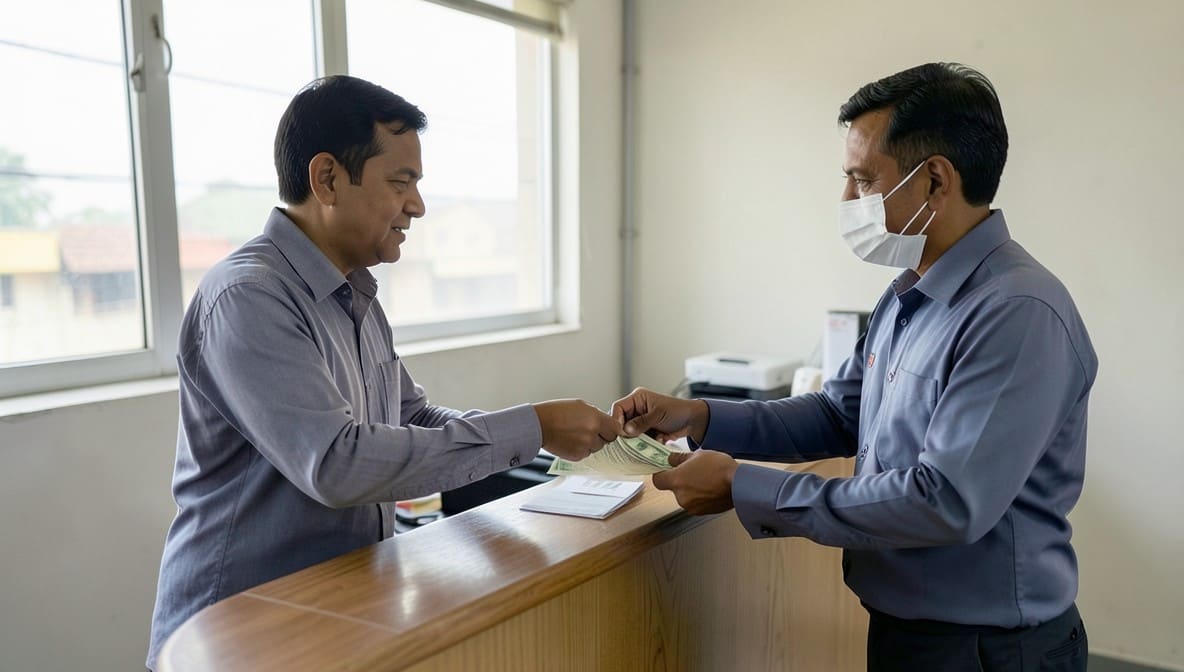
The Punjab & Haryana High Court has established a pragmatic framework for enforcing monetary decrees in civil execution matters by permitting structured monthly payments with a clear penalty for default. This order balances the creditor’s right to recovery with the debtor’s capacity to pay, setting a precedent for judicially sanctioned payment plans in cases of genuine financial hardship.
Background & Facts
The Dispute
The dispute arose from a civil suit concerning possession of immovable property, wherein the respondent, Lal Chand Gupta, was awarded mesne profits against the petitioner, Vijay Kumar, for unauthorized occupation of the premises. The Additional Civil Judge (Senior Division), Ambala, passed an order on 21.07.2023 dismissing the petitioner’s application seeking permission to pay the decretal amount in monthly installments. The petitioner, aged 63, filed a civil revision petition under Article 226 of the Constitution challenging this order.
Key Facts
- The total amount due as mesne profits was agreed upon by both parties as ₹2,60,000/-
- The petitioner had been subject to execution proceedings, including warrants of attachment against his property
- The petitioner, through counsel, offered to pay ₹10,000/- per month until full settlement
- The petitioner undertook to pay an additional ₹50,000/- as penalty in case of any default in monthly payment
- The respondent agreed to the proposed payment plan on condition that execution proceedings could be revived upon default
- The petitioner is 63 years old and has no other means of discharging the liability in lump sum
Procedural History
- 21.07.2023: Additional Civil Judge (Sr.Div.), Ambala, dismissed petitioner’s application for installment payment
- 08.12.2025: Civil Revision Petition was initially heard; Court directed notice to respondent and liberty to serve summons
- 30.03.2026: Court issued interim order permitting petitioner to pay ₹10,000/- monthly and directed notice to respondent for 16.04.2026
- 16.04.2026: Final hearing before Division Bench; parties reached consensus on payment terms
Relief Sought
The petitioner sought: (i) setting aside of the order dated 21.07.2023; (ii) permission to pay ₹2,60,000/- in monthly installments of ₹10,000/-; (iii) disposal of execution proceedings; and (iv) immunity from further attachment if payments are made punctually.
The Legal Issue
The central question was whether a civil court, in the exercise of its inherent powers under Section 151 CPC, may permit a judgment-debtor to discharge a decretal liability in monthly installments, and whether such an arrangement may be coupled with a penalty for default without violating the principles of execution law.
Arguments Presented
For the Petitioner
The petitioner’s counsel argued that the petitioner, being elderly and without liquid assets, could not pay the entire sum at once. He submitted that the offer of ₹10,000/- monthly was reasonable and demonstrated bonafide intent to comply. He further emphasized that the undertaking to pay an additional ₹50,000/- upon default served as sufficient deterrent and incentive for compliance. Reliance was placed on the Court’s inherent powers under Section 151 CPC to do justice and prevent abuse of process.
For the Respondent
The respondent’s counsel accepted the proposed payment plan but insisted on the right to revive execution proceedings upon any default. He argued that without such a safeguard, the decree-holder would be left without remedy if the petitioner defaulted. He also sought assurance that the additional ₹50,000/- penalty would be enforceable as part of the execution proceedings.
The Court's Analysis
The Court observed that the parties had reached a clear, voluntary, and fair consensus on the modalities of payment. It noted that the petitioner’s offer was not merely an attempt to delay but a structured, credible plan to satisfy the decree. The Court emphasized that Section 151 CPC empowers courts to act in the interest of justice where no other provision applies, and that such powers are particularly relevant in execution matters to avoid undue hardship without compromising the decree-holder’s rights.
"The petitioner has undertaken a clear, binding obligation to pay ₹10,000/- monthly, with a penalty of ₹50,000/- for any default. This is not a concession but a calibrated mechanism to ensure compliance."
The Court rejected the notion that execution proceedings must remain active pending full payment. It held that where parties agree to a payment plan and the court endorses it, the execution petition may be disposed of conditionally, provided the penalty for default is clearly stipulated and enforceable. The Court further noted that the penalty of ₹50,000/- was not punitive but compensatory, designed to reflect the increased cost and inconvenience caused by default.
The Verdict
The petitioner succeeded. The Court recalled its order dated 08.12.2025 and restored the civil revision petition to its original number. The execution proceedings are disposed of subject to the following conditions: (i) the petitioner shall pay ₹10,000/- on or before the 12th of every month; (ii) the respondent shall provide bank account details to the petitioner’s counsel within two weeks; (iii) in case of even one missed payment, the respondent may revive execution proceedings and recover an additional ₹50,000/- as penalty; (iv) both parties shall file affidavits before the Executing Court affirming their binding commitment to these terms.
What This Means For Similar Cases
Installment Plans Are Judicially Recognized in Execution Matters
- Practitioners may now file applications under Section 151 CPC seeking installment payment of decretal amounts, especially where the judgment-debtor demonstrates genuine inability to pay in lump sum
- Courts are likely to approve such plans if they are specific, time-bound, and include a meaningful penalty for default
Penalty Clauses Are Enforceable in Execution
- A penalty for default, even if substantial, is not void as long as it is agreed upon by both parties and is not arbitrary
- The ₹50,000/- penalty here was upheld because it was tied to the cost of revival and deterrence, not punishment
Execution Proceedings May Be Disposed of Conditionally
- Courts may dispose of execution petitions outright if a binding payment plan is approved, rather than keeping them pending
- This reduces court burden and provides finality to parties, provided the conditions are clearly recorded and enforceable
Documentary Undertakings Are Binding
- Oral undertakings before the Court, when recorded in the order, become binding legal obligations
- Affidavits filed before the Executing Court are mandatory to prevent later disputes on terms
The Role of Section 151 CPC Is Expanded
- Section 151 CPC is not merely a residual power but a proactive tool to achieve justice in execution matters
- Courts may now use it to craft tailored remedies where rigid statutory provisions fall short