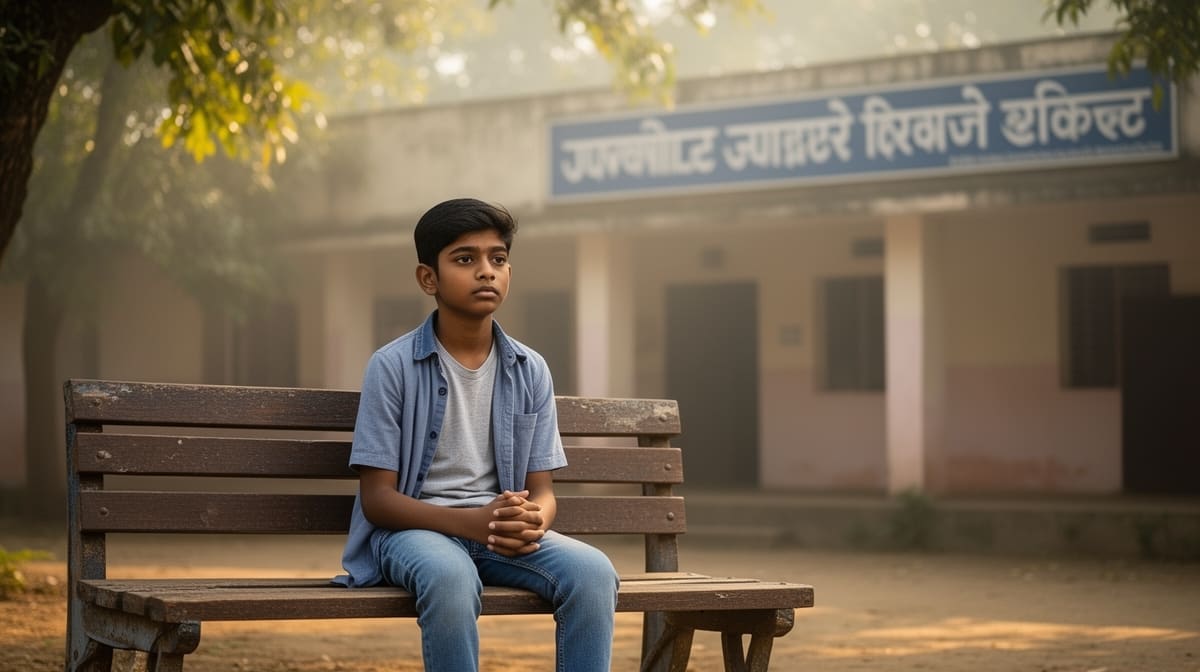
The Allahabad High Court has reaffirmed that bail for juveniles under the Juvenile Justice Act is the rule, not the exception. In a significant ruling, the Court held that denial of bail must rest on specific, documented grounds - not speculative concerns about moral danger or criminal association. This judgment reinforces the statutory presumption in favor of release under Section 12 of the Juvenile Justice Act, 2015, and mandates rigorous judicial scrutiny before detention.
Background & Facts
The Dispute
The revisionist, identified as 'Juvenile S', was apprehended in connection with Case Crime No. 400 of 2025, registered at Police Station Kamalganj, District Farrukhabad, under Section 103(1) of the B.N.S. and Sections 9 and 25 of the Arms Act. The allegations involved possession and use of firearms. The revisionist was declared a juvenile by the Juvenile Justice Board on 08.12.2025 and has been detained in an observation home since that date.
Key Facts
- The revisionist was apprehended on or before 08.12.2025
- The Juvenile Justice Board, Fatehgarh, Farrukhabad, conducted an inquiry and rejected the bail application on 12.02.2026
- The Board cited generalized concerns that release might expose the revisionist to "moral, physical or psychological danger" and lead to association with known criminals
- The District Probation Officer’s report, which opposed bail, was found to lack substantive material or factual basis
- The revisionist’s counsel contended that the role attributed to him was limited to exhortation, with no direct involvement in weapon use
- No evidence was presented linking the revisionist to any known criminal network
Procedural History
- 08.12.2025: Revisionist apprehended and placed in observation home
- 12.02.2026: Juvenile Justice Board rejected bail application without detailed reasoning
- 25.02.2026: Revisionist filed Juvenile Criminal Appeal No. 73 of 2026 before the Special Judge (POCSO Act)/Additional Sessions Judge, Farrukhabad
- 31.03.2026: Sessions Judge dismissed the appeal, upholding the Board’s order
- 15.04.2026: Criminal Revision No. 2868 of 2026 filed before the Allahabad High Court
- 09.06.2026: Hearing concluded before Dr. Gautam Chowdhary, J.
The Parties' Positions
For the Revisionist: Argued that the denial of bail was arbitrary, unsupported by evidence, and violated the mandatory presumption under Section 12 of the Juvenile Justice Act. Contended that the Probation Officer’s report was conclusory and lacked factual foundation. Emphasized that the revisionist had no prior record and was detained for over six months without trial.
For the State: Opposed bail, relying on the lower courts’ observations regarding potential moral danger and risk of association with criminals. Did not produce any specific evidence or documentation to substantiate these claims.
Relief Sought
The revisionist sought: (1) setting aside of the orders dated 12.02.2026 and 31.03.2026; (2) immediate release on bail; and (3) directions to the Board to grant bail under Section 12 of the Act with appropriate conditions.
The Legal Issue
The central question was whether the denial of bail to a juvenile under Section 12 of the Juvenile Justice (Care and Protection of Children) Act, 2015 can be justified by vague, unsubstantiated fears of moral danger or criminal association, or whether the law requires specific, documented grounds to override the statutory presumption in favor of release.
Arguments Presented
For the Appellant/Petitioner
Learned counsel relied on the mandatory language of Section 12(1), which mandates release on bail unless specific exceptions apply. He argued that the lower courts failed to record any concrete facts demonstrating that the revisionist’s release would: (a) bring him into association with known criminals; (b) expose him to moral, physical, or psychological danger; or (c) defeat the ends of justice. He cited the absence of any police record, prior delinquency, or credible threat evidence. He emphasized that the Probation Officer’s report was speculative and not based on any assessment of the revisionist’s background, family support, or community ties.
For the Respondent/State
The Additional Government Advocate opposed bail, relying solely on the findings of the lower courts. No independent evidence or affidavit was filed to substantiate the claim that the revisionist posed a risk. The State did not dispute the absence of material on record but argued that the courts below were entitled to exercise discretion based on the nature of the offence under the Arms Act.
The Court's Analysis
The Court undertook a detailed examination of Section 12 of the Juvenile Justice Act, noting its overriding nature, which displaces the provisions of the CrPC in matters concerning juveniles. The provision is designed to protect the welfare of the child and ensure that detention is the last resort.
"Such person shall not be so released if there appears reasonable grounds for believing that the release is likely to bring that person into association with any known criminal or expose the said person to moral, physical or psychological danger or the person's release would defeat the ends of justice, and the Board shall record the reasons for denying the bail and circumstances that led to such a decision."
The Court observed that the lower courts had merely parroted the statutory language without applying it to the facts of the case. There was no mention of any known criminal with whom the revisionist might associate, no evidence of prior criminal conduct, no indication of family instability, and no assessment of the revisionist’s personal circumstances. The Probation Officer’s report was described as "conclusory" and devoid of factual underpinning.
The Court emphasized that the burden lies squarely on the State to demonstrate the existence of one or more of the three statutory exceptions. Mere apprehension, generalized risk, or the seriousness of the alleged offence cannot substitute for specific, documented reasoning. The Court further noted that the revisionist had already spent over six months in an observation home without trial, and prolonged detention without judicial determination of guilt violates the spirit of the Act.
The Sessions Judge, in dismissing the appeal, failed to independently evaluate the legality of the Board’s order. The Court held that both orders were legally unsustainable.
The Verdict
The revisionist succeeded. The Allahabad High Court set aside the orders dated 12.02.2026 and 31.03.2026. The revisionist, 'Juvenile S', is directed to be released on bail upon furnishing a personal bond through his legal guardian, Vijay Kumar (father), and two sureties, each in a like amount, to the satisfaction of the Juvenile Justice Board. The Board is directed to issue the bail order within seven days of this judgment.
What This Means For Similar Cases
Bail Denial Must Be Reasoned, Not Routine
- Practitioners must challenge bail denials where courts rely on boilerplate language without citing specific facts
- The burden of proof for invoking Section 12 exceptions rests entirely on the State
- Probation Officer reports must be detailed, evidence-based, and tied to the individual’s circumstances - not generic warnings
Detention Without Trial Is Not a Substitute for Bail
- Prolonged detention in observation homes pending inquiry violates the child’s right to liberty under Section 12
- Courts must prioritize release unless the statutory exceptions are demonstrably met
- Any delay in bail hearings must be justified by exceptional circumstances, not administrative backlog
Judicial Scrutiny of Lower Orders Is Mandatory
- Sessions Judges and appellate courts must conduct an independent review of bail denials under the JJ Act
- Blind affirmation of Board orders without analysis constitutes legal error
- This judgment establishes a new standard: vague fears cannot override statutory rights