The Delhi High Court affirmed the validity of an arbitral award granting interest on a construction contract, rejecting the National Highways Authority of India's challenge on jurisdictional grounds and underscoring that pleas of lack of jurisdiction must be raised early and cannot be used to reopen settled awards.
Background & Facts
The Dispute
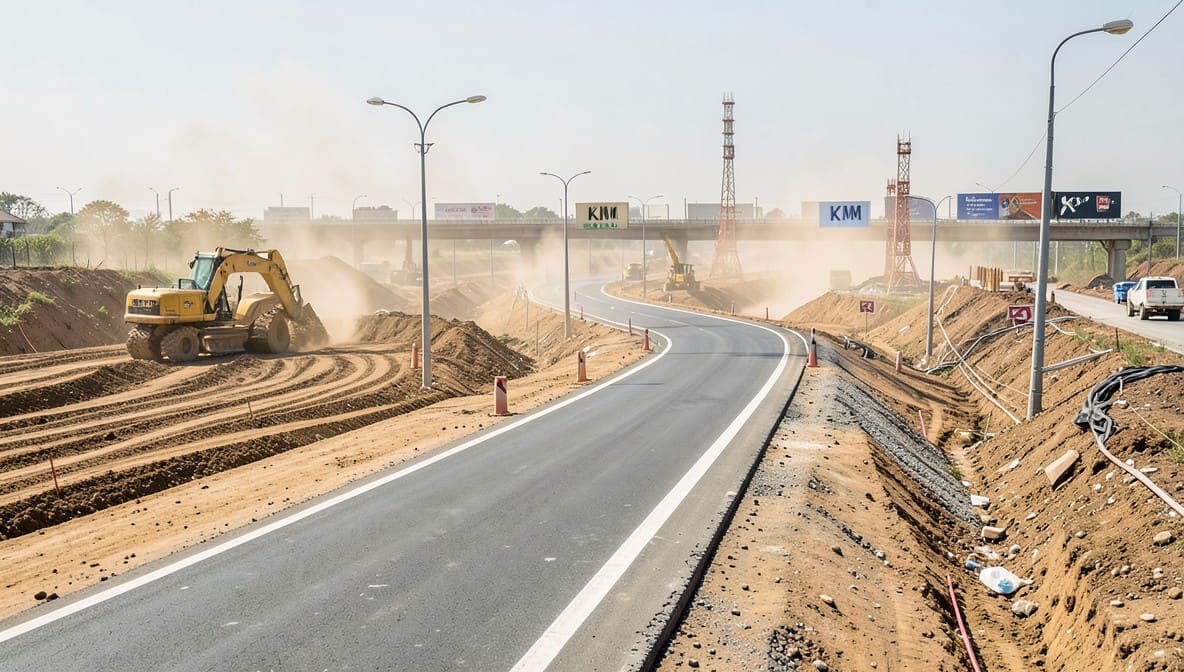
The petitioner, National Highways Authority of India (NHAI), entered into a contract with the respondent, KNR Constructions Ltd. (KNR), on 22.10.2009 for the widening and strengthening of a 4/6-lane stretch of NH-5 in Odisha (Km 284.000 to 340.006). The agreement incorporated Clause 60.8 of the Conditions of Particular Application (COPA), which prescribed interest at 10% per annum compounded monthly on delayed payments.
Key Facts
- 22.10.2009: Contract (the Agreement) executed between NHAI and KNR.
- 08.07.2013: KNR commenced first round of arbitral proceedings.
- 29.04.2017: First arbitral award (the 2017 Award) granted KNR a sum of Rs. 35,39,67,728 with interest at 10% p.a. from 03.08.2013.
- 25.10.2018: Delhi High Court dismissed NHAI’s challenge to the 2017 Award.
- 03.05.2019: Delhi High Court partially set aside the 2017 Award on the ground that interest for the pre-reference period and the rate of interest for the post-reference period were not awarded.
- 05.06.2019: KNR filed an application before the earlier arbitral tribunal seeking re-agitation of the interest claim.
- 18.06.2019: Arbitrator C notified parties of the commencement of proceedings.
- 10.07.2019: Hearing held before the three-member tribunal (Arbitrators A, B, C).
- 24.07.2019: KNR submitted a detailed claim for interest, seeking monthly compounding at 10% p.a. from the date of reference (03.08.2013) and for the pre-reference period.
- 01.10.2019: NHAI was directed to file a response.
- 24.01.2020: KNR requested further hearing.
- 06.02.2020: Arbitrator A recused himself; KNR nominated Arbitrator D.
- 13.02.2020: Arbitrator C informed parties that the tribunal was reconstituted with Arbitrators B, C, D.
- 11.02.2020: NHAI filed its Statement of Defence.
- 16.03.2020: KNR addressed a further letter referencing Arbitrator B’s concerns.
- 11.07.2020: Additional meeting of the tribunal.
- 17.07.2020: Arbitrator B suggested amendments to the minutes, raising jurisdictional doubts.
- 22.07.2020 & 23.07.2020: Zoom meetings held to discuss the matter.
- 01.08.2020: NHAI sought adjournment; KNR objected and urged continuation.
- 05.08.2020: Meeting held but placed in abeyance.
- 24.09.2020: NHAI informed the tribunal it would not pursue the objection.
- 22.02.2021: KNR updated its interest claim.
- 08.12.2021: Impugned arbitral award dated, granting KNR interest at 10% p.a. compounded monthly from the date payable until actual payment.
- 11.08.2026: Judgment pronounced by Justice Prateek Jalan.
Procedural History
- 08.07.2013: First arbitral proceedings commenced.
- 29.04.2017: First award (2017 Award) rendered.
- 25.10.2018: NHAI’s challenge dismissed by Delhi High Court.
- 03.05.2019: Delhi High Court partially set aside the 2017 Award and allowed parties to re-agitate claims.
- 05.06.2019: KNR filed application for re-agitation of interest claim.
- 10.07.2019: Hearing before the original tribunal.
- 06.02.2020: Arbitrator A recused; Arbitrator D appointed.
- 13.02.2020: Tribunal reconstituted (Arbitrators B, C, D).
- 08.12.2021: New award rendered.
- Petition under Section 34: NHAI filed petition challenging the 08.12.2021 award.
Relief Sought
NHAI sought to set aside the award on the ground that the tribunal lacked jurisdiction to entertain the fresh interest claim and that the award should be vacated under Section 34 of the Arbitration Act.
The Legal Issue
The central question was whether the arbitral tribunal, constituted after the 03.05.2019 order, had jurisdiction to entertain KNR’s fresh claim for interest under Clause 60.8 of COPA, and whether NHAI could raise a jurisdictional objection for the first time at the Section 34 stage despite not having raised it under Section 16 of the Arbitration Act.
Arguments Presented
For the Appellant/Petitioner (NHAI)
- Contended that the original tribunal’s mandate terminated with the 2017 Award; any fresh claim required a new arbitration under Clause 67 of COPA and Section 21 of the Act.
- Relied on Section 31 of the Act, arguing that the 2019 order did not revive the earlier tribunal’s jurisdiction.
- Cited Inder Sain Mittal v. Housing Board, Srei Infrastructure Ltd. v. Tuff Drilling Pvt. Ltd., and Hindustan Zinc Ltd. v. Ajmer Vidyut Vitran Nigam Ltd. to support the view that jurisdictional pleas can be raised at the Section 34 stage but must satisfy the waiver test under Section 4.
- Asserted that NHAI’s failure to object earlier amounted to waiver and that the tribunal’s continuation was illegal.
For the Respondent (KNR)
- Argued that both parties consented to the continuation of the arbitral proceedings, as reflected in the minutes of 10.07.2019, 11.07.2020 and 22.07.2020.
- Relied on L.G. Chaudhary Engineers v. M.P. Rural Road Development Authority and Sweta Construction v. Chhattisgarh State Power Generation Co. Ltd. to contend that a lack of jurisdiction plea raised for the first time at Section 34 is barred by waiver unless a strong reason is shown.
- Cited Quippo Construction and JMC Projects to emphasise that consent to arbitration waives objections to tribunal composition and jurisdiction.
- Submitted that Clause 60.8 of COPA clearly mandated interest and that the tribunal’s interpretation was a matter of contract construction, not subject to judicial interference.
The Court's Analysis
The Court began by examining the statutory framework governing jurisdictional objections under the Arbitration and Conciliation Act, 1996. It noted that Section 16 requires a party to raise any objection to the jurisdiction of the arbitral tribunal at the earliest stage; failure to do so results in waiver under Section 4. The Court then surveyed the leading precedents.
"I do not find any reason to interfere with the impugned majority Award dated 08.12.2021, in exercise of the jurisdiction under Section 34 of the Act."
The Court distinguished Lion Engineering Consultants v. State of M.P. which permits a jurisdictional plea at the Section 34 stage, by emphasizing that L.G. Chaudhary (II) carved out a narrow exception: such a plea cannot succeed where the party failed to raise the issue before the arbitral tribunal and cannot demonstrate a “strong and sufficient reason” for the delay. The Court held that NHAI had not raised any objection to the tribunal’s jurisdiction during the re-agitation proceedings, nor had it shown any compelling reason for the belated challenge.
The Court further examined the doctrine of consent. It observed that the minutes of the hearings on 10.07.2019, 11.07.2020 and 22.07.2020 were signed by all arbitrators and that both parties expressly agreed to continue the proceedings. This consent, the Court held, estops NHAI from later asserting that the tribunal lacked jurisdiction. The Court also referred to Quippo Construction and JMC Projects to confirm that objections to the composition of the tribunal are waivable by mutual consent.
Regarding the substantive issue of interest, the Court reiterated that the interpretation of contractual clauses, such as Clause 60.8 of COPA, falls within the exclusive domain of the arbitral tribunal. The Court found no manifest perversity or arbitrariness in the tribunal’s reasoning that interest at 10% per annum compounded monthly was payable from the date the amount became due until actual payment.
Finally, the Court addressed the argument that the award was vague. It noted that the amounts of price adjustment and the dates of entitlement were quantified in the 2017 Award and the accompanying documents, enabling a precise calculation of interest. Consequently, the Court concluded that the award was not vague and did not warrant setting aside.
The Verdict
The petition was dismissed. The Delhi High Court upheld the arbitral award dated 08.12.2021, which granted KNR interest at 10% per annum compounded monthly from the date payable until actual payment. No costs were awarded. The pending application was also disposed of. The court found no jurisdictional defect in the tribunal’s constitution and declined to interfere with its interpretation of Clause 60.8 of COPA.
What This Means For Similar Cases
Jurisdictional Pleas Must Be Raised Early
- Parties must raise any objection to the tribunal’s jurisdiction under Section 16 of the Arbitration Act; failure to do so results in waiver under Section 4.
- A plea of lack of jurisdiction can be introduced at the Section 34 stage only if the party can demonstrate a strong and sufficient reason for the earlier omission.
Consent and Waiver Govern Fresh Arbitration
- Mutual consent to continue proceedings, as evidenced by signed minutes and unobjected participation, estops a party from later challenging jurisdiction.
- Objections to the composition of the tribunal are waivable when both parties have agreed to the arbitrators.
Section 34 Is Not a Vehicle to Reopen Settled Awards
- Courts will not substitute their own interpretation of contractual terms for that of the arbitral tribunal unless the award is perverse or arbitrary.
- Parties cannot use Section 34 to relitigate issues that were or could have been raised during the arbitral proceedings.
Practical Takeaways for Practitioners
- File any jurisdictional objection promptly under Section 16; document the objection clearly.
- Preserve evidence of consent or acquiescence, such as signed minutes, to pre-empt waiver arguments.
- When challenging an award, focus on procedural irregularities or patent perversity rather than mere disagreement with the tribunal’s interpretation.