The Bombay High Court has delivered a pivotal clarification on the criminal liability for disrespect to the Indian National Flag, emphasizing that mere presence or accidental inversion of the flag cannot constitute an offence under the Prevention of Insults to National Honour Act, 1971. The judgment reinforces that intentional disrespect is a non-negotiable ingredient of the offence, and without mens rea, prosecution cannot proceed.
Background & Facts
The Dispute
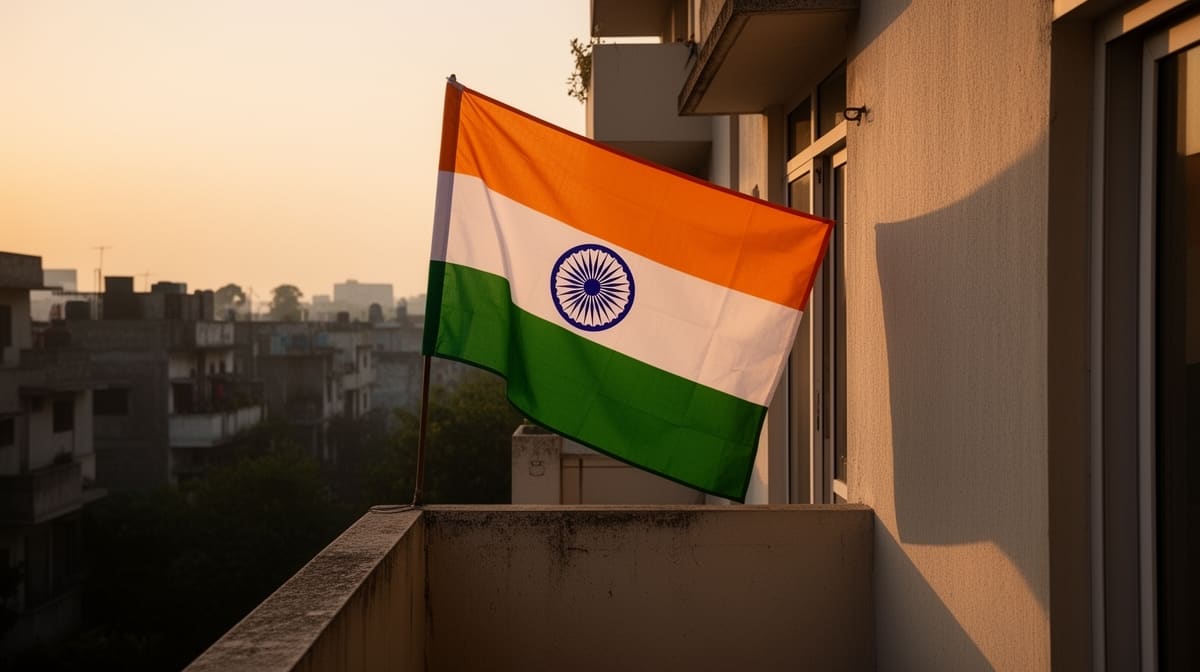
On Republic Day, 26 January 2017, a flag-hoisting ceremony was conducted by the Shri Rajani Society at its residential building terrace in Mumbai. After the event, the terrace gate was left open. Later that afternoon, police officers observed the flag inverted - saffron stripe downward - and registered FIR No. 13 of 2017 under Section 2(4)(l) of the Prevention of Insults to National Honour Act, 1971. The applicant, V.K. Narayanan, an 85-year-old retired man and former society member, was named as one of six accused, despite no evidence linking him to the act of hoisting or displaying the flag.
Procedural History
- 26.01.2017: FIR registered at Tilak Nagar Police Station under Section 2(4)(l) of the Prevention of Insults to National Honour Act, 1971.
- 2017: Magistrate issued process without assigning any reasons, in a non-speaking order.
- 2024: Charge sheet filed as Criminal Case No. 460/PS/2017.
- 25.07.2025: Sessions Court quashed the charge sheet on grounds of insufficient evidence.
- 22.01.2026: Applicant filed Criminal Application No. 7 of 2026 under Section 528 of the Bharatiya Nagarik Suraksha Sanhita, 2023, seeking quashing of the FIR and cognisance order.
Relief Sought
The applicant sought quashing of the FIR, charge sheet, and the illegal cognisance order, arguing absence of mens rea, lack of independent evidence, and the fact that the terrace was not a public place. He also submitted an unconditional apology as a senior citizen suffering from age-related ailments.
The Legal Issue
The central question was whether Section 2(4)(l) of the Prevention of Insults to National Honour Act, 1971, criminalizes the accidental or unintentional inversion of the National Flag, or whether intentional disrespect is an essential ingredient of the offence.
Arguments Presented
For the Petitioner
Mr. Rajendra Sorankar argued that the prosecution failed to establish any act or intention attributable to the applicant. He emphasized that the terrace of a residential society building is not a "public place" as defined under Explanation 3 of the Act. He cited Union of India v. Naveen Jindal to affirm that while flying the flag is a fundamental right, intentional disrespect is required for criminal liability. He further contended that the cognisance order dated 03.07.2017 was a "rubber-stamped" non-speaking order, violating the mandate in Lalankumar Singh v. State of Maharashtra.
For the Respondent
Ms. Pallavi Dabholkar contended that the statement of the watchman, Deepak Jaysingh, was sufficient to establish the applicant’s involvement. She argued that the flag’s inversion, even if unintentional, amounted to disrespect under the Act and that the applicant’s presence at the scene made him liable as a member of the organizing body.
The Court's Analysis
The Court undertook a rigorous analysis of Section 2(4)(l), which criminalizes "intentionally displaying the Indian National Flag with the ‘saffron’ down." The Court held that the word "intentionally" is not surplusage - it is the very core of the offence. The judgment distinguished between negligence and criminal intent, noting that the Act does not impose strict liability.
"To constitute the offence under Section 2(4)(l), the display of the Indian National Flag in an inverted manner must be intentional. Thus, mens rea to cause insult or disrespect, or to bring the Indian National Flag into contempt, would be required."
The Court rejected the prosecution’s reliance on the watchman’s statement, which named "office-bearers" and "society members" generally, without identifying the applicant as the person who hoisted or directed the flag’s display. The Court further held that the terrace, being a private residential area not accessible to the general public, did not qualify as a "public place" under Explanation 3.
The Court also condemned the Magistrate’s cognisance order dated 03.07.2017 as a "non-speaking" and "rubber-stamped" order, violating the principles laid down in Lalankumar Singh v. State of Maharashtra. The Court reiterated that taking cognisance is a judicial act requiring application of mind, and failure to record even minimal reasons renders the order illegal.
The Court applied the Bhajan Lal guidelines to prevent abuse of process, concluding that the case was fit for quashing at the threshold due to complete absence of prima facie evidence of intentional disrespect.
The Verdict
The applicant succeeded. The Bombay High Court quashed the impugned FIR, the charge sheet, and the illegal cognisance order. The Court held that intentional disrespect is an indispensable element under Section 2(4)(l), and in the absence of any evidence linking the applicant to such intent, no offence was made out.
What This Means For Similar Cases
Mens Rea Is Non-Negotiable
- Practitioners must now insist on proof of intentional act in all flag disrespect cases under Section 2(4)(l).
- Accidental inversion, poor hoisting, or wind-related flipping cannot be prosecuted without evidence of deliberate intent.
- Defence counsel should move to quash FIRs where the charge sheet lacks any direct evidence of the accused’s involvement or intent.
Private Spaces Are Not Public Places
- Residential terraces, private premises, or gated society areas are not "public places" under the Act unless demonstrably open to the general public.
- Prosecutors must establish public accessibility to invoke the Act - mere visibility from a public road is insufficient.
- This clarifies the scope of the Act and prevents its misuse against private citizens in non-public settings.
Non-Speaking Cognisance Orders Are Illegal
- Magistrates must record at least minimal reasons for taking cognisance under Section 204 CrPC (now BNSS).
- Courts will set aside cognisance orders that are mechanical, formulaic, or devoid of judicial reasoning.
- Defence advocates should routinely challenge cognisance orders lacking reasons under Lalankumar Singh.