The Bombay High Court has affirmed that intentionally appearing naked in the presence of a woman, with the intent that she see it, constitutes an offence under Section 509 of the Indian Penal Code. The judgment clarifies that the act need not involve physical contact or explicit verbal abuse - mere exposure intended to be seen, if capable of shocking a woman’s sense of decency, suffices to invoke the provision.
Background & Facts
The Dispute
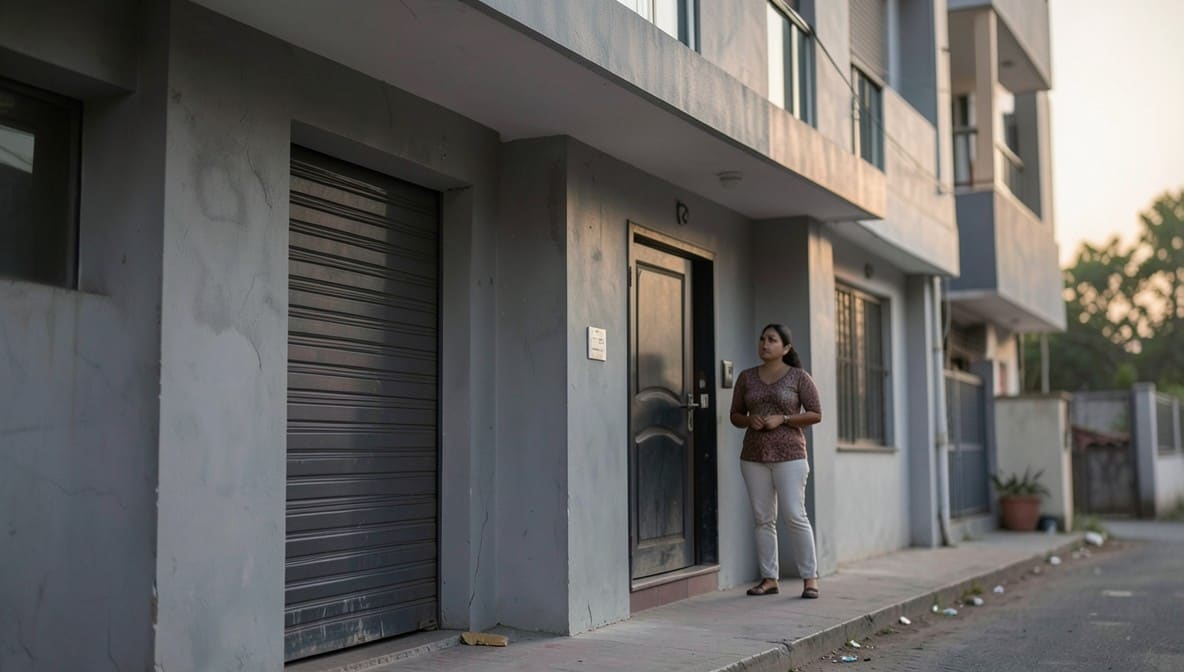
The dispute arose from an alleged incident of indecent exposure within a residential apartment complex in Ambegaon Pathar, Pune. The Respondent No. 2, Mrs. Rajshree Satish Kopnar, a watchwoman residing in the same building, alleged that on 31st December 2023, the Applicant, Mr. Hitesh Suresh Borse, opened the door of his flat while completely naked, in her presence, as she sought to retrieve the terrace water key.
Key Facts
- The Applicant resides in Flat No. 504 of Parth Darshan Apartment.
- The Respondent No. 2, employed as a watchwoman, was responsible for managing water supply from the society’s terrace tank.
- The keys to the terrace were normally in her possession, but on 30th December 2023, the Applicant took possession of them.
- On 31st December 2023 at 7:00 a.m., the Respondent No. 2, accompanied by her son, went to the Applicant’s flat to retrieve the key.
- When the Applicant opened the door, he was fully naked.
- The Respondent No. 2 extended her hand to receive the key, which was handed to her without the Applicant covering himself.
- After retrieving the key, she proceeded to the terrace, returned to her residence, and informed her sister-in-law and other residents of the incident.
- Later, when confronted by Mr. Satish Pilane, the society chairman, the Applicant allegedly picked up a shovel and threatened the Respondent No. 2, and also abused her sister.
- The FIR was registered on 31st December 2023 under Sections 504, 506, and 509 of the IPC.
Procedural History
- 30th December 2023: Applicant takes possession of terrace key.
- 31st December 2023: Incident occurs at 7:00 a.m.; FIR registered same day as FIR No. 854 of 2023.
- 10th April 2026: Present application for quashing of FIR heard and decided by the Bombay High Court.
The Parties' Positions
For the Applicant
- Alleges the complaint is fabricated and motivated by prior disputes over society management.
- Claims no gesture or act was performed by him to insult modesty; merely being naked does not constitute a ‘gesture’ under Section 509.
- Points out that no direct witnesses were examined, and the only account is that of the complainant.
- Argues that the shovel was not seized and no forensic or corroborative evidence exists.
- Asserts that two students present in his residence during the incident were not examined.
For the Respondent-State
- Submits that the complainant’s statement clearly satisfies the ingredients of Section 509 IPC.
- Emphasizes that the Applicant’s conduct - opening the door fully naked and remaining so while handing over the key - demonstrates clear intent to be seen by a woman.
- Argues that the law does not require physical contact or verbal abuse; the act itself, if intended to insult modesty, is sufficient.
- Relies on Supreme Court precedents affirming that the reaction of the woman and societal norms are relevant to determining outrage to modesty.
Relief Sought
The Applicant seeks quashing of FIR No. 854 of 2023 under Section 482 of the CrPC, on grounds that no offence under Sections 504, 506, or 509 IPC is made out, and that the complaint is mala fide.
The Legal Issue
Whether the act of opening a door in a completely naked state, in the presence of a woman, with the intent that she see him, constitutes an offence under Section 509 of the Indian Penal Code, even in the absence of physical contact, verbal abuse, or corroborative witnesses.
Arguments Presented
For the Appellant/Petitioner
The Applicant’s counsel contended that Section 509 IPC requires a deliberate ‘gesture’ or ‘act’ directed at the woman, and mere nudity without an accompanying intentional movement or signal does not qualify. He cited Joseph Paul de Sousa v. State to argue that while ‘gesture’ may include non-verbal conduct, it must be purposefully directed to insult modesty. He further argued that the absence of independent witnesses, non-seizure of the shovel, and the complainant’s potential motive due to societal disputes rendered the FIR baseless. He emphasized that at the quashing stage, the court must examine whether the allegations, even if true, constitute an offence.
For the Respondent/State
The Additional Public Prosecutor argued that the complainant’s account, if accepted at face value, clearly satisfies the three essential ingredients of Section 509: (i) intention to insult modesty, (ii) act done to be seen by the woman, and (iii) conduct capable of shocking her sense of decency. He relied on Ramkripal v. State of Madhya Pradesh and Rupan Deol Bajaj v. Kanwar Pal Singh Gill to establish that modesty is an attribute of womanhood, and any act perceived as indecent by societal standards may outrage it. He stressed that the Supreme Court has repeatedly held that courts must not conduct mini-trials at the quashing stage.
The Court's Analysis
The Court undertook a detailed interpretation of Section 509 IPC, examining its legislative intent and judicial evolution. It noted that the provision was designed to protect women from non-physical forms of sexual harassment, including acts that intrude upon privacy or are intended to be seen.
"The word ‘gesture’ refers not merely to body signs... an act done by a person to express his attitude or intentions also is a ‘gesture’... a person can make a gesture by doing an act without involving any body signs."
The Court cited Joseph Paul de Sousa to affirm that even non-verbal conduct - such as appearing naked in a manner intended to be observed - can constitute a gesture under Section 509. It further relied on Ramkripal v. State of Madhya Pradesh and State of Punjab v. Major Singh to hold that the ultimate test is whether the act is capable of shocking the sense of decency of a woman.
The Court rejected the Applicant’s argument that the absence of corroborative evidence or seizure of the shovel invalidates the FIR. It emphasized:
"This Court ought not to consider the defence of the Applicant, while considering the application under Section 482 of the Code of Criminal Procedure... The correctness or otherwise of the allegations made in the complaint cannot be examined on the touchstone of probable defence..."
It held that the complainant’s testimony, if believed, clearly establishes the requisite intention and conduct. The fact that the Applicant remained naked while handing over the key, after opening the door, demonstrated a continuous act intended to be seen. The Court concluded that the conduct prima facie shocks the sense of decency of a woman and satisfies the statutory requirements.
The Court also reiterated the settled principle from Central Bureau of Investigation v. Aryan Singh and Priyanka Jaiswal v. State of Jharkhand that Section 482 CrPC is not a forum for evaluating evidence or testing defences. The trial court remains the appropriate forum for such scrutiny.
The Verdict
The application for quashing of FIR No. 854 of 2023 under Sections 504, 506, and 509 IPC was dismissed. The Court held that a prima facie case under Section 509 IPC is made out, and the matter must proceed to trial. The Applicant is directed to face trial in accordance with law. No monetary relief or interim direction was issued.
What This Means For Similar Cases
Nakedness Can Constitute a Gesture Under Section 509 IPC
- Practitioners must now recognize that appearing naked in the presence of a woman, with intent that she see it, may constitute an offence under Section 509 IPC, even without verbal abuse or physical contact.
- The focus shifts from the nature of the act to the intention and perception: Was the exposure deliberate? Was it meant to be seen by the woman? Would it shock her sense of decency?
- Defence arguments based on absence of witnesses or lack of physical evidence are unlikely to succeed at the quashing stage.
Courts Will Not Conduct Mini-Trials at Quashing Stage
- Applications under Section 482 CrPC cannot be used to challenge the credibility of the complainant or demand corroboration.
- The court’s role is limited to determining whether the allegations, if true, disclose an offence - not whether they are proven.
- Defence evidence, including alibis or motive, must be raised and tested during trial.
Societal Norms Define ‘Modesty’ in Contemporary Context
- The judgment reinforces that ‘modesty’ is not a static concept but must be interpreted through evolving societal standards.
- Courts will consider the context: residential setting, gender dynamics, and the woman’s reasonable expectation of privacy.
- This precedent strengthens protection against non-contact sexual harassment in shared living spaces, including apartments, hostels, and workplaces.