The Madhya Pradesh High Court has affirmed that a workman’s prolonged and continuous service, even if initially engaged on a casual or contractual basis, may attract statutory protections under the Industrial Disputes Act, 1947 if the employer fails to disprove the claim of continuous employment. The judgment reinforces the principle that failure to produce service records justifies an adverse inference against the employer.
Background & Facts
The Dispute
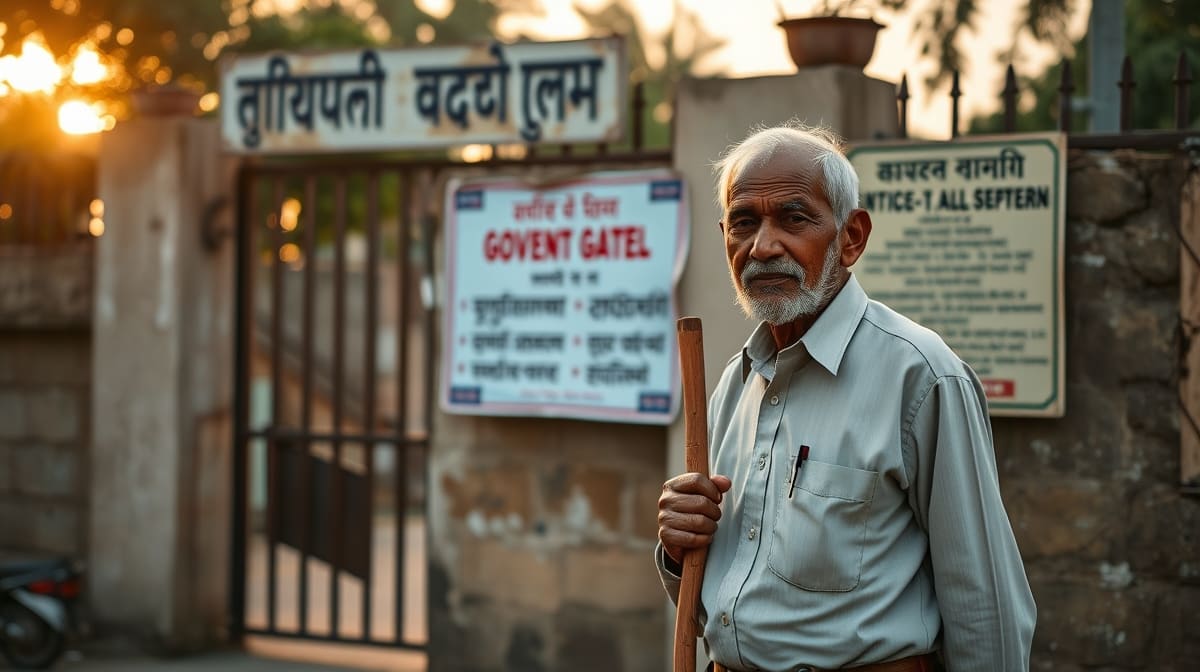
The respondent, Gopal Tiwari, claimed he was appointed as a Chowkidar in the petitioner’s department, the Madhya Pradesh Housing Board, in the year 2000 against a permanent and vacant post. He alleged that he discharged his duties continuously for approximately fourteen years until his services were terminated in 2014 by an oral order without any reason, notice, or payment of retrenchment compensation. He contended that he had worked more than 240 days in multiple calendar years, thereby qualifying as a "workman" under the Industrial Disputes Act, 1947, and was entitled to statutory safeguards under Sections 25-F, 25-G, and 25-N.
Key Facts
- The respondent claimed continuous service from 2000 to 2014 as a Chowkidar
- He submitted an application for settlement before the Assistant Labour Commissioner on 13.10.2014, which remained pending for over seven months
- The petitioner department denied all allegations and asserted that the respondent was engaged only as a casual labourer for one month in 2006 and one month in 2007
- The respondent produced an Identity Card dated 30.09.2006 as documentary evidence of his association with the department
- The department did not produce any service records, attendance registers, or payment rolls for the period 2000 to 2014, despite having exclusive possession of such records
- The department’s witness, Shri Hemant Kumar Ghuralya, deposed that the respondent worked only for one month each in 2006 and 2007 and denied any other engagement
Procedural History
- 2014: Industrial dispute initiated by respondent before the Assistant Labour Commissioner
- 2015: Reference filed before Labour Court No.1, Gwalior as Case No. COC 30/A/I.D. Act/2015
- 22.04.2016: Labour Court passed award directing reinstatement without back wages
- 31.05.2016: Award formally pronounced
- 2016: Petition under Article 227 filed before the High Court of Madhya Pradesh at Gwalior (WP-4852 of 2016)
- 23.06.2026: Judgment delivered by the High Court
The Parties' Positions
For the Petitioner (MP Housing Board):
- Respondent was a casual labourer engaged only for one month in 2006 and one month in 2007
- No permanent post was ever assigned to him
- No service records exist beyond those two months
- Termination was not retrenchment but cessation of contractual engagement
- Burden of proving 240 days of service lay entirely on the respondent
For the Respondent (Gopal Tiwari):
- Served continuously from 2000 to 2014 as Chowkidar against a permanent vacancy
- Worked over 240 days in multiple calendar years
- Department failed to produce service records in its exclusive possession
- Oral termination without compliance with Sections 25-F and 25-N was illegal
- Labour Court’s findings were based on evidence and不应 be disturbed
Relief Sought
The petitioner sought quashing of the Labour Court’s award dated 22.04.2016. The respondent sought dismissal of the writ petition and confirmation of the award directing reinstatement.
The Legal Issue
The central question was whether a workman who claims continuous service beyond short-term contractual engagements can be deemed to have completed 240 days of service in a calendar year under the Industrial Disputes Act, 1947, and whether the employer’s failure to produce service records justifies an adverse inference in favour of the workman.
Arguments Presented
For the Appellant/Petitioner
The petitioner argued that the respondent was a casual labourer with no right to permanent employment. His engagement was limited to one month each in 2006 and 2007, and he was paid Rs. 2,400 per month for those periods. The petitioner emphasized that the burden of proving continuous service and completion of 240 days rested solely on the respondent, who failed to produce any attendance records, pay slips, or official orders. The identity card dated 30.09.2006 was insufficient to establish long-term service. The petitioner contended that the Labour Court erred in assuming continuous service and in drawing an adverse inference without concrete evidence.
For the Respondent/State
The respondent argued that the Labour Court correctly appreciated the evidence and noted the department’s failure to produce service records despite having them in its exclusive possession. He relied on the principle that where an employer withholds relevant documents, an adverse inference may be drawn. The respondent’s oral testimony, supported by the identity card and the department’s silence, established a prima facie case of continuous service. The termination without notice or compensation violated Sections 25-F and 25-N of the Act, rendering it illegal.
The Court's Analysis
The High Court emphasized that the jurisdiction under Article 227 is supervisory and not appellate. It cannot re-appreciate evidence or substitute its own view merely because another interpretation is possible. The Court noted that the Labour Court had conducted a detailed examination of oral and documentary evidence and had assigned cogent reasons for its findings.
"It is well settled that where the employer is in possession of the best evidence relating to the service particulars of a workman and fails to produce the same despite opportunity, the Labour Court is justified in drawing an adverse inference against the employer."
The Court rejected the petitioner’s argument that the burden of proof remained exclusively with the respondent. It held that while the initial burden lies on the workman, once a credible claim of continuous service is made and the employer possesses records capable of verifying or refuting it, the failure to produce such records permits the adjudicating authority to draw an adverse inference. The department’s silence on service records from 2000 to 2014, despite having them, was fatal to its case.
The Court further held that the Labour Court’s finding that the respondent completed more than 240 days of service in a calendar year was a factual determination based on evidence. The oral termination without compliance with Sections 25-F and 25-N was therefore illegal. The Court also rejected the contention that casual or contractual employees are categorically excluded from protection under the Act. The nature of employment, not its label, determines statutory applicability.
The Court observed that the Labour Court had exercised restraint by denying back wages while granting reinstatement, thereby balancing the equities. The award was neither perverse nor jurisdictionally flawed.
The Verdict
The writ petition was dismissed. The High Court upheld the Labour Court’s award dated 22.04.2016, directing the reinstatement of Gopal Tiwari in service without back wages. The Court held that the termination was illegal for non-compliance with Sections 25-F and 25-N of the Industrial Disputes Act, 1947, and that the adverse inference drawn against the employer for non-production of service records was legally valid.
What This Means For Similar Cases
Adverse Inference Applies When Records Are Withheld
- Employers must produce service records, attendance registers, and pay rolls when challenged
- Failure to produce records in exclusive possession justifies an adverse inference against the employer
- This principle applies even if the workman’s claim is based on oral testimony
Continuous Service Trumps Contractual Label
- A workman’s status is determined by actual service, not by the label "casual" or "contractual"
- If a person works continuously for over 240 days in a year, statutory protections under Sections 25-F and 25-N apply
- Employers cannot evade liability by labeling long-term service as temporary
Labour Court Findings Are Final Unless Perverse
- High Courts must not re-appreciate evidence under Article 227
- Interference is permissible only if findings are based on no evidence, perverse, or jurisdictionally flawed
- Reinstatement without back wages is a valid equitable remedy where termination is illegal but workman’s conduct is questionable