The National Company Law Appellate Tribunal has clarified that an operational creditor cannot initiate Corporate Insolvency Resolution Process under Section 9 of the IBC if a genuine, non-spurious pre-existing dispute regarding the operational debt exists, even if the dispute relates to prior transactions under the same purchase order.
Background & Facts
The Dispute
JS Steel Co. Ltd., a South Korean operational creditor, entered into a business arrangement with Amod Stampings Private Limited, an Indian corporate debtor, in 2021. Under a single Purchase Order dated 08.09.2021, JS Steel agreed to supply electrical silicon steel sheets to Amod Stampings under CFR INCOTERMS 2020. Three consignments were shipped from China between 2021 and 2022. Payments were made for the first two consignments, but Amod Stampings defaulted on payment for the third consignment, invoiced on 16.09.2022 for USD 353,534.50 (approximately Rs. 2.92 crore). The goods were shipped, arrived at Nhava Sheva Port, and the Corporate Debtor filed the Bill of Entry on 03.10.2022 but neither cleared the goods nor made payment.
Key Facts
- Purchase Order dated 08.09.2021 covered all three consignments
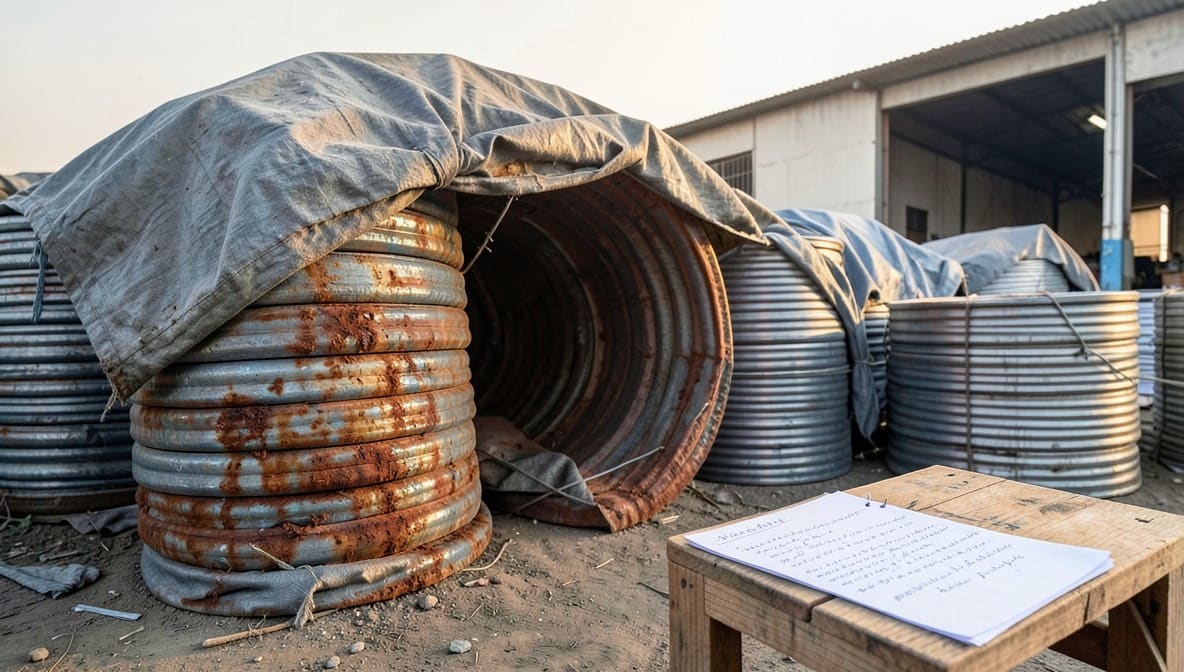
- First two consignments delivered in mid-2022 were found to be rusted and non-conforming to specifications
- Corporate Debtor sent detailed complaints on 12.10.2022 and 14.10.2022, attaching photographs and non-conformity reports
- Operational Creditor acknowledged rusting due to monsoon moisture in email dated 19.10.2022
- Operational Creditor offered compensation: first proposal of USD 100/mt on 08.11.2022, later increased to USD 550/mt on 23.12.2022
- Corporate Debtor rejected the third consignment on grounds of prior defective supply
- Section 8 Demand Notice issued by Operational Creditor on 26.06.2023 for USD 353,534.50
- Corporate Debtor responded with Notice of Dispute on 04.07.2023, citing prior defective supply and compensation offers
- Section 9 application filed on 10.08.2023
- Adjudicating Authority dismissed application on 31.10.2025 on grounds of pre-existing dispute
Procedural History
- 08.09.2021: Purchase Order issued by Corporate Debtor
- Mid-2022: First two consignments delivered and rejected for rust and non-conformity
- 12.10.2022: Corporate Debtor emails complaint about rusted coils
- 14.10.2022: Follow-up email with photos and demand for replacement
- 19.10.2022: Operational Creditor acknowledges moisture-induced rusting
- 08.11.2022: Operational Creditor offers USD 100/mt compensation
- 23.12.2022: Operational Creditor increases compensation offer to USD 550/mt
- 03.10.2022: Corporate Debtor files Bill of Entry for third consignment
- 26.06.2023: Section 8 Demand Notice issued by Operational Creditor
- 04.07.2023: Corporate Debtor issues Notice of Dispute
- 10.08.2023: Section 9 application filed before NCLT Ahmedabad
- 31.10.2025: NCLT Ahmedabad dismisses Section 9 application
- 11.02.2026: Appeal filed before NCLAT
- 20.04.2026: NCLAT dismisses appeal
Relief Sought
The Appellant sought reversal of the NCLT’s order dated 31.10.2025 and initiation of CIRP against the Corporate Debtor for the unpaid operational debt of USD 353,534.50, with interest.
The Legal Issue
The central question was whether a pre-existing dispute regarding defective goods supplied under earlier consignments, supported by contemporaneous communications and compensation offers, can validly bar initiation of CIRP under Section 9 of the IBC when the operational debt claimed relates to a separate, later consignment under the same purchase order.
Arguments Presented
For the Appellant
The Appellant contended that the third consignment was a distinct transaction governed by a separate invoice, and any dispute over prior shipments could not legally extend to the unpaid invoice dated 16.09.2022. Reliance was placed on Transmission Corporation of Andhra Pradesh Ltd. v. Equipment Conductors and Cables Ltd. (2019) 12 SCC 697 and R.A.J. Krishna Construction Co. v. Newera Solutions Pvt. Ltd. (CA(AT)(Ins) No. 83 of 2024), which held that disputes must be directly linked to the specific invoice in the Section 8 notice. It was argued that CFR INCOTERMS transferred risk at the port of shipment, making quality disputes after arrival invalid. The compensation offers were claimed to be commercial compromises, not admissions of liability.
For the Respondent
The Respondent argued that all consignments arose from a single purchase order and were interdependent. The dispute over defective goods was not an afterthought but was communicated well before the Section 8 notice, with documented evidence including photographs, non-conformity reports, and explicit rejection notices. The Appellant’s written offers of compensation constituted clear admissions of defective supply. Reliance was placed on Mobilox Innovations v. Kirusa Software (2018) 1 SCC 353 and Rajratan Babulal Agarwal v. Solartex India Pvt. Ltd. (2023) 1 SCC 115, affirming that the Adjudicating Authority need not adjudicate merits, only assess plausibility of dispute.
The Court's Analysis
The NCLAT emphasized that Section 9(5)(ii)(d) of the IBC mandates rejection of an application if a notice of dispute has been received, unless the dispute is patently feeble, spurious, hypothetical, or illusory. The Tribunal held that the Adjudicating Authority correctly applied the Mobilox standard, which requires only a plausible contention requiring further investigation - not proof of likelihood of success.
"All that the Adjudicating Authority has to satisfy itself is that the dispute truly existed in fact and is not spurious, hypothetical or illusory."
The Tribunal meticulously reviewed the email chain dated 12.10.2022 and 14.10.2022, wherein the Corporate Debtor detailed rusting, attached photographic evidence, and demanded replacement. The Operational Creditor’s responses on 19.10.2022, 08.11.2022, and 23.12.2022 explicitly acknowledged the defect and offered compensation, which the Tribunal treated as admissions under the Sale of Goods Act, 1930. The fact that the dispute predated the Section 8 notice and was not contrived was decisive.
The Appellant’s argument that CFR INCOTERMS negated quality claims was rejected as beyond the summary jurisdiction of the Adjudicating Authority. The Tribunal noted that contractual terms do not override statutory rights under the Sale of Goods Act, particularly where defects are admitted. The single purchase order and continuous commercial relationship rendered the consignments interlinked for the purpose of dispute assessment.
The NCLAT held that the Adjudicating Authority did not err in concluding that the dispute was genuine, non-spurious, and directly relevant to the operational debt claimed. The Tribunal underscored that Section 9 is not a summary recovery mechanism but a gateway to insolvency, and must be barred where credible disputes exist.
The Verdict
The appeal was dismissed. The NCLAT upheld the Adjudicating Authority’s order dated 31.10.2025 rejecting the Section 9 application. The Court confirmed that the existence of a genuine pre-existing dispute, evidenced by contemporaneous communications and compensation offers, validly bars initiation of CIRP under Section 9 of the IBC. No costs were awarded. The Appellant remains free to pursue remedies under civil or contract law.
What This Means For Similar Cases
Pre-Existing Disputes Must Be Evaluated Holistically
- Practitioners must examine all prior communications between parties, not just the invoice in dispute
- A single purchase order linking multiple deliveries can render disputes interdependent under Section 9
- Compensation offers, even if framed as "goodwill," constitute admissions of defect and support a plausible dispute
CFR INCOTERMS Do Not Override Quality Claims Under Sale of Goods Act
- Risk transfer under INCOTERMS does not extinguish buyer’s rights under Section 16 and 17 of the Sale of Goods Act, 1930
- Quality disputes raised post-arrival are valid if defects were latent or became apparent only upon inspection
- Adjudicating Authorities must not conflate commercial risk allocation with statutory rights
Section 9 Applications Are Not Summary Recovery Tools
- Operational creditors cannot bypass civil remedies by filing Section 9 applications where disputes are documented
- The threshold for rejecting an application is low: plausibility, not probability of success
- Courts will not entertain attempts to artificially segregate transactions under a common purchase order to evade dispute defenses