The Bombay High Court has reaffirmed that prior judicial findings on market value in identical acquisition proceedings bind subsequent reference applications from the same village, and that compensation for fruit-bearing trees must be grounded in documented yield and market data - not speculative expert testimony. This judgment provides critical clarity on evidentiary standards in land acquisition disputes.
Background & Facts
The Dispute
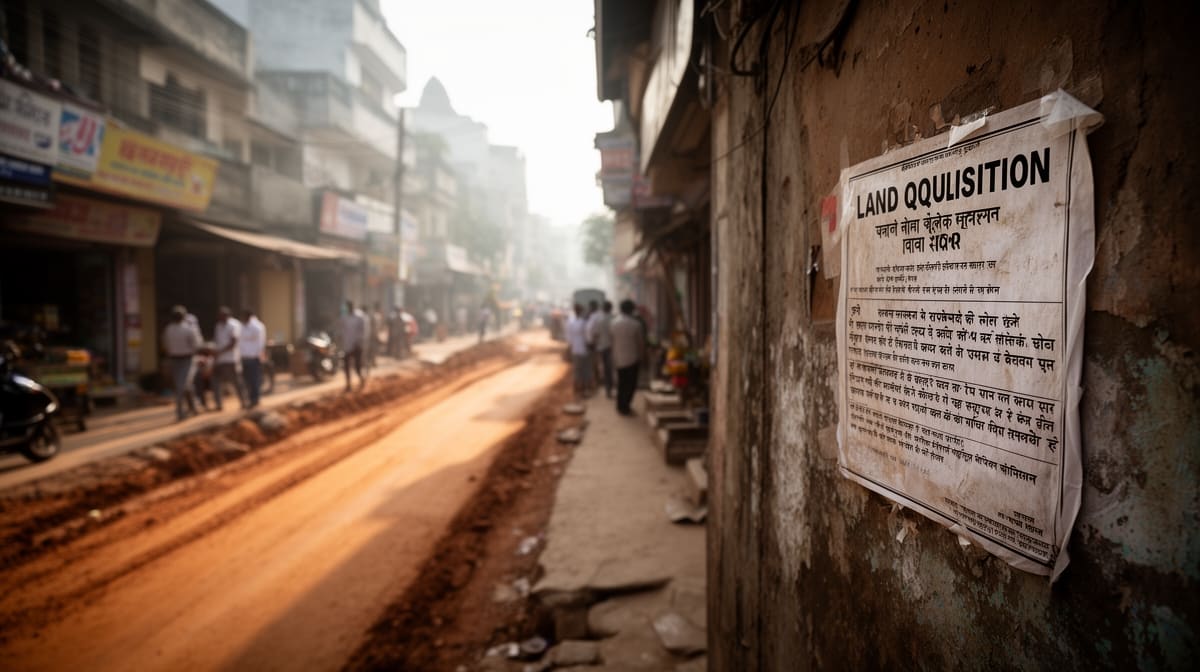
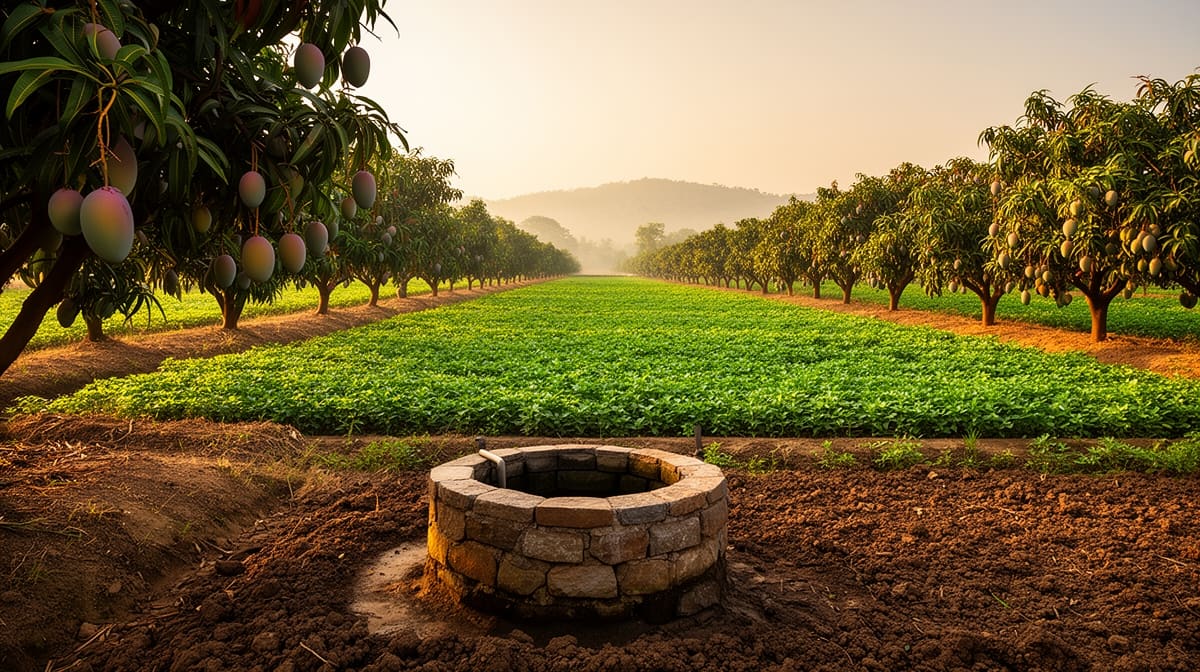
The Appellants, Shrikrushna Kolhe and Smt. Satyabhamabai Kolhe (the latter deleted by order dated 12.07.2022), challenged the compensation awarded by the Reference Court in Land Acquisition Case No.26/2012 for 13 acres of irrigated land in Gat No.215, Mouje Talkhed, Dist. Buldhana. The land was acquired for the construction of the Talkhed Tank. The Special Land Acquisition Officer (SLAO) initially awarded compensation at Rs.52,800 per acre for the land, with no compensation for 76 Hapus Mango trees, 4 Jujubee (Bor) trees, a pipeline, or damage to remaining land. The Appellants filed a claim petition seeking enhanced compensation totaling Rs.1,13,47,905, after deducting the SLAO’s award of Rs.9,52,095.
Key Facts
- Notification under Section 4 of the Land Acquisition Act, 1894, was published on 11.08.2005.
- SLAO’s Award was passed on 24.04.2006.
- The Appellants relied on a sale deed dated 15.01.2005 (Exh.57) for Rs.2,00,000 per acre, executed prior to the Section 4 notification, to establish market value.
- The Appellants claimed Rs.70,00,000 for 76 Hapus Mango trees, Rs.6,00,000 for 4 Jujubee trees, Rs.70,00,000 for damage to remaining land, and Rs.1,00,000 for a buried pipeline.
- The Appellants examined an expert witness, Abhay Prakash Wagh (Exh.78), an M.Sc. in Horticulture, who testified about average yields and wholesale rates but did not prepare a formal valuation report.
- The SLAO admitted in cross-examination that a pipeline existed on the land but had not been valued due to lack of documentation.
- The Appellants did not produce receipts, APMC price lists, or documented yield records for the trees.
- The Reference Court relied on a prior judgment dated 29.07.2011 in LAR No.23/2008, which had rejected the same sale deed (Exh.57) as inflated and artificially timed in anticipation of acquisition.
Procedural History
- 11.08.2005: Section 4 notification published.
- 24.04.2006: SLAO’s Award issued.
- 2012: Claim petition filed before Reference Court (LAC No.26/2012).
- 30.08.2014: Reference Court awarded:
- Rs.2,50,000 per hectare for land (equivalent to Rs.1,00,000 per acre)
- Rs.7,66,000 for 76 Hapus Mango trees
- Rs.19,600 for 4 Jujubee trees
- No compensation for pipeline or damage to remaining land
- 18.02.2026: Appeal heard and reserved.
- 08.05.2026: Judgment pronounced.
The Parties' Positions
For the Appellants
- Argued that the sale deed dated 15.01.2005 was genuine and the best evidence of market value.
- Contended that the Reference Court erred in relying on the 2011 judgment, which was not binding in this case.
- Asserted that the expert’s testimony on tree yields and market rates was sufficient and unchallenged.
- Claimed that the SLAO’s admission of the pipeline’s existence constituted conclusive proof.
- Sought Rs.1,44,40,000 to Rs.3,00,80,000 for mango trees, Rs.6,00,000 for Bor trees, Rs.1,00,000 for pipeline, and Rs.70,00,000 for damage to remaining land.
For the Respondent (State)
- Maintained that the Reference Court correctly applied the principles from Chimanlal Hargovinddas v. Special Land Acquisition Officer.
- Argued that the sale deed was previously held to be inflated and in anticipation of acquisition.
- Contended that the expert’s testimony lacked formal valuation, documentation, and cross-examination.
- Stated that no evidence was adduced to prove damage to remaining land.
- Supported the Reference Court’s conservative valuation of trees and pipeline.
Relief Sought
The Appellants sought:
- Enhanced compensation for land at Rs.2,20,000 per acre (Rs.5,43,620 per hectare).
- Rs.13,68,000 for 76 Hapus Mango trees (as revised by High Court).
- Rs.6,00,000 for 4 Jujubee trees.
- Rs.1,00,000 for the pipeline.
- Rs.70,00,000 for damage to remaining land.
- Interest and solatium as per Section 23(1A) and 23(2) of the LA Act.
The Legal Issue
The central questions were: (1) Whether a prior judicial finding rejecting a sale deed as inflated and timed in anticipation of acquisition binds a subsequent reference application arising from the same acquisition award and village? (2) Whether compensation for fruit-bearing trees may be awarded based on expert testimony alone, absent documented yield records or market price data? (3) Whether the State’s admission of a pipeline’s existence suffices to award compensation without documentary proof of cost?
Arguments Presented
For the Appellant
The Appellant relied on Special Deputy Collector v. Kurra Sambasiva Rao, Om Parkash v. State of Haryana, and Mani Ram Sharma v. Union of India to argue that sale deeds executed prior to notification, especially where the claimant is a party, constitute the best evidence of market value. He contended that the Reference Court erred in mechanically applying the 2011 judgment, which was not appealed and thus not binding. He further argued that the unchallenged expert testimony on mango tree yields and wholesale rates should have been accepted, citing Pandhari v. State of Maharashtra and Shriram Namdeo v. State of Maharashtra. He asserted that the SLAO’s admission of the pipeline’s existence was sufficient proof under Bhimasha v. SLAO.
For the Respondent
The State relied on Chimanlal Hargovinddas v. Special Land Acquisition Officer to argue that the Reference Court must determine market value afresh but may consider prior judicial findings from the same acquisition context. It contended that the sale deed was previously invalidated as rigged and that the expert’s testimony was speculative, lacking formal valuation reports, APMC data, or income receipts. It maintained that the SLAO’s admission of the pipeline’s existence did not equate to proof of its cost, and that damage to remaining land required quantified evidence, not general admissions.
The Court's Analysis
The Court began by affirming the foundational principle from Chimanlal Hargovinddas: a reference court must determine market value afresh, but it is not barred from considering prior judicial findings from the same acquisition context. The Court observed that the prior judgment dated 29.07.2011 in LAR No.23/2008, delivered by a coordinate bench on the same land, same village, and same acquisition award, had conclusively held that the sale deed dated 15.01.2005 was executed in anticipation of acquisition and was therefore not a genuine market transaction. The Court held that this finding, having been rendered by a court of competent jurisdiction and not set aside, operates as res judicata in the present matter.
"The said findings in respect of the sale-deed below Exh.57 relied upon by the Appellant in the present matter, is made by the Court of competent jurisdiction and will operate until it is set aside. Undisputedly, the said decision in LAR No.23/2008 is not subject to challenge in the present Appeal."
Regarding the mango trees, the Court noted that while the expert’s testimony was not cross-examined, the burden of proof remained on the claimant. The Court emphasized that expert opinion without a formal valuation report, yield records, or APMC price lists cannot substitute for concrete evidence. The Court accepted the Reference Court’s methodology: 200 fruits per tree (40 kg), wholesale rate of Rs.20/kg, and a 30-year life span as per the Government Circular. After applying a 25% deduction for depreciation and natural calamities, the Court upheld Rs.13,68,000 as fair compensation.
"The expert witness was not shown to be possessed with licence from the Government in respect of valuation of Mango trees... the Appellant admitted in cross-examination that he did not file on record the receipt in respect of the income received from the acquired land."
For the Jujubee trees, the Court similarly accepted the Reference Court’s valuation methodology but reduced the depreciation deduction from 30% to 25%, increasing compensation from Rs.19,600 to Rs.30,000.
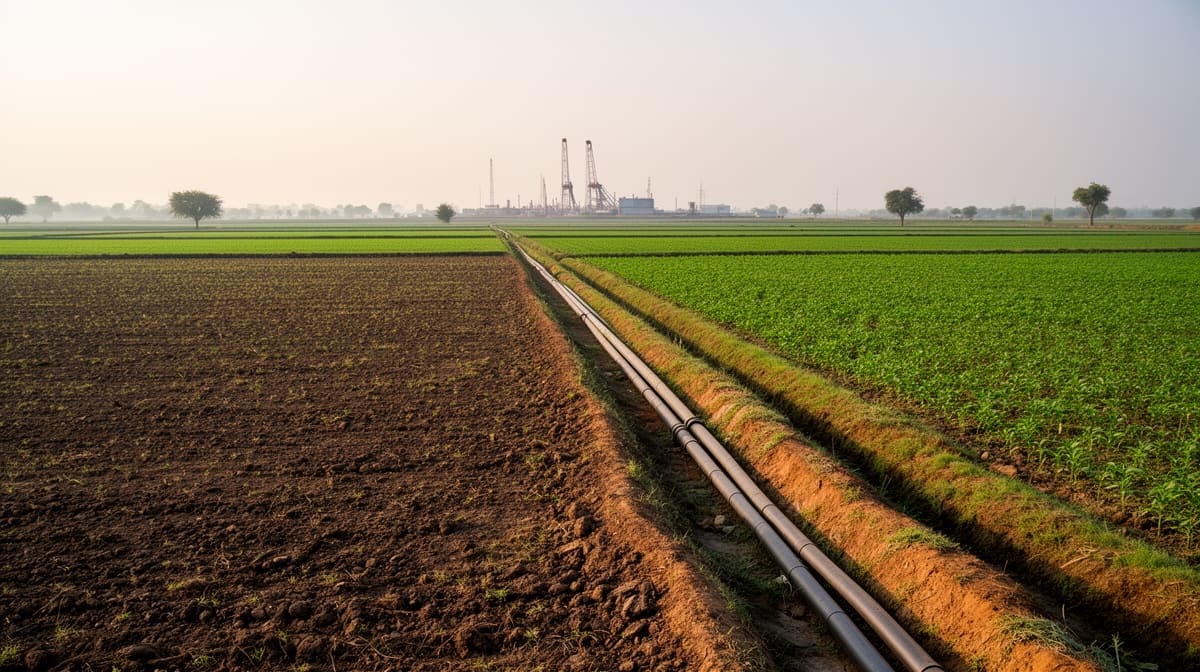
On the pipeline, the Court held that while the SLAO’s admission established existence, compensation required proof of cost. In the absence of bills or invoices, Rs.10,000 was deemed a reasonable estimate.
Regarding damage to remaining land, the Court held that general admissions by the SLAO about water percolation and slipperiness were insufficient to prove quantifiable loss. No expert report, survey, or cost estimate was produced.
The Verdict
The Appellants succeeded in part. The High Court set aside the compensation amounts for mango trees, jujubee trees, and pipeline, and modified them as follows: (1) Rs.13,68,000 for 76 Hapus Mango trees; (2) Rs.30,000 for 4 Jujubee trees; (3) Rs.10,000 for the pipeline. The compensation for land and solatium under Sections 23(1A) and 23(2) remained unchanged. The total enhanced compensation, after deducting amounts already paid, shall be deposited by the State in the Reference Court within four months. Upon deposit, the Appellants may withdraw the amount following due procedure.
What This Means For Similar Cases
Prior Judicial Findings Bind Subsequent Reference Applications
- Practitioners must check whether a prior reference judgment from the same acquisition project has already ruled on the validity of a sale deed or market rate.
- A prior finding rejecting a sale instance as inflated or pre-meditated cannot be re-litigated in a subsequent reference unless set aside by higher authority.
- The doctrine of res judicata applies even between coordinate benches in the same court when the subject matter and parties are substantially identical.
Expert Testimony Requires Documentary Corroboration
- Expert opinions on tree yields or market rates are insufficient without:
- Formal valuation reports
- APMC price lists or certified wholesale rates
- Historical income receipts or tax records
- Documentation of tree age and productivity
- Courts will not award compensation based on speculative testimony, even if unchallenged.
Admission of Fact ≠ Proof of Value
- The State’s admission of the existence of a pipeline, structure, or tree does not equate to proof of its monetary value.
- Claimants must produce invoices, receipts, or engineering estimates to substantiate cost claims.
- Mere oral admission by an official cannot substitute for documentary evidence in compensation claims.
Damage to Remaining Land Requires Quantified Evidence
- General statements about waterlogging, erosion, or reduced productivity are inadequate.
- Claimants must commission and submit:
- Survey reports
- Soil analysis
- Expert assessment of loss in agricultural yield
- Cost estimates for remediation
- Without such evidence, claims for damage to remaining land will be dismissed.