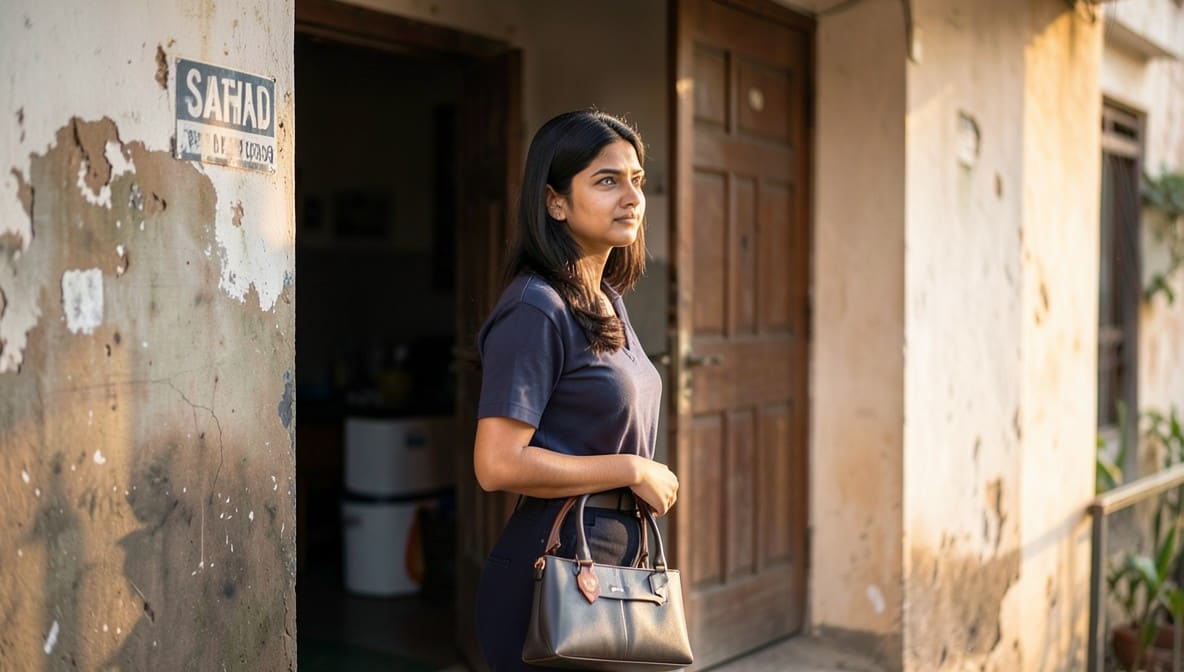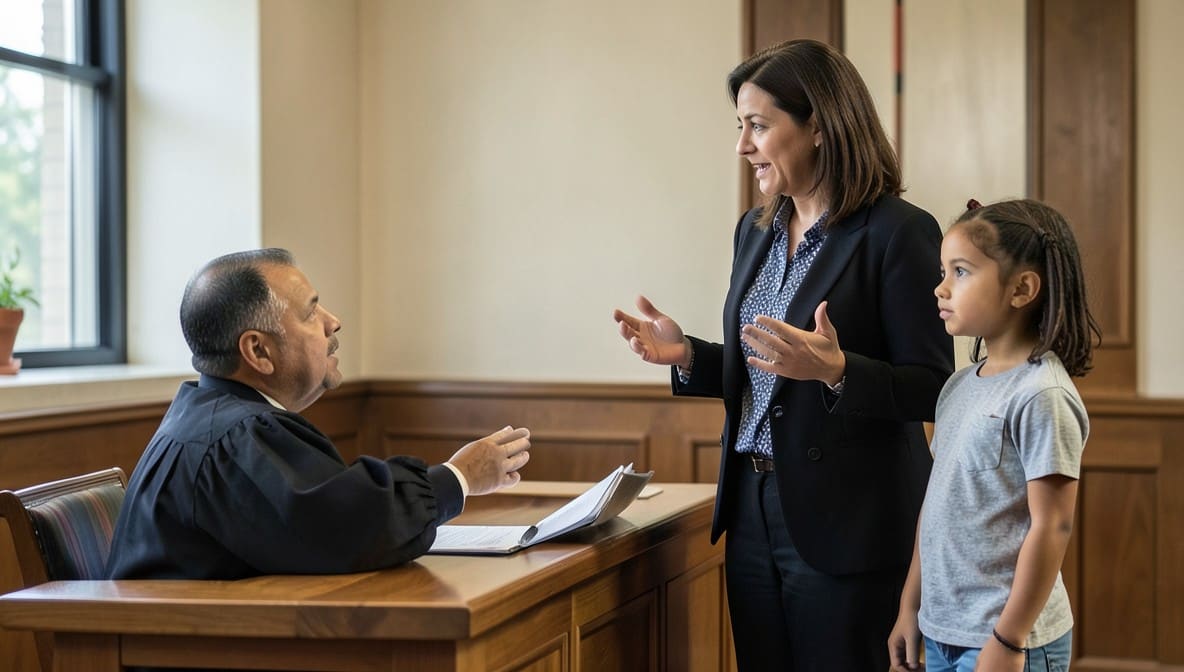
The Allahabad High Court dismissed a habeas corpus petition after interacting with the corpus, who stated she was not under illegal detention and wished to live independently with her children. The Court, noting the petitioner’s consent, permitted the minor children to remain with their mother, underscoring the principle that a major’s voluntary residence cannot be challenged through habeas corpus.
Background & Facts
The Dispute
The petitioners, Rama Patel @ Pooja Patel, Akash Kumar Patel, and their two minor children, Ayush Patel and Km. Tanya, were involved in a matrimonial dispute. The petitioner, Akash Kumar Patel, filed a habeas corpus writ petition alleging illegal detention of his wife, Rama Patel @ Pooja Patel, and their minor children by the respondents, including the State of U.P. and unnamed third parties.
Key Facts
- 11.05.2026: The Court directed the State to produce the corpus, Rama Patel @ Pooja Patel, Ayush Patel, and Km. Tanya, before the Court.
- 03.07.2026: The corpus were produced by Sub-Inspectors Amit Kumar Pal and Chhaya Yadav of Police Station Ghoorpur, District Prayagraj.
- The Court interacted with Rama Patel @ Pooja Patel, who admitted she is the legally wedded wife of Akash Kumar Patel.
- She stated she is not willing to reside with the petitioner in the matrimonial home due to his physical disability and inability to maintain the family.
- She expressed her intent to earn her livelihood independently and wished to keep both children with her.
- She categorically denied being under illegal detention or confinement.
- The petitioner, Akash Kumar Patel, submitted that if the corpus and children do not wish to reside with him, he has no objection to their living separately.
Procedural History
- Habeas Corpus Writ Petition No. 562 of 2026 was filed before the Allahabad High Court.
- 11.05.2026: The Court directed the production of the corpus.
- 03.07.2026: The corpus were produced, and the Court interacted with the parties.
Relief Sought
The petitioner sought the release of Rama Patel @ Pooja Patel and the minor children from alleged illegal detention and their restoration to his custody.
The Legal Issue
The central question was whether a habeas corpus petition is maintainable when the corpus, a major, is residing voluntarily and not under illegal detention, and whether the Court can intervene in the custody of minor children in such circumstances.
Arguments Presented
For the Petitioner
The petitioner contended that his wife and children were illegally detained by the respondents. He sought their production before the Court and restoration to his custody, relying on the right to personal liberty under Article 21 of the Constitution of India.
For the Respondent
The State, through its counsel, submitted that the corpus was produced before the Court and had voluntarily expressed her desire to live independently with the children. The State argued that habeas corpus is not maintainable where the corpus is not under illegal detention.
The Court's Analysis
The Court examined the scope of habeas corpus in matrimonial disputes, particularly where the corpus is a major and capable of making independent decisions. The Court relied on the principle that habeas corpus is a remedy for illegal detention and cannot be used to challenge the voluntary residence of a major.
"This Court interacted with the corpus, Rama Patel @ Pooja Patel, who admitted that she is the legally wedded wife of the petitioner, Akash Kumar Patel. She, however, stated that she is not willing to reside with the petitioner in the matrimonial home as he is physically disabled and, according to her, is unable to maintain the family. She further stated that she intends to earn her livelihood independently and wishes to keep both her children with her. She also categorically stated that she is not under the illegal detention or confinement of any person."
The Court noted that the petitioner had no objection to the corpus and children residing separately. It emphasized that custody of minor children is a matter of best interest, and in this case, the children’s welfare was best served by remaining with their mother, given her voluntary decision and the petitioner’s consent.
The Verdict
The Court dismissed the habeas corpus petition. It held that Rama Patel @ Pooja Patel is not under illegal detention and is at liberty to reside at a place of her choice. The Court permitted the minor children, Ayush Patel and Km. Tanya, to remain in the custody of their mother. The police personnel were directed to escort the corpus and the minor children to the place of their choice.
What This Means For Similar Cases
Habeas Corpus Cannot Challenge Voluntary Residence
- Habeas corpus is a remedy for illegal detention and cannot be invoked where the corpus, a major, is residing voluntarily.
- Practitioners must ensure that the corpus is actually under illegal confinement before filing a habeas corpus petition in matrimonial disputes.
Custody of Minors in Matrimonial Disputes
- Courts prioritize the best interest of the child in custody matters. Where the mother is capable and willing, and the father consents, the Court is likely to permit the children to remain with the mother.
- The consent of the father in such cases can be a decisive factor, as seen in this judgment.
Role of Police in Escorting Corpus
- The Court directed the police to escort the corpus and minor children to their chosen residence. This underscores the duty of law enforcement to ensure the safety and free movement of individuals, especially in sensitive family matters.