The Bombay High Court has affirmed that state funding for private educational institutions is a discretionary policy matter, not a legal entitlement, and cannot be claimed retrospectively even where schools have operated for years without financial support. This ruling clarifies the limits of judicial intervention in fiscal policy decisions affecting school grants.
Background & Facts
The Dispute
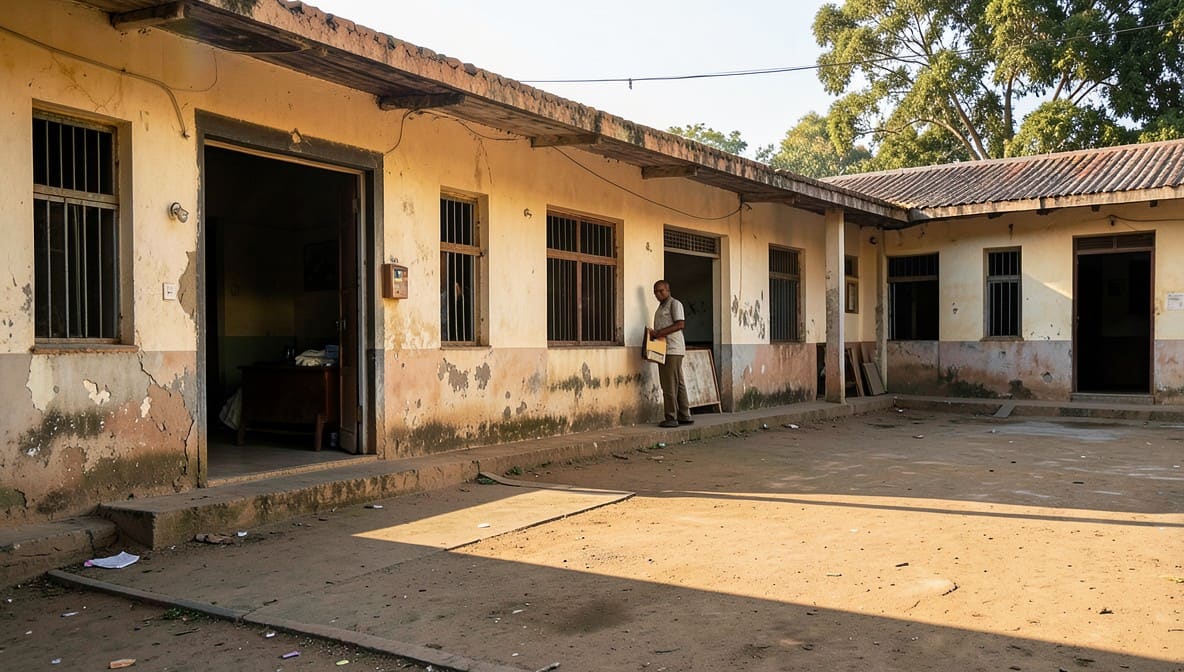
The petitioners, three private educational institutions in Osmanabad and Dhule districts of Maharashtra, sought judicial directions to compel the State Government to grant financial aid with retrospective effect. They had been operating schools since the 1990s but were granted permission to function on a "permanent non grant basis" - meaning they could operate without state funding. The petitioners contended that, having met eligibility criteria under state policy, they were entitled to grants dating back to when they first qualified under the State’s own guidelines.
Key Facts
- Petitioner No.1 (Nageshwar Shikshan Sanstha) has been running Petitioner No.2 (Padmashri Shankar Bapu Madhyamik Vidyalaya) since 1990.
- The petitioners submitted multiple grant proposals between 1996 and 2000.
- A writ petition filed in 1996 (No.1290/1996) led to a Court direction on 22.06.1998 for the State to decide proposals within three months.
- Despite this, the State rejected the proposal via letter dated 16.11.1998.
- A fresh proposal was submitted on 05.03.1997 and again on 09.05.2000, both rejected.
- A second writ petition (No.2718/2001) was filed and disposed of on 29.10.2001, with the State undertaking to decide the proposal by 31.12.2001.
- Permission to operate was finally granted on 29.06.2002, but on a "permanent non grant basis".
- The petitioners challenged this classification, seeking conversion to "non grant basis" (without the word "permanent") and release of grants.
- On 20.07.2009, the State issued a Government Resolution (GR) revising policy to remove the word "permanent" and establish a framework for grant eligibility.
- A subsequent GR dated 01.03.2014 reiterated that grants would be granted only prospectively and subject to fund availability.
- The petitioners claimed entitlement to grants from 2007 (five years after school commencement), and sought arrears from 2007 to 2016, when they finally began receiving grants.
Procedural History
- 1996: First writ petition filed (No.1290/1996)
- 22.06.1998: High Court directed State to decide grant proposals within three months
- 16.11.1998: Proposal rejected by State
- 05.03.1997 & 09.05.2000: Additional grant proposals submitted
- 29.10.2001: Second writ petition (No.2718/2001) disposed of with undertaking to decide by 31.12.2001
- 29.06.2002: Permission granted on "permanent non grant basis"
- 20.07.2009: State issues GR revising policy to remove "permanent" and introduce eligibility criteria
- 01.03.2014: State issues GR reiterating prospective-only grant policy
- 2004: Writ Petition No.3839/2004 filed
- 2003: Writ Petition No.427/2003 filed (related institution)
- 2005: Writ Petition No.6408/2005 filed (Dhule-based institution)
- 27.04.2026: Judgment reserved
- 06.05.2026: Judgment pronounced
Relief Sought
The petitioners sought:
- Quashing of the "permanent non grant basis" permission granted on 29.06.2002
- Conversion of permission to "non grant basis"
- Grant-in-aid with retrospective effect from 2007 to 2016
- Payment of arrears for the period 2007 - 2016
- Interest on delayed grants
The Parties' Positions
Petitioners: Argued that they had diligently pursued grants since 1996, met eligibility criteria under the 2009 GR, and were entitled to grants from the date they qualified (five years after establishment). They contended that the State’s retrospective denial was arbitrary and violated principles of legitimate expectation.
Respondents (State): Maintained that grant-in-aid is a fiscal policy decision, not a legal right. The 2009 and 2014 GRs clearly stated grants are discretionary, subject to fund availability, and not payable retrospectively. No constitutional or statutory violation was alleged.
The Legal Issue
Can educational institutions claim grant-in-aid with retrospective effect based on prior operational history and eligibility under revised state policy, when the State has explicitly adopted a prospective-only grant policy?
Arguments Presented
For the Petitioner
The petitioners relied on their continuous pursuit of grants since 1996, their compliance with infrastructure and academic norms, and the State’s own 2009 policy which recognized their eligibility. They argued that the State’s policy change in 2009 effectively validated their entitlement from the date they qualified under the new criteria - five years after establishment (i.e., 2007). They contended that the denial of retrospective grants was arbitrary and violated the principle of legitimate expectation, especially since they had operated for years without state support in reliance on the State’s silence and eventual policy shift.
For the Respondent/State
The State contended that grant-in-aid is a fiscal policy decision governed by budgetary constraints and administrative discretion. The 2009 and 2014 Government Resolutions explicitly barred retrospective grants to ensure fiscal discipline and equitable distribution among institutions. The State emphasized that no statute or constitutional provision creates a right to grant-in-aid, and courts cannot substitute their judgment for policy decisions absent arbitrariness or discrimination.
The Court's Analysis
The Court undertook a structured review of the State’s policy evolution and the nature of grant-in-aid under constitutional and administrative law. It noted that the State had, over time, refined its approach to school funding - from initial non-grant permissions to the 2009 policy introducing eligibility criteria, and finally to the 2014 clarification that grants would be granted only prospectively.
"Grant-in-aid, by its very nature, involves financial implications on the State exchequer and is governed by budgetary allocations and policy priorities."
The Court emphasized that the State’s policy was neither arbitrary nor discriminatory. It applied the well-established principle that judicial review under Article 226 does not extend to second-guessing fiscal policy unless it violates fundamental rights or statutory mandates. The petitioners failed to demonstrate any violation of equality, non-discrimination, or procedural fairness.
The Court further relied on its own precedent in Keraleeya Samajam and others v. State of Maharashtra and others (2004(2) Mh.L.J. 171), which held that grant-in-aid is neither a fundamental right nor a statutory right. The Court observed that the petitioners had no vested or accrued right to receive grants prior to the State’s decision to allocate funds prospectively.
The Court rejected the argument of legitimate expectation, noting that while the State had acknowledged eligibility under the 2009 GR, it had simultaneously and clearly limited the benefit to future disbursements. The absence of a statutory or contractual obligation to pay grants retrospectively rendered the petitioners’ claim legally unsustainable.
The Verdict
The writ petitions were dismissed. The Court held that the State’s policy of granting aid prospectively only, as embodied in Government Resolutions dated 20.07.2009 and 01.03.2014, is lawful, non-arbitrary, and within its administrative discretion. The petitioners are not entitled to retrospective grants for the period 2007 - 2016. The Rule is discharged.
What This Means For Similar Cases
Grant-in-Aid Is Not an Accrued Right
- Educational institutions cannot claim grants retroactively even if they operated for years and met eligibility criteria under revised policies
- Entitlement arises only from the date funds are formally allocated, not from the date of institutional establishment or policy change
- Practitioners must advise clients that reliance on state silence or delayed policy implementation does not create a legal claim for arrears
Judicial Deference to Fiscal Policy Is Firmly Established
- Courts will not interfere with state funding decisions absent proof of arbitrariness, mala fide, or constitutional violation
- Budgetary constraints and fiscal prudence are valid grounds for prospective-only grant policies
- Petitions seeking retrospective funding must now demonstrate a clear statutory or contractual entitlement, not mere eligibility
Policy Clarity Is Critical for Institutions
- Institutions must document all grant applications and responses to establish timelines
- Any future claims must be framed around prospective entitlement under current policy, not past expectations
- Legal strategies should focus on securing current funding and ensuring compliance with eligibility criteria, not recovering past arrears