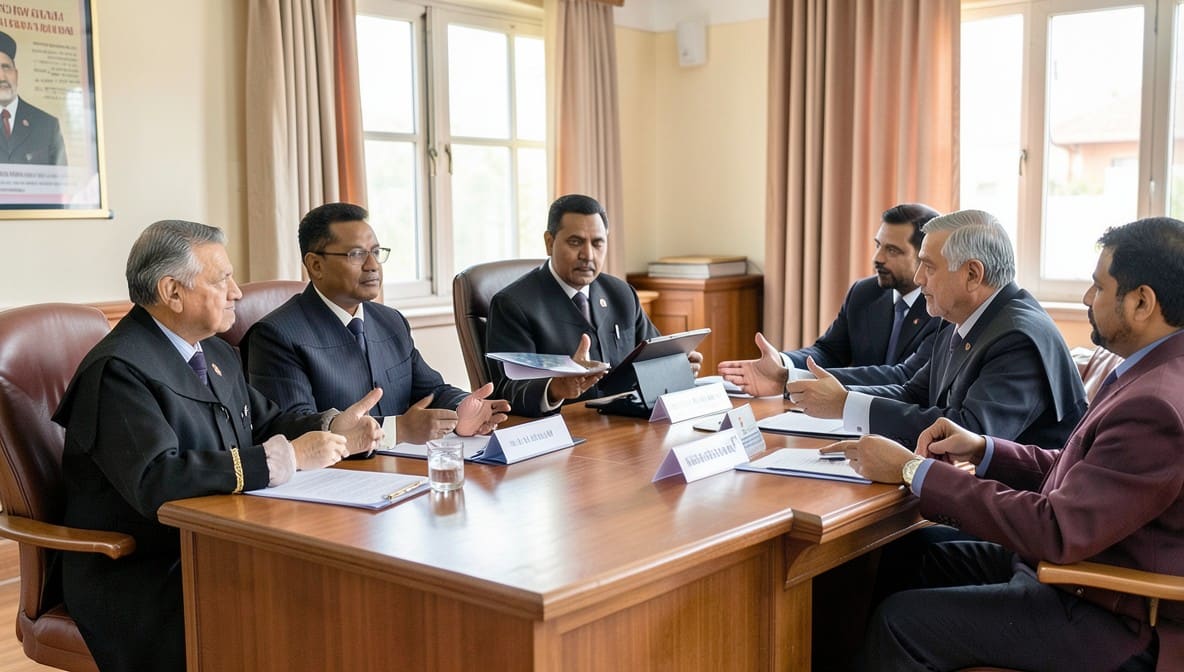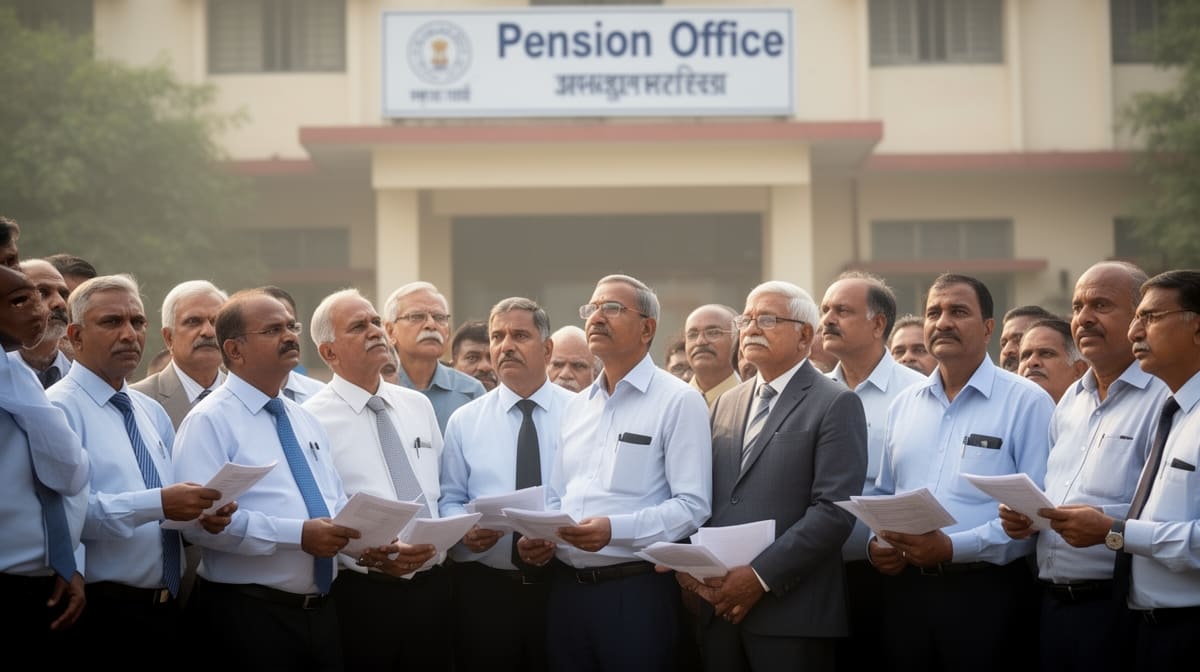
The Bombay High Court has definitively affirmed that employees appointed before 1.11.2005 in schools receiving 100% government grant-in-aid are entitled to the old pension scheme, irrespective of whether their initial appointment was in an unaided or partially aided division. This ruling resolves long-standing ambiguity for thousands of government-aided school employees across Maharashtra and reinforces the principle that pension rights crystallize at the time of appointment, not at the time of regularization.
Background & Facts
The Dispute
The petitioners, comprising retired and serving assistant teachers, junior college lecturers, physical instructors, and non-teaching staff, were initially appointed on unaided, partially aided, or clock-hour bases in schools that later became 100% grant-in-aid institutions. They seek recognition under the Maharashtra Civil Services (Pension) Rules, 1982, and the General Provident Fund scheme, rather than the Defined Contribution Pension Scheme (DCPS) introduced from 1.11.2005.
Procedural History
- Prior to 1.11.2005: All petitioners were appointed to teaching or non-teaching posts in schools that were either unaided or partially aided.
- Between 2005 and 2011: The respective schools received 100% government grant-in-aid, regularizing the petitioners' service under aided posts.
- Post-2005: The State implemented DCPS for new appointments and those who did not opt out, but petitioners were never given a choice to opt into DCPS.
- 2022 - 2023: Multiple writ petitions were filed across districts, challenging the denial of old pension benefits.
- 2024 - 2025: The Bombay High Court consistently ruled in favor of petitioners in similar cases, including Nilesh Namdev Gurav v. State of Maharashtra and Prashant Dnyaneshwar Chimne v. State of Maharashtra.
Relief Sought
The petitioners seek a declaration that they are governed by the old pension scheme, refund of any DCPS deductions made from their salaries, allotment of GPF accounts, and immediate submission of pension proposals for retired employees.
The Legal Issue
The central question was whether an employee appointed prior to 1.11.2005 in a school that later became 100% grant-in-aid is entitled to the old pension scheme, even if their initial appointment was in an unaided or partially aided division.
Arguments Presented
For the Petitioner
The petitioners relied on the binding precedent in Nilesh Namdev Gurav v. State of Maharashtra (2022) and a series of subsequent judgments from the Bombay High Court, which held that the determining factor is the status of the school on the cut-off date (1.11.2005), not the nature of the post at the time of initial appointment. They argued that once the school became 100% aided, the entire service became pensionable under the old scheme, and the State cannot retroactively impose DCPS on employees who had no opportunity to opt out. They cited S.K. Dua v. State of Haryana to assert that retiral benefits are not a bounty but a statutory right.
For the Respondent
The State, through the AGP, contended that eligibility for the old pension scheme requires the employee to have been appointed directly to a grant-in-aid post before 1.11.2005. It argued that petitioners were initially on unaided posts and thus fell outside the scheme’s ambit. The State further claimed that the petitioners failed to make a prior representation, that delay and laches barred their claims, and that the High Court’s earlier judgments were under challenge in the Supreme Court. It invoked Deshmukh Dilipkumar Bhagwan v. State of Maharashtra (2019) to argue that eligibility must be tested against the precise conditions of the pension scheme, including salary payment from the State’s consolidated fund.
The Court's Analysis
The Court reaffirmed that the legal position is no longer res integra and is settled by its own consistent jurisprudence. It rejected the State’s argument that the nature of the initial appointment disqualifies an employee from the old pension scheme. The Court emphasized that the key criterion is the status of the employing institution on the cut-off date - 1.11.2005. Once the school became 100% grant-in-aid, the service became pensionable under the old scheme, regardless of prior classification.
"The fact that the petitioners were initially appointed on unaided or partially aided posts does not deprive them of the benefit of the old pension scheme, as the school was receiving 100% grant-in-aid on the cut-off date."
The Court dismissed the State’s procedural objections regarding lack of representation and delay, holding that the State’s duty to provide retiral benefits is non-discretionary and arises automatically upon superannuation. It cited S.K. Dua to underscore that pension is not a privilege but a statutory right. The Court also noted that the Supreme Court had not granted any interim stay on its prior judgments, making them binding. The State’s reliance on Deshmukh Dilipkumar Bhagwan was distinguished, as that case involved employees appointed after the cut-off date, unlike the petitioners here.
The Court further held that the State’s failure to provide GPF accounts and its unlawful deduction of DCPS contributions constituted a violation of the petitioners’ rights. The obligation to regularize these accounts and refund deductions was not contingent on any application by the employee.
The Verdict
The petitioners won. The Court held that employees appointed prior to 1.11.2005 in schools that became 100% grant-in-aid are entitled to the old pension scheme, irrespective of their initial appointment status. The State was directed to refund all DCPS deductions, allot GPF accounts, and submit pension proposals for retired employees within stipulated timelines.
What This Means For Similar Cases
Old Pension Entitlement Is Based on School Status, Not Initial Post Type
- Practitioners must now argue that the cut-off date status of the institution determines pension eligibility, not the nature of the post at the time of initial appointment.
- Even if an employee was hired on a contract, clock-hour, or unaided basis before 2005, if the school became 100% aided by 1.11.2005, the old pension scheme applies.
- This applies to both teaching and non-teaching staff, including peons and supervisors.
State Cannot Impose DCPS Without Explicit Opt-In
- The DCPS cannot be imposed retroactively on employees who were not given a clear, documented opportunity to opt into it.
- Any deduction made under DCPS after the cut-off date must be refunded, and GPF accounts must be regularized without requiring a separate application.
- The burden of proof lies on the State to demonstrate that an employee was informed of and voluntarily opted for DCPS.
Retiral Benefits Are Statutory Rights, Not Discretionary Grants
- Authorities cannot withhold pension or GPF benefits on grounds of non-application or delay.
- The duty to provide retiral benefits is automatic upon superannuation, as per S.K. Dua.
- Petitioners need not file representations before approaching the High Court in such matters.
- Courts will impose costs on the State for frivolous litigation on this settled issue, as done here with Rs. 10,000.