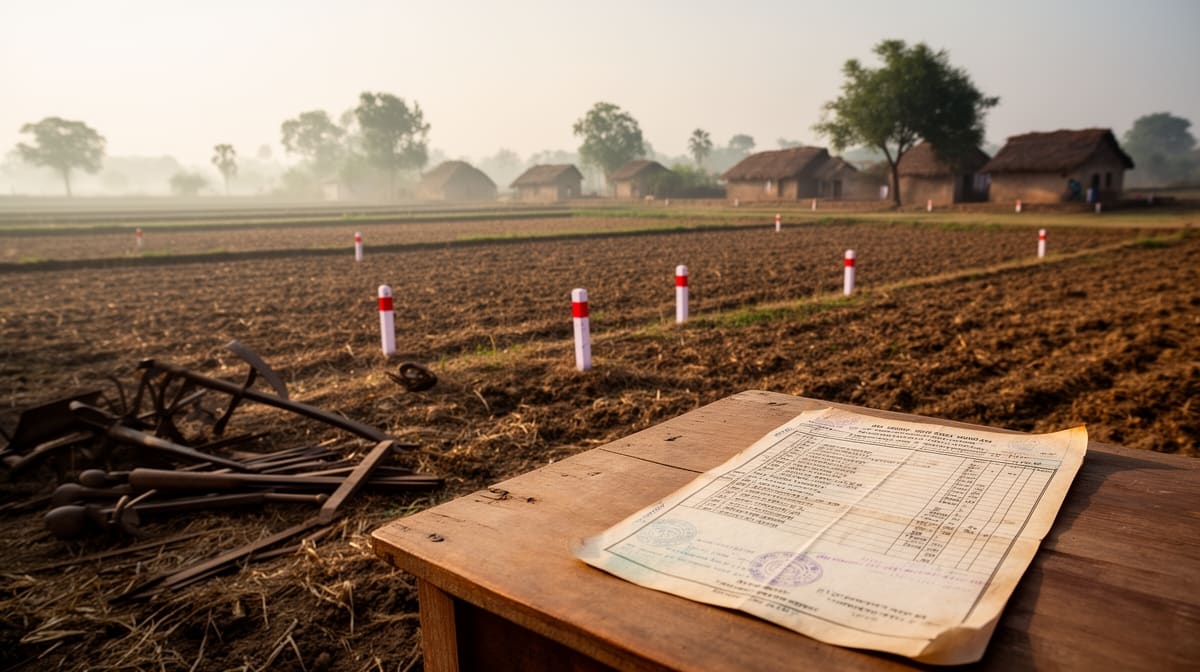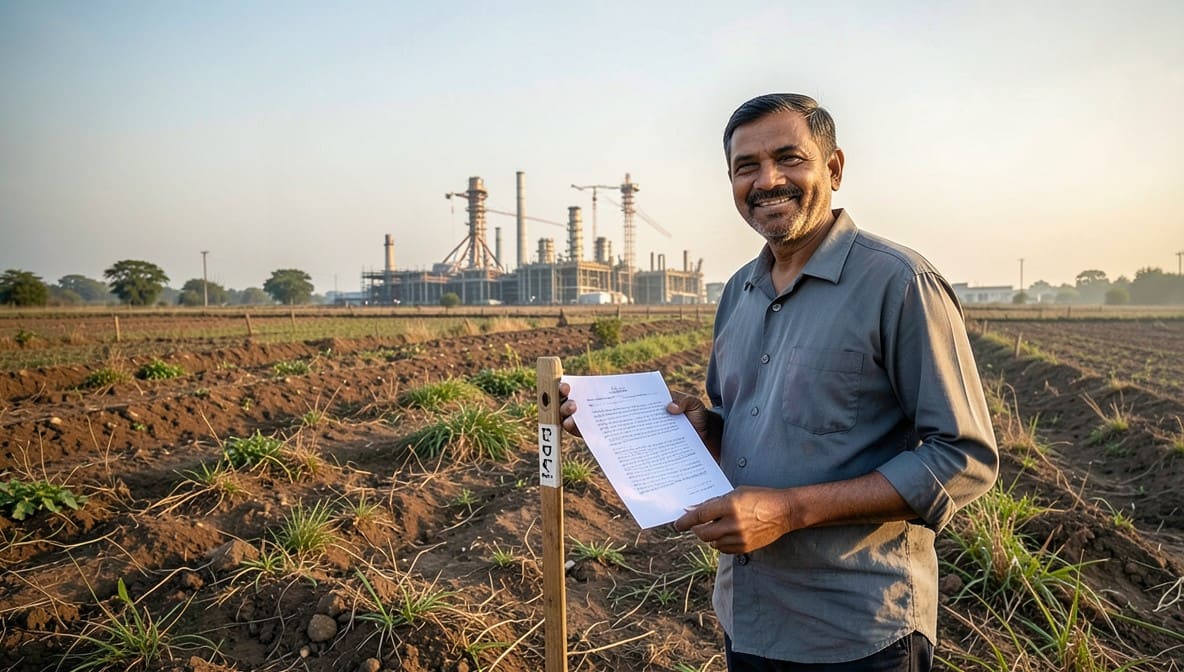
The Karnataka High Court has affirmed that when landowners voluntarily consent to compensation terms, the state cannot impose a general award under the KIAD Act. This ruling reinforces the principle that procedural rigidity must yield to substantive fairness in land acquisition, particularly where parties are willing to negotiate.
Background & Facts
The Dispute
The petitioners, four family members residing at Cheeluru Village, Maralavadi Hobli, Harohalli Taluk, Ramanagara District, owned agricultural land that was acquired by the Karnataka Industrial Area Development Board (KIADB) for industrial development. The acquisition was initiated under the Karnataka Industrial Areas Development Act, 1966 (KIAD Act). The petitioners expressed willingness to enter into a consent award under Section 29(2) of the KIAD Act, which permits voluntary settlement between the landowner and the acquiring authority. Despite this, the Third Respondent, the Special Land Acquisition Officer, KIADB, issued a General Award bearing No. KIADB:LAQ:2013-14 dated 30.12.2013 (Annexure-A), without any prior consultation or attempt at negotiation.
Key Facts
- The petitioners’ land was identified for acquisition in the early 2010s as part of a notified industrial area.
- The petitioners, through their counsel, communicated their willingness to accept a consent award on multiple occasions prior to the issuance of the General Award.
- No formal notice under Section 29(2) was issued to invite consent, nor was any attempt made to record the petitioners’ willingness.
- The General Award dated 30.12.2013 was passed ex parte, without any hearing or opportunity for the petitioners to present their claim.
- The petitioners were not provided a copy of the General Award until years after its issuance, depriving them of any timely remedy.
- The petitioners filed this writ petition on 2026, challenging the legality and fairness of the General Award.
Procedural History
- Early 2010s: Land identified for acquisition under KIADB’s industrial development plan.
- Before 30.12.2013: Petitioners expressed willingness to enter into consent award under Section 29(2) of KIAD Act.
- 30.12.2013: Third Respondent issued General Award No. KIADB:LAQ:2013-14 without consultation.
- 2025: Petitioners obtained a copy of the General Award and initiated legal proceedings.
- 01.01.2026: Writ Petition No. 8608 of 2026 filed before the Karnataka High Court under Articles 226 and 227.
- 23.03.2026: Hearing before Justice S. Sunil Dutt Yadav.
The Parties' Positions
Petitioners: Argued that their clear willingness to enter into a consent award under Section 29(2) rendered the issuance of a General Award illegal, arbitrary, and violative of natural justice. They contended that the state had a duty to facilitate voluntary settlement before resorting to unilateral determination of compensation.
Respondents: The State and KIADB did not dispute the petitioners’ willingness to consent. The Additional Government Advocate accepted notice, and counsel for KIADB conceded that the petitioners’ case warranted a consent award. The respondents did not contest the legal proposition that Section 29(2) mandates consideration of consent awards where parties are willing.
Relief Sought
The petitioners sought:
- Quashing of the General Award dated 30.12.2013 insofar as their land was concerned.
- A writ of mandamus directing the Special Land Acquisition Officer to pass a consent award under Section 29(2) of the KIAD Act.
- A direction to determine compensation fairly, in accordance with market value and statutory guidelines.
The Legal Issue
The central question was whether Section 29(2) of the Karnataka Industrial Areas Development Act, 1966 permits the state to issue a General Award when landowners have clearly expressed willingness to enter into a consent award, and whether such issuance violates principles of natural justice and statutory intent.
Arguments Presented
For the Petitioner
The petitioners relied on the plain language of Section 29(2) of the KIAD Act, which states that the Special Land Acquisition Officer "may, if the owner of the land agrees, pass a consent award." They argued that the word "may" confers discretion, but not an obligation to ignore consent. Where consent is offered, the authority must act on it. They cited State of Karnataka v. K. S. Nagaraj to emphasize that statutory discretion must be exercised reasonably and not arbitrarily. The failure to even attempt negotiation, they submitted, amounted to a denial of fair procedure.
For the Respondent
The respondents did not oppose the petitioners’ request. The Additional Government Advocate accepted notice, and counsel for KIADB conceded that the petitioners’ case fell squarely within the scope of Section 29(2). The respondents acknowledged that the issuance of a General Award in the face of a willing landowner was procedurally flawed and inconsistent with the legislative intent of facilitating amicable settlement.
The Court's Analysis
The Court observed that Section 29(2) of the KIAD Act was enacted to promote voluntary settlement and avoid protracted litigation. The provision is not merely permissive but reflects a legislative preference for consensual resolution. The Court noted that the petitioners had not merely expressed interest - they had actively communicated their willingness to accept a consent award, a fact not disputed by the respondents.
"The statutory framework under Section 29(2) contemplates a dialogue between the acquiring authority and the landowner. Where the landowner is willing, the authority cannot unilaterally impose a general award. To do so defeats the very purpose of the provision."
The Court further held that the issuance of the General Award without any attempt to ascertain the petitioners’ willingness constituted a violation of natural justice and rendered the award void ab initio. The Court distinguished K. R. Srinivas v. KIADB, where consent was not sought, from the present case where consent was clearly indicated but ignored.
The Court emphasized that the KIADB, as a statutory body entrusted with public purpose acquisition, has a duty to act fairly and transparently. The failure to engage with willing landowners undermines public trust and invites litigation.
The Verdict
The petition succeeded. The Court set aside the General Award dated 30.12.2013 insofar as the petitioners’ land is concerned. The Third Respondent, the Special Land Acquisition Officer, KIADB, is directed to consider the petitioners’ claim and pass a consent award under Section 29(2) of the KIAD Act within four months from the date of receipt of a copy of this order. It is clarified that if any dispute arises regarding entitlement or apportionment of the award amount, the General Award shall stand revived. The Special Land Acquisition Officer is at liberty to withdraw any amount deposited in the Civil Court pursuant to the impugned General Award.
What This Means For Similar Cases
Consent Must Be Actively Sought, Not Assumed
- Practitioners representing landowners must document and formally communicate willingness to enter into a consent award under Section 29(2) in writing.
- Authorities cannot rely on silence or delay as implied consent; active refusal or non-response must be formally recorded.
- Failure to attempt consent negotiation before issuing a general award renders the award liable to quashing.
General Awards Are Not Default Remedies
- The KIAD Act does not permit general awards as a routine or default mechanism.
- Where landowners are willing, consent awards are the preferred and legally mandated route.
- Authorities must maintain records of all attempts to negotiate consent, including correspondence and meeting minutes, to demonstrate compliance.
Judicial Scrutiny of Procedural Arbitrariness
- Courts will intervene where statutory discretion is exercised mechanically or without regard to the landowner’s position.
- This judgment establishes that procedural fairness under Section 29(2) is not optional - it is a substantive right.
- Future petitions challenging general awards must highlight the absence of consent negotiation as a ground for invalidity.