The Punjab & Haryana High Court has delivered a landmark ruling redefining how compensation is calculated in motor accident claims involving the death of homemakers and self-employed agriculturalists. By rejecting arbitrary income assessments and mandating a realistic valuation of non-monetary domestic contributions, the judgment establishes a robust doctrinal framework for claimants across India.
Background & Facts
The Dispute
The appellants, family members of Ram Singh and Sarabjit Kaur, sought enhanced compensation after both were killed in a motor accident on 4 June 2008. Ram Singh, aged 40, was an agriculturist and dairy owner; Sarabjit Kaur, aged 34, was a homemaker with no formal employment. The Motor Accident Claims Tribunal awarded Rs. 3,41,000 each, assessing Ram Singh’s income at Rs. 3,000/month and Sarabjit Kaur’s at the same notional rate, despite substantial evidence of higher earnings and domestic contributions.
Procedural History
- 2008: Accident occurred on 04.06.2008
- 2009: Tribunal awarded Rs. 3,41,000 each as compensation
- 2010: Appeal filed before the High Court seeking enhancement
- 2026: Judgment pronounced after condonation of 351-day delay in re-filing
Relief Sought
The appellants sought enhancement of compensation by:
- Recognizing Ram Singh’s actual income from dairy and agriculture
- Assigning a realistic notional income to Sarabjit Kaur as a homemaker
- Granting future prospects and correct multiplier
- Eliminating deduction of personal expenses for the homemaker
- Awarding proper compensation under conventional heads
The Legal Issue
The central question was whether the notional income of a homemaker in a motor accident claim must be assessed based on the economic value of household services, and whether future prospects and multiplier must be applied in accordance with settled Supreme Court precedents, even in the absence of formal employment.
Arguments Presented
For the Appellant
Learned counsel argued that:
- The Tribunal erred in applying strict rules of evidence, contrary to the relaxed standards under the Motor Vehicles Act
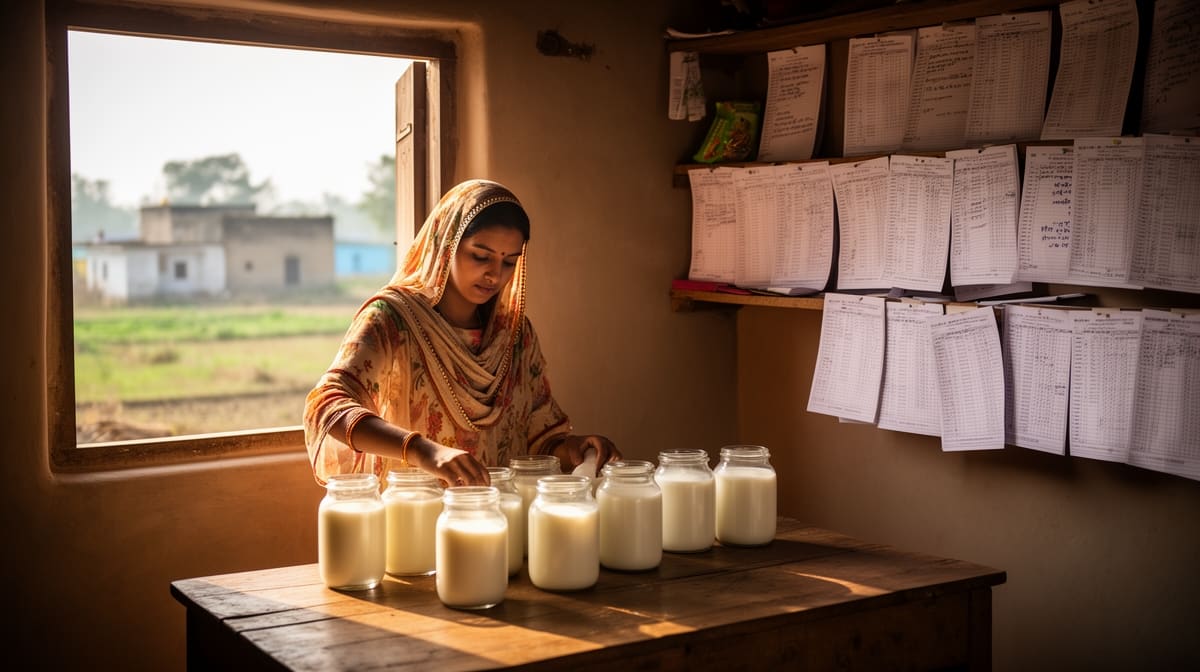
- Documentary evidence - milk sale registers and commission agent receipts - proved Ram Singh’s monthly income of Rs. 20,000
- Precedents like Parameswaran v. Sunny George, Laxmidhar Nayak, and National Insurance Co. v. Dhan Singh mandated a realistic valuation of homemakers’ contributions
- Future prospects of 30% for Ram Singh and 40% for Sarabjit Kaur were mandatory under Pranay Sethi
- No deduction for personal expenses was permissible for a homemaker, as held in Gurtej Singh v. Gurnaib Singh
- Multiplier of 15 and 16, respectively, was required under Smt. Sarla Verma
For the Respondent
Respondents did not dispute the accident or negligence but contended that the Tribunal’s award was reasonable and should not be disturbed, offering no specific legal rebuttal to the claimants’ evidentiary or doctrinal submissions.
The Court's Analysis
The Court conducted a meticulous review of the evidence and precedent, rejecting the Tribunal’s mechanical application of outdated norms. It emphasized that compensation under the Motor Vehicles Act is not governed by rigid evidentiary rules but by the principle of just and fair reparation.
"The learned Tribunal thus, erred in discarding the same by applying strict rules of evidence, which were not required to be adhered to in proceedings under the Motor Vehicles Act."
Regarding Ram Singh, the Court accepted the documentary proof of milk sales and agricultural produce, concluding his monthly income was Rs. 20,000. It applied a 30% addition for future prospects as mandated in Pranay Sethi, and a multiplier of 15 based on his age of 40.
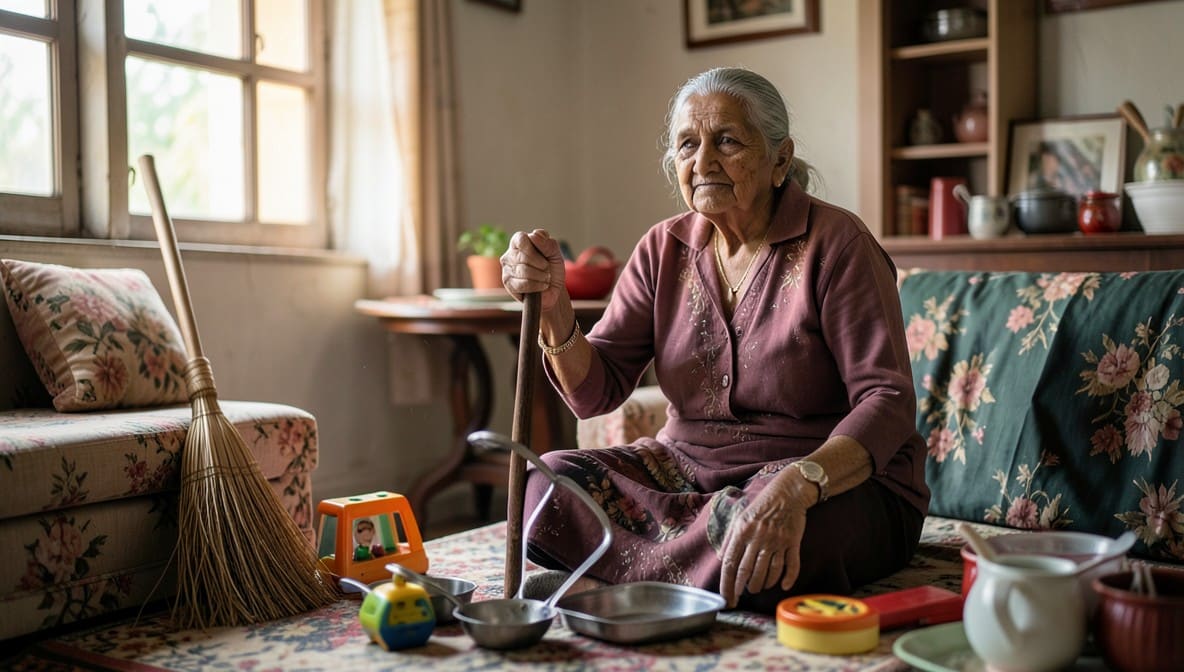
For Sarabjit Kaur, the Court held that a homemaker’s contribution cannot be reduced to a token sum. It referenced multiple judgments to establish that notional income must reflect the cost of replacing household services - cooking, cleaning, childcare, emotional support - and set it at Rs. 4,000/month, adjusted for inflation since 2008. Crucially, it ruled that no deduction for personal expenses is permissible for homemakers, citing Gurtej Singh. A multiplier of 16 was applied, and 40% future prospects were granted, aligning with Rajendra Singh.
The Court also awarded Rs. 1,44,000 as loss of consortium for each deceased, calculated as Rs. 48,000 per dependent (three claimants), and Rs. 18,000 each for funeral and loss of estate, following Smt. Sarla Verma and United India Insurance v. Satinder Kaur.
The Verdict
The appellants won. The Court held that notional income for homemakers must reflect the economic value of domestic labor, future prospects must be granted, no deduction for personal expenses is allowed, and multipliers must align with age-based precedents. Compensation was enhanced to Rs. 33,00,000 for Ram Singh and Rs. 12,55,200 for Sarabjit Kaur.
What This Means For Similar Cases
Notional Income Must Reflect Economic Reality
- Practitioners must now submit detailed evidence of household services rendered, including cost comparisons with hired help
- Tribunal awards below Rs. 4,000/month for homemakers post-2008 are now legally untenable
- Courts must adjust notional income for inflation using precedents as benchmarks
Future Prospects Are Mandatory for Homemakers
- A 40% addition for homemakers under 35 is now the standard, per Rajendra Singh
- Even if the deceased had no formal career, their skills in child-rearing and household management improve with time
- Failure to grant future prospects constitutes a legal error warranting appellate interference
Personal Expense Deduction Is Prohibited for Homemakers
-
The 1/3rd deduction for personal expenses applies only to earning members
-
Homemakers contribute to the entire household; their income is not personal but familial
-
Any tribunal applying such a deduction to a homemaker’s notional income must be reversed on appeal
-
Practitioners must cite Gurtej Singh and Pranay Sethi in all homemaker compensation claims
-
Documentary proof of agricultural or business income must be systematically organized and authenticated
-
Multiplier tables must be strictly followed per Sarla Verma - no arbitrary reduction