The Karnataka High Court's Division Bench has delivered a significant judgment in a land grant dispute, emphasizing that fraudulent documents vitiate all judicial orders. The Court set aside a single judge's order that had directed the State to enter petitioners' names in revenue records, holding that the petitioners had engineered records to support their claim after the State granted the land to Siddaganga Mutt for a charitable purpose. The judgment underscores that fraud and justice cannot coexist, and parties attempting to mislead courts forfeit equitable relief.
Background & Facts
The Dispute
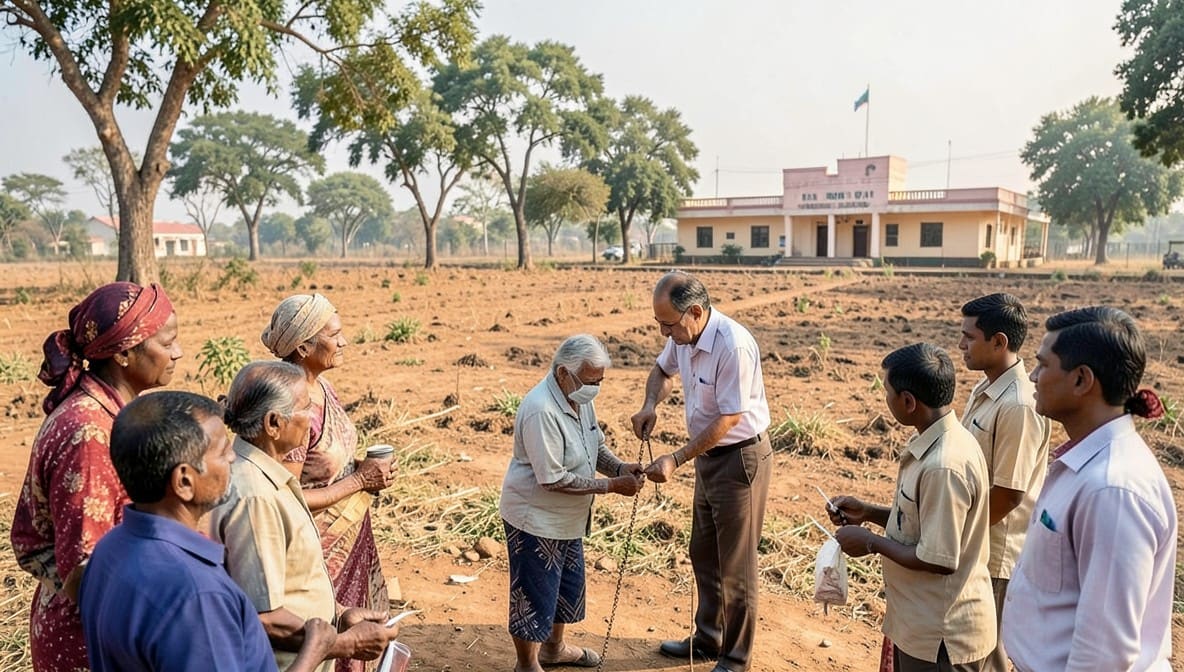
The dispute centers around land bearing Survey No. 41 of Kadaranahalli Village, Dasanapura Hobli, Bengaluru North Taluk. The petitioners, belonging to the Adi Karnataka community, claimed to be grantees of this land pursuant to an application filed in 1981. The State, however, granted 14 acres 25 guntas of the same land to Siddaganga Mutt (respondent No. 5) for establishing a Dasoha Prasada Distributing Centre via Government Order dated 27.05.2010 and Official Memorandum (OM) dated 18.08.2010.
Key Facts
- 15.03.1981: Petitioners filed applications seeking grant of land as landless persons.
- 31.07.1982: Tahsildar, Bengaluru North Taluk, sent a proposal (Annexure-A) to the Assistant Commissioner recommending grant of land to the petitioners.
- 11.10.1982: Alleged OM (Annexure-L) issued by Special Deputy Commissioner granting 3 acres each to the petitioners and one B.R. Narasimhamurthy.
- 27.05.2010: Government granted 14 acres 25 guntas to Siddaganga Mutt via Government Order.
- 18.08.2010: OM (Annexure-H) issued by Special Deputy Commissioner confirming the grant to the Mutt.
- 02.04.2007: Notification issued for auction of the land, but the auction was not concluded as the land was allegedly granted to the petitioners.
- 27.04.2018: Karnataka Appellate Tribunal (KAT) dismissed the petitioners' appeal (Appeal No. 897/2011), holding no grant was made in their favor.
- 15.07.2025: Single Judge of the High Court allowed the writ petition (WP No. 30695/2018), set aside the OM dated 18.08.2010, and directed the Tahsildar to enter the petitioners' names in revenue records.
Procedural History
- 12.06.2011: Petitioners filed Appeal No. 897/2011 before KAT challenging the grant to Siddaganga Mutt.
- 27.04.2018: KAT dismissed the appeal, holding no grant was made in favor of the petitioners.
- 15.07.2018: Writ Petition No. 30695/2018 filed before the High Court.
- 15.07.2025: Single Judge allowed the writ petition, quashed the OM dated 18.08.2010, and directed the State to allot alternative land to the Mutt.
- 28.03.2026: Writ Appeals (WA Nos. 1338 & 1339/2025) filed by the State and Siddaganga Mutt challenging the single judge's order.
The Parties' Positions
Petitioners' Contentions
- Relied on Annexure-A (31.07.1982) and Annexure-L (11.10.1982) to argue the land was granted to them.
- Contended the upset price of Rs. 1,000 per acre was waived as they belonged to the Adi Karnataka community.
- Argued the Darkhast register (Annexure-N) showed their names, proving the grant.
- Submitted the FSL report was inconclusive regarding fabrication.
- Cited W.P. No. 49958/2019 where a similar grant to Adichunchanagiri Mutt was set aside.
State's Contentions
- Argued the documents relied on by the petitioners were fabricated and not found in official records.
- Contended Annexure-L (11.10.1982) was unsigned and Annexure-A (31.07.1982) was merely a proposal, not a concluded grant.
- Relied on affidavits from Regional Commissioner and Tahsildars stating no grant records existed.
- Submitted the FSL report indicated all documents were typed on the same typewriter, suggesting fabrication.
- Cited State of Rajasthan v. Bhawant Singh and Gunwant Kaur v. Municipal Committee, Bhatinda to argue disputed questions of fact cannot be adjudicated under Article 226.
Siddaganga Mutt's Contentions
- Argued the land was lawfully granted to the Mutt after verifying records.
- Contended the petitioners' documents were created post-facto to challenge the Mutt's grant.
- Relied on W.P. No. 20245/2010 where the Court upheld a grant under Rule 10(2) and 27 of the Karnataka Land Revenue (Amendment) Rules, 2007.
Relief Sought
- Petitioners: Quashing of OM dated 18.08.2010, entry of their names in revenue records, and allotment of alternative land to the Mutt.
- State: Dismissal of the writ petition and confirmation of the KAT's order.
- Siddaganga Mutt: Dismissal of the writ petition and upholding of the OM dated 18.08.2010.
The Legal Issue
The central question was whether the petitioners were entitled to the land based on the OM dated 11.10.1982, and whether the State was justified in contending that the documents produced by the petitioners were fabricated. Additionally, the Court had to determine if the grant of land to Siddaganga Mutt under the OM dated 18.08.2010 was lawful.
Arguments Presented
For the Appellants (State and Siddaganga Mutt)
- Fabrication of Documents: The State argued the petitioners' documents, particularly Annexure-L (11.10.1982), were fabricated as they were not found in official records and were typed on the same typewriter.
- No Concluded Grant: Contended Annexure-A (31.07.1982) was merely a proposal, and no Saguvali Chit (grant deed) was issued to the petitioners.
- Delay and Laches: Argued the petitioners approached the Court belatedly, nearly 42 years after the alleged grant, disentitling them to equitable relief.
- Judicial Precedents: Cited State of Rajasthan v. Bhawant Singh and Gunwant Kaur v. Municipal Committee, Bhatinda to argue that disputed questions of fact cannot be adjudicated under Article 226.
- FSL Report: Relied on the FSL report stating all documents were typed on the same typewriter, suggesting fabrication.
For the Respondents (Petitioners)
- Genuine Grant: Argued the OM dated 11.10.1982 and Darkhast register entries proved the grant.
- Possession and Cultivation: Contended they were in possession and cultivation of the land since 1982.
- FSL Report Inconclusive: Submitted the FSL report was inconclusive regarding fabrication.
- Precedent: Cited W.P. No. 49958/2019 where a similar grant to Adichunchanagiri Mutt was set aside.
The Court's Analysis
The Division Bench meticulously analyzed the evidence and submissions:
-
Proposal vs. Grant: The Court noted Annexure-A (31.07.1982) was merely a proposal for grant, and the petitioners' case initially relied solely on this document. The alleged OM dated 11.10.1982 and other documents were produced only in December 2024, nearly 42 years later, raising suspicions of fabrication.
-
FSL Report: The FSL report indicated all documents were typed on the same typewriter, which the Court found improbable for Government records. The report also noted mismatched signatures and absence of signatures on key documents.
-
Affidavits of Officials: Affidavits from the Regional Commissioner and Tahsildars categorically stated no grant records existed in official files. The Darkhast register entry relied on by the petitioners was disputed as it was based on a fabricated order.
-
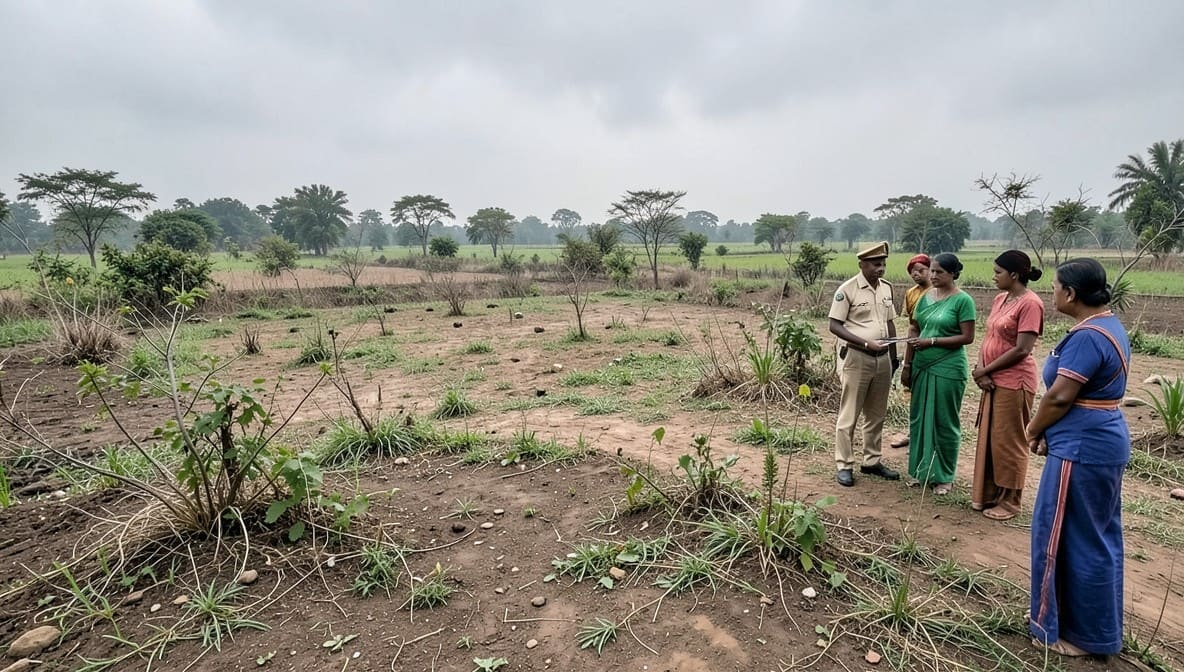
Mahazar and Revenue Inspector's Report: The mahazar and Revenue Inspector's report clearly stated the land was vacant and not under cultivation by anyone, contradicting the petitioners' claim of possession.
-
Judicial Precedents on Fraud: The Court relied on Vishnu Vardhan @ Vishnu Pradhan v. State of Uttar Pradesh and other judgments to hold that fraud vitiates all judicial actions. The petitioners' attempt to engineer records to support their claim was deemed a fraud on the Court.
"Fraud and justice never dwell together (fraus et jus nunquam cohabitant)... No court will allow a person to keep an advantage which he has obtained by fraud... Fraud unravels everything."
- Equity and Clean Hands: The Court emphasized that parties approaching the Court with soiled hands forfeit equitable relief. The petitioners' conduct in fabricating documents disentitled them to any relief.
The Verdict
The Division Bench allowed the writ appeals, set aside the order dated 15.07.2025 passed by the single judge, and dismissed W.P. No. 30695/2018. The Court upheld the KAT's order dated 27.04.2018, confirming the grant of land to Siddaganga Mutt under the OM dated 18.08.2010. The petitioners' claim was rejected due to their fraudulent conduct, and no costs were imposed considering their financial status.
What This Means For Similar Cases
Fraud Vitiates All Judicial Actions
- No Equitable Relief: Parties attempting to mislead the Court by fabricating documents or suppressing material facts forfeit their right to equitable relief, regardless of the merits of their claim.
- Burden of Proof: The burden lies heavily on the party alleging fraud to disprove the authenticity of documents, especially when official records contradict their claims.
Disputed Questions of Fact and Writ Jurisdiction
- Limits of Article 226: Courts exercising writ jurisdiction under Article 226 are cautious in adjudicating disputed questions of fact, particularly when title to immovable property is in serious dispute.
- Judicial Restraint: Where authenticity of documents is in question, and official records contradict the claimant's assertions, courts may refrain from granting relief under Article 226.
Delay and Laches in Land Disputes
- Equitable Considerations: Delay in pursuing legal remedies, especially in land disputes, may disentitle parties to equitable relief. Courts may view belated claims with suspicion, particularly when alternative remedies (e.g., appeals before tribunals) were not exhausted in a timely manner.
- Afterthought Claims: Claims raised as an afterthought, particularly after the opposing party has obtained lawful rights, are likely to be rejected.