The Bombay High Court has reaffirmed that litigants approaching courts under Article 226 of the Constitution must do so with clean hands. In a stark reminder of judicial integrity, the Court dismissed a writ petition after finding the petitioner misrepresented a commercial hotel as a residential house, suppressed material facts, and failed to produce requisite permissions. The judgment underscores that fraud on the court disentitles any relief, even interim orders, and reinforces the duty of litigants to comply with statutory regulations before invoking constitutional remedies.
Background & Facts
The Dispute
The petitioner, Jagdish Ramnaresh Yadav, a 38-year-old agriculturist from Village Sakwar, Taluka Vasai, District Palghar, filed a writ petition under Article 226 challenging a notice dated 28th April, 2026 issued by the Circle Officer, Mandvi, Taluka Vasai. The notice pertained to an alleged illegal construction on land he claimed to own. The petitioner contended that he had constructed a residential house on the land prior to 1994 and sought quashing of the notice.
Key Facts
- The petitioner claimed the construction was a residential house, relying on:
- A Certificate dated 16th April, 2018 issued by the Sarpanch, Gram Panchayat Sakwar, certifying that the house (No. 413/A) fell within its jurisdiction and that the petitioner was a resident.
- An assessment receipt from 2014 and an electricity bill dated 12th June, 2026, both produced during proceedings.
- During the hearing, the Court questioned the petitioner about obtaining construction permissions. The petitioner admitted he held no documents beyond the aforementioned records.
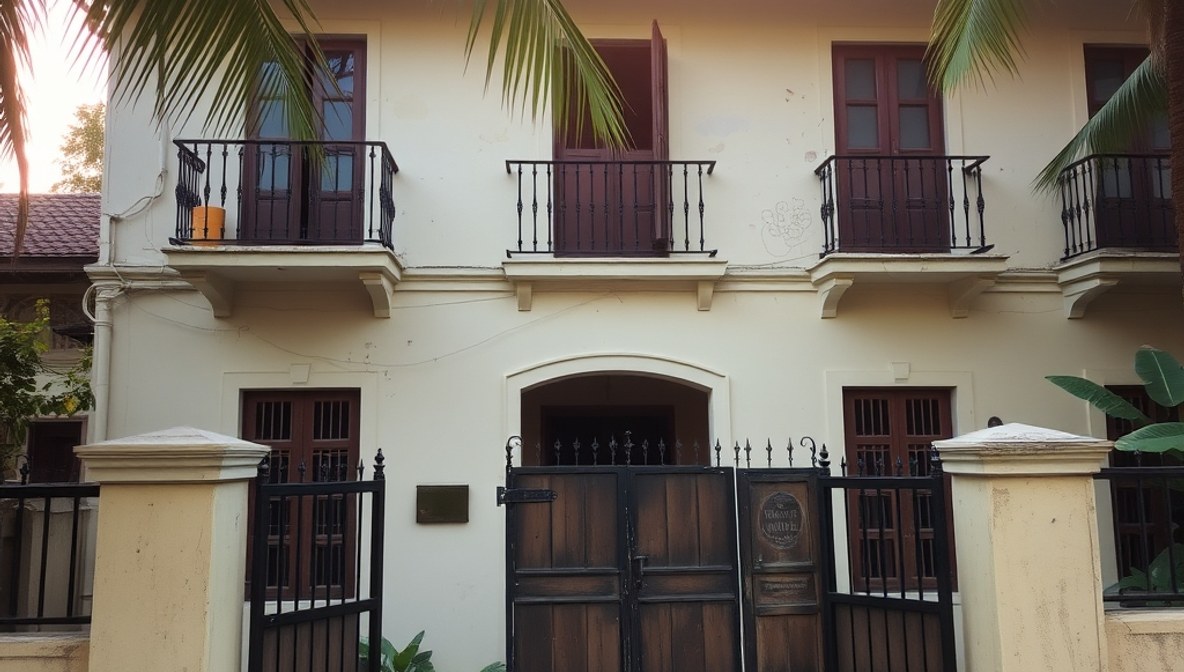
- A photograph tendered by the Assistant Government Pleader (AGP) revealed the structure was not a residential house but a hotel named 'Hotel Haryana Punjab', operated by the petitioner. This fact was not disputed by the petitioner’s counsel.
Procedural History
- 15th May, 2026: The petitioner obtained an interim stay order from the Vacation Court based on his pleadings.
- 18th June, 2026: The matter was reserved for judgment after the petitioner failed to produce additional documents.
- 6th July, 2026: The Division Bench pronounced the judgment dismissing the petition.
Relief Sought
The petitioner sought:
- Quashing of the notice dated 28th April, 2026 issued by Respondent No. 2.
- A declaration that the construction was legal and pre-dated 1994.
- Protection from demolition or penal action.
The Legal Issue
The central question was whether a litigant who suppresses material facts, misrepresents the nature of a structure, and fails to produce requisite statutory permissions is entitled to relief under Article 226 of the Constitution, particularly when such conduct amounts to fraud on the court.
Arguments Presented
For the Petitioner
- The petitioner’s counsel argued that the petitioner had resided in the structure since 1994 and relied on the Sarpanch’s certificate and other documents to substantiate his claim.
- It was contended that the petitioner had no obligation to produce additional documents beyond those already on record.
For the Respondent-State
- The AGP submitted that the petitioner’s claim was false and unsubstantiated, as the photograph clearly showed the structure was a commercial hotel, not a residential house.
- It was argued that the petitioner suppressed material facts, obtained an interim stay through misrepresentation, and failed to comply with statutory requirements for construction.
- Reliance was placed on S.P. Chengalvaraya Naidu v. Jagannath and Dalip Singh v. State of U.P. to contend that such conduct disentitles the petitioner to any relief.
The Court's Analysis
The Court conducted a fact-based inquiry and found the petitioner’s conduct egregious and fraudulent. Key observations included:
-
Fraud on the Court: The Court held that the petitioner’s false statement in paragraph 2 of the petition - claiming the structure was a residential house - amounted to fraud on the court. The AGP’s photograph, which was not disputed, proved the structure was a commercial hotel, directly contradicting the petitioner’s claim.
"A litigant who approaches the Court is bound to produce all the documents executed by him which are relevant to the litigation. If he withholds the vital documents in order to gain advantage on the other side then he would be guilty of playing a fraud on the Court as well as on the opposite party." The Court relied on S.P. Chengalvaraya Naidu v. Jagannath to emphasize that fraud vitiates all judicial proceedings.
-
Suppression of Material Facts: The petitioner obtained an interim stay on 15th May, 2026 based on false and unsubstantiated pleadings. The Court noted that the petitioner not only suppressed material facts but also distorted them to mislead the Court. Citing Dalip Singh v. State of U.P., the Court held:
"A litigant who attempts to pollute the stream of justice, or who touches the pure fountain of justice with tainted hands, is not entitled to any relief, interim or final."
-
Abuse of Process: The Court observed that entertaining such a petition would abuse the judicial process. It relied on Prestige Lights Ltd. v. State Bank of India and K.D. Sharma v. SAIL to hold that a High Court exercising jurisdiction under Article 226 is not merely a court of law but also a court of equity. Where a litigant suppresses material facts or places twisted facts before the Court, it is fully justified in refusing to entertain the petition without going into its merits.
-
Statutory Compliance and Duty to the State: The Court emphasized that ownership of land does not absolve a citizen of statutory duties. The petitioner was bound to obtain appropriate permissions from local authorities before constructing any structure. Failure to do so rendered the construction wholly illegal and liable to demolition. The Court held:
"To invoke any right and seek relief under Article 226 of the Constitution of India, he must demonstrate that he has discharged his duties. The Petitioner, having failed to conform to the Rules and Regulations of the land, is disentitled to any relief."
-
Insufficiency of Evidence: The Court dismissed the Sarpanch’s certificate as wholly insufficient to prove the petitioner’s claim. It noted that the certificate merely stated the petitioner’s residence and the jurisdiction of the Gram Panchayat but did not certify the legality of the construction or its compliance with statutory requirements.
The Verdict
The writ petition was dismissed with no order as to costs. The Court held that the petitioner’s conduct - suppressing material facts, misrepresenting the nature of the structure, and failing to comply with statutory regulations - disentitled him to any relief under Article 226. The interim stay order dated 15th May, 2026 was effectively vacated by implication.
What This Means For Similar Cases
Fraud on Court Disentitles All Relief
- Practitioners must advise clients that fraud on the court - whether through suppression of facts, misrepresentation, or distortion - vitiates all judicial proceedings, including interim orders.
- Courts are not bound to entertain petitions where material facts are concealed or misstated. As held in Dalip Singh, even interim relief can be denied if the litigant’s hands are tainted.
- Key Takeaway: Ensure full disclosure of all relevant documents and facts at the first instance. Obtaining interim relief through false pleadings can lead to dismissal of the entire petition and potential contempt proceedings.
Statutory Compliance Is Non-Negotiable
- Ownership of land does not confer immunity from statutory regulations. Litigants must obtain all requisite permissions before constructing any structure, failing which the construction is liable to demolition.
- Local authorities’ certificates (e.g., Sarpanch’s certificate) are not conclusive proof of legality. They must be corroborated with statutory permissions (e.g., building plans, NOCs, occupancy certificates).
- Key Takeaway: Before approaching courts for relief under Article 226, ensure strict compliance with all local laws, regulations, and permissions. Courts will not entertain petitions where the litigant has flouted statutory duties.
Evidentiary Burden in Writ Petitions
- Self-serving documents (e.g., electricity bills, assessment receipts) are insufficient to prove legality of construction. Litigants must produce primary evidence (e.g., sanctioned building plans, NOCs from authorities).
- Photographic evidence tendered by the opposing party can disprove claims if not rebutted. In this case, the AGP’s photograph conclusively proved the structure was a hotel, not a residential house.
- Key Takeaway:
- Anticipate photographic or documentary evidence from the opposing party and prepare rebuttal evidence.
- Do not rely on peripheral documents (e.g., Sarpanch’s certificate) to prove substantive claims (e.g., legality of construction).