The Calcutta High Court has clarified that an executing court possesses jurisdiction to order police assistance for enforcing a decree of permanent prohibitory injunction under Order 21 Rule 32(5) of the Code of Civil Procedure read with Section 151, while simultaneously staying execution proceedings pending the disposal of an appeal against the underlying decree.
Background & Facts
The Dispute
The plaintiff, Manoj Kumar Paul, filed Title Suit No. 111 of 2015 seeking a declaration of title over property gifted to him by a deed of gift numbered 01679 of 2010 dated 15.03.2010, and a permanent injunction restraining the defendants, Arabinda Paul and another, from interfering with his peaceful possession and from forceful entry into the suit property. The defendants contested the suit and filed a counter claim praying for a declaration that the deed of gift was null and void, and for an injunction restraining the plaintiff from giving effect to it.
Key Facts
- The deed of gift (No. 01679 of 2010) was executed on 15.03.2010 in favour of the plaintiff by the donor/mother.
- The suit property included "C" marked area on the site plan attached to the deed of gift.
- The defendants claimed the "B" and "C" marked areas were meant for common user by both brothers as per the donor's direction, and alleged the plaintiff obtained the "C" marked property through fraud and misrepresentation.
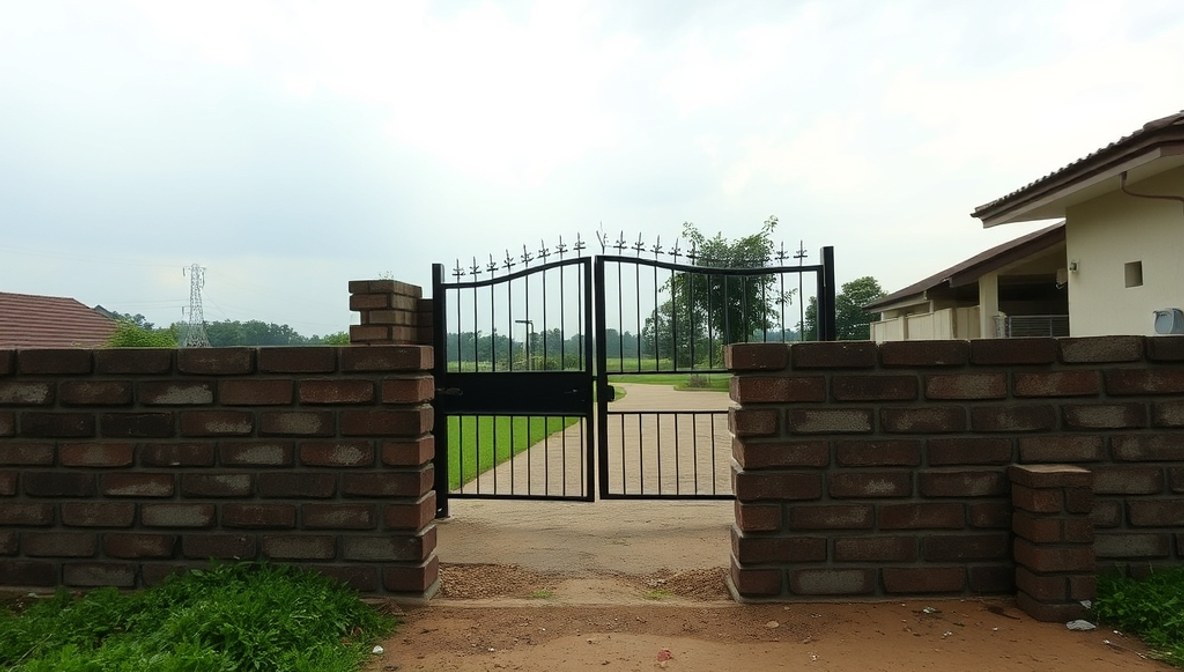
- The defendants asserted they used a gate on the "C" marked property for ingress and egress, and the plaintiff had placed a padlock on the gate to deprive them of access.
- The plaintiff contended the defendants had an alternative entry for ingress and egress to their property.
Procedural History
- 20.09.2022: The learned Civil Judge (Junior Division), Bidhannagar, decreed Title Suit No. 111 of 2015 on contest, declaring the plaintiff absolute owner by virtue of the deed of gift and granting a permanent injunction against the defendants. The counter claim was dismissed.
- 20.12.2022: The Additional District Judge, Second Court, Barrackpore (First Appellate Court), rejected the defendants' application for stay of operation of the judgment and decree in Title Appeal No. 27 of 2022, observing the defendants should pray for temporary injunction.
- 02.06.2023: The First Appellate Court rejected the defendants' application for temporary injunction in the appeal, holding the balance of convenience was not in their favour as they had an alternative entry for ingress and egress.
- 29.11.2025: The executing court (Civil Judge, Junior Division, Bidhannagar) dismissed Title Execution Case No. 4 of 2023 as not maintainable.
- 05.02.2026: The plaintiff filed an application under Order 21 Rule 32(5) read with Section 151 CPC praying for deployment of adequate police force to assist in blocking the vacant area and other portions of the decretal property by constructing a boundary wall.
- 12.06.2026: The executing court rejected the application on the ground that deployment of police force is beyond the provisions of Order 21 Rule 32 CPC.
- 02.02.2026: A coordinate bench in CO 4494 of 2025 observed that if the decree holder requires protection by an order of mandatory injunction upon removal of encroachment, the decree holder would be at liberty to approach the executing court by filing a proper application.
- 25.08.2026: Arguments reserved in both Civil Revision Applications.
- 25.11.2026: Judgment delivered by Justice Hiranmay Bhattacharyya.
Relief Sought
In CO 1927 of 2026, the plaintiff sought setting aside of the order dated 12.06.2026 and restoration of his application for police assistance. In CO 2937 of 2023, the defendants sought stay of the decree and temporary injunction restraining the plaintiff from obstructing their use of the common passage.
The Legal Issue
The central questions were: (1) Whether an executing court has jurisdiction to order deployment of police force for execution of a decree for permanent prohibitory injunction under Order 21 Rule 32(5) read with Section 151 CPC; (2) Whether the First Appellate Court erred in rejecting the defendants' applications for stay and temporary injunction; (3) Whether execution proceedings should be stayed pending disposal of the appeal against the underlying decree.
Arguments Presented
For the Petitioner (Plaintiff/Decree Holder)
The plaintiff, appearing in person, contended that the executing court failed to appreciate its jurisdiction to pass an order for police protection under Order 21 Rule 32 CPC. He relied on Raja Venkateswarlu & Anr. v. Mada Venkata Subbaiah & Anr. (Civil Appeal No. 9916 of 2017, decided 31.07.2017), where the Supreme Court held that merely because an application for police protection was filed only under Section 151 CPC, it cannot be a reason for the High Court to reject it, and restored the executing court's order granting police help. He also cited Nagamma & Ors. v. Gowramma (Writ Petition No. 9306 of 2025, decided 24.04.2025, Karnataka High Court), holding that an application under Order 21 Rule 32(5) read with Section 151 seeking police aid for implementation of a decree is maintainable. Additionally, he cited P.A. Ashraf v. A.L. Mujibar Rahaman & Ors. (AIR 2008 (NOC) 362 (Mad)), where it was held that directions can be issued to the police to implement a decree of permanent injunction under Section 151 CPC.
For the Respondent (Defendants/Judgment Debtors)
Mr. Gopal Chandra Ghosh, Senior Advocate, contended that a decree for permanent injunction may be enforced only by way of detention in civil prison or by attachment of property or both under Order 21 Rule 32(1). He argued that grant of police help to enforce a decree for permanent injunction is beyond the scope of Order 21 Rule 32. He further contended that since the defendants had preferred an appeal challenging the judgment and decree, the First Appellate Court ought to have granted stay of operation of the decree. He submitted that the defendants were using the "C" marked property as a common area for ingress and egress, and the plaintiff had illegally placed a padlock on the gate. He argued that during the pendency of the appeal, the plaintiff should be restrained by temporary injunction from creating obstruction in the use of the common passage.
The Court's Analysis
The Court examined the scheme of Order 21 Rule 32 CPC. Sub-rule (1) provides for enforcement of a decree for injunction by detention in civil prison or attachment of property or both where the judgment debtor has had an opportunity to obey and has willfully failed. The Court noted the historical controversy regarding the applicability of Rule 32(5) - which empowers the court to direct "the act required to be done" - to prohibitory injunctions.
The Court referred to Sachi Prasad Mukherjee v. Amarnath Roy Chowdhury ((1919) 46 Cal 105), where it was held that the court may direct the act of removing an obstruction to be performed by the decree holder or a person appointed by the court, and that Rule 32(5) applies to both prohibitory and mandatory injunctions. A contrary view was expressed in Hemchandra Naskar v. Narendra Nath Basu (AIR 1934 Cal 402), holding that clauses (1), (2), and (3) apply to both classes of injunction but clause (5) has no application to a simple prohibitory injunction. In Ram Charan Sikdar v. Sm. Jogamaya Basu (AIR 1978 Cal 193), it was held that an application under Rule 32(5) was maintainable when the decree holder obtained a decree for permanent injunction and the court could direct removal of an admitted obstruction.
The Court held that the controversy was put to rest by the Explanation inserted by the Amendment Act of 2002 after Order 21 Rule 32(5) with effect from 01.07.2002. The Explanation declares that the expression "the act required to be done" covers prohibitory as well as mandatory injunction. Accordingly, the Court held that the court can ensure compliance of a decree for prohibitory injunction in a mandatory form or in any other way as far as practicable by the decree holder or any person appointed by the court.
On the question of police assistance, the Court relied on Raja Venkateswarlu (supra), where the Supreme Court observed that it is not disputed that the executing court has jurisdiction to grant police help in execution proceedings. The Court also followed Nagamma (supra) and P.A. Ashraf (supra). The Court found that the impugned order dated 12.06.2026 rejected the prayer for deployment of police force solely on the ground that it was beyond the provisions of Order 21 Rule 32, which runs counter to the proposition of law laid down by the Supreme Court.
Regarding the defendants' revision (CO 2937 of 2023), the Court noted that the First Appellate Court had returned a factual finding that the defendants have an alternative entry for ingress and egress to their property. Mr. Ghosh could not controvert this factual finding. The Court therefore declined to interfere with the order dated 02.06.2023 rejecting the temporary injunction application.
On the stay of execution, the Court observed that the judgment and decree in Title Suit No. 111 of 2015 is under challenge in Title Appeal No. 27 of 2022, and the decree is yet to attain finality. It is well settled that when a judgment of the court of first instance is appealed against, the judgment ceases to be res judicata and becomes res subjudice. In view thereof, the Court held that the execution case should be stayed till the disposal of the Title Appeal.
The Verdict
The Court disposed of both Civil Revision Applications with the following directions: (i) The order dated 12.06.2026 passed by the Civil Judge (Junior Division), Bidhannagar, in Title Execution Case No. 4 of 2023 is set aside; the application dated 05.02.2026 filed by the decree holder stands restored to its original file and number for decision on merits. (ii) The order dated 02.06.2023 passed in Title Appeal No. 27 of 2022 rejecting the temporary injunction application is not interfered with. (iii) The order dated 20.12.2022 passed in Title Appeal No. 27 of 2022 is modified by passing an order of stay of all further proceedings in Title Execution Case No. 4 of 2023 as well as the hearing of applications filed therein till the disposal of Title Appeal No. 27 of 2022. No order as to costs.
What This Means For Similar Cases
Police Assistance Available For Prohibitory Injunction Execution
The 2002 Explanation to Order 21 Rule 32(5) CPC expressly extends the provision to prohibitory injunctions. Practitioners should frame execution applications under Rule 32(5) read with Section 151 CPC when seeking police assistance for enforcing a decree of permanent prohibitory injunction. The executing court has jurisdiction to direct police aid; rejection on the ground that it is beyond the scope of Order 21 Rule 32 is erroneous per Raja Venkateswarlu.
- Cite the 2002 Explanation to Rule 32(5) as the statutory basis for mandatory enforcement of prohibitory injunctions.
- Rely on Raja Venkateswarlu, Nagamma, and P.A. Ashraf to establish the executing court's power to order police deployment.
- Ensure the application is filed under the correct provision (Rule 32(5) read with Section 151) to avoid procedural objections.
Factual Findings On Balance Of Convenience Bind Revisional Court
The High Court declined to interfere with the First Appellate Court's factual finding that the defendants had an alternative entry for ingress and egress. In revisional jurisdiction, the court will not re-appreciate evidence or disturb concurrent factual findings unless perverse.
- Temporary injunction during appeal requires a strong prima facie case and balance of convenience.
- If the appellate court finds alternative access exists, the balance of convenience tilts against the appellant.
- Revisional courts are reluctant to overturn factual findings on balance of convenience.
Execution Automatically Stays Pending Appeal Against Decree
Where a decree is under appeal, execution proceedings should be stayed to prevent the appeal from becoming infructuous. The principle that an appealed judgment ceases to be res judicata and becomes res subjudice mandates a stay of execution.
- Seek modification of the appellate court's order to include an explicit stay of execution proceedings.
- The stay operates on all further proceedings in the execution case and hearing of applications therein.
- This protects the appellate court's jurisdiction and the appellant's substantive right of appeal.