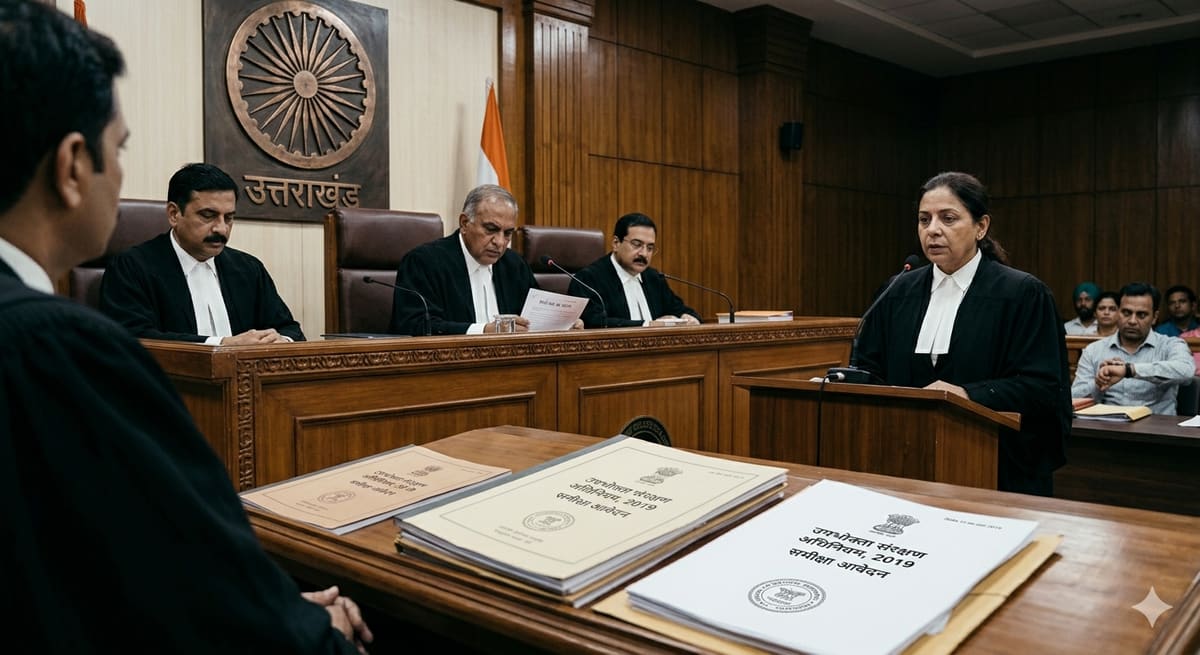
The Delhi State Consumer Disputes Redressal Commission set aside the District Commission’s order to the extent that it refused to refund penalty charges for EMI bounce on two installments, holding that such charges were wrongly levied when the loan agreement permitted payment up to the 7th of the month and the complainant maintained sufficient balance in his account.
Background & Facts
The Dispute
The complainant availed a personal loan of Rs.3 lakhs from Axis Bank (OP-1) under a loan agreement dated 25.09.2005, to be repaid in 48 monthly instalments of Rs.8,349/- each via ECS. He alleged that the bank presented the ECS before the due date (the 5th of each month) and then levied cheque bounce charges and penalties, constituting an unfair trade practice under the Consumer Protection Act, 1986.
Key Facts
- Loan agreement date: 25.09.2005
- Disbursed amount: Rs.2,96,674/- (processing fee of Rs.3,326/- deducted upfront)
- Monthly instalment: Rs.8,349/- payable via ECS
- Alleged date of ECS presentment: 1st of every month (as per bank statement)
- Due date for payment under clause 6 of the agreement: 7th of each month
- Processing fee: Rs.3,326/- non-refundable; waived on 29.06.2006, 27.02.2007 and 11.05.2007
- Complainant paid 17 EMIs amounting to Rs.1,58,631/-; balance of Rs.1,38,043/- remained
- In March 2006 and July 2006 the complainant’s account balance was Rs.10,282/- and Rs.9,252/- respectively, exceeding the instalment amount
- District Commission order date: 23.01.2019
- Date of institution of complaint: 20.02.2019
- Date of hearing: 23.12.2025
- Date of judgment: 25.09.2026
Procedural History
- 20.02.2019: Complaint filed before District Consumer Disputes Redressal Commission
- 23.01.2019: District Commission passed order holding OP-1 guilty of unfair trade practice, directing waiver of bounce charges for Oct 2005 - Jun 2007 (excluding Mar 2006 and Jul 2006), directing complainant to pay balance EMIs and charges for Mar/Jul 2006 in four instalments from Mar 2019, awarding Rs.20,000 compensation and Rs.10,000 litigation cost to complainant
- FA/131/2019: Present appeal filed by Mr. R.P. Kapur challenging the District Commission’s order
- 23.12.2025: Arguments heard
- 25.09.2026: Judgment pronounced
Relief Sought
The appellant sought modification of the District Commission’s order to direct refund of penalty charges for all 24 instalments (including Mar 2006 and Jul 2006) and refund of the processing fee of Rs.3,326/-, while seeking to set aside the imposition of charges for the two months.
The Legal Issue
The central question was whether the imposition of cheque bounce charges and penalties for EMI payments presented before the contractual due date, when the borrower maintained sufficient balance and the loan agreement permitted payment up to the 7th of the month, constitutes an unfair trade practice under Section 2(1)(r) of the Consumer Protection Act, 1986.
Arguments Presented
For the Appellant/Petitioner
The appellant contended that the bank presented the ECS on the 1st of each month, whereas the loan agreement fixed the due date as the 7th; therefore the bounce charges were wrongly levied. He relied on his account statements showing sufficient balance (Rs.10,282/- in Mar 2006 and Rs.9,252/- in Jul 2006) to cover the instalment. He further argued that the processing fee of Rs.3,326/- was wrongly deducted and should be refunded.
For the Respondent/State
The respondent defended the District Commission’s order, asserting that the effective date of presentment under the agreement was the 1st of each month and that the bank had the right to set-off outstanding amounts. It cited Bharati Knitting Company v. DHL Worldwide Express Courier Services to support its position that the bank’s actions were in accordance with the loan terms.
The Court's Analysis
The Commission first examined Section 2(1)(r) of the Consumer Protection Act, 1986, which defines unfair trade practice as any deceptive or unfair method adopted to promote sales or services. It then turned to Clause 6 of the Loan Agreement dated 25.09.2005, which stipulates that the due date for EMI repayment is the 7th of every month, while post-dated cheques/payment instructions may be presented starting the 1st, but the loan shall not be considered past due or attract penalties if payment is received by the 7th.
On perusal of the account statements (Annexure A-5), the Commission found that the effective date of bounce for the March 2006 instalment was 01.03.2006 and for July 2006 was 01.07.2006. Since the due date under the agreement was the 7th of the month, the presentment on the 1st was premature. Consequently, the penalty charges levied on those two instalments were illegal. The Commission noted that the complainant had sufficient balance in his account on those dates, negating any claim of default.
"As per the aforementioned Clause 6 of the Loan Agreement dated 25.09.2005 between the parties, it clear that the due date of the payment of installments is the 7th of every month, however, the cheques for the installments of March, 2006 and July, 2006 have bounced on the 1st day of the month itself, therefore, it is clear that the penalty charges were wrongly levied on the Appellant."
Accordingly, the Commission held that the District Commission erred in limiting the waiver of bounce charges to only 22 instalments and directed that the refund extend to all 24 instalments, including March and July 2006, while leaving the remainder of the District Commission’s order unchanged.
The Verdict
The appeal was allowed. The impugned order of the District Commission dated 23.01.2019 was modified to direct the respondent to refund penalty charges for all 24 instalments (including March 2006 and July 2006). The directions regarding payment of balance EMIs, compensation of Rs.20,000, litigation cost of Rs.10,000, and compliance within 30 days of receipt of the order remain unchanged. If the respondent fails to pay within one month of receipt, the complainant may recover the amount along with simple interest at 9% per annum from the date of the order.
What This Means For Similar Cases
Loan Agreement Terms Govern EMI Charges
- Practitioners must scrutinise the exact due date stipulated in loan agreements; any charge levied before that date is liable to be struck down as an unfair trade practice.
- The clause permitting presentation of instructions from the 1st does not authorise penalties if payment is received by the contractual due date.
Sufficiency of Funds Negates Bounce Charges
- Where the borrower’s account balance exceeds the instalment amount on the date of presentment, the bank cannot legitimately claim a bounce or impose penalties.
- Account statements are decisive evidence; oral allegations of insufficiency are insufficient without documentary proof.
Unfair Trade Practice Requires Deceptive Conduct
- To succeed under Section 2(1)(r), the complainant must show that the bank adopted an unfair or deceptive method; mere contractual disagreement does not suffice.
- The Commission emphasized that the bank’s act of presenting ECS early and then charging penalties amounted to a deceptive practice aimed at extracting extra amounts.