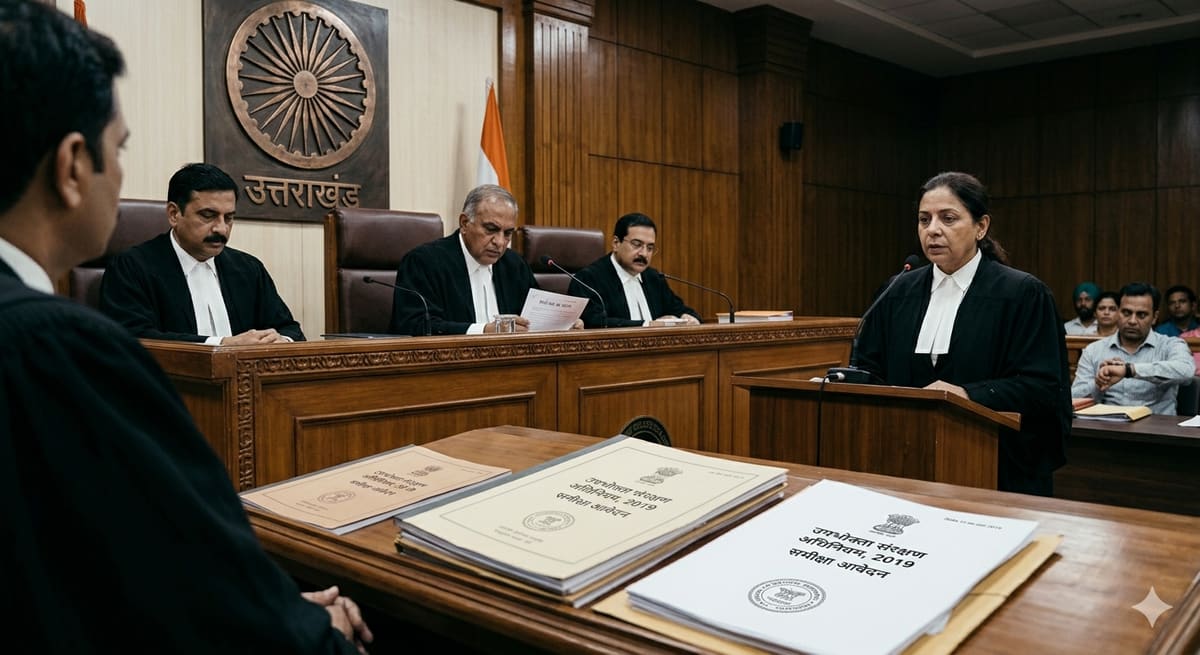
The Delhi State Consumer Disputes Redressal Commission ruled that a bank’s unilateral escalation of interest rates beyond the contractual ceiling, without informing the borrower of the RBI’s Base-Rate circular, amounts to deficiency in service and unfair trade practice, mandating full restitution and compensation.
Background & Facts
The Dispute
The complainant, Ms. Rekha Gautam, a resident of Dwarka, New Delhi, obtained a housing loan of Rs.50,00,000 from the opposite parties (Axis Bank Ltd., formerly Citi Bank, and three Citi Bank branches) on 13.12.2005 at an agreed interest rate of 12% per annum for a tenure of 120 months. The loan required a fixed EMI of Rs.71,736. The sanction letter and repayment schedule stipulated full repayment by November 2015.
Key Facts
- 13.12.2005: Loan sanctioned at 12% p.a.; repayment schedule attached.
- 31.01.2014: After paying 97 EMIs (total Rs.69,58,332), the account statement showed an outstanding principal of Rs.26,19,404 instead of the expected Rs.14,16,408.
- July 2010 - Dec 2013: Bank varied its internal base rate between 7.25% and 10.5% but continued to charge the borrower interest ranging from 12% to 16.5%.
- 09.04.2010: RBI Circular No. RBI/2009-10/390/DBOD introduced the Base-Rate system, effective 01.07.2010.
- 15.10.2014: Vice-President Mr. Sumit Dahiya assured the borrower that the interest-rate issue would be resolved.
- 01.12.2014: Complainant sent a formal representation to the bank’s North Zone Head.
- 11.08.2015: Bank’s letter promised to reduce the interest rate to 11.25% and waive penal interest, subject to clearance of dues.
- 03.03.2017: Loan statement still reflected an interest rate of 15.25%.
- April 2017: Total amount paid by the complainant reached Rs.98,27,832, whereas the original schedule indicated a total payable of Rs.86,08,320.
- 25.04.2017: Legal notice demanding refund of excess interest and correction of the loan account.
- 23.06.2017: Complaint filed before the Delhi State Consumer Disputes Redressal Commission (Case No. 1097/2017).
- 28.04.2026: Hearing concluded.
- 06.08.2026: Commission delivered its judgment.
Procedural History
- 23.06.2017: Complaint lodged (Complaint Case No. 1097/2017).
- 28.04.2026: Hearing date.
- 06.08.2026: Decision rendered.
Parties' Positions
- Complainant: Asserted that the bank breached the loan agreement by charging interest up to 16.5% without consent, failed to inform her of the RBI Base-Rate circular, and therefore engaged in deficiency of service and unfair trade practice. Sought refund of excess interest, compensation for mental agony, and costs.
- Opposite Parties: Contended that the loan was on a floating/variable rate, permitting periodic revisions, and that they had dispatched sixteen letters between 06.03.2006 and 13.10.2013 informing the borrower of rate changes. Denied any deficiency or unfair practice.
Relief Sought
- Reduction of interest rate to 11.25% or less from 01.07.2010.
- Refund of Rs.12,19,512 (excess interest) with interest at 11%.
- Deletion of outstanding balance Rs.7,28,446 as of 25.04.2017.
- Issuance of NOC confirming full repayment.
- Compensation of Rs.5,00,000 for mental torture and financial hardship.
- Costs of litigation Rs.1,00,000.
- Any further appropriate orders.
The Legal Issue
What is the extent of a bank’s duty under the Consumer Protection Act, 1986 to (i) honour the interest rate stipulated in the loan agreement, (ii) inform the borrower of RBI circulars affecting interest calculation, and (iii) refund excess interest collected in violation of those duties?
Arguments Presented
For the Appellant/Petitioner
- The loan agreement expressly fixed the interest rate at 12% p.a.; any unilateral increase without borrower consent contravenes the contract and amounts to deficiency in service.
- Citing V. Gilbert v. Manager, Vijaya Bank and Vishnu Bansal v. ICICI Bank Ltd., the petitioner argued that failure to disclose RBI’s Base-Rate circular and the option to switch constitutes an unfair trade practice under the Consumer Protection Act.
- The petitioner highlighted the bank’s inability to produce the alleged sixteen letters, thereby failing to prove that the borrower was informed or consented to rate revisions.
For the Respondent/State
- The bank maintained that the loan was on a floating/variable rate, allowing periodic revisions as per the terms of the agreement.
- It asserted that written communications (sixteen letters) had been sent to the borrower, thereby satisfying the duty of notice.
- The respondent relied on the principle that interest rate adjustments are permissible provided they are communicated, seeking dismissal of the complaint.
The Court's Analysis
The Commission first examined the contractual documents. The sanction letter dated 13.12.2005 and the repayment schedule unequivocally fixed the interest at 12% p.a. The bank’s claim of a floating rate was unsupported by any documentary evidence. As the Commission noted:
"The statement of account placed on record shows that the Opposite Party charged interest at rates up to 16.5% per annum. The Opposite Party has admitted that it received a total amount of Rs.98,27,832/- from the Complainant up to April 2017." The Commission then turned to the RBI Circular No. RBI/2009-10/390/DBOD dated 09.04.2010, which mandated that banks offer existing borrowers the option to switch to the Base-Rate regime from 01.07.2010. The bank failed to produce any proof of such an offer, nor did it produce the alleged letters. In the absence of such proof, the Commission held that the bank could not rely on a purported consent.
The Commission further relied on precedent that a consumer cannot be expected to know regulatory circulars and that the onus lies on the service provider to inform the consumer (V. Gilbert v. Manager, Vijaya Bank; Narayanrao Mahadeo Manjrekar v. Sangli Bank Ltd.). Consequently, the bank’s omission amounted to deficiency in service and an unfair trade practice under Sections 2(1)(g) and 2(1)(r) of the Consumer Protection Act, 1986.
Regarding the quantum of excess interest, the Commission calculated the difference between the amount actually paid (Rs.98,99,568) and the amount payable under the original schedule (Rs.86,08,320), arriving at an excess recovery of Rs.12,91,248. The Commission also considered the mental agony and financial hardship suffered by the complainant, awarding compensation accordingly.
Finally, the Commission addressed the interest payable on the refunded amount. It ordered interest at 6% p.a. from June 2017 until actual realization, with a default interest rate of 9% p.a. if the bank fails to comply by the stipulated deadline of 05.10.2026.
The Verdict
The Commission held in favour of the complainant. It ordered the opposite parties to:
- Refund the excess amount of Rs.12,91,248 with interest at 6% p.a. calculated from June 2017 until actual payment, payable on or before 05.10.2026; if delayed, interest rises to 9% p.a..
- Pay Rs.1,00,000 as compensation for mental agony and financial hardship.
- Pay litigation costs of Rs.50,000.
- No order was made on the request to recalculate the loan on the Base-Rate basis, as the refund sufficed.
What This Means For Similar Cases
Duty to Inform Borrowers of Regulatory Changes
- Banks must proactively disclose RBI circulars that affect loan interest calculations and must offer borrowers the option to switch to the Base-Rate regime.
- Failure to produce evidence of such communication will be deemed a breach of the Consumer Protection Act.
Unilateral Rate Changes Require Borrower Consent
- Even where a loan agreement contains a floating-rate clause, any increase beyond the agreed ceiling must be communicated and consented to by the borrower.
- Courts will scrutinise the existence of written notices; absence of copies or proof of service defeats the bank’s defence.
Quantifying Excess Interest and Compensation
- Courts will compute excess interest by comparing the amount actually paid with the amount payable under the original schedule.
- Compensation for mental agony and litigation costs is routinely awarded where the bank’s conduct causes prolonged hardship.
- Interest on the refunded amount is typically set at a modest rate (e.g., 6% p.a.) with a higher default rate as a deterrent.
Practical Takeaways for Practitioners
- Preserve all correspondence (letters, emails, SMS) evidencing rate-change notices.
- Advise clients to obtain written confirmation before any interest-rate revision.
- In consumer complaints, anchor arguments on Sections 2(1)(g) and 2(1)(r) of the Consumer Protection Act, 1986, and relevant precedents.
- Calculate excess interest precisely; include interest on the excess as part of the relief.