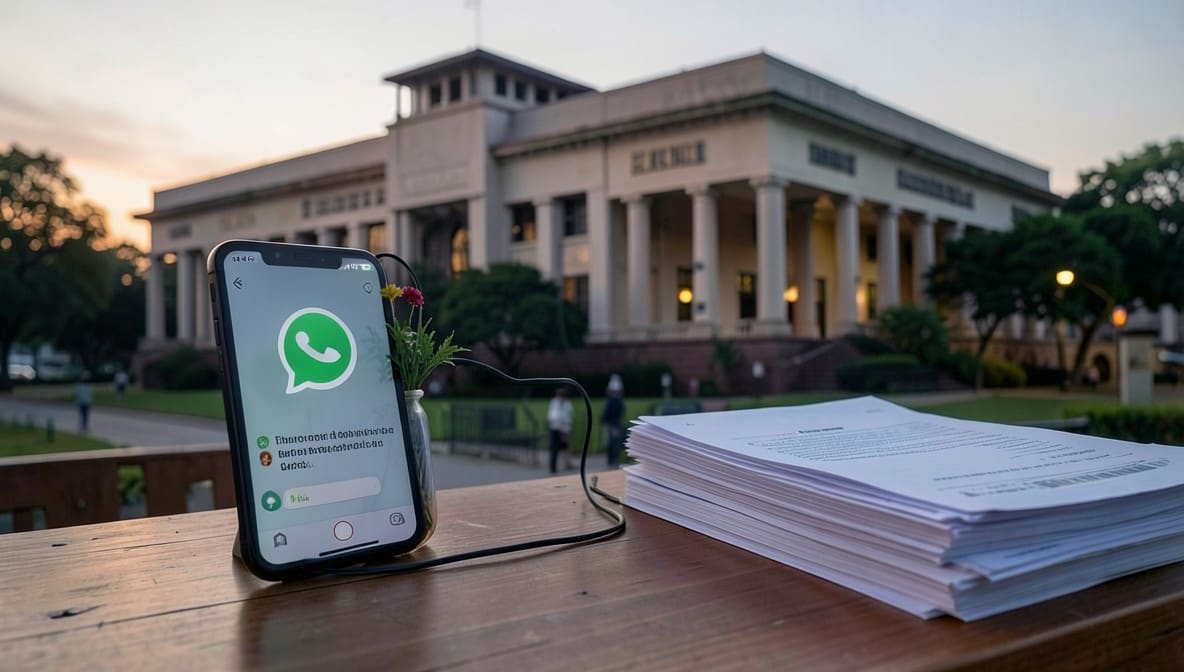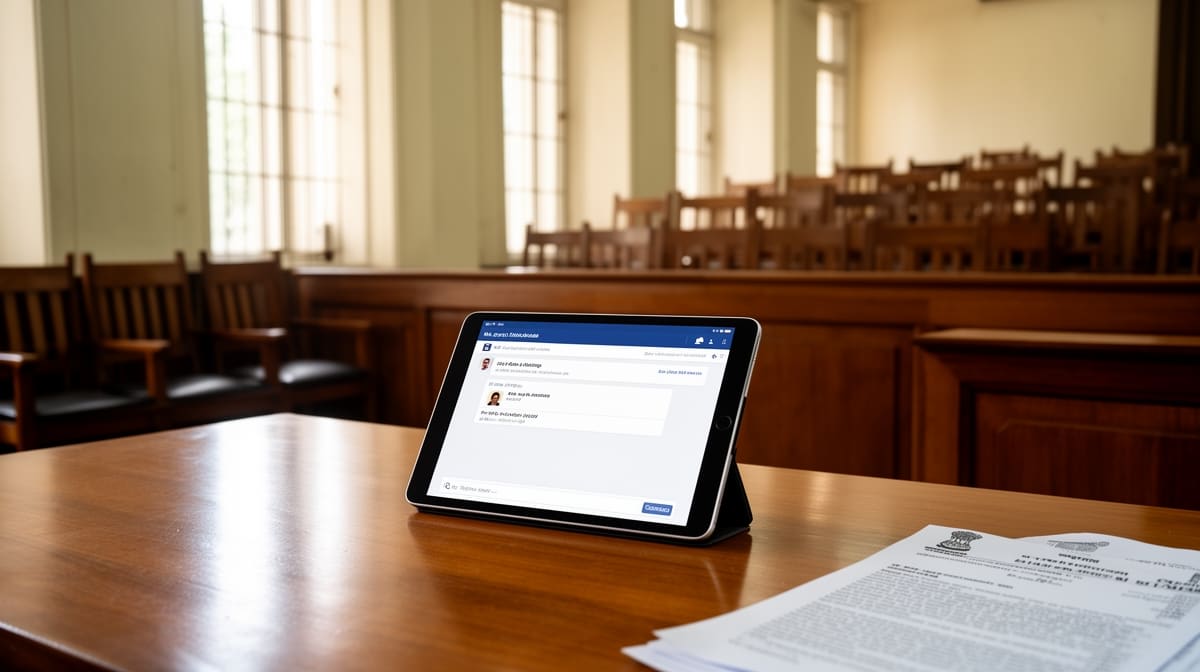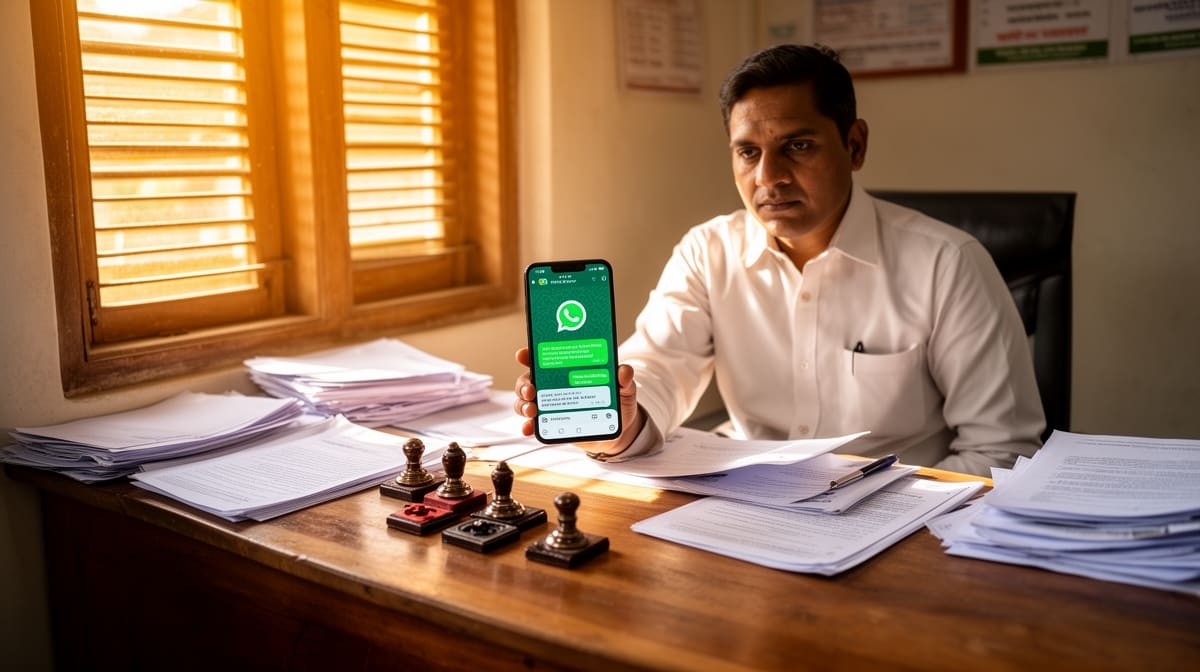
The Uttarakhand High Court has affirmed that service of legal notices via WhatsApp constitutes valid service under the Uttar Pradesh Zamindari Abolition and Land Reforms Rules, 1952, marking a significant shift in procedural compliance for revenue recovery proceedings. This ruling clarifies the adaptability of traditional legal frameworks to digital communication, with direct implications for revenue officers, land administrators, and litigants facing coercive recovery actions.
Background & Facts
The Dispute
The petitioners, Pooja Goel and Punit Kumar Goel, were penalized Rs. 52,89,700 under the Uttarakhand Minerals (Prevention of Illegal Mining, Illegal Transportation and Illegal Storage) Rules, 2021, for excavating and selling minor minerals. The penalty order, dated 27.08.2025, was passed ex parte by the District Magistrate, Nainital. The petitioners filed an appeal under Rule 15 of those Rules before the Commissioner, Kumaon Division, which remained pending admission as of 26.02.2026.
Procedural History
- 27.08.2025: District Magistrate imposed penalty and directed deposit within one month.
- 08.01.2026: Tehsildar, Ramnagar, issued a citation to appear under the Uttar Pradesh Zamindari Abolition and Land Reforms Rules, 1952, for non-payment of penalty.
- After non-appearance: Arrest warrants were issued against Punit Kumar Goel under Rule 247-A of the 1952 Rules.
- Service Method: Citation and arrest warrants were served via WhatsApp, which the petitioners challenged as invalid.
Relief Sought
The petitioners sought quashing of the arrest warrants and declaration that WhatsApp service violated Rule 247-A and Rule 239 of the 1952 Rules. They also sought stay of coercive action pending appeal.
The Legal Issue
The central question was whether service of a recovery citation and arrest warrant via WhatsApp satisfies the statutory requirements of Rule 247-A of the Uttar Pradesh Zamindari Abolition and Land Reforms Rules, 1952, or whether physical or registered postal service remains the only valid mode.
Arguments Presented
For the Petitioner
Learned counsel contended that Rule 247-A mandates service by registered post or personal delivery, and WhatsApp service is neither recognized nor contemplated under the Rules. Further, the joint issuance of citation against both petitioners violated Rule 239, which requires individual service. They argued that digital service without consent or acknowledgment undermines due process and violates the principle of audi alteram partem.
For the Respondent
The State contended that the petitioners had actual knowledge of the proceedings, as evidenced by their filing of an appeal. The use of WhatsApp was a practical, cost-effective, and timely method of communication in the digital age. The State argued that rigid adherence to outdated service norms should not override the reality of modern communication, especially where no prejudice was shown.
The Court's Analysis
The Court rejected the petitioners’ argument that WhatsApp service is per se invalid. It observed that Rule 247-A does not explicitly exclude electronic modes of communication, and its purpose is to ensure actual notice - not to prescribe a single, inflexible method. The Court emphasized that the Rules must be interpreted in light of technological advancement and the principle of substantive justice.
"In this age of electronic development, service over ‘WhatsApp’ shall be considered to be the proper service upon the petitioners."
The Court noted that the petitioners had not denied receipt of the WhatsApp messages and had actively pursued their appeal, indicating actual notice. The Court further held that while Rule 239 requires individual service, the joint citation did not vitiate the proceedings since the petitioners were jointly liable under the mineral rules and had not demonstrated prejudice.
The Court declined to interfere with the arrest warrants outright, recognizing the State’s legitimate interest in recovery. However, it balanced procedural fairness by granting liberty to seek interim stay before the appellate authority and imposed a time-bound obligation on the Commissioner to decide the application within three weeks.
The Verdict
The petitioners did not succeed in quashing the warrants, but the Court granted them procedural relief. The Court held that WhatsApp service satisfies Rule 247-A when actual notice is established, and directed the appellate authority to decide the stay application within three weeks, with no coercive action permitted until then.
What This Means For Similar Cases
Electronic Service Is Now Presumptively Valid
- Practitioners must now assume that WhatsApp service is legally sufficient unless proven ineffective or denied
- Revenue officers may rely on WhatsApp for citations, notices, and recovery proceedings under land reform rules
- Petitioners must demonstrate actual non-receipt or technical failure to challenge service
Stay Applications Must Be Timely and Specific
- Parties cannot bypass appellate remedies by approaching High Courts prematurely
- Interim relief applications before appellate authorities must be filed promptly and with clear grounds
- Courts will enforce strict timelines for appellate disposal of stay applications
Joint Citations Are Permissible Where Liability Is Joint
- Where multiple parties are jointly liable under the substantive law (e.g., mining violations), joint service under Rule 239 does not invalidate proceedings
- Separate service is mandatory only when liability is individual and distinct
- Practitioners should analyze the nature of liability before challenging joint notices