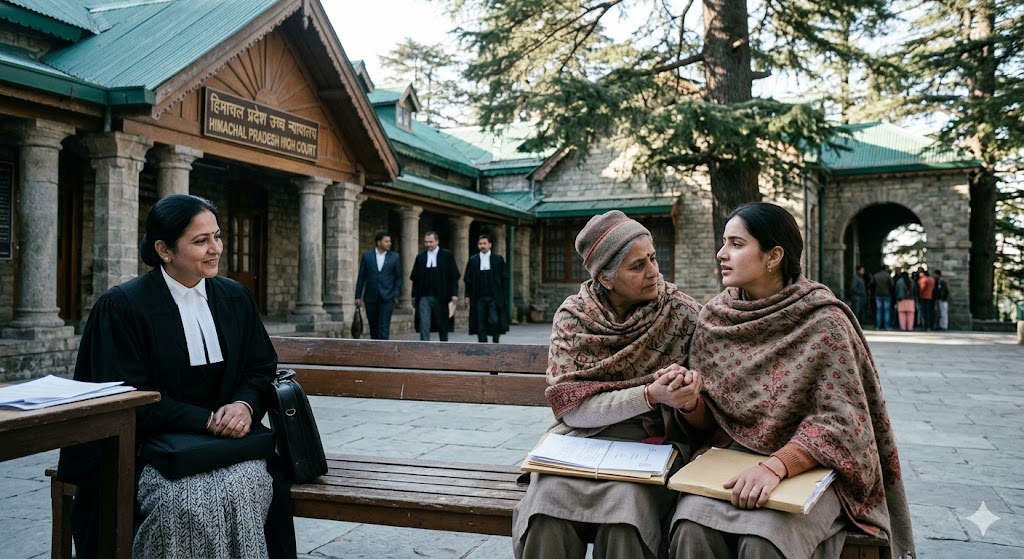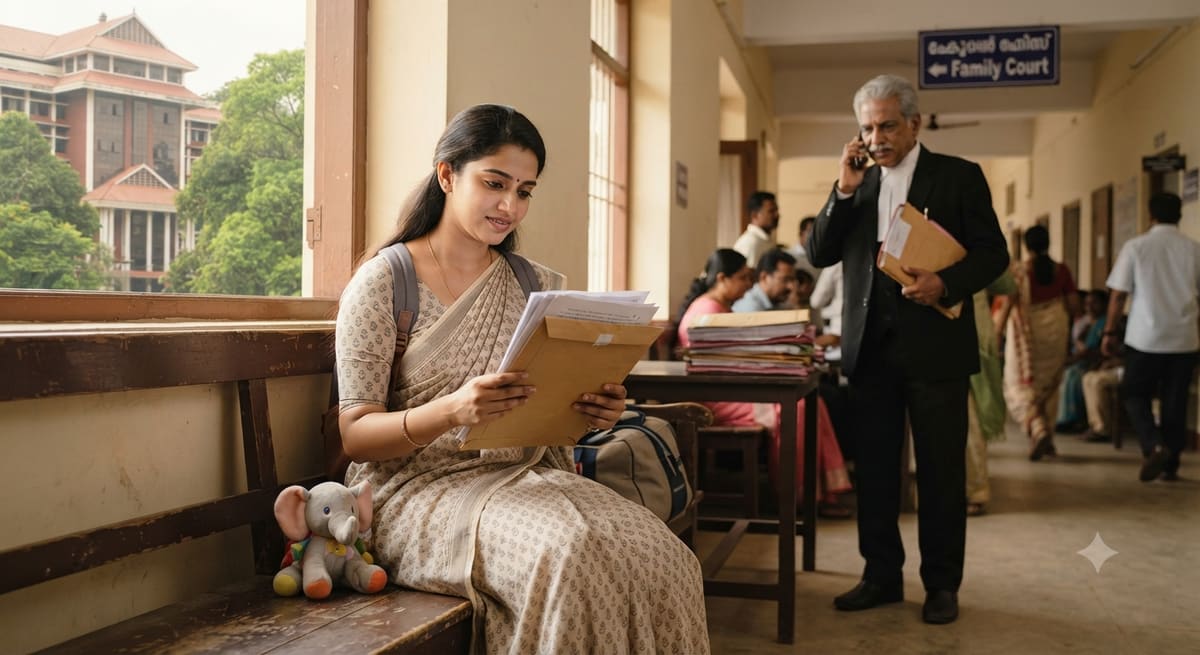
The Himachal Pradesh High Court has affirmed that the convenience and financial vulnerability of a wife are decisive factors in granting transfer of a matrimonial petition under Section 24 of the Code of Civil Procedure. In a case marked by uncontroverted allegations of domestic abuse and extreme geographical hardship, the Court prioritized equitable access to justice over procedural formalities.
Background & Facts
The Dispute
The petitioner, Abhilekha Chaudhary, is the wife in a matrimonial dispute initiated by her husband, Puneet Bhaniari. The husband filed a petition under Section 13(1)(ia) and (ib) of the Hindu Marriage Act, 1955, seeking dissolution of marriage before the Family Court in Dharamshala, Kangra. The petitioner now seeks transfer of the same case to the Family Court in Kullu, where she resides, citing severe financial hardship and physical inaccessibility.
Key Facts
- The petitioner and respondent were married on 03.11.2020 as per Hindu rites and rituals.
- They have one minor son, Rudhvik Bhaniari, born after two years of marriage.
- The petitioner alleges that after the child’s birth, the respondent began subjecting her to physical abuse, mental torture, and substance abuse (liquor and Charas).
- On 15.04.2024, the petitioner lodged an FIR at the Women Police Station, Kullu, under Sections 498-A, 323, 342, 406, 504, and 506 IPC.
- The respondent previously filed a divorce petition in the Family Court, Kangra, which he later withdrew.
- The petitioner filed a maintenance petition under Section 144 of the Bharatiya Nagarik Suraksha Sanhita (BNSS) before the Family Court, Kullu, seeking monthly support for herself and her child.
- The respondent has now refiled the divorce petition under Section 13(1)(ia) and (ib) of the Hindu Marriage Act before the Additional Principal Judge, Family Court, Dharamshala, Kangra.
- The petitioner is unemployed, has no independent income, and is currently residing at her parental home at Mountain Shack Hotel, Tibetan Colony Road, Patlikuhal, Lower Dobhi, Kullu.
- The distance between her residence in Kullu and the Family Court in Dharamshala is approximately 178 kilometers.
- The petitioner cannot afford the recurring travel and accommodation expenses required to attend hearings in Dharamshala.
Procedural History
- 03.11.2020: Marriage between petitioner and respondent.
- 15.04.2024: FIR lodged by petitioner at Women Police Station, Kullu.
- 2024 (exact date not specified): First divorce petition filed by respondent in Family Court, Kangra; later withdrawn.
- 2024 (exact date not specified): Petitioner filed maintenance petition under Section 144 BNSS before Family Court, Kullu.
- 2025: Respondent refiles divorce petition as HMA No. 376 of 2025 before Family Court, Kangra (Dharamshala).
- 2026: Petitioner files CMPMO No. 153 of 2026 under Section 24 CPC seeking transfer to Family Court, Kullu.
- 07.05.2026: Notice served on respondent; no appearance filed.
The Parties' Positions
Petitioner’s Position: The petitioner contends that the ongoing litigation in Dharamshala imposes an unreasonable burden on her due to her financial incapacity and the 178-kilometer distance. She asserts that the case should be heard in Kullu, where she resides, where she has already initiated maintenance proceedings, and where the alleged abuse occurred. She further states that the respondent has not contested any of her factual assertions.
Respondent’s Position: The respondent did not appear before the High Court despite service of notice. No written submission, affidavit, or counter-allegation was filed. The Court treated the petitioner’s allegations as uncontroverted.
Relief Sought
The petitioner seeks transfer of HMA No. 376 of 2025 from the Family Court, Kangra (Dharamshala), to the Family Court, Kullu, on grounds of convenience, financial hardship, and the principle of equitable access to justice.
The Legal Issue
The central question was whether Section 24 of the Code of Civil Procedure permits transfer of a matrimonial petition to a court closer to the wife’s residence when she is financially vulnerable, the distance to the original forum is substantial, and the husband has failed to contest the allegations.
Arguments Presented
For the Petitioner
The petitioner relied on the principle that in matrimonial disputes, the convenience of the wife is a paramount consideration, especially when she is economically disadvantaged and has no means to travel long distances for repeated hearings. She cited judicial precedents emphasizing that courts must ensure access to justice is not denied due to geographical or financial barriers. She argued that since the alleged abuse occurred in Kullu, the FIR was lodged there, and maintenance proceedings are already pending there, transferring the case would promote judicial efficiency and reduce trauma.
For the Respondent
The respondent did not appear or file any response. The Court noted that the allegations made by the petitioner remained uncontroverted, and no counter-evidence or objection was raised.
The Court's Analysis
The Court observed that Section 24 CPC empowers it to transfer any suit or proceeding from one court to another if it deems it necessary for the ends of justice. In matrimonial matters, the Court emphasized that the welfare and convenience of the wife, particularly when she is economically dependent and subjected to abuse, must be given overriding weight.
"The convenience of the wife is paramount consideration, in such type of matters, coupled with the fact that whatsoever pleaded by the petitioner-wife, in the petition, remained uncontroverted, this Court is of the view that the present petition is liable to be allowed."
The Court noted that the respondent’s failure to appear or contest the petition amounted to an admission of the petitioner’s factual assertions. The 178-kilometer distance between Kullu and Dharamshala, coupled with the petitioner’s unemployment and inability to bear travel expenses, rendered attendance at the Kangra court practically impossible. The Court further observed that the petitioner had already initiated maintenance proceedings in Kullu, making consolidation of related matters there both logical and efficient.
The Court rejected any rigid adherence to territorial jurisdiction where such adherence would defeat the purpose of justice. It held that the transfer would not prejudice the respondent, as he would still have full opportunity to present his case before the transferee court.
The Verdict
The petition was allowed. The Court ordered the transfer of HMA Petition No. 376 of 2025 from the Family Court, Kangra (Dharamshala), to the Family Court, Kullu. The learned Principal Judge, Family Court, Kullu, was directed to proceed with the case after securing the presence of both parties. All pending miscellaneous applications were disposed of. A copy of the order was directed to be sent to both the Family Courts in Kangra and Kullu for compliance.
What This Means For Similar Cases
Convenience of the Wife Overrides Territorial Formalities
- Practitioners must now argue that in matrimonial cases involving financial hardship or domestic abuse, Section 24 CPC can be invoked to transfer proceedings to the wife’s place of residence, even if the petition was originally filed elsewhere.
- Courts are expected to prioritize accessibility over technical jurisdiction, especially when the wife is unemployed or dependent.
Non-Appearance by Respondent Strengthens Petitioner’s Case
- When the respondent fails to appear or contest allegations, courts may treat the petitioner’s factual assertions as admitted, significantly strengthening the case for transfer.
- This creates a strategic advantage for petitioners in domestic violence or maintenance-related proceedings where the respondent is evasive.
Consolidation of Related Proceedings Is Judicially Favored
- Where maintenance proceedings under BNSS and divorce petitions under the Hindu Marriage Act are pending in different jurisdictions, courts will favor consolidation in the forum where the wife resides and where abuse occurred.
- Practitioners should file transfer petitions alongside maintenance applications to maximize judicial efficiency and reduce trauma.