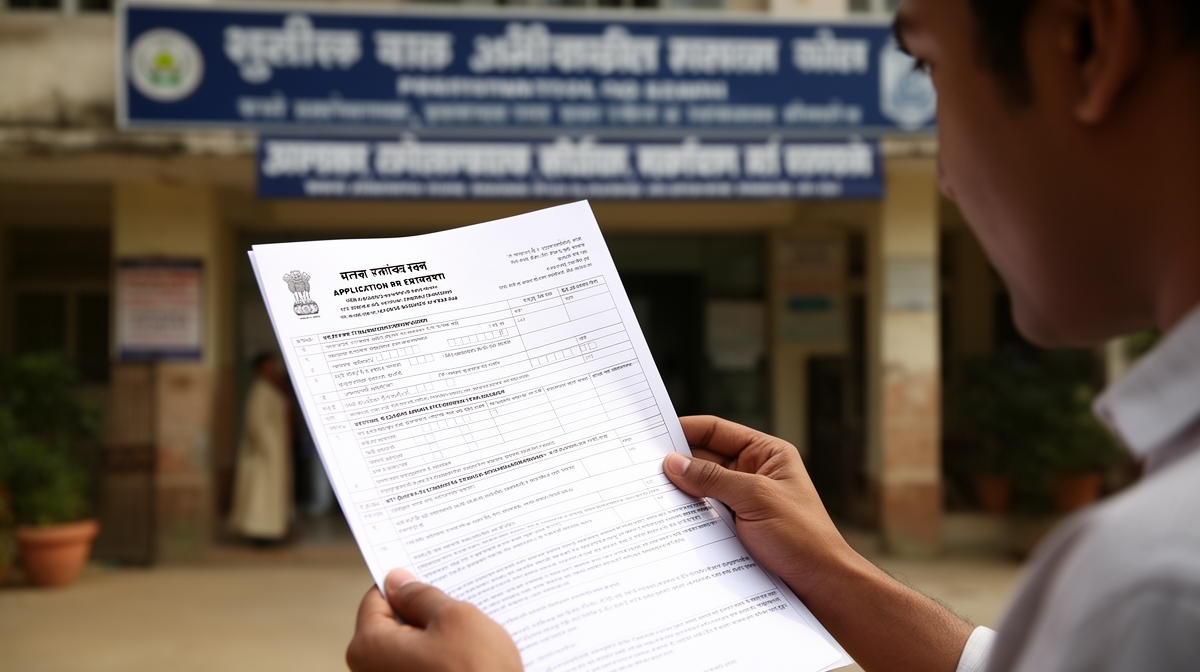

The Central Information Commission has delivered a landmark ruling affirming that the disclosure of examination marks of selected candidates in public sector recruitment cannot be denied on grounds of personal information, when such disclosure is essential to uphold transparency and fairness. This decision reinforces the primacy of public interest under the Right to Information Act, 2005, and sets a clear precedent for similar recruitment-related RTI applications across India.
Background & Facts
The Dispute
The appellant, Mohit, applied for the post of Law Officer with Hindustan Petroleum Corporation Limited (HPCL) through a competitive recruitment process involving a Computer Based Test, Group Task, Moot Court, and Personal Interview. He filed an RTI application seeking five specific pieces of information related to the selection process, including the marks scored by all five selected candidates, his own marks, and certified scorecards prepared by the interview panel. He emphasized that no personally identifiable information of other candidates would be sought, and that transparency in public sector recruitment was a matter of vital public interest.
Procedural History
The case progressed through the following stages:
- 07-06-2024: RTI application filed by the appellant
- 17-06-2024: CPIO responded with partial replies: NIL for seat allocation, weightage details provided, but refused to disclose marks of selected candidates or scorecards, directing the appellant to check his own marks online
- 28-06-2024: First appeal filed challenging the CPIO’s response
- 25-07-2024: First Appellate Authority (FAA) upheld the refusal for point no. 3 and 5, invoking Section 8(1)(j) and Section 11 of the RTI Act, while directing disclosure of the appellant’s own marks (point no. 4)
- 10-09-2024: Second appeal filed before the Central Information Commission
Relief Sought
The appellant sought full disclosure of: (1) marks of all five selected candidates, (2) his own marks, and (3) certified scorecards from the interview stages, with third-party personal details redacted. He argued that the CPIO’s refusal violated the spirit of transparency mandated under the RTI Act and that the FAA’s reliance on exemptions was legally unsustainable.
The Legal Issue
The central question was whether Section 8(1)(j) of the RTI Act, 2005 permits denial of marks scored by other candidates in a public recruitment process, even when no personally identifiable information is sought, and when disclosure is necessary to ensure transparency and fairness.
Arguments Presented
For the Appellant
The appellant relied on the Supreme Court’s judgment in Public Information Officer and Registrar & Anr v. Onkar Dattatray Kalmankar & Anr, which held that disclosure of examination marks, though personal information, must be granted if it serves public interest. He argued that the CPIO’s refusal was arbitrary, especially since the weightage system was disclosed but not the actual scores, making it impossible to verify the integrity of the process. He further contended that redaction of names and identities would fully address privacy concerns under Section 11.
For the Respondent
The respondent, HPCL, contended that the scorecards and marks of other candidates constituted personal information exempt under Section 8(1)(j) and Section 11. It further invoked Section 8(1)(c) and 8(1)(y), claiming that disclosure would endanger the lives of interview board members and breach fiduciary obligations. It maintained that the appellant could access his own marks online, rendering further disclosure unnecessary.
The Court's Analysis
The Commission conducted a rigorous analysis of the exemptions claimed and found them legally untenable. It emphasized that Section 8(1)(j) does not create an absolute bar on disclosure of personal information; rather, it requires a balancing test between privacy and public interest. The Commission noted that the appellant sought only numerical marks, not names, addresses, or other identifiers, thereby minimizing privacy intrusion.
"The disclosure of the marks though may fall in the category of personal information, yet the disclosure of this personal information is presently necessary in public interest, and therefore, it is not an information which cannot be given by the Information Officer under the RTI Act, 2005."
The Commission explicitly adopted the reasoning of the Supreme Court in Onkar Dattatray Kalmankar, holding that in public sector recruitment, where merit and fairness are paramount, the public interest in verifying the integrity of the process outweighs the privacy interest of other candidates. It further rejected the claim of endangerment to interviewers as speculative and unsupported by evidence.
Regarding the scorecards, the Commission noted that the respondent had agreed during the hearing to allow physical inspection with redaction of third-party details. This concession, coupled with the legal principle established, rendered the refusal under Section 8(1)(c) and 8(1)(y) redundant. The Commission held that redaction is a viable and legally recognized mechanism to reconcile transparency with privacy.
The Verdict
The appellant succeeded. The Commission held that Section 8(1)(j) does not exempt disclosure of examination marks when no personally identifiable information is sought and public interest demands transparency. It directed HPCL to provide the marks of all five selected candidates with redacted identities and to facilitate physical inspection of the appellant’s scorecards with third-party details hidden.
What This Means For Similar Cases
Disclosure of Marks Is Mandatory in Public Recruitment
- Practitioners must now argue that Section 8(1)(j) cannot be invoked to deny marks of other candidates in competitive public sector exams if only numerical scores are requested
- Redaction of names, roll numbers, and addresses is sufficient to satisfy privacy concerns under Section 11
- Public sector entities must proactively disclose merit lists with scores unless a compelling, evidence-based privacy threat exists
Public Interest Overrides Speculative Harm Claims
- Claims of "endangerment to interviewers" under Section 8(1)(y) must be substantiated with concrete evidence, not mere assertions
- Courts and Information Commissions will not accept vague or generalized fears as grounds for exemption
- Transparency in selection processes is now a non-negotiable public interest under the RTI Act
Redaction Is a Legally Recognized Tool
- Entities cannot refuse disclosure outright; they must offer redacted versions or inspection opportunities
- The burden shifts to the public authority to demonstrate why redaction is insufficient
- Practitioners should routinely request inspection with redaction as an alternative to outright denial in RTI appeals