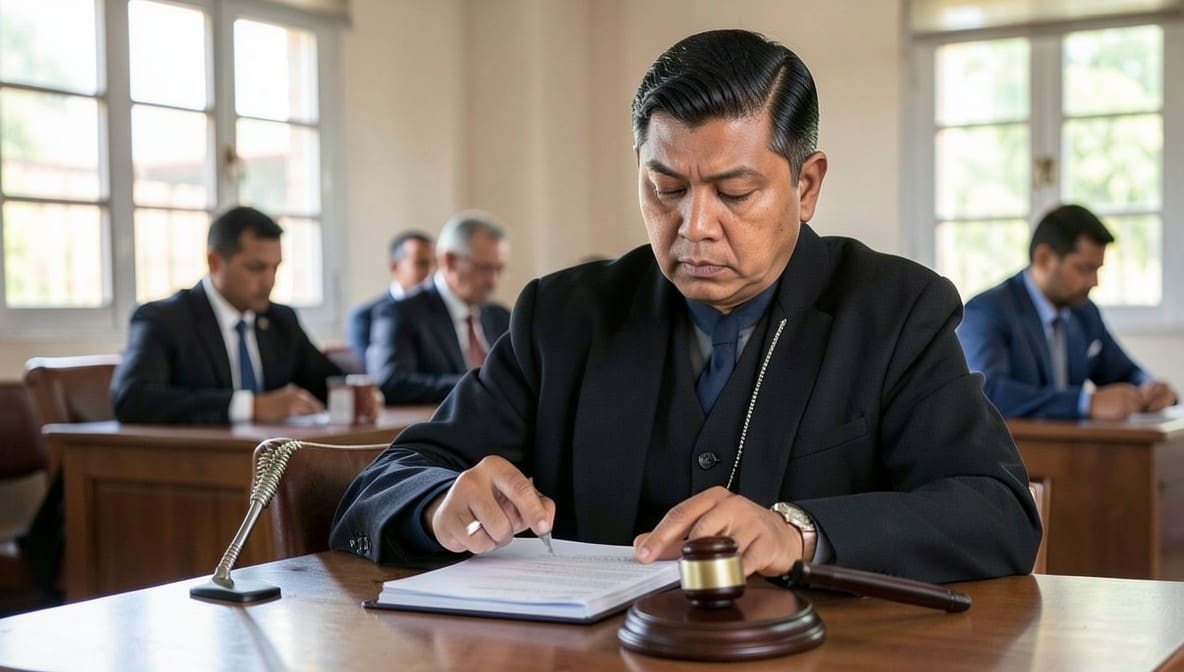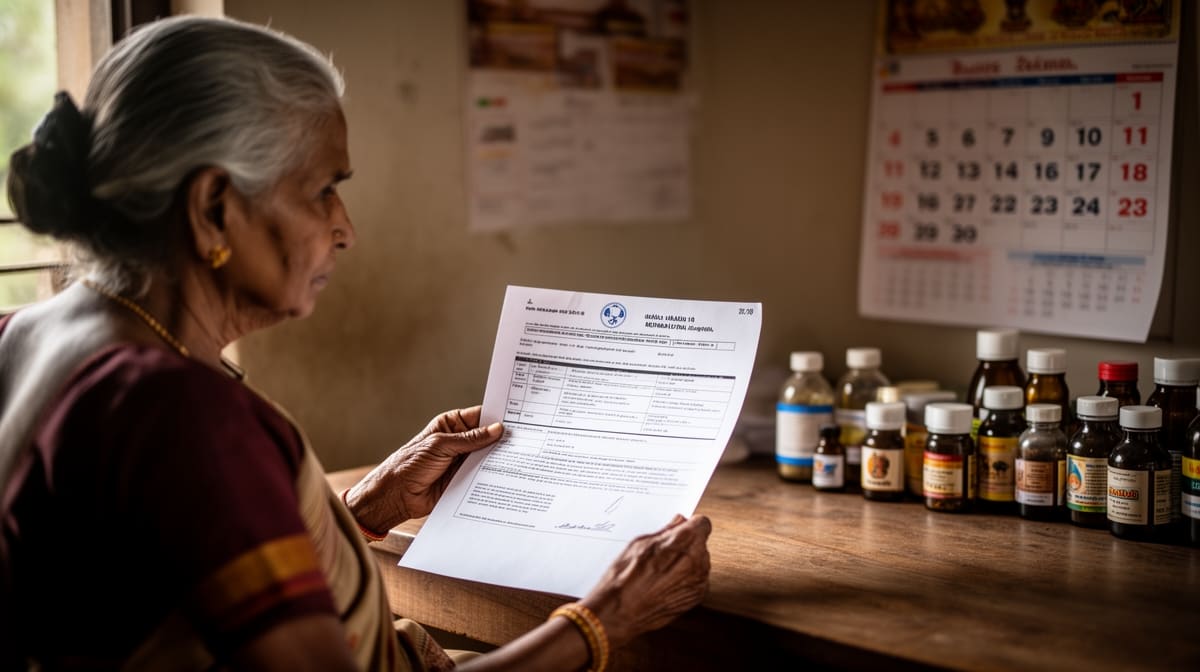
The Madras High Court has clarified that the source of a medical certificate - whether from an allopathic or traditional medicine practitioner - is irrelevant under Section 5 of the Limitation Act, provided the illness is substantiated. This ruling reinforces that courts must focus on the sufficiency of the explanation for delay, not the formality of the documentation.
Background & Facts
The Dispute
The plaintiff filed Original Suit No.192 of 2013 seeking cancellation of a sale deed, permanent injunction, and return of original documents. The second defendant failed to appear during trial, leading to an ex-parte decree on August 20, 2018. She later claimed she was incapacitated due to viral fever and undergoing Siddha treatment, which prevented her from appearing in court.
Procedural History
- August 20, 2018: Ex-parte decree passed against the second defendant
- 2020: Second defendant filed I.A. No.80 of 2020 under Order IX Rule 13 CPC to set aside the ex-parte decree
- 2020: Simultaneously filed application under Section 5 of the Limitation Act, 1963 seeking condonation of 470-day delay
- July 14, 2022: Trial Court condoned the delay upon payment of Rs.3,000 as costs
- 2022: Plaintiff filed Civil Revision Petition under Section 115 CPC challenging the condonation order
- July 29, 2024: First petitioner (plaintiff) died; his legal representatives (wives and daughters) were brought on record
Relief Sought
The revision petitioner sought to set aside the Trial Court’s order condoning delay, arguing suppression of facts due to reliance on an allopathic medical certificate despite claiming Siddha treatment.
The Legal Issue
The central question was whether reliance on a medical certificate issued by an allopathic doctor, while claiming treatment under Siddha medicine, invalidates the explanation for delay under Section 5 of the Limitation Act, 1963.
Arguments Presented
For the Petitioner
The revision petitioner contended that the second defendant suppressed material facts by submitting an allopathic medical certificate (Ex-P.1) while asserting she was under Siddha treatment. Counsel argued this inconsistency undermined the credibility of her explanation and rendered the Trial Court’s condonation order erroneous. He relied on the principle that courts must scrutinize explanations for delay with caution, especially where documentation appears contradictory.
For the Respondent
The respondent countered that the nature of treatment - Siddha or allopathic - was immaterial. She submitted that Siddha practitioners rarely issue formal medical certificates, and obtaining one from an allopathic doctor was a pragmatic step to substantiate her illness. Counsel cited M.K. Prasad v. P. Arumugam to emphasize that courts must assess the sufficiency of reasons, not their formality, and that natural justice demands adjudication on merits.
The Court's Analysis
The Court examined the purpose of Section 5 of the Limitation Act, which permits condonation of delay if sufficient cause is shown. It held that the length of delay is not decisive; the sufficiency and acceptability of the reason are paramount. The Court noted that the second defendant had filed a sworn affidavit, examined herself as P.W.1, and produced a medical certificate corroborating her illness during the relevant period.
"Medical Certificates are not common among Siddha practitioners and are generally stigmatised as of less value. For this reason, the second defendant might have obtained medical certificate from Allopathy Doctor."
The Court rejected the petitioner’s argument that the mismatch between claimed treatment and certificate source amounted to suppression. It observed that there was no evidence of fraud, collusion, or false representation. The certificate’s issuer was irrelevant unless the facts suggested deliberate misrepresentation - which they did not. The Trial Court’s decision to condone delay was grounded in a balanced appreciation of evidence and adherence to the principle of adjudicating cases on their merits.
The Court further emphasized that procedural technicalities must not override substantive justice, particularly where the defendant’s illness was corroborated by objective documentation.
The Verdict
The revision petition was dismissed. The Madras High Court held that a medical certificate from an allopathic doctor is sufficient to establish sufficient cause for delay under Section 5 of the Limitation Act, even when the party claims treatment under alternative medicine systems. The Trial Court’s order condoning delay was upheld.
What This Means For Similar Cases
Medical Documentation Is Functional, Not Formalistic
- Practitioners need not insist on certificates from the treating system; any credible medical proof establishing incapacity suffices
- Courts must evaluate the substance of the illness claim, not the institutional source of the certificate
- A certificate from a government hospital, private allopathic doctor, or even a registered Ayurvedic practitioner is equally valid if it corroborates the claim
Delay Condonation Hinges on Sufficiency, Not Perfection
- The burden is not to prove the exact medical regimen, but to show a genuine inability to appear
- Courts should avoid nitpicking inconsistencies unless there is clear evidence of fabrication
- This judgment reinforces that Section 5 is remedial in nature and must be interpreted liberally to prevent injustice
Siddha, Ayurveda, and Unconventional Treatments Are Legally Recognized
- Traditional medicine systems are not legally inferior to allopathy in civil procedure
- Parties are not required to conform to Western medical norms to claim illness-based delay
- This removes a potential barrier for litigants from rural or traditional backgrounds seeking access to justice