The Bombay High Court has reinforced the stringent standard for trademark protection in the pharmaceutical sector, granting an interim injunction against the use of LIVOGEM due to its deceptive similarity to the well-established LIVOGEN mark. The judgment underscores that even the slightest possibility of confusion between medicinal products must be restrained to protect public health, irrespective of commercial co-existence or alleged bonafide adoption.
Background & Facts
The Dispute
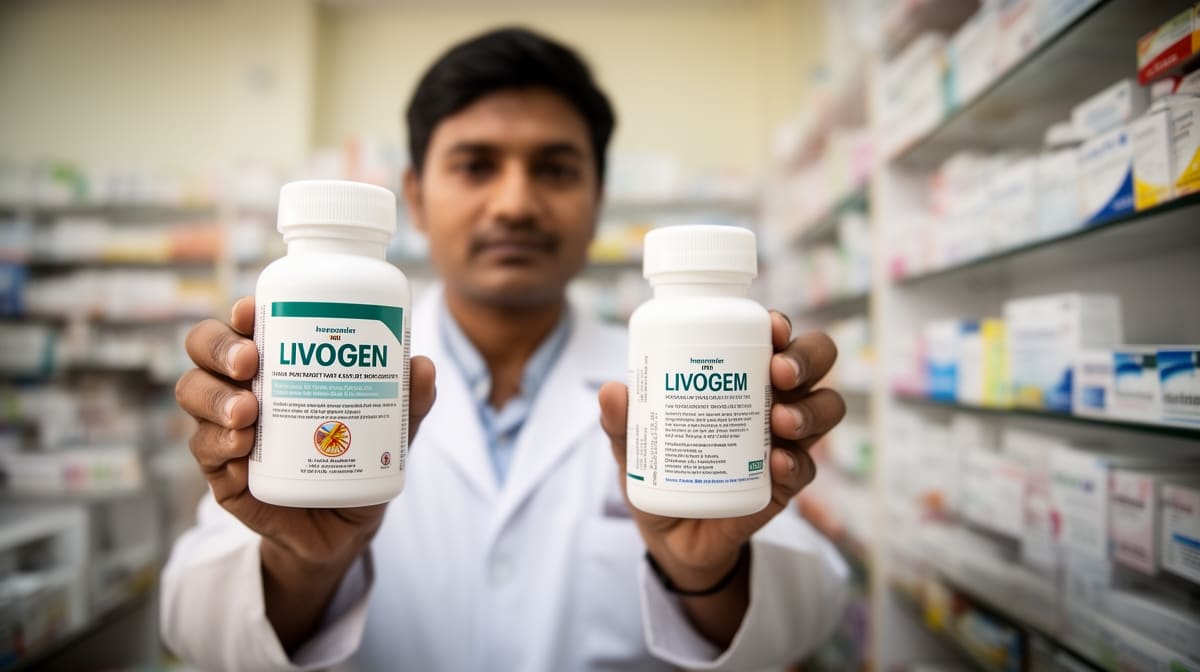
The Plaintiffs, Procter & Gamble Health Limited and P&G Health Germany GmbH, are the registered proprietors of the trademark LIVOGEN, first used in India in 1967 and registered as early as 1942. They also hold registration for LIVOGEN-Z, filed in 2013 with a claimed user date of 2001. The Plaintiffs manufacture and market LIVOGEN as a blood health supplement containing iron, folic acid, and B-complex vitamins, primarily for treating iron deficiency anemia in adults, pregnant women, and children. The Defendants, Horizon Bioceuticals Pvt. Ltd. and Curewell Drugs & Pharmaceuticals Pvt. Ltd., adopted and began marketing a product under the mark LIVOGEM in 2012, claiming it supports liver health and digestion.
Key Facts
- The Plaintiffs’ trademark LIVOGEN was first used in 1930 by predecessor British Drug House Limited and registered in India in 1942 (Reg. No. 9596) and later in 2010 (Reg. No. 2599064).
- Sales turnover for LIVOGEN from 2010 to 2024 and advertising expenditure from 2021 to 2024 were detailed in the Plaint.
- The Defendants filed an application for registration of LIVOGEM in Class 5 on 28 May 2024, claiming user since 13 July 2012.
- The Defendants claim LIVOGEM was conceived on 7 February 1997 but provided no evidence of use prior to 2012.
- The Plaintiffs’ product is a Schedule H drug requiring prescription; the Defendants’ product is classified as a nutraceutical under FSSAI guidelines.
- Active ingredients differ: Plaintiffs’ product contains Ferric Ammonium, Folic Acid, Cyanocobalamin; Defendants’ contains Choline Citrate, Silymarin, Niacin.
- The Defendants also own the registered trademark OSSIGEM, using the suffix "GEM" across multiple products.
- The Defendants produced invoices and stock transfer notes from 2012 to 2022 to prove use.
- The Plaintiffs discovered the Defendants’ mark through the trademark journal and subsequent market investigation in July 2024.
Procedural History
- 28 May 2024: Defendant No. 1 files trademark application for LIVOGEM in Class 5.
- June 2024: Plaintiffs file opposition to the trademark application.
- July 2024: Plaintiffs initiate commercial IP suit (No. 38975 of 2025) for trademark infringement and passing off.
- August 2025: Defendants file affidavit-in-reply with evidence of use since 2012 and list of third-party trademarks with prefix "LIVO".
- 4 February 2026: Interim application (IA-L-39102-2025) heard and reserved.
- 17 March 2026: Order pronounced granting interim injunction.
The Parties' Positions
Plaintiffs: Argue that LIVOGEM is visually and phonetically deceptively similar to LIVOGEN. Emphasize the high public health stakes, the established reputation of LIVOGEN, and the absence of any bona fide search by Defendants before adoption. Cite Cadila Health Care Ltd. v. Cadila Pharmaceuticals Ltd. to assert that even the slightest possibility of confusion in pharmaceuticals warrants injunction.
Defendants: Claim LIVOGEM is a coined term: "LIVO" (indicative of liver) + "GEM" (denoting quality). Argue that "LIVO" is a common prefix in pharmaceutical trademarks (e.g., LIVOTONE, LIVOGIN) and that "GEM" differs from "GEN". Assert co-existence since 2012 without consumer confusion. Claim their product is a nutraceutical, not a medicine, and thus distinct in channel and use.
Relief Sought
The Plaintiffs seek an interim injunction restraining the Defendants from using the mark LIVOGEM or any deceptively similar mark in relation to any pharmaceutical or health product, pending final disposal of the suit.
The Legal Issue
The central question was whether the mark LIVOGEM, used in relation to liver health supplements, is deceptively similar to the registered trademark LIVOGEN for blood health products, such that it creates a likelihood of confusion among consumers, thereby warranting an interim injunction under Section 29(2) of the Trade Marks Act, 1999.
Arguments Presented
For the Appellant/Petitioner
The Plaintiffs relied on Cadila Health Care Ltd. v. Cadila Pharmaceuticals Ltd. to argue that in the pharmaceutical sector, the threshold for confusion is exceptionally low due to public health risks. They contended that the marks must be compared as a whole, not dissected into components. The Plaintiffs emphasized that the Defendants’ use of "LIVO" as a prefix does not establish common usage in trade, as mere registration on the trademark register does not prove market use. They cited Corn Products Refining Co. v. Shangrilla Food Products Ltd. to show that presence in the register is not evidence of user. The Plaintiffs further argued that the Defendants’ failure to conduct a trademark search before adopting LIVOGEM renders their adoption negligent and at their own peril, as held in Macleods Pharmaceuticals Ltd. v. Intas Pharmaceuticals Ltd.
For the Respondent/State
The Defendants argued that LIVOGEM is a coined term with a distinct suffix "GEM" differing from "GEN" in LIVOGEN. They submitted that "LIVO" is a descriptive prefix widely used in the industry, citing third-party registrations and e-commerce listings. They claimed co-existence since 2012 without any documented consumer confusion, and that their product is a nutraceutical, not a prescription drug, thus operating in a different commercial channel. They relied on Macleods v. Intas and Sun Pharma v. West Coast Pharma to argue that dissimilarity in active ingredients and product classification negates confusion. They also contended that the Plaintiffs failed to prove goodwill through certified financial records and did not establish misrepresentation for passing off.
The Court's Analysis
The Court conducted a rigorous comparative analysis of the marks LIVOGEN and LIVOGEM, applying the principles laid down in Cadila Health Care Ltd. v. Cadila Pharmaceuticals Ltd. and Macleods Pharmaceuticals Ltd. v. Intas Pharmaceuticals Ltd. The Court held that the pharmaceutical context demands a stricter standard: "It is not the probability of confusion but the slightest possibility of confusion which is required to be restrained."
"The Court may not speculate as to whether there is a probability of confusion between the marks. Mere existence of the slightest probability of confusion in case of medicinal product marks, requires that the use of such mark be restrained."
The Court rejected the Defendants’ argument that "LIVO" is common to trade. It held that mere registration of other marks containing "LIVO" does not establish market use or reputation, citing Corn Products Refining Co. v. Shangrilla Food Products Ltd. The Court noted that the Defendants’ own application for registration of LIVOGEM estops them from claiming the prefix is generic or descriptive.
The Court further found that the uncommon elements "GEN" and "GEM" are visually and phonetically indistinguishable in casual utterance. A pharmacist, under pressure, may mishear or misread LIVOGEN as LIVOGEM, leading to potentially dangerous substitution of drugs with different indications. The Court dismissed the distinction between Schedule H drugs and nutraceuticals, noting that both are sold through pharmacies and consumed by the same public.
The Court also rejected the defence of co-existence since 2012, holding that "co-existence without search is not a defence" and that the Defendants failed to take the elementary precaution of checking the trademark registry. The Court emphasized: "The duty of the Court must always be to protect the public, irrespective of what hardship or inconvenience it may cause to a particular party whose trademark is likely to deceive or cause confusion."
Regarding passing off, the Court found insufficient evidence of misrepresentation or consumer deception, noting the Plaintiffs had not submitted certified sales data or proof of actual confusion. The claim for passing off was therefore not granted at the interim stage.
The Verdict
The interim application was allowed. The Court granted an interim injunction restraining the Defendants, their agents, distributors, and all persons acting in concert, from using the mark LIVOGEM or any deceptively similar mark in relation to any pharmaceutical or health product, pending final disposal of the suit. The injunction applies to all forms of use, including packaging, advertising, and online sales. The Court directed the Defendants to file their written statement within four weeks and set the next hearing for 15 April 2026.
What This Means For Similar Cases
Pharmaceutical Trademarks Demand the Highest Vigilance
- Practitioners must argue that even minor visual or phonetic similarities between drug names warrant injunctions under Section 29(2), regardless of product classification (prescription vs. nutraceutical).
- Evidence of co-existence without trademark search is not a valid defence; failure to check the registry renders adoption negligent.
- The burden shifts to the defendant to prove extensive, bona fide use of a common prefix - mere registration on the trademark database is insufficient.
Dissection of Marks Is Prohibited
- Courts will compare marks as a whole; arguments based on differing suffixes (e.g., "GEN" vs. "GEM") are unlikely to succeed if the overall impression is confusing.
- Phonetic similarity, especially in high-risk sectors, carries equal weight to visual similarity.
- The "anti-dissection rule" is strictly applied in pharmaceutical trademark disputes.
Public Interest Overrides Commercial Convenience
- Courts will prioritize public health over commercial interests, even if the defendant has invested in branding since 2012.
- Injunctions are granted based on potential harm, not actual harm - no proof of consumer confusion is required.
- Plaintiffs must still substantiate goodwill with certified financials for passing off claims, but infringement claims can proceed on registration and similarity alone.