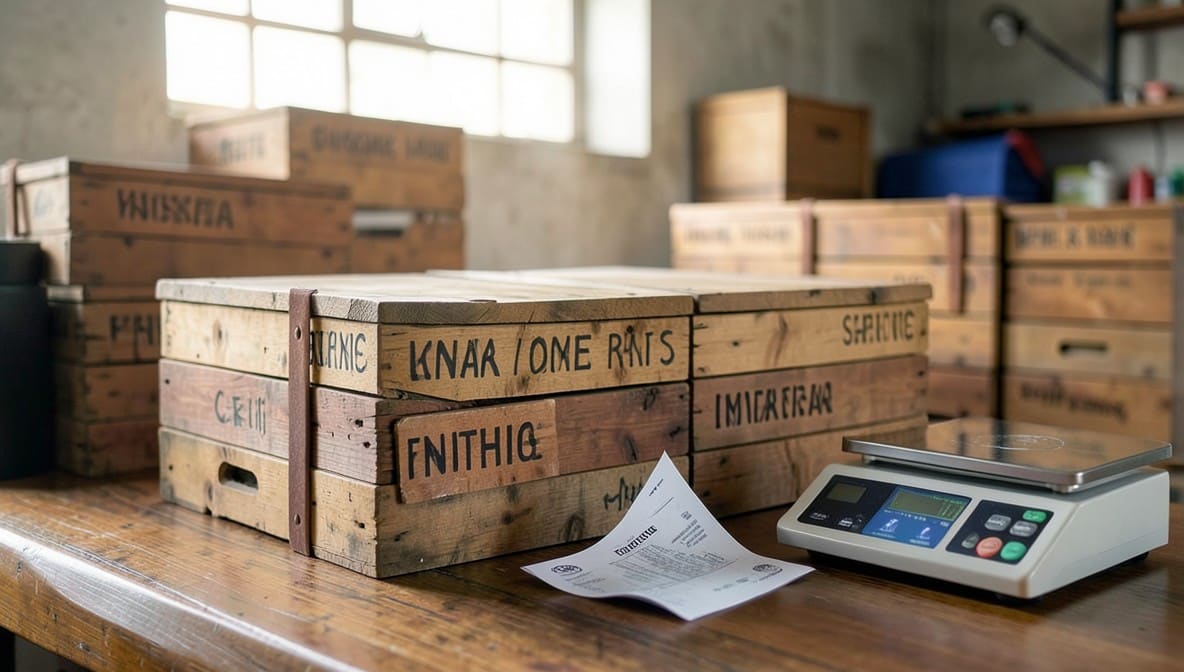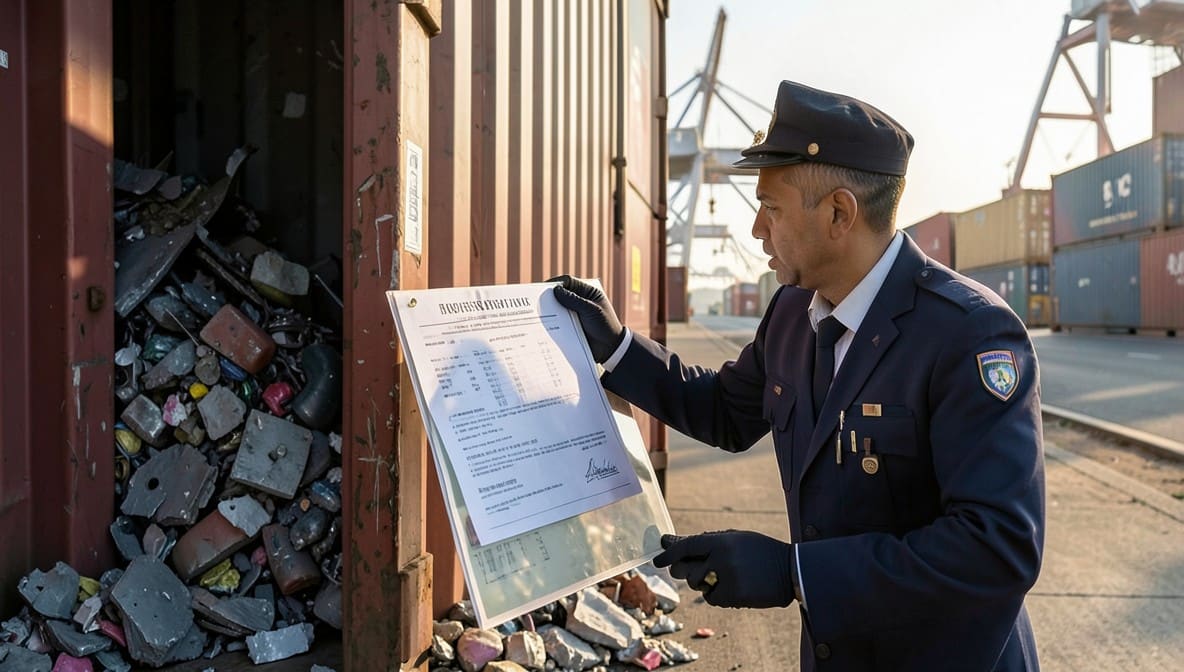
The Calcutta High Court clarified that the Customs Act, 1962 and the Food Safety and Standards Act, 2006 operate in distinct, concurrent legislative fields at the border, rejecting the view that FSSAI exclusively controls sampling of imported food consignments. The Court held that Customs officers retain independent power under Section 144 of the Customs Act to draw samples for tariff classification, valuation, and revenue protection even where food safety concerns arise, emphasizing that statutory mechanisms must be read harmoniously.
Background & Facts
The Dispute
The core controversy involved the statutory authority to draw samples, classify goods, and investigate revenue fraud in an imported consignment of foreign-origin Areca nuts intercepted at Inland Container Depot (ICD) Durgapur. The Directorate of Revenue Intelligence (DRI) and Customs authorities alleged intentional misdeclaration of prohibited dried Areca nuts as roasted Areca nuts to evade customs duties and circumvent Minimum Import Price (MIP) restrictions, while the importer maintained the consignment was lawfully imported and compliant with all regulations.
Key Facts
- The importing entity M/s Credence International (IEC: AJLPK2889F) procured the consignment from Belawan Port, Indonesia
- The cargo arrived under Import General Manifest (IGM) No. 1152662 dated August 31, 2025 at Kolkata Port
- Following arrival, the consignment underwent in-bond transshipment to ICD Durgapur
- On September 11, 2025, the importer filed Bill of Entry No. 4451174 declaring the cargo as "Roasted Areca Nuts" under Customs Tariff Heading (CTH) 20081991
- The declared shipment comprised three containers (TIDU5213432, TIDU5229125, TIDU5228026) weighing 84.48 metric tons with an assessable value of Rs.1,12,21,197
- Based on specific intelligence indicating misdeclaration to bypass DGFT MIP conditions and CBIC Tariff Values, the DRI Kolkata Zonal Unit issued an Alert Notice on September 15, 2025, holding the consignment and preventing its routing to the Food Import Clearance System (FICS) on ICEGATE
- Jurisdictional Customs and DRI officers examined the cargo on September 22, 2025 and recorded statements under Section 108 of the Customs Act
- Representative samples were drawn under Section 144 of the Customs Act on September 24, 2025 and sent to the National Food Laboratory (NFL), Kolkata
- NFL issued test reports on September 26, 2025 declaring the samples unsafe under Section 3(1)(zz) of the FSS Act due to mould, insect infestation and excessive aflatoxin content
- Upon the importer's re-testing request, samples were dispatched to the Central Revenues Control Laboratory (CRCL), New Delhi
- CRCL initially reported on December 18, 2025 as "other than roasted areca nut"
- Final CRCL reports dated March 12 and 13, 2026 (following redrawn samples on January 22 and February 20, 2026) confirmed the cargo was misdeclared and unfit for human consumption
- Consequently, Customs seized the three containers under Section 110(1) of the Customs Act on October 07, 2025
- A formal show cause notice was issued on September 11, 2026
Procedural History
- September 11, 2025: Bill of Entry No. 4451174 filed at ICD Durgapur
- September 15, 2025: DRI Alert Notice issued
- September 22, 2025: Cargo examination by Customs/DRI officers
- September 24, 2025: Samples drawn under Section 144 Customs Act
- September 26, 2025: NFL test report declaring samples unsafe
- October 07, 2025: Customs seizure of consignment under Section 110(1)
- December 18, 2025: Initial CRCL report
- January 22 & February 20, 2026: Redrawn samples sent to CRCL
- March 12 & 13, 2026: Final CRCL reports confirming misdeclaration
- September 11, 2026: Show cause notice issued
- July 15, 2026: Hon'ble Single Judge allowed writ petitions (W.P.O. No. 263 of 2026 and connected W.P.O. No. 262 of 2026), holding FSSAI officers as sole competent authority to draw samples, declaring Customs sampling illegal and void, quashing NFL and CRCL reports, and ordering fresh sampling through FSSAI-authorized officers
- October 15, 2026: Pronouncement of the present Division Bench judgment setting aside the Single Judge's order
Relief Sought
The appellant/revenue sought to set aside the Single Judge's judgment and order dated July 15, 2026, which had:
- Declared FSSAI-authorized officers as the sole competent authority to draw samples for every purpose
- Quashed Customs sampling, NFL and CRCL laboratory reports
- Mandated compulsory fresh sampling, videography, fixed 5-day laboratory timelines, mandatory cargo release within 24 hours, and blanket restraint against demurrage or detention charges from April 27, 2026
The respondent/importer sought to uphold the Single Judge's order, contending that FSSAI-exclusive sampling jurisdiction applied to the imported food consignment.
The Legal Issue
The central question was whether Section 144 of the Customs Act, 1962 permits Customs officers to draw samples of imported food consignments for tariff classification, valuation, and revenue protection, or whether the Food Safety and Standards Act, 2006 exclusively vests such authority in FSSAI-authorized officers to the exclusion of Customs' independent statutory powers under Section 144.
Arguments Presented
For the Appellant (Revenue/DRI)
The appellant submitted that the Single Judge committed a gross error of law by holding that the FSS Act completely eclipses the Customs Act regarding sampling and examination of imported food consignments. It was argued that the Two statutes occupy distinct legislative fields and operate concurrently at the border: the Customs Act governs import control, tariff classification, assessment, valuation, revenue protection, and enforcement of prohibitions, while the FSS Act ensures food safety for human consumption. Reliance was placed on Section 25(1)(iii) of the FSS Act, which expressly mandates that no person shall import food in contravention of the FSS Act or "any other Act for the time being in force", thereby acknowledging the Customs Act's continued applicability. The appellant emphasized that Section 144 of the Customs Act confers plenary and independent statutory power upon Proper Officers (including DRI Intelligence Officers under CBIC Notification No. 26/2022) to take samples for examination, testing, ascertaining value, or any other purposes of the Customs Act, and that this power is not curtailed by the edible nature of the cargo. It was further submitted that executive instructions like CBIC Instruction No. 04/2026 cannot override statutory powers conferred by Parliamentary enactments, and that the Single Judge's order violated natural justice by not affording the revenue an opportunity to file an affidavit-in-opposition.
For the Respondent (Importer/FSSAI)
The respondent/importer (M/s Credence International) submitted that it lawfully imported the consignment under Bill of Entry No. 4451174 dated September 11, 2025, declaring the cargo under CTH 2008 as "other roasted nuts" at a price exceeding Rs. 351 per kilogram, thereby fully complying with MIP notifications and enjoying free import policy. It contended that the allegations of misdeclaration were baseless and factually incorrect. Regarding FSSAI's role, the respondent argued that since the imported article constitutes a food item, the statutory power to draw representative samples rests exclusively with FSSAI's Authorized Officer under Section 47(5) and Section 25 of the FSS Act read with Regulation 13(1) of the FSS (Import) Regulations, 2017. It submitted that the DRI's unilateral sample drawing on September 22, 2025 without FSSAI participation was without jurisdiction, illegal, and in direct violation of statutory mandates, rendering the subsequent seizure under Section 110(1) of the Customs Act null and void. The respondent further relied on the Madras High Court decision in The Commissioner of Customs (Imports) v. M/s Prakruthi Traders (W.A. No. 2949 of 2026) to assert that for food consignments, Section 144 of the Customs Act must be read harmoniously with the FSS Act, rendering unilateral sampling by Customs officers impermissible.
The Court's Analysis
The Court began by affirming that the Customs Act, 1962 and the FSS Act, 2006 operate in distinct, concurrent and non-conflicting legislative fields, citing Section 25(1)(iii) of the FSS Act as express parliamentary intent for both mechanisms to coexist at the border. It held that the Customs Act is a fiscal, border-enforcement and regulatory statute governing import control, tariff classification, valuation, revenue protection, and investigation of fiscal fraud, while the FSS Act is a public health enactment designed to ensure food articles entering domestic markets are safe and wholesome for human consumption.
Crucially, the Court determined that determining the true identity and tariff classification of an imported commodity (e.g., whether a shipment consists of prohibited dried Areca nuts under CTH 080280 or processed roasted Areca nuts under CTH 20081991) is an antecedent statutory requirement under the Customs Tariff Act, 1975. Customs authorities must first establish what the commodity actually is to detect misdeclaration, duty evasion, or circumvention of MIP restrictions. The function of FSSAI, conversely, is limited to certifying whether the item is safe for human consumption once its commodity identity is presented for clearance. The Court explicitly stated: "Food safety legislation cannot be invoked as a shield to oust or displace antecedent threshold investigations conducted by Customs authorities into tariff classification and fiscal fraud."
The Court rejected the Single Judge's interpretation of Section 89 of the FSS Act, holding that its overriding effect applies only to direct inconsistencies concerning food safety standards and does not extinguish or exclude Customs' independent mandate to conduct anti-fraud investigations, draw diagnostic samples under Section 144, or enforce import prohibitions. It further held that Regulation 5 of the FSS (Import) Regulations, 2017 establishes that FSSAI's exclusive sampling procedure for routine food import clearance commences only after a Bill of Entry is transmitted and routed to the Food Import Clearance System (FICS) on ICEGATE; where a Bill of Entry is held under an intelligence-driven Alert Notice prior to FICS routing (as in the present case), FSSAI does not acquire exclusive sampling jurisdiction to the total exclusion of Customs officers.
The Court emphasized that executive instructions like CBIC Instruction No. 04/2026 cannot override, curtail, or restrict statutory powers conferred on Proper Officers under Section 144 of the Customs Act. Administrative guidelines for inter-agency coordination during routine clearances cannot strip Customs officers of their independent statutory identity or border enforcement jurisdiction during an anti-fraud investigation. It further noted that due weight was not accorded by the Single Judge to concurrent technical findings from two expert government-approved laboratories (NFL, Kolkata and CRCL, New Delhi), which independently established misdeclaration to evade high tariff values and MIP conditions, and declared samples unsafe due to mould, insect infestation, and aflatoxin levels exceeding permissible limits.
The Court distinguished precedents relied upon by the Single Judge, noting that NBG International Private Limited v. The Union of India pertained to secondary sampling after FSSAI had issued a No Objection Certificate during routine clearance, whereas the present case involved an initial anti-fraud investigation prior to NOC issuance. Similarly, M/s Unik Traders affirmed that FSSAI certification does not conclude questions of tariff classification under the Customs Tariff Act, thereby supporting Customs' independent mandate.
Ultimately, the Court concluded that the Single Judge's directions for compulsory fresh sampling, videography, fixed timelines, cargo release, and demurrage waivers exceeded the permissible boundaries of judicial review under Article 226 of the Constitution by substituting statutory administrative procedures and disrupting the Customs statutory mechanism.
The Verdict
The Division Bench set aside the impugned judgment and order dated July 15, 2026 passed by the Hon'ble Single Judge to the extent that it declared FSSAI-authorized officers as the sole competent authority to draw samples for every purpose and quashed Customs sampling, NFL and CRCL laboratory reports. The Court held that a Proper Officer of Customs may lawfully draw samples under Section 144 of the Customs Act, 1962 for Customs examination, tariff classification, valuation, and investigation, even where the imported goods are food articles. Consequently, the directions for compulsory fresh sampling, videography, fixed 5-day laboratory timelines, mandatory cargo release within 24 hours, and blanket restraint against demurrage or detention charges from April 27, 2026 were vacated. The Customs authorities were directed to proceed with the pending show cause notice adjudication strictly in accordance with law. There shall be no order as to costs, and the appeal and all connected applications stand disposed of.
What This Means For Similar Cases
Jurisdictional Coexistence at the Border
Practitioners must recognize that Customs and FSSAI jurisdictions operate concurrently rather than hierarchically at India's borders. When challenging sample collection by Customs officers on imported food consignments, importers cannot rely solely on FSSAI-exclusive sampling arguments; they must demonstrate direct inconsistency with food safety standards under Section 89 of the FSS Act. Conversely, revenue authorities should ensure that sampling under Section 144 is conducted for legitimate Customs purposes (tariff classification, valuation, revenue protection) and not as a pretext to bypass FSSAI procedures where a formal food safety determination is subsequently required.
Antecedent Tariff Classification Prevails
The judgment establishes that determining the true nature and tariff classification of imported goods is a prerequisite Customs function that cannot be displaced by food safety legislation. For cases involving alleged misdeclaration (e.g., dry fruits declared as processed, raw spices as blended), Customs officers retain authority to draw samples under Section 144 to ascertain the actual commodity identity before any FSSAI safety assessment becomes relevant. This principle applies equally to cases of duty evasion, MIP circumvention, or prohibition enforcement where the core dispute lies in fiscal fraud rather than immediate food safety hazards.
Executive Instructions Cannot Curtail Statutory Powers
The Court clarified that administrative guidelines like CBIC Instruction No. 04/2026 identifying Participating Government Agencies for routine clearance do not override statutory powers under Section 144 of the Customs Act. Even in ports where FSSAI officers are absent, Customs officers may be delegated FSSAI functions but retain their independent statutory identity and sampling powers for Customs purposes. Practitioners should scrutinize whether impugned sample collection occurred during an intelligence-driven anti-fraud investigation (where Customs jurisdiction is plenary) versus routine clearance (where PGA coordination applies), as this distinction determines the applicable legal framework.
Evidentiary Weight to Technical Findings
The judgment underscores that concurrent reports from multiple government-approved laboratories (e.g., NFL and CRCL) must be given due weight in customs proceedings. Quashing such expert scientific findings without adequate material, as done by the Single Judge, constitutes an overreach of judicial review under Article 226. Revenue authorities should ensure laboratory testing follows prescribed procedures under both Customs and FSS frameworks, while importers challenging results must identify specific procedural infirmities rather than disputing the scientific conclusions outright.