The Allahabad High Court has reaffirmed that writ jurisdiction under Article 226 of the Constitution cannot be invoked to challenge orders passed under Section 145 Cr.P.C. when an efficacious alternative remedy exists before a civil court. This judgment underscores the principle that constitutional remedies are not substitutes for statutory civil proceedings, particularly in disputes over religious property management.
Background & Facts
The Dispute
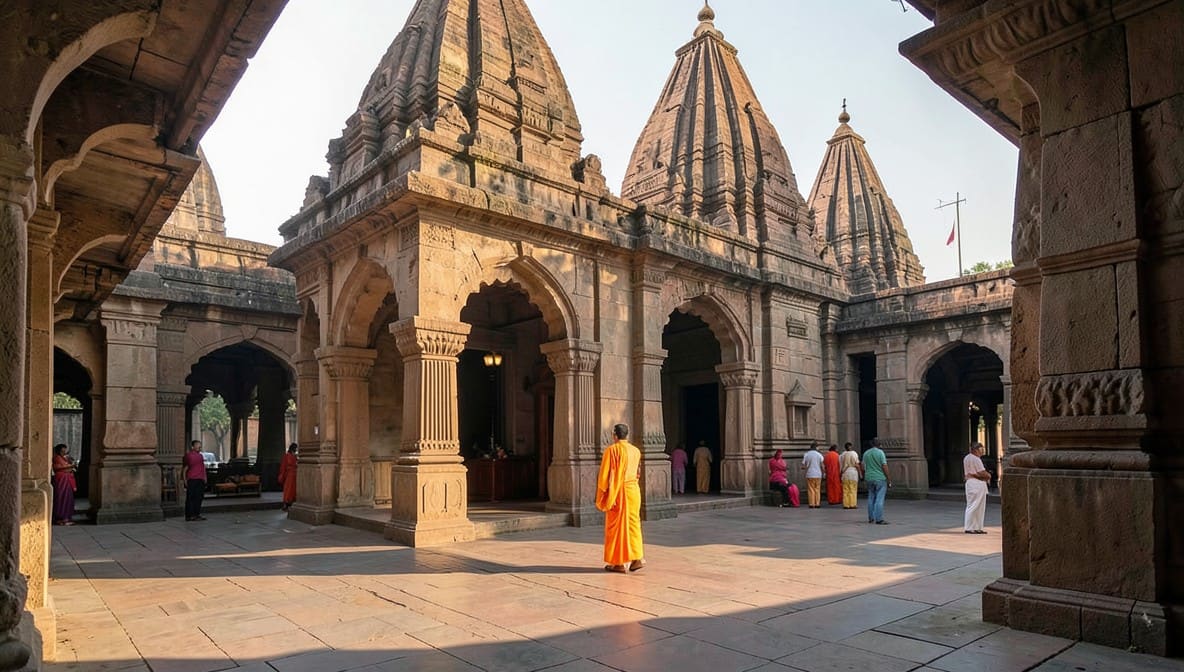
The dispute centers on the management of the Bilveshwarnath Mandir in Bilvehswari, behind Sadar Bazar, Meerut, where the deity Lord Jagannath has been worshipped since 1910. The petitioner, Ganesh Dutta Sharma, claims to be the hereditary main priest of the temple, having managed its affairs for the past 25 years. However, in 2016, a registered trust named Bhagwan Shri Jagannath Mandir Sewa Trust was formed, comprising respondents nos. 5 to 10, who are not related to the petitioner by lineage or appointment. The petitioner is not a trustee of this trust. The core conflict arises from competing claims over control of temple funds, rituals, and priestly authority, particularly regarding the annual Jagannath Yatra.
Key Facts
- The deity of Lord Jagannath has been installed in the temple since 1910.
- The petitioner and his ancestors have served as main priests since that time.
- The Bhagwan Shri Jagannath Mandir Sewa Trust was registered on 15.06.2016.
- The petitioner was not named as a trustee in the trust deed.
- In 2024, a dispute erupted over the commercialization of the Jagannath Yatra, which the petitioner opposed on religious grounds.
- On 23.06.2024, a complaint was lodged with Police Station Sadar Bazar, Meerut, alleging potential breach of peace.
- Proceedings under Section 145 Cr.P.C. were initiated on 27.06.2024 by the Additional City Magistrate (Sadar), Meerut.
- No notice under Section 145 Cr.P.C. was served on the petitioner.
- A preliminary order was passed on 27.06.2024.
- A final order under Section 145(1) Cr.P.C. was passed on 17.03.2026, attaching the temple property pending civil adjudication.
- An attachment order under Section 146(1) Cr.P.C. was also issued on 17.03.2026.
- Respondents filed a civil suit under Section 92 C.P.C. before the District Judge, Meerut, seeking removal of the petitioner and appointment of a scheme of management.
- The petitioner is not a party to the Section 92 C.P.C. suit.
- The petitioner retired from temple management duties on 31.03.2026.
Procedural History
- 15.06.2016: Registration of Bhagwan Shri Jagannath Mandir Sewa Trust.
- 23.06.2024: Police complaint filed alleging dispute over temple management.
- 27.06.2024: Preliminary order under Section 145 Cr.P.C. issued by Additional City Magistrate (Sadar), Meerut.
- 17.03.2026: Final order under Section 145(1) Cr.P.C. and attachment order under Section 146(1) Cr.P.C. passed.
- 17.03.2026: Petitioner files this writ petition under Article 226 before the Allahabad High Court.
- 05.05.2026: Judgment delivered by the High Court.
The Parties' Positions
Petitioner: Claims hereditary right as main priest to manage the temple, asserts he was excluded from the trust despite being the custodian of religious rites, and alleges that the trust is attempting to commercialize the temple. He contends that the Cr.P.C. proceedings were initiated without notice to him and that the attachment order is illegal.
Respondents (Trustees): Argue that the petitioner has no legal or statutory right to manage the temple, that he has misappropriated donations, and that the trust, duly registered under the Indian Trusts Act, is the lawful managing body. They assert that the Cr.P.C. proceedings were correctly initiated to prevent breach of peace and that the civil suit under Section 92 C.P.C. is the proper forum to determine ownership and management rights.
Relief Sought
The petitioner sought:
- Quashing of the orders dated 17.03.2026 under Sections 145 and 146(1) Cr.P.C.
- Direction to respondents 3 and 4 not to interfere with the petitioner’s performance of religious rituals at the temple.
- Costs of the petition.
The Legal Issue
Can a writ petition under Article 226 of the Constitution be entertained to challenge an order passed under Section 145 Cr.P.C. when an alternative efficacious remedy is available before a civil court under Section 92 C.P.C.?
Arguments Presented
For the Petitioner
The petitioner’s counsel argued that he is the hereditary priest with de facto control over the temple since 1910 and that his exclusion from the trust is illegal. He contended that the Cr.P.C. proceedings were initiated without notice to him, violating principles of natural justice. He further argued that the attachment of the temple under Section 146 Cr.P.C. infringes upon his fundamental right to practice religion under Article 25. He maintained that the civil suit under Section 92 C.P.C. does not include him as a party and therefore cannot adequately protect his interests.
For the Respondent
The respondents’ counsel submitted that the petitioner has no legal title or statutory right to manage the temple. The trust, duly registered in 2016, is the lawful entity managing the temple. The Cr.P.C. proceedings were initiated to prevent breach of peace, not to adjudicate ownership. The Magistrate correctly declined to decide the title dispute and instead granted liberty to approach the civil court. The counsel emphasized that the petitioner’s remedy lies in impleading himself in the pending Section 92 C.P.C. suit, and that invoking writ jurisdiction is an abuse of process.
The Court's Analysis
The Court examined the nature of the dispute and the remedies available. It noted that the petitioner admitted he had no statutory or legal right to manage the temple, and that the trust was duly registered. The Court held that Section 145 Cr.P.C. is a procedural mechanism to prevent breach of peace and cannot be used to determine title or ownership over property. The Magistrate correctly recognized this limitation and directed the parties to resolve their dispute in a civil court.
"It is apparent that in the proceedings under Section 145 Cr.P.C., the dispute of managing the temple cannot be decided and as such, the learned Magistrate has rightly granted liberty to the parties to file a suit before the competent court for getting their disputes adjudicated."
The Court further observed that the petitioner, despite being excluded from the trust, is not without remedy. He may apply for impleadment in the pending Section 92 C.P.C. suit before the District Judge, Meerut, where his rights as priest and custodian can be examined. The Court emphasized that the writ jurisdiction under Article 226 is discretionary and should not be invoked when an equally efficacious remedy exists.
The Court also noted that the petitioner had not filed a criminal revision against the Magistrate’s order, which was a legally available remedy under Section 397 Cr.P.C. The failure to exhaust this remedy further barred the invocation of writ jurisdiction.
The Verdict
The writ petition was dismissed. The Court held that the petitioner’s remedy lies in seeking impleadment in the pending civil suit under Section 92 C.P.C. before the District Judge, Meerut. No relief was granted. The attachment order under Sections 145 and 146 Cr.P.C. remains in force pending adjudication by the civil court. The petitioner is directed to approach the civil court within four weeks to seek impleadment.
What This Means For Similar Cases
Alternative Civil Remedy Bars Writ Jurisdiction
- Practitioners must exhaust statutory civil remedies under Section 92 C.P.C. before approaching High Courts under Article 226 in temple or trust management disputes.
- Writ petitions challenging Cr.P.C. orders will be dismissed if the dispute involves title or management rights that can be adjudicated in civil court.
Notice and Natural Justice in CrPC 145 Proceedings
- While notice under Section 145 Cr.P.C. is mandatory, failure to serve notice does not automatically invalidate the order if the petitioner has an alternative remedy.
- Courts will examine whether the petitioner’s exclusion from proceedings was prejudicial, but will not interfere if a civil forum is available.
Priest’s Rights in Temple Management
- Hereditary priests without legal title or trust membership have no automatic right to manage temple property.
- Priests must seek impleadment in Section 92 C.P.C. suits to assert their rights, rather than resorting to criminal or constitutional remedies.
When CrPC 145 Is Appropriate
- Section 145 Cr.P.C. may be invoked to prevent breach of peace in disputes over possession, even if title is contested.
- The Magistrate’s role is limited to maintaining peace; adjudication of rights remains with civil courts.
Procedural Compliance Is Non-Negotiable
- Parties must file criminal revisions under Section 397 Cr.P.C. before approaching writ courts.
- Failure to pursue available remedies weakens the case for constitutional intervention.