
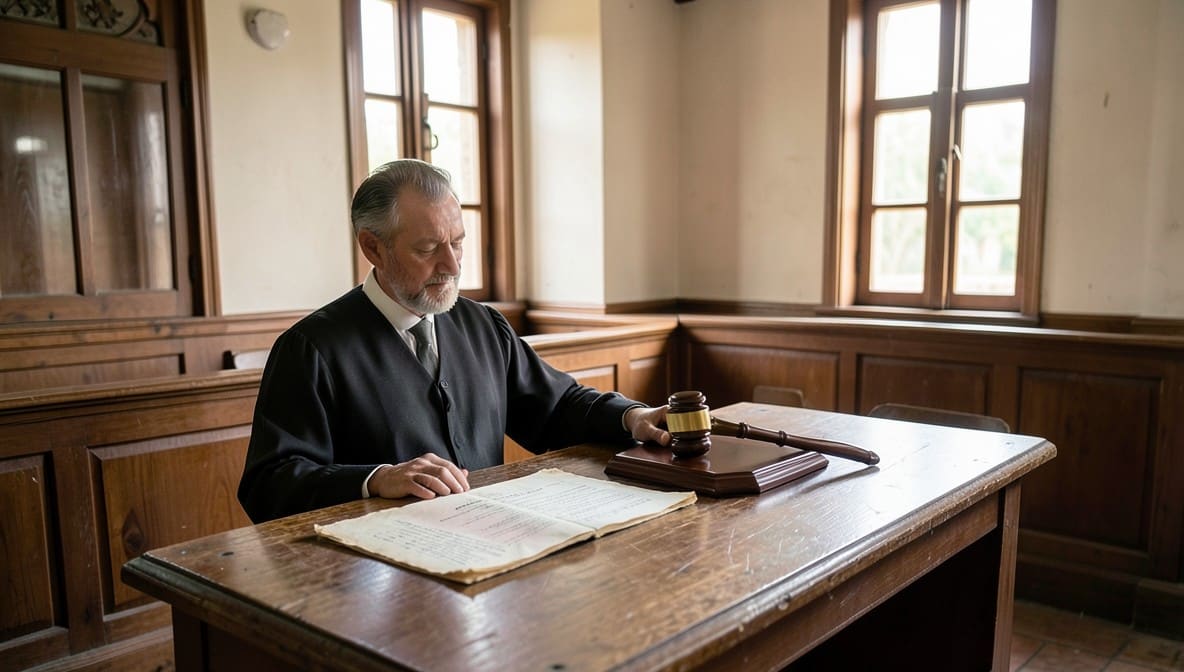
The Supreme Court has reaffirmed that a compromise decree under the Code of Civil Procedure is void if signed by counsel without express authorization from the party, regardless of delay or alleged fraud. This ruling restores the primacy of statutory compliance over procedural convenience in civil litigation.
Background & Facts
The Dispute
The dispute arose from a partition suit filed in 1989 by Dinbandhu Ojha and others against the predecessors of the respondents, seeking a 1/4th share in ancestral property belonging to Thakur Ojha. Defendant No. 5, Chaturbhuj Chaudhary, was made a party to the suit. Although he appeared through counsel, Ram Krishna Mehta, no express written authorization for compromise was filed on his behalf.
Key Facts
- The partition suit (Suit No. 128 of 1989) was filed in 1989.
- Defendant No. 5, Chaturbhuj Chaudhary, was served with summons and filed a written statement on 27.08.1992 through counsel Ram Krishna Mehta.
- The vakalatnama of Ram Krishna Mehta was dated 27.08.1992 but contained no specific authority to enter into a compromise.
- A compromise petition was filed on 18.02.1994, signed by counsel Mehta on behalf of Defendant No. 5, without his signature or express consent.
- The Sub-Judge accepted the compromise on 22.02.1994 and passed a decree on 27.05.1997.
- For nearly 25 years, no challenge was made to the decree.
- On 07.04.2022, the respondents (legal heirs of Chaturbhuj Chaudhary) filed Miscellaneous Case No. 07 of 2022 seeking to set aside the compromise decree, alleging fraud and lack of authorization.
- The respondents claimed Chaturbhuj Chaudhary never authorized Mehta to compromise, that his signature on the written statement and compromise petition were forged, and that he was never served notice of the suit.
- The appellants (plaintiffs’ heirs) countered that Chaturbhuj Chaudhary was a close relative, had knowledge of the suit, and had consented to the compromise through his counsel.
Procedural History
- 1989: Partition Suit No. 128 of 1989 filed by plaintiffs.
- 27.08.1992: Written statement and vakalatnama filed by counsel Ram Krishna Mehta for Defendant No. 5.
- 18.02.1994: Compromise petition filed, signed by counsel Mehta on behalf of Defendant No. 5.
- 22.02.1994: Sub-Judge-01 (East), Muzaffarpur, recorded the compromise and directed decree.
- 27.05.1997: Final decree passed in terms of compromise.
- 07.04.2022: Respondents filed Miscellaneous Case No. 07 of 2022 seeking setting aside of the compromise decree.
- 07.02.2024: Sub-Judge-01 (East), Muzaffarpur, allowed the application, setting aside the compromise decree.
- 2024: Single Judge of Patna High Court dismissed civil revision challenging the Sub-Judge’s order.
- 2025: Special Leave Petition (SLP(C) No. 13671 of 2025) filed in Supreme Court.
- 01.07.2026: Supreme Court delivered judgment.
The Parties' Positions
Appellants (Plaintiffs’ heirs): Argued that the compromise was valid, that counsel acted with implied authority, and that the 28-year delay barred the respondents from challenging the decree. They contended that Chaturbhuj Chaudhary was aware of the proceedings and had acquiesced.
Respondents (Legal heirs of Defendant No. 5): Contended that the compromise was void because it lacked the signature of Chaturbhuj Chaudhary and his counsel had no express authority to compromise. They alleged forgery of signatures and collusion, and asserted that the decree was obtained by fraud.
Relief Sought
The respondents sought setting aside of the compromise decree dated 22.02.1994 and restoration of the original partition suit for adjudication on merits. The appellants sought dismissal of the application and enforcement of the compromise decree.
The Legal Issue
The central question was whether a compromise decree under Order XXIII Rule 3 of the Code of Civil Procedure, 1908, is valid when signed by counsel without express written authorization from the party, and whether delay in challenging such a decree can override statutory non-compliance.
Arguments Presented
For the Appellant/Petitioner
The appellants relied on the principle that long delay defeats equity, citing Navratan Lal Sharma v. Radha Mohan Sharma to argue that compromise decrees are final and can only be challenged through recall, not fresh suits. They contended that the counsel’s conduct, coupled with the 28-year acquiescence, amounted to implied authority. They further argued that the respondents’ claim of fraud was unsubstantiated and that the court should not reopen a settled decree after nearly three decades.
For the Respondent/State
The respondents relied on Byram Pestonji Gariwala v. Union Bank of India, Himalayan Coop. Group Housing Society v. Balwan Singh, and Prasanta Kumar Sahoo v. Charulata Sahoo to argue that counsel cannot act on implied authority to surrender substantial property rights. They emphasized that Order XXIII Rule 3 mandates a written and signed compromise by the parties themselves, and that the absence of Chaturbhuj Chaudhary’s signature or express authorization rendered the compromise void ab initio. They also argued that fraud vitiates all proceedings and cannot be condoned by delay.
The Court's Analysis
The Court undertook a rigorous analysis of Order XXIII Rule 3 CPC, tracing its evolution from pre-1976 oral compromises to the post-amendment requirement of a written and signed agreement. The Court held that the 1976 amendment was enacted precisely to prevent fraudulent or collusive compromises, and that the requirement of signature is not a mere formality but a substantive condition.
"A compromise decree being signed by all parties is a mandate of the law."
The Court examined the vakalatnama dated 27.08.1992 and found no express authority granted to counsel Ram Krishna Mehta to enter into a compromise. It rejected the argument of implied authority, citing Himalayan Coop. Group Housing Society v. Balwan Singh, which held that an advocate must not transgress the authority conferred by the client, especially when rights to property are at stake.
"A client is not bound by a statement or admission which he or his lawyer was not authorised to make."
The Court further noted that the compromise petition itself did not bear the signature of Defendant No. 5, and that the counsel’s unilateral action could not confer legal validity. The Court distinguished this from routine tactical decisions, emphasizing that surrendering a share in ancestral property is a fundamental right requiring explicit consent.
Regarding delay, the Court held that while limitation is a procedural bar, it cannot be invoked to protect an illegal act. The Court observed:
"The law of limitation, while undoubtedly an important facet of the legal system, cannot be used as a means to defeat substantive rights."
It rejected the High Court’s failure to examine the delay issue, noting that the compromise was not merely procedurally defective but substantively unlawful. The Court concluded that the compromise decree was void under Order XXIII Rule 3 CPC and that the Sub-Judge’s order setting it aside was correct.
The Court further held that the original partition suit must be adjudicated on merits, as the factual disputes regarding ownership, knowledge, and authority remain unresolved.
The Verdict
The appeal was dismissed. The Supreme Court upheld the setting aside of the compromise decree dated 22.02.1994, holding it void for non-compliance with Order XXIII Rule 3 CPC. The Court directed that the original partition suit (Suit No. 128 of 1989) be restored and tried on its merits, with all available evidence to be recorded. No costs were awarded.
What This Means For Similar Cases
Express Authorization Is Non-Negotiable
- Practitioners must ensure that every compromise petition includes either the party’s signature or a specific endorsement in the vakalatnama authorizing compromise.
- General powers to appear, file written statements, or conduct litigation do not extend to surrendering property rights.
- Counsel who sign compromises without express authority risk rendering the decree void and exposing themselves to professional misconduct proceedings.
Delay Cannot Shield Fraudulent or Illegal Decrees
- Courts will not apply limitation rigidly where a decree is void ab initio due to statutory non-compliance or fraud.
- The doctrine of laches does not protect illegal acts; the court retains inherent power under Section 151 CPC to set aside such decrees even after long delays.
- Practitioners must advise clients to challenge compromised decrees immediately upon discovery of fraud or lack of authorization, regardless of time elapsed.
Compromise Decrees Are Not Res Judicata
- A compromise decree does not operate as res judicata under Section 11 CPC and can be challenged on grounds of fraud, lack of authority, or illegality.
- The only remedy is a recall application under Section 151 CPC or a separate proceeding to set aside the decree - not an appeal.
- Lawyers must treat compromise decrees as provisional until statutory compliance is verified.





