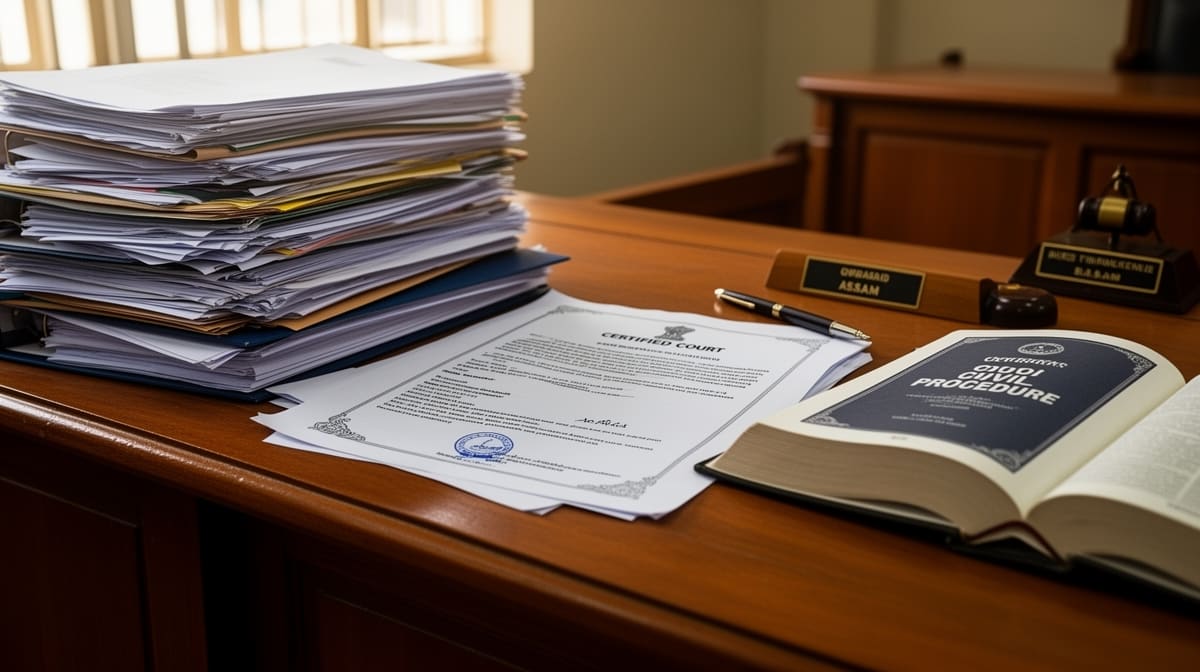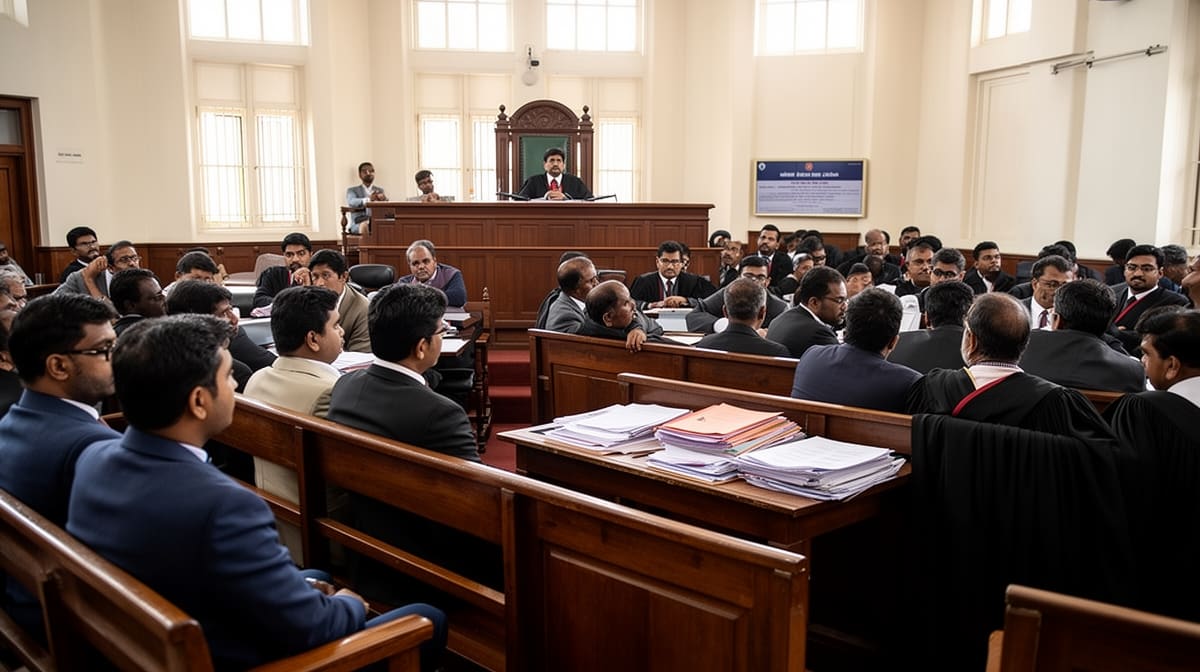
The Bombay High Court has clarified that a landlord may assert a claim for eviction through a counterclaim in a tenant’s suit for injunction, even when the original suit does not challenge the landlord’s title. This ruling reinforces procedural efficiency under the Code of Civil Procedure and affirms the statutory framework of the Maharashtra Rent Control Act.
Background & Facts
The Dispute
The applicant, a tenant, filed a suit for injunction against the respondent, his landlord, seeking to restrain eviction from a 120 sq. ft. shop premises in Aurangabad. The respondent, in response, filed a counterclaim for eviction under the Maharashtra Rent Control Act, alleging non-payment of rent and termination of tenancy by notice dated 01.01.2020. The applicant challenged the maintainability of this counterclaim, arguing that the Civil Judge (Senior Division) lacked jurisdiction and that no cause of action existed for eviction in an injunction suit.
Procedural History
- 2011 - 2018: Lease agreements executed between parties, with rent fixed at Rs. 5,500/month.
- 2020: Landlord issued notice terminating tenancy due to arrears.
- 2019: Tenant filed suit for injunction before Civil Judge (Senior Division), Aurangabad.
- 2025: Respondent filed counterclaim for eviction under the Rent Act.
- 16.09.2025: Trial Court rejected applicant’s application under Order VII Rule 11 CPC to strike out the counterclaim.
- 2025: Civil Revision Application filed challenging the rejection.
Relief Sought
The applicant sought dismissal of the counterclaim on grounds of lack of jurisdiction and absence of cause of action. The respondent sought confirmation that the counterclaim was legally maintainable and that the Civil Judge (Senior Division) had jurisdiction to adjudicate it.
The Legal Issue
The central question was whether a landlord can file a counterclaim for eviction under the Maharashtra Rent Control Act in a suit initiated by the tenant for injunction, and whether the Civil Judge (Senior Division) has jurisdiction to entertain such a counterclaim despite statutory provisions directing rent suits to the Civil Judge (Junior Division).
Arguments Presented
For the Appellant
The applicant argued that:
- The suit for injunction did not raise any issue of title or tenancy, so no counterclaim for eviction could arise.
- Under Section 33(1)(c) of the Rent Act, only the Civil Judge (Junior Division) has exclusive jurisdiction to try eviction suits.
- Reliance was placed on Amritpal Jagmohan Sethi v. Haribhau Pundlik Ingole to argue that contractual tenancy ended upon decree, making the counterclaim redundant.
For the Respondent
The respondent contended that:
- The counterclaim arose from the same tenancy relationship underlying the tenant’s suit, satisfying Order VIII Rule 6A CPC.
- The Supreme Court in Ramesh Chand Ardawatiya v. Anil Panjwani affirmed that landlords may assert possession claims via counterclaim when tenants seek equitable relief.
- The Bombay High Court in Sukhlal Bhivsan Dhobi v. Vinayak Sadashiv Sangale held that Civil Judge (Senior Division) courts have concurrent jurisdiction to try rent matters, even when Junior Division courts exist.
The Court's Analysis
The Court examined the interplay between Order VIII Rule 6A CPC and the Maharashtra Rent Control Act, emphasizing judicial economy and procedural fairness. It noted that the tenant’s suit for injunction, while not explicitly seeking title, necessarily engaged the legal relationship of tenancy, which formed the substratum of both claims.
"The Apex Court further clarified that such a counter-claim is procedurally valid and legally sustainable, as it arises out of the same tenancy relationship which forms the substratum of the suit filed by the tenant."
The Court distinguished Amritpal Jagmohan Sethi, observing that the case dealt with the effect of an eviction decree, not the procedural permissibility of a counterclaim. It affirmed that Order VIII Rule 6A CPC was designed precisely to prevent multiplicity of litigation when disputes stem from a common factual matrix.
Regarding jurisdiction, the Court relied on Sukhlal Bhivsan Dhobi, which interpreted Section 31 read with Section 28 of the Rent Act to permit Civil Judge (Senior Division) courts to entertain rent suits, even if the statute prescribes the Junior Division as the primary forum. The Court held that jurisdiction is not ousted merely because the suit was filed in a higher court; the court may proceed or transfer the matter.
The Court rejected the applicant’s argument that the counterclaim lacked cause of action, noting that the notice of termination, non-payment of rent, and continued unauthorized possession were sufficient to establish a prima facie claim under the Rent Act.
The Verdict
The respondent prevailed. The Court held that a counterclaim for eviction under the Maharashtra Rent Control Act is maintainable in a tenant’s suit for injunction, provided the claims arise from the same tenancy relationship. It further held that the Civil Judge (Senior Division) has jurisdiction to entertain such counterclaims, even where the Rent Act designates the Civil Judge (Junior Division) as the primary forum.
What This Means For Similar Cases
Counterclaims Are Not Limited to Title Disputes
- Practitioners must now recognize that any claim arising from the same tenancy relationship - including eviction, arrears, or possession - can be raised via counterclaim in an injunction suit.
- Tenants cannot use injunction suits as a tactical shield to avoid eviction proceedings.
- Landlords should routinely include counterclaims in responses to injunction suits to preserve rights without initiating separate litigation.
Jurisdiction Is Concurrent, Not Exclusive
- The designation of Civil Judge (Junior Division) as the primary forum under Section 33 does not oust the jurisdiction of the Civil Judge (Senior Division).
- A suit filed in the Senior Division court may proceed unless challenged on jurisdictional grounds at the earliest opportunity.
- Courts may transfer matters to the Junior Division if appropriate, but need not dismiss them outright.
Procedural Efficiency Overrides Technical Objections
- Courts will prioritize judicial economy over technical objections to form or forum.
- Applications under Order VII Rule 11 CPC to strike out counterclaims will be dismissed if the claim discloses a cause of action rooted in the same facts.
- Legal teams must draft pleadings with an eye toward potential counterclaims, even in seemingly one-sided suits.