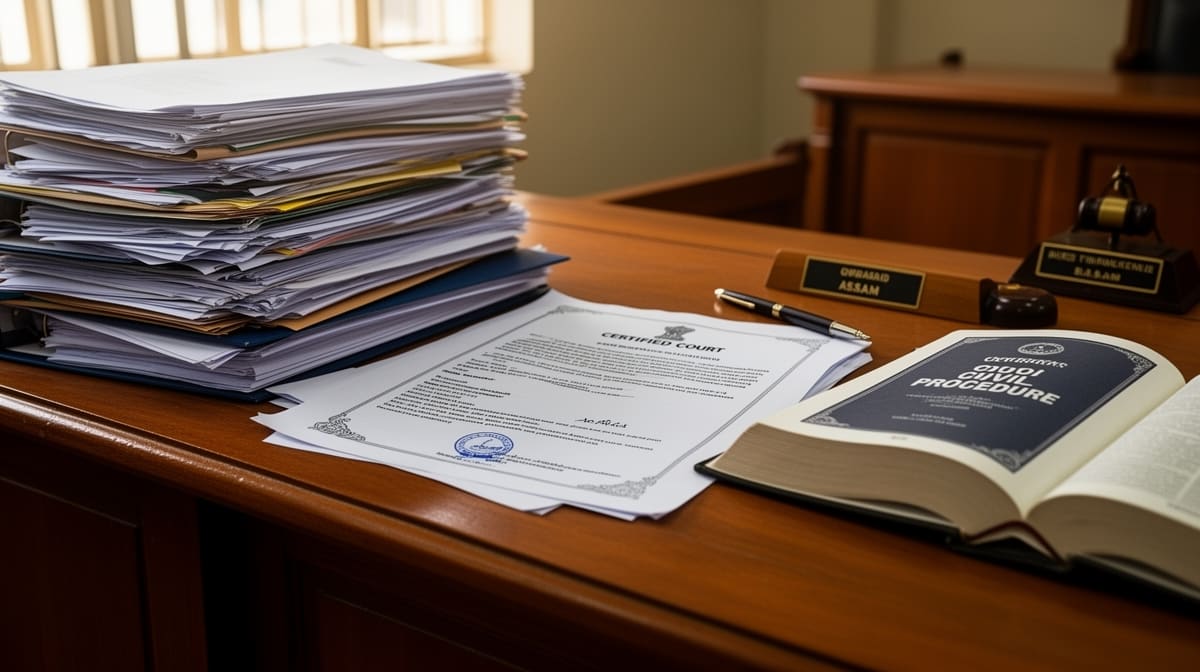
The Gauhati High Court has reinforced a critical procedural principle in civil litigation: when a plaintiff defends against a counter-claim for rent eviction, documents supporting that defence must be formally introduced under Order 8 Rule 1A of the Code of Civil Procedure, not through the broader, less precise mechanism of Order 7 Rule 14. This ruling clarifies the statutory framework for evidentiary compliance in landlord-tenant disputes and prevents procedural evasion.
Background & Facts
The Dispute
The petitioner, Navin Kumar Sharma, operates a pharmaceutical business from premises owned by the respondents. The respondents filed a title suit seeking eviction, alleging non-payment of rent. The petitioner contested the suit and filed a counter-claim, asserting that he had consistently deposited rent with the court, thereby negating the claim of default. To substantiate this, he sought to produce certified copies of sixteen Miscellaneous (Non-Judicial) cases where rent deposits were recorded.
Procedural History
- 2021: Title Suit No. 560/2021 filed by respondents seeking eviction.
- Petitioner’s response: Filed written statement and counter-claim, denying rent default.
- Earlier order: Trial court permitted petitioner to call for records of Misc. (N.J.) cases, but petitioner’s counsel failed to act.
- 03.08.2024: Petitioner filed Petition No. 873/2024 under Order 7 Rule 14 CPC seeking permission to exhibit certified copies of the Misc. (N.J.) cases.
- 21.12.2024: Trial court rejected the petition, citing failure to obtain documents and vague prayer for future submission.
- 2025: Petitioner filed CRP(IO)/105/2025 under Article 227 before the Gauhati High Court.
Relief Sought
The petitioner sought leave to exhibit certified copies of sixteen specified Misc. (N.J.) cases to prove rent deposits and defeat the respondents’ counter-claim for eviction.
The Legal Issue
The central question was whether a plaintiff defending against a counter-claim for rent default may rely on documents not filed with the written statement under Order 8 Rule 1A CPC, or whether such documents must be introduced exclusively through Order 7 Rule 14 CPC.
Arguments Presented
For the Petitioner
The petitioner’s counsel argued that Order 7 Rule 14 CPC permits the production of documents not in possession at the time of filing the plaint, and that the petitioner had disclosed the specific case details in Petition No. 873/2024. He cited State of Assam v. Union of India to emphasize judicial discretion in favour of substantive justice. He contended that denying the documents would cause irreparable prejudice, as the core of the respondents’ claim hinged on rent default.
For the Respondent
The respondents’ counsel countered that the petitioner had previously defaulted in obtaining the records despite court permission, and that the petition contained a vague, open-ended request to exhibit documents "as and when received." He argued that the petitioner’s conduct amounted to procedural manipulation and that Order 7 Rule 14 was misapplied to circumvent the mandatory requirements of Order 8 Rule 1A CPC for documents supporting a defence to a counter-claim.
The Court's Analysis
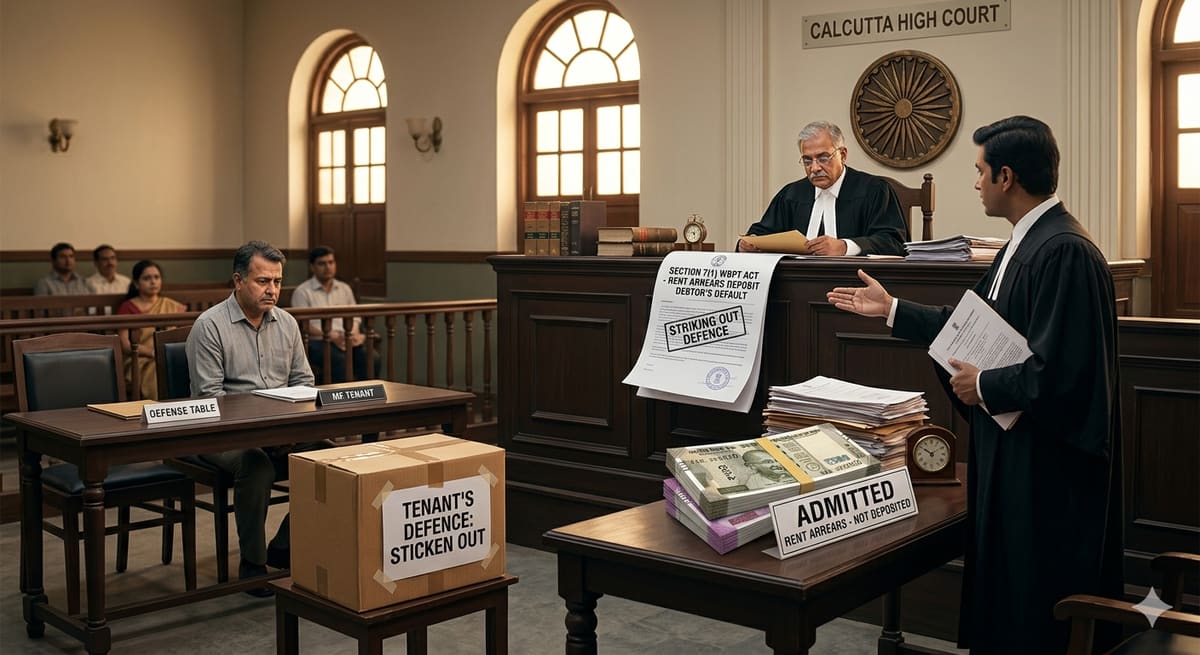
The Court undertook a detailed statutory interpretation of the Code of Civil Procedure, distinguishing between the scope of Order 7 Rule 14 and Order 8 Rule 1A. It held that Order 7 Rule 14 applies to documents relied upon in the plaint, whereas Order 8 Rule 1A governs documents relied upon by a plaintiff in defending a counter-claim. Since the respondents’ counter-claim alleged rent default, the petitioner, in his capacity as defendant to that claim, was obligated to list all supporting documents in his written statement under Order 8 Rule 1A(1). Failure to do so required him to seek leave under Order 8 Rule 1A(3) to produce them later.
"The petitioner, in defending the counter-claim, stood in the shoes of a defendant and was bound by the procedural mandates applicable to defendants under Order 8 Rule 1A."
The Court acknowledged the petitioner’s procedural lapse but rejected the trial court’s blanket denial. It found that the petitioner had specifically identified sixteen Misc. (N.J.) cases in paragraph 4 of his petition, thereby satisfying the requirement of specificity. The Court emphasized that the ends of justice demanded admission of these documents, given their direct relevance to the central issue of rent payment. However, it imposed a cost of Rs. 10,000 to penalize the delay and negligence.
The Verdict
The petitioner won. The Gauhati High Court held that documents supporting a defence to a counter-claim for rent default must be introduced under Order 8 Rule 1A CPC, not Order 7 Rule 14. The certified copies of the sixteen specified Misc. (N.J.) cases were permitted in evidence, subject to payment of Rs. 10,000 as cost.
What This Means For Similar Cases
Documents in Counter-Claim Defence Must Be Led Under Order 8 Rule 1A CPC
Practitioners must now treat a plaintiff defending a counter-claim as a defendant for evidentiary purposes. Any document relied upon to rebut allegations in a counter-claim - whether for rent default, breach of contract, or title dispute - must be listed in the written statement under Order 8 Rule 1A(1). Failure to do so requires a separate application under Order 8 Rule 1A(3), not a generic petition under Order 7 Rule 14.
Procedural Lapses Do Not Automatically Bar Justice
Courts retain discretion to admit documents despite delay, provided the party demonstrates specificity and relevance. This judgment establishes that mere non-compliance with timelines does not equate to abuse of process if the documents are material and the party has identified them with precision.
Costs as a Deterrent for Negligence
The imposition of Rs. 10,000 as cost signals that courts will penalize procedural negligence but will not deny substantive justice. Practitioners should now routinely include cost-benefit analysis in applications for late document production, anticipating that courts may impose costs while still admitting evidence.
- Always list all documents supporting a defence to a counter-claim in the written statement under Order 8 Rule 1A(1)
- If documents are unavailable at filing, file a separate application under Order 8 Rule 1A(3) with specific case references
- Avoid using Order 7 Rule 14 for counter-claim defences - it is procedurally incorrect
- Prepare for potential cost imposition when seeking late admission of documents