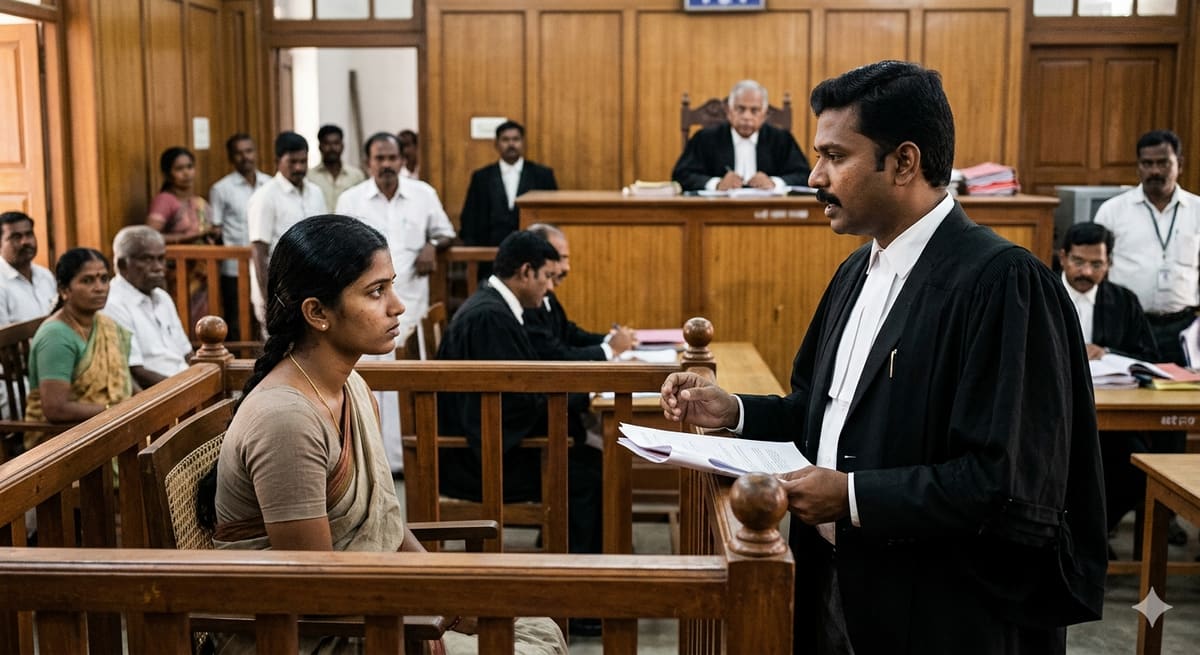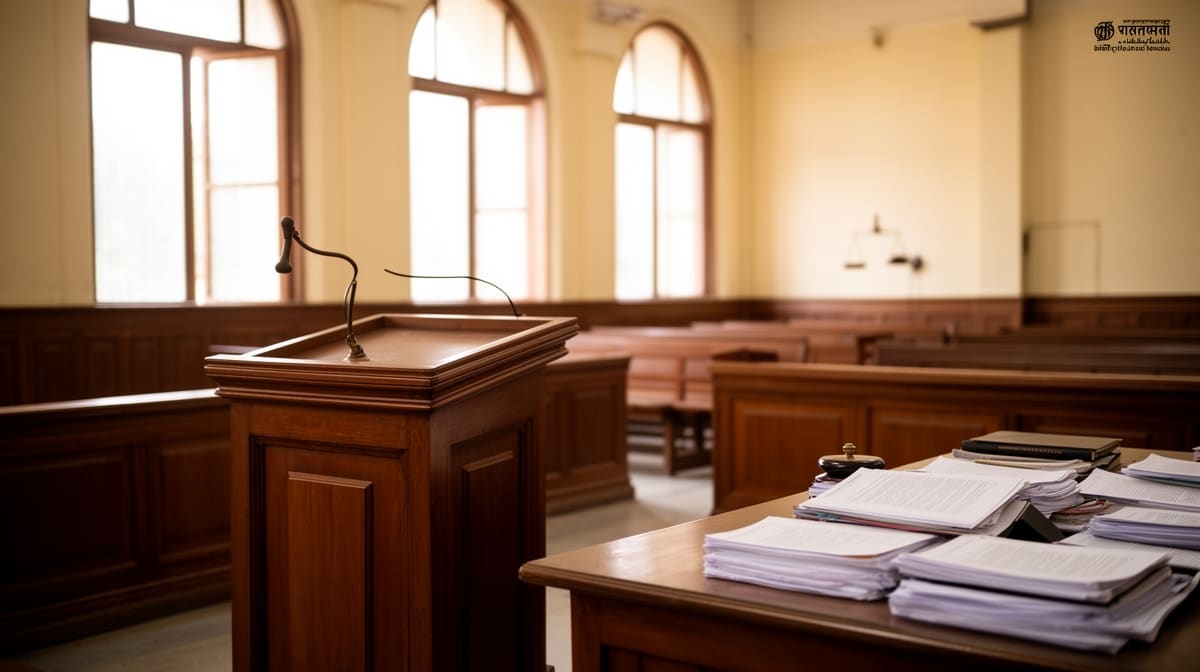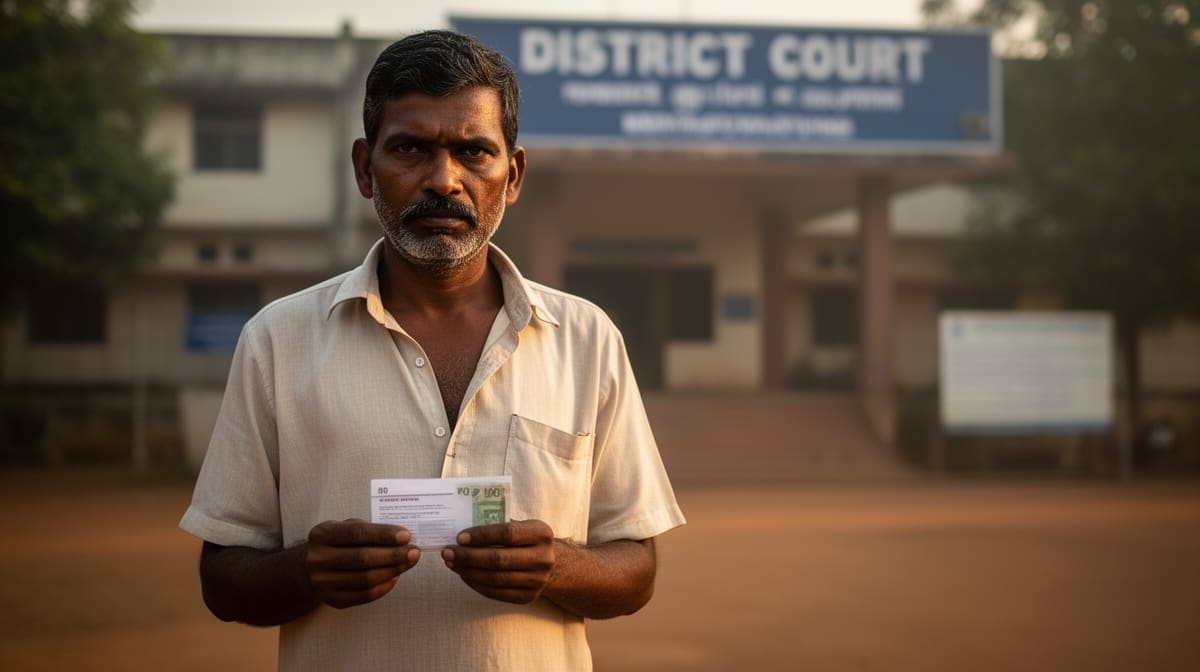
The Madras High Court’s ruling in this petition redefines the boundaries of judicial discretion in imposing costs for witness recall under Section 311 of the Bharatiya Nagarik Suraksha Sanhita. In a POCSO trial where the accused faced multiple charges and financial hardship, the Court struck a critical balance between procedural fairness and fiscal realism, ensuring that the right to cross-examination is not rendered illusory by arbitrary financial barriers.
Background & Facts
The Dispute
The petitioner, a daily wage earner and food delivery worker, was accused in Crime No.3 of 2023 under Sections 11(1) and 12 of the POCSO Act and Section 354A(1)(i) of the IPC. During the trial, he sought to recall eight prosecution witnesses - PW1 to PW8 - for cross-examination under Section 311 of the Bharatiya Nagarik Suraksha Sanhita, citing inadequate legal representation due to an advocates’ boycott on the day of examination-in-chief.
Procedural History
- 2023: Crime registered against petitioner in Coimbatore
- 2024: Trial commenced in Special POCSO Court, Spl.C.C.No.83 of 2024
- 2025: Petitioner filed Crl.M.P.No.198 of 2025 seeking recall of eight witnesses
- 21.07.2025: Special Court allowed recall but imposed a cost of Rs.3,000 per witness, totaling Rs.24,000
- Petitioner’s inability to pay: Due to indigence and pending litigation in three other cases, he failed to deposit the amount
- 2026: Petitioner filed Crl.O.P.No.2699 of 2026 under Section 528 BNS challenging the cost order
Relief Sought
The petitioner sought to set aside the cost condition imposed by the Special Court, arguing that the amount was disproportionate and violated his constitutional right to a fair trial. He also submitted that he had now secured funds to meet a reasonable cost.
The Legal Issue
The central question was whether Section 311 of the Bharatiya Nagarik Suraksha Sanhita permits a trial court to impose costs for recalling witnesses that are so high as to effectively deny the accused the opportunity to exercise his right to cross-examination, and if so, what standard must guide such imposition.
Arguments Presented
For the Petitioner
Counsel argued that the imposition of Rs.3,000 per witness was arbitrary and punitive, especially given the petitioner’s destitute status. He relied on State of Haryana v. Bhagwan Das and Rajendra Prasad v. State of U.P. to assert that Section 311 is a discretionary provision meant to ensure justice, not to create financial hurdles. He emphasized that the right to cross-examine is a fundamental component of natural justice and cannot be conditioned on unaffordable payments.
For the Respondent
The Government Advocate conceded the petitioner’s financial hardship but contended that the cost was imposed to deter frivolous applications and compensate witnesses for time lost. He cited State of Maharashtra v. Chandrakant to argue that courts have inherent power to impose costs to maintain trial discipline, and that the amount was not excessive in the context of a serious POCSO case.
The Court's Analysis
The Court acknowledged the importance of deterring abuse of process but held that Section 311 must be interpreted in light of the accused’s right to a fair trial under Article 21. It observed that while costs may be imposed to discourage delay, they must be proportionate and not operate as a de facto denial of rights.
"The right to cross-examine is not a privilege to be granted at the cost of financial ruin; it is a constitutional imperative that cannot be conditioned on the accused’s ability to pay exorbitant sums."
The Court noted that the Special Court had imposed identical costs in three other cases against the petitioner, indicating a pattern of uniformity rather than individualized assessment. It further held that Rs.3,000 per witness was excessive for a daily wage earner in Tamil Nadu, especially when the total cost exceeded the petitioner’s monthly income.
The Court applied the principle of proportionality and equitable access to justice, distinguishing between punitive costs and reasonable compensation. It emphasized that the purpose of costs under Section 311 is not to penalize poverty but to ensure orderly procedure.
The Verdict
The petitioner succeeded. The Madras High Court set aside the order imposing Rs.3,000 per witness and reduced the cost to Rs.1,000 per witness, totaling Rs.8,000. The trial court was directed to recall the eight witnesses upon deposit, with the condition that cross-examination must occur on the same day of appearance, failing which the right would be forfeited.
What This Means For Similar Cases
Costs Must Be Proportionate to Means
- Practitioners must now argue that any cost imposed under Section 311 CrPC must be assessed based on the accused’s financial capacity
- Courts must record reasons for the quantum of cost, not apply blanket rates
- Indigent accused cannot be denied cross-examination due to unaffordable conditions
Right to Cross-Examination Is Non-Negotiable
- The Court reaffirmed that cross-examination is not a procedural formality but a substantive right under Article 21
- Any condition that renders this right inaccessible violates the fair trial doctrine established in State of U.P. v. Ram Swarup
- Courts must prioritize substantive justice over procedural rigidity
Judicial Discretion Must Be Guided by Equity
- The judgment establishes that discretion under Section 311 must be exercised with sensitivity to socio-economic realities
- Uniform cost schedules across cases without individualized inquiry are legally unsustainable
- Advocates should file affidavits of indigence to support requests for cost reduction