The Rajasthan High Court has delivered a landmark ruling affirming that execution proceedings cannot be used as a vehicle to impose liability on non-parties by piercing the corporate veil in the absence of fraud, statutory mandate, or prior adjudication. The judgment underscores the strict limits of an executing court’s jurisdiction and reinforces the foundational principle that execution enforces, but does not create, legal rights.
Background & Facts
The Dispute
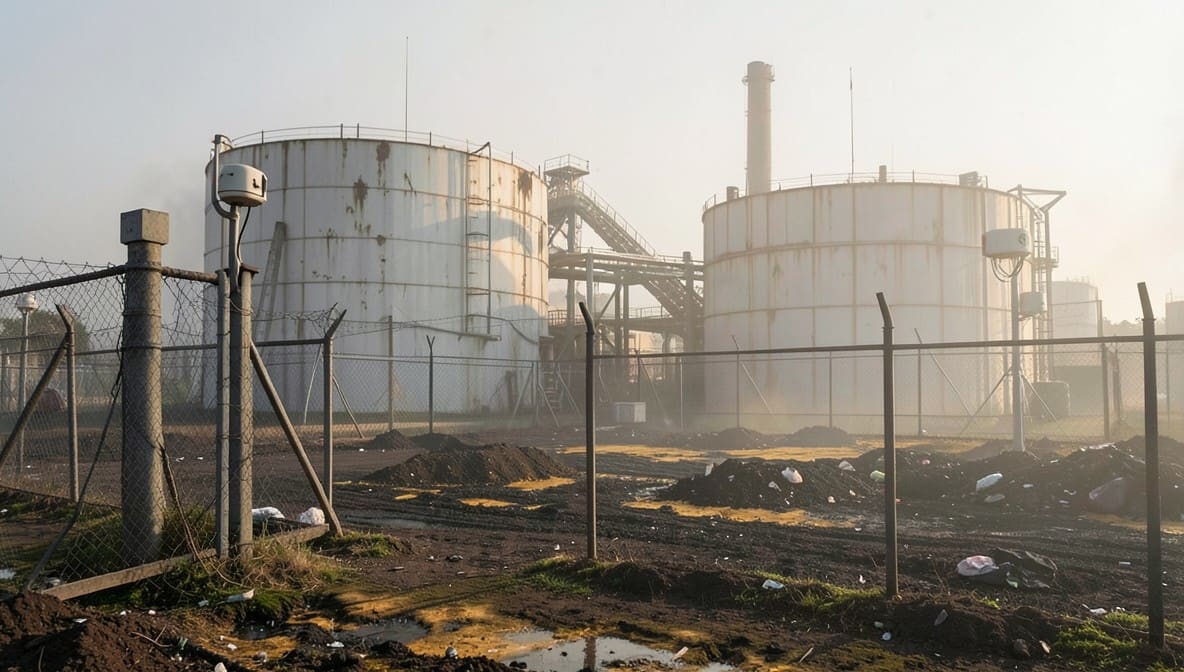
The dispute arises from the failure to complete and operate a Common Effluent Treatment Plant (CETP) in Sanganer, Jaipur, intended to treat industrial effluents from approximately 807 textile units. The Sanganer Kapda Rangai Chapai Association (the Association), with support from the State Government and Jaipur Development Authority (JDA), invited bids for the project. M/s Advent Envirocare Technology Pvt. Ltd. (Advent), the award holder, was selected as the Project Execution Agent under a contract dated 24.07.2015. To comply with the Integrated Processing Development Scheme (IPDS), a Special Purpose Vehicle (SPV), M/s Sanganer Enviro Project Development (SEPD), was incorporated on 28.12.2015. The SPV received land from JDA and entered into a superseding agreement with Advent on 03.09.2016.
Key Facts
- The total project cost was Rs. 145 Crore, funded through Central grant (Rs. 37.5 Cr), State grant (Rs. 39.75 Cr), bank loan (Rs. 15 Cr), and member contributions (Rs. 29.25 Cr + Rs. 8.11 Cr additional).
- Advent claimed non-payment of Rs. 52,50,46,583/- and filed a claim under the Micro, Small and Medium Enterprises Development Act, 2006 (MSME-D Act) against SEPD.
- An arbitral award dated 03.09.2021 was passed in favor of Advent against SEPD only.
- The award was enforced in Jaipur Commercial Court via Execution Petition No. 1604/2023.
- The SPV’s Memorandum of Association limited member liability to Rs. 5,000/- per member upon winding up.
- The Association and Sanganer Pradushan Niwaran Samiti (Samiti) are registered societies under the Rajasthan Societies Registration Act, 1958.
- The Central Government withheld Rs. 22.50 Crores due to incomplete infrastructure, including pumping stations.
- Advent’s application before the National Green Tribunal (NGT) dated 04.08.2023 was dismissed as misconceived.
Procedural History
- 24.07.2015: Contract executed between Association and Advent.
- 28.12.2015: SPV incorporated; land handed over.
- 03.09.2016: New agreement between SPV and Advent superseding prior contract.
- 12.08.2019: Advent filed claim under MSME-D Act against SEPD.
- 03.09.2021: Arbitral Award No. 11/2021 passed in favor of Advent against SEPD.
- 24.03.2023: Execution proceedings transferred from Gandhinagar to Jaipur Commercial Court.
- 08.12.2023: SEPD filed objections to execution.
- April 2024: Union of India and Association filed objections.
- 14.02.2025: Executing Court passed impugned order lifting corporate veil and attaching properties of non-parties.
- 06.03.2025: Division Bench stayed operation of impugned order to the extent of lifting corporate veil.
- 22.04.2025: Appeal converted into writ petition.
- 17.03.2026: Judgment pronounced by Rajasthan High Court.
The Parties' Positions
Petitioners (State of Rajasthan, District Collector, Association members, textile unit owners): Argued that the executing court exceeded its jurisdiction by imposing personal liability on non-parties, including government officials and members of societies, without pleadings, evidence, or trial. They contended that the corporate veil cannot be pierced without fraud or statutory mandate, and that the ‘polluter pays’ principle cannot be invoked in execution.
Respondents (Advent and SEPD): Contended that the Association, Samiti, and SPV were alter egos, and that the State and its instrumentalities were jointly responsible for CETP’s failure. They argued that the ‘polluter pays’ principle justified attaching properties of textile units and that the court had jurisdiction under Section 51(e) and Section 151 CPC.
Relief Sought
The petitioners sought quashing of the order dated 14.02.2025, particularly paragraphs 165(A) - (L), which:
- Lifted the corporate veil of SEPD to hold directors, shareholders, and members personally liable.
- Held the State of Rajasthan and Collector, Jaipur jointly liable under ‘pay and recover’.
- Ordered attachment and sale of premises and movable assets of 192 textile units.
- Directed restraint on Collector’s salary until award satisfaction.
- Mandated sale of textile units as ‘immovable property’ if dues remained unpaid within three months.
- Directed police and board assistance for enforcement.
The Legal Issue
The central question was whether an executing court under Section 36 of the Arbitration and Conciliation Act, 1996 can pierce the corporate veil, invoke the ‘polluter pays’ principle, and impose personal liability on non-parties - including government officials and members of societies - without pleadings, evidence of fraud, or prior adjudication, and whether such action violates Order XXI of the Code of Civil Procedure, 1908 and the principle of audi alteram partem.
Arguments Presented
For the Appellant/Petitioner
Learned counsel contended that the executing court’s jurisdiction is strictly confined to enforcing the award as it stands. Reliance was placed on Topanmal Chhotamal v. Kundomal Gangaram, Rajasthan Finance Corporation v. Man Industrial Corporation, and Meenakshi Saxena v. ECGC to establish that an executing court cannot go behind the decree or create new liabilities. It was argued that the corporate veil cannot be lifted without allegations of fraud or statutory mandate, as per Salomon v. Salomon and Balwant Rai Saluja v. Air India. The Rajasthan Societies Registration Act, 1958, Section 8, explicitly bars personal liability of society members. The ‘polluter pays’ principle requires substantive environmental adjudication, which the NGT had already declined. No notice was issued under Order XXI Rules 46D and 46E CPC to third parties. The attachment of properties exceeding the decretal amount violated Balakrishnan v. Malaiyandi Konar. The Collector’s salary restraint was ultra vires and arbitrary.
For the Respondent/State
Respondents argued that the SPV, Association, and Samiti were alter egos created to evade obligations. They contended that the State and its instrumentalities were jointly responsible for CETP’s failure and that the ‘polluter pays’ principle justified attaching properties of polluting units. They relied on Bhatia Industries v. Asian Natural Resources and Delhi Airport Metro v. DMRC to support piercing the veil in execution. They asserted that notices were issued to the Chief Secretary, Collector, and Pollution Control Board, and that objections were filed, thus satisfying natural justice. They further claimed that writ jurisdiction was barred under Section 5 of the Arbitration Act, but conceded that supervisory jurisdiction under Article 227 may apply.
The Court's Analysis
The Court undertook a rigorous analysis of the statutory framework governing execution, corporate personality, and environmental jurisprudence. It held that Section 36 of the Arbitration and Conciliation Act, 1996 mandates that an arbitral award be enforced as if it were a decree, thereby subjecting execution to the strict confines of Order XXI of the CPC. The Court emphasized that execution is not a forum for adjudicating new rights: “executio est finis et fructus legis” - execution is the end and fruit of law, not its origin.
“The Executing Court cannot assume a jurisdiction wider than what is contained in the award itself. Enforcement proceedings assume the character of execution proceedings under the Code of Civil Procedure, 1908.”
The Court rejected the respondents’ reliance on Bhatia Industries and Delhi Airport Metro, distinguishing them on facts: those cases involved fraud or statutory mandates absent here. The Court held that the doctrine of piercing the corporate veil is an exception, not a rule, and requires either fraud, evasion of law, or statutory provision. No such allegations were pleaded or proven. The directors and members were not parties to the arbitration, and the SPV’s MoA capped liability at Rs. 5,000 per member.
The Court further held that the invocation of the ‘polluter pays’ principle was impermissible in execution proceedings. The principle requires a substantive determination of pollution causation, harm quantification, and liability assignment - matters exclusively within the domain of the NGT under Sections 14, 15, and 18 of the NGT Act, 2010. The NGT had already dismissed Advent’s application. The executing court, by invoking the principle without evidence or hearing, substituted adjudication with assumption, violating actus curiae neminem gravabit.
The Court also found that Order XXI Rules 46D and 46E CPC, which mandate notice to third parties in garnishee proceedings, were entirely ignored. The attachment of properties belonging to 192 textile units, none of whom were parties to the award, was a clear violation of natural justice. The direction to restrain the Collector’s salary was held to be without statutory basis and arbitrary.
“Execution is the handmaid of justice, not its architect.”
The Court concluded that the impugned order suffered from jurisdictional overreach, violation of natural justice, and disregard for the separate legal personality of corporate and societal entities.
The Verdict
The petitioners succeeded. The Rajasthan High Court quashed and set aside the impugned order dated 14.02.2025. The matter was remanded to the Commercial Court for fresh consideration strictly within the following parameters: (1) the terms of the arbitral award; (2) the provisions of Order XXI CPC; (3) the statutory limits on liability under the Companies Act, 2013 and Rajasthan Societies Registration Act, 1958; and (4) the principles of natural justice and audi alteram partem. The Court directed the executing court to afford adequate opportunity to all necessary parties and to confine its proceedings strictly to enforcement of the award against SEPD alone. All pending applications were disposed of. The Registrar was directed to transmit a copy of the order to the executing court for compliance.
What This Means For Similar Cases
Execution Cannot Be a Substitute for Adjudication
- Practitioners must ensure that execution proceedings are confined to the precise terms of the decree or award.
- Any attempt to expand liability to non-parties - even under public interest or environmental doctrines - will be struck down as ultra vires.
- Courts must not conflate enforcement with substantive adjudication.
Corporate Veil Lifting Requires Specific Grounds
- The corporate veil cannot be pierced merely because entities are interlinked or share common members.
- Fraud, improper conduct, or statutory mandate must be pleaded and proved.
- Limited liability clauses in MoA are binding and cannot be overridden in execution.
Environmental Principles Require Specialized Forums
- The ‘polluter pays’ principle cannot be invoked in execution proceedings without prior environmental adjudication.
- If a statutory tribunal (e.g., NGT) has dismissed a claim on merits, that outcome is binding and cannot be circumvented by civil courts.
- Courts must not use execution as a backdoor to enforce environmental liability.
Procedural Compliance in Execution Is Non-Negotiable
- Notice under Order XXI Rules 46D and 46E CPC is mandatory before attaching third-party property.
- Attachment and sale must not exceed the decretal amount.
- Restraints on public officials’ salaries or assets without statutory authority are void.