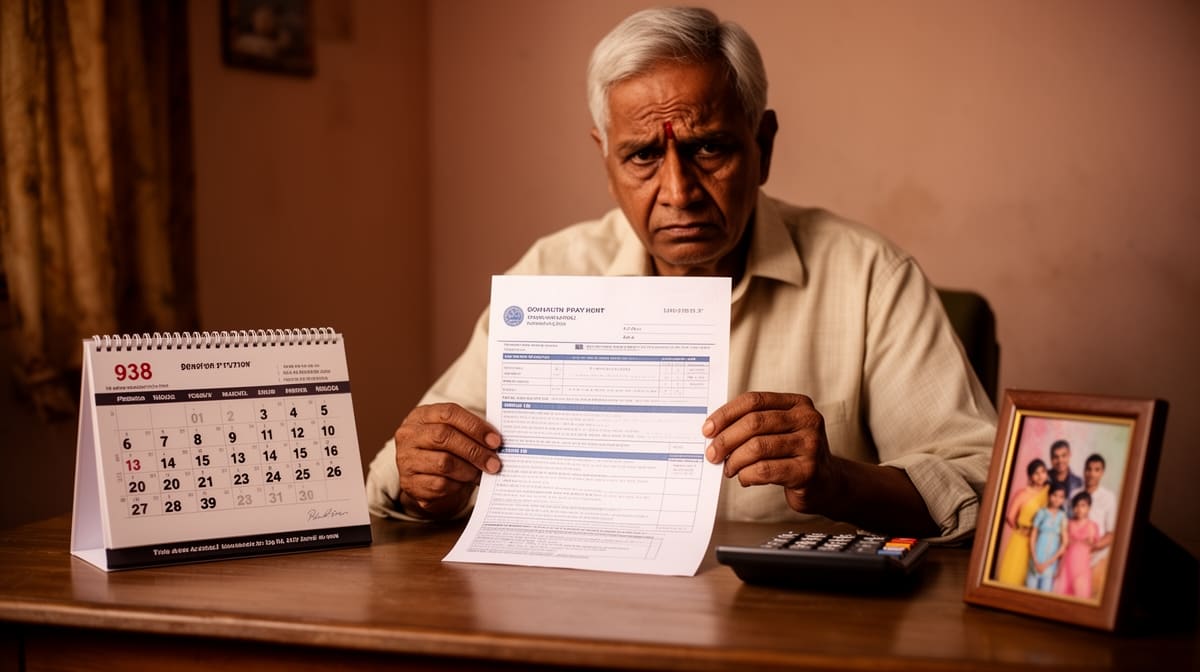
The Madhya Pradesh High Court has reinforced the statutory obligation of Controlling Authorities under the Payment of Gratuity Act, 1972 to act promptly on applications for execution of awarded gratuity amounts. This judgment clarifies that inaction or procedural delay by administrative bodies cannot deprive employees of their legally mandated benefits, establishing a clear timeline for enforcement.
Background & Facts
The Dispute
The petitioner, Gourav Lokre, was awarded Rs. 75,678/- including interest by the Controlling Authority under Section 7(3A) of the Payment of Gratuity Act, 1972 on 5 November 2024. Despite the award becoming final, the employer failed to make payment. The petitioner filed an application for execution of the award on 8 August 2025, but the Controlling Authority took no action - neither registering the case nor issuing notices to the employer.
Procedural History
- 5 November 2024: Controlling Authority passed award under Section 7(3A) for gratuity and interest
- 8 August 2025: Petitioner filed application for execution before the same authority
- No action taken: No registration, no notice issued, no proceedings initiated
- 18 February 2026: Petitioner filed writ petition before the Madhya Pradesh High Court seeking enforcement
Relief Sought
The petitioner sought a direction to the Controlling Authority to initiate recovery proceedings under Section 8 of the Act, recover the awarded amount, and grant costs.
The Legal Issue
The central question was whether the Controlling Authority has a mandatory duty under Section 8 of the Payment of Gratuity Act, 1972 to register and act upon an application for execution of a gratuity award, and whether prolonged inaction constitutes a violation of statutory rights.
Arguments Presented
For the Petitioner
The petitioner’s counsel relied on Section 8 of the Payment of Gratuity Act, 1972, which empowers the Controlling Authority to recover awarded amounts as if it were an arrear of land revenue. He argued that the authority’s failure to register or act on the execution application amounted to a denial of justice and violated the petitioner’s statutory right to timely recovery. He cited State of Punjab v. Jagjit Singh to emphasize that statutory remedies must be effective, not illusory.
For the Respondent
The Controlling Authority did not file a written response. No counter-affidavit was submitted, and no legal justification was offered for the delay or inaction. The Court noted the absence of any defense as a factor weighing against the respondent.
The Court's Analysis
The Court examined the structure and intent of the Payment of Gratuity Act, 1972, noting that its purpose is to ensure prompt payment of gratuity to employees upon termination of service. Section 8 explicitly vests the Controlling Authority with the power to recover unpaid amounts through coercive means, including attachment and sale of property. The Court held that the authority’s role is not discretionary once an award is passed - it is a statutory duty.
"The power conferred under Section 8 is not a mere formality; it is a mechanism to give effect to the award and to prevent the employer from evading liability by procedural delay."
The Court rejected the notion that registration of an execution application is optional. It emphasized that the petitioner’s right to recovery crystallized upon the award’s issuance, and the Controlling Authority’s inaction rendered that right meaningless. The Court further observed that the delay of over six months without any procedural step was indefensible and amounted to a failure of administrative responsibility.
The Verdict
The petitioner succeeded. The Court held that the Controlling Authority is legally bound to register and execute the award under Section 8 of the Payment of Gratuity Act, 1972. It directed the authority to register the execution application and complete recovery within 60 days of receiving a certified copy of the order.
What This Means For Similar Cases
Execution Applications Cannot Be Ignored
- Practitioners must now treat any delay by Controlling Authorities in registering execution applications as a ground for writ relief
- A simple application for execution under Section 8 triggers an immediate statutory duty - no further notice or petition is required to establish the authority’s obligation
60-Day Timeline Is Now Binding
- The Court’s 60-day directive sets a new benchmark for administrative compliance in gratuity cases
- Future petitions may cite this judgment to demand strict adherence to timelines, especially where employees are financially vulnerable
Administrative Inaction Is a Violation of Statutory Rights
- Courts will no longer tolerate passive non-compliance by quasi-judicial bodies under labor statutes
- The burden now shifts to the authority to justify delay, not the employee to plead for action