The Punjab & Haryana High Court has reaffirmed that compensation claims under the Motor Vehicles Act cannot be sustained where the claimant’s testimony is demonstrably false and contradicts sworn statements made in a parallel criminal proceeding. This judgment underscores the foundational principle that judicial remedies require integrity of evidence, and deliberate falsehoods nullify entitlement to relief.
Background & Facts
The Dispute
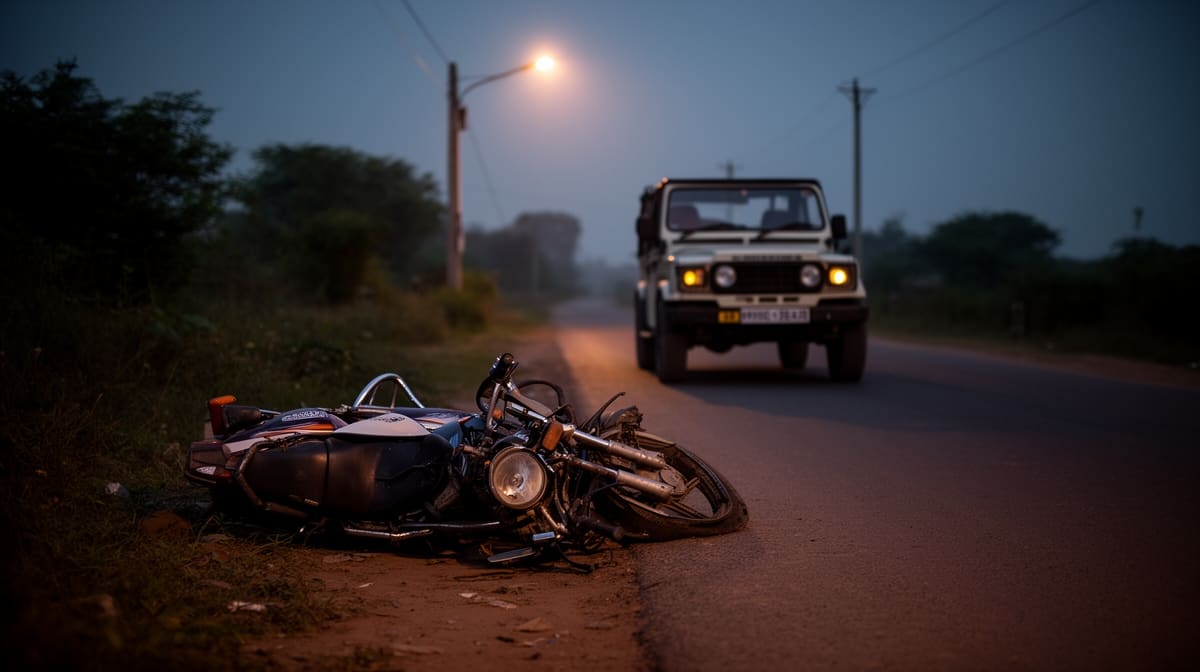
The appellants, the mother and two brothers of deceased Major Singh, filed a claim petition before the Motor Accident Claims Tribunal, Jalandhar, seeking compensation for the death of Major Singh in a motor vehicle accident on 15.06.2017. The accident involved a bus bearing registration No. PB-35-Q-1790, owned by the respondents and driven by respondent No. 3. The Tribunal awarded compensation of Rs. 8,64,640/- with interest at 7.5% per annum, holding the respondents jointly and severally liable.
Key Facts
- Deceased Major Singh was 45 years old at the time of death on 15.06.2017
- He was unmarried and a bachelor
- Claimants alleged he was employed in a factory in Ludhiana earning Rs. 17,000/- per month and also engaged in agriculture earning Rs. 24,000/- per month
- Claimant No. 3, Jarnail Singh (brother), appeared as PW1 before the Tribunal and deposed to the above income claims
- No documentary evidence was produced: no salary slips, employment letters, bank statements, or employer affidavits
- Tribunal assessed income based on Notification dated 05.04.2017 of Labour Commissioner, Punjab, fixing unskilled labourer income at Rs. 7,568/- per month
- Post-mortem report (Ex. P5) was relied upon to determine age
- Tribunal awarded: Rs. 15,000/- for loss of estate, Rs. 40,000/- for consortium to mother, Rs. 15,000/- for funeral expenses, and applied 25% future prospects and multiplier of 14
Procedural History
- 15.06.2017: Motor accident occurred
- 15.06.2017: FIR No. 133 registered at Police Station Rama Mandi, Jalandhar under Sections 279, 304-A, and 427 IPC
- 25.07.2017: Motor Accident Claim Petition (MACP-163-2017) filed before Tribunal
- 14.02.2022: Tribunal awarded compensation of Rs. 8,64,640/- with 7.5% interest
- 08.04.2023: Judicial Magistrate, 1st Class, Jalandhar acquitted respondent No. 3 (driver) based on testimony of Jarnail Singh
- 28.03.2022: First Appeal (FAO-5494-2022) filed before Punjab & Haryana High Court seeking enhancement of compensation
The Events
In the criminal trial, Jarnail Singh, the sole eyewitness and claimant, deposed under oath that he had never met the driver, Davinder Pal Singh, prior to 14.06.2017 and had not seen him driving the bus. Based on this testimony, the criminal court acquitted the driver, holding that the prosecution failed to establish the chain of circumstances linking the accused to the driving of the offending vehicle.
Procedural History
- 15.06.2017: Accident occurred
- 15.06.2017: FIR registered
- 25.07.2017: MACP filed before Tribunal
- 14.02.2022: Tribunal awards Rs. 8,64,640/-
- 17.04.2023: Criminal court acquits driver based on claimant’s testimony
- 08.04.2026: High Court delivers judgment on appeal
Relief Sought
The appellants sought enhancement of compensation on three grounds:
- Increase in income assessment from Rs. 7,568/- to Rs. 17,000/- per month (factory) plus Rs. 24,000/- (agriculture)
- Increase in consortium award to Rs. 1,00,000/- for mother and Rs. 50,000/- each for brothers
- Increase in interest rate from 7.5% to 11%
The Legal Issue
The central question was whether a claimant’s testimony before the Motor Accident Claims Tribunal can be accepted when it directly contradicts a sworn statement made by the same witness in a criminal trial, resulting in acquittal of the accused, and no explanation is offered for the contradiction.
Arguments Presented
For the Appellant
Counsel argued that the Tribunal erred in undervaluing the deceased’s income and underawarding conventional heads. He contended that the Tribunal should have relied on oral testimony of PW1, Jarnail Singh, despite absence of documentary proof, citing precedents allowing estimation of income in absence of formal records. He further submitted that the criminal court’s acquittal was irrelevant to the civil claim, as the standards of proof differ.
For the Respondent
The respondents contended that the claimant’s testimony before the Tribunal was inherently unreliable because it directly contradicted his sworn statement in the criminal trial, where he denied seeing the accused driving the bus. They relied on United India Insurance Co. Ltd. v. Kamla Devi and Shri Ram General Insurance Co. Ltd. v. Jeeto Devi to argue that such contradictions render the witness unworthy of belief and that the Tribunal’s award was already fair and lawful.
The Court's Analysis
The Court conducted a rigorous analysis of the credibility of PW1, Jarnail Singh, whose testimony formed the sole basis for establishing liability and income claims. The Court noted that the claimant’s statement before the criminal court - that he had never seen the accused driving the bus - directly undermined the very foundation of the claim before the Tribunal, which relied on the same witness to assert that the bus driven by the accused caused the accident.
"It would therefore appear that the claimant had deposed falsely before the Tribunal only to get the compensation."
The Court emphasized that while a criminal court’s judgment is not binding on the Motor Accident Claims Tribunal, the Tribunal cannot ignore a glaring contradiction in the testimony of a key witness who has sworn to two mutually exclusive versions under oath. The Court held that such conduct amounts to perjury and vitiates the entire claim.
The Court reaffirmed its earlier rulings in United India Insurance Co. Ltd. v. Kamla Devi and Shri Ram General Insurance Co. Ltd. v. Jeeto Devi, holding that when a witness gives diametrically opposite versions under oath in two judicial proceedings, and offers no explanation for the contradiction, his entire testimony must be rejected. The Court observed that accepting selective portions of such testimony would be a travesty of justice.
The Court further held that the Tribunal’s assessment of income as Rs. 7,568/- per month, based on the Labour Commissioner’s notification for unskilled labourers, was correct in the absence of any corroborative documentary evidence. The application of 25% future prospects and multiplier of 14 was also found to be in accordance with settled principles.
The Verdict
The appeal was dismissed. The High Court upheld the Tribunal’s award of Rs. 8,64,640/- with interest at 7.5% per annum from the date of filing of the claim petition until realization. The Court held that the claimant’s false testimony before the criminal court rendered his entire evidence unreliable, and no enhancement of compensation was warranted. All pending applications were disposed of.
What This Means For Similar Cases
False Testimony Invalidates Compensation Claims
- Practitioners must now treat any contradiction between a claimant’s testimony in criminal and civil proceedings as fatal to the claim unless a credible, documented explanation is provided
- Oral testimony unsupported by documents, when contradicted under oath, cannot form the basis of a compensation award
- Courts will not permit claimants to benefit from inconsistent narratives - credibility is non-negotiable
No Splitting of Witness Testimony
- Tribunals and courts cannot cherry-pick favorable portions of a witness’s testimony while ignoring contradictory parts
- If a witness is found to have lied under oath in one proceeding, the entire testimony must be rejected, not selectively accepted
- This principle applies even if the contradiction arises from a different forum - the oath and the truth remain paramount
Documentary Evidence Is Essential for Income Claims
- In absence of salary slips, bank statements, or employer affidavits, income estimation must follow statutory notifications
- Claims based on speculative or uncorroborated oral assertions will be rejected
- Practitioners must advise clients to collect and preserve employment records before filing claims