The Himachal Pradesh High Court has reaffirmed that writ petitions under Article 226 cannot be used as a vehicle to introduce new claims after a final adjudication on the same subject matter. The judgment underscores the doctrines of res judicata, constructive res judicata, and the requirement of clean hands in constitutional litigation, setting a clear boundary against litigative manipulation.
Background & Facts
The Dispute
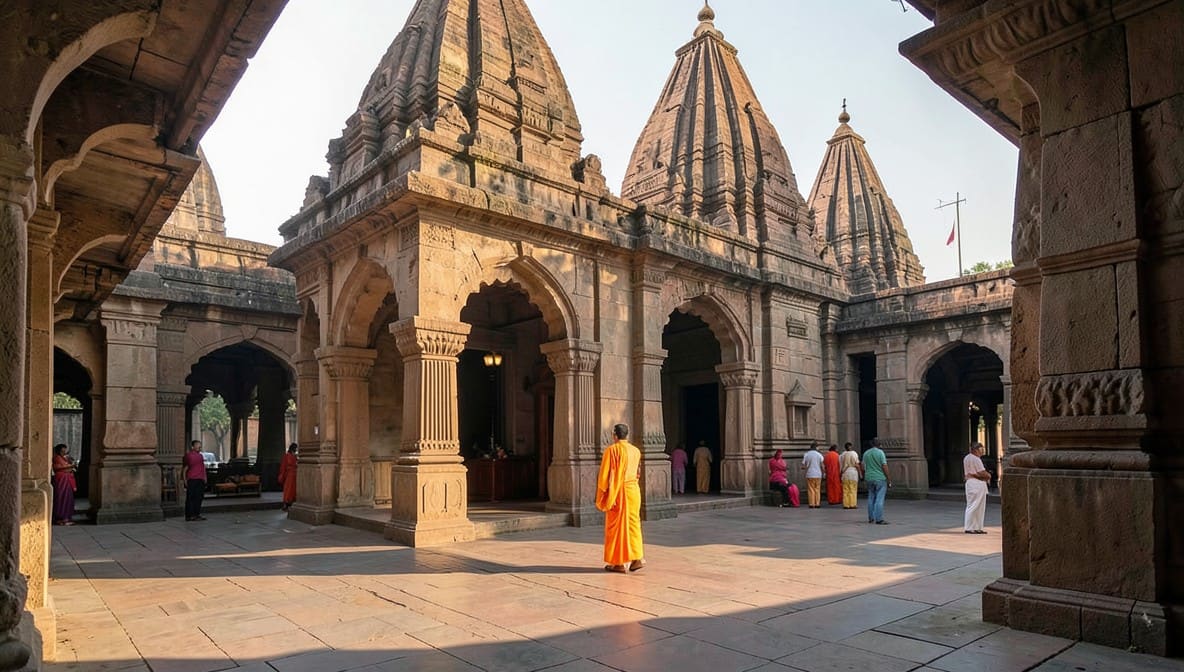
The dispute centers on the hereditary right to perform puja and the role of Mohtamin (temple administrator) at the Shri Shiv Mandir Nayas in Mahakal Tehsil, Baijnath, District Kangra, Himachal Pradesh. The deceased petitioner, Hari Ram, claimed to be the sole hereditary Pujari and Mohtamin of the temple, excluding his brothers (respondents No. 5 to 7). This claim was contested through multiple litigations spanning over a decade.
Key Facts
- Hari Ram and his brothers, along with their mother Smt. Mansa Devi, had been performing puja at the temple since at least 1987.
- After the mother’s demise, the distribution pattern of puja duties and offerings changed.
- On 09.03.2006, the temple was formally taken over by the Government of Himachal Pradesh under the Himachal Pradesh Hindu Public Religious Institutions and Charitable Endowments Act, 1984 (the Act).
- A temple trust was constituted, and all Pujaris were placed on the temple rolls with equal shares of offerings under Section 21 of the Act.
- In 2012, the Deputy Commissioner reduced the Pujaris’ share from 40% to 30%.
- Hari Ram was appointed Mohtamin by the Deputy Commissioner via letter dated 11.10.1983, and this was recorded in revenue records (No. 123, dated 23.10.1991).
- Upon temple takeover in 2006, the revenue records were amended to remove references to "Mohtamin" and "Pujari," replacing them with "Shri Mahakal Mandir Nayas."
- Hari Ram filed Writ Petition No. 381 of 2016 challenging the Assistant Commissioner’s order dated 02.11.2013, which mandated a month-wise rotation of puja duties among all stakeholders, including his brothers.
- In that petition, Hari Ram claimed only to be a hereditary Pujari and sought exclusion of respondents No. 5 to 7 as co-Pujaris. He did not claim the office of Mohtamin.
- On 15.03.2024, the High Court disposed of CWP No. 381 of 2016 by directing the Additional Commissioner to convene a meeting of all stakeholders to resolve the issue.
- A meeting was held on 28.03.2024, where Hari Ram’s son, Sushil Kumar, represented him. The Committee recommended continuation of the month-wise rotation system as per the 2013 order.
- On 26.06.2024, the recommendation was formally accepted by the authorities.
- On 16.10.2024, the Single Judge dismissed Writ Petition No. 6424 of 2024, filed by Hari Ram, challenging the 28.03.2024 meeting minutes and 26.06.2024 order.
- Hari Ram died on 15.08.2025. His legal heirs were brought on record on 18.08.2025.
- The appellants now sought to withdraw CWP No. 6424 of 2024 and file a fresh petition claiming the office of Mohtamin.
Procedural History
- 1983: Hari Ram appointed Mohtamin by Deputy Commissioner (letter dated 11.10.1983)
- 1991: Revenue record (No. 123) mutated in favor of Hari Ram as Mohtamin
- 09.03.2006: Temple taken over by Government under the Act; Mohtamin/Pujari entries deleted from revenue records
- 2012: Deputy Commissioner reduces Pujaris’ share from 40% to 30%
- 02.11.2013: Assistant Commissioner issues order for month-wise rotation of puja duties
- 20.10.2015: Commissioner rejects Hari Ram’s representation against the 2013 order
- 2016: CWP No. 381 of 2016 filed challenging the 2013 order and claiming sole hereditary Pujari status
- 15.03.2024: High Court disposes of CWP No. 381 of 2016, directing stakeholder meeting
- 28.03.2024: Committee meeting held; recommends continuation of rotation system
- 26.06.2024: Order accepting Committee’s recommendation issued
- 16.10.2024: Single Judge dismisses CWP No. 6424 of 2024
- 18.08.2025: Hari Ram dies; legal heirs brought on record
- 28.03.2026: Letters Patent Appeal filed before Division Bench
The Parties' Positions
Appellants (Legal Heirs of Hari Ram): Argued that Hari Ram was the rightful Mohtamin under custom and prior appointment, and that the 2024 orders violated his hereditary rights. Sought liberty to withdraw CWP No. 6424 of 2024 and file a fresh petition claiming Mohtamin status.
Respondents (State and Temple Stakeholders): Contended that the claim of Mohtamin was never raised in any prior litigation, was barred by limitation, and was triable only in a civil court. Argued that the petition was an abuse of process.
Relief Sought
The appellants sought:
- Permission to withdraw CWP No. 6424 of 2024
- Liberty to file a fresh writ petition claiming the office of Mohtamin
- Setting aside of the 26.06.2024 order
- Recognition of Hari Ram’s hereditary rights as Mohtamin and sole Pujari
The Legal Issue
Can a writ petitioner, after a final adjudication on the same subject matter, seek to withdraw the petition and file a fresh one raising a new claim (Mohtamin status) that was never previously pleaded, and is barred by limitation and the doctrine of constructive res judicata?
Arguments Presented
For the Appellant
The appellant’s counsel argued that the office of Mohtamin is distinct from that of Pujari and is governed by the Himachal Pradesh Hindu Public Religious Institutions and Charitable Endowments Act, 1984. He contended that the High Court, in its wide powers under Article 226, should allow amendment or withdrawal to enable a proper claim. He relied on the judiciary’s duty to discern truth and argued that the claim of Mohtamin was a legitimate right overlooked in prior proceedings.
For the Respondent
The respondents argued that the claim of Mohtamin was never raised in CWP No. 381 of 2016 or in any representation prior to 2024. The temple’s takeover in 2006 extinguished the hereditary Mohtamin status under the Act. The claim was barred by limitation under Article 107 of the Limitation Act, as the right was effectively denied in 2006. They further argued that the petition was a clear abuse of process, as the petitioner had deliberately omitted the claim to gain tactical advantage, violating the principles of clean hands and constructive res judicata.
The Court's Analysis
The Court undertook a comprehensive analysis of the doctrines of res judicata, constructive res judicata, and the limits of judicial discretion under Article 226. It emphasized that while the High Court has wide powers to mould relief, this does not permit it to grant unpleaded claims, especially when doing so would prejudice respondents and undermine finality.
"Every petition under Article 226 of the Constitution must contain a relief clause. Whenever the petitioner is entitled to or is claiming more than one relief, he must pray for all the reliefs."
The Court cited Bharat Amratlal Kothari v. Dosukhan Samadkhan Sindhi (2010) to affirm that courts cannot grant reliefs not specifically prayed for, particularly when the petitioner is represented by counsel and the matter is not one of public interest or fundamental rights violation.
The Court further held that the principle of constructive res judicata under Explanation IV to Section 11 of the Code of Civil Procedure applies to writ petitions. The claim of Mohtamin was clearly within the subject matter of CWP No. 381 of 2016, as it arose from the same temple, same family, and same disputed rights. The failure to raise it then amounted to an omission that barred its assertion now.
"The application of the rule by courts in India should be influenced by no technical considerations of form, but by matter of substance within the limits allowed by law."
The Court also invoked the doctrine of clean hands, citing Kishore Samrite v. State of Uttar Pradesh (2013), and held that the petitioner’s conduct - suppressing the Mohtamin claim for years and attempting to resurrect it only after adverse orders - constituted an abuse of process. The Court rejected the argument that the judiciary’s duty to find truth justifies entertaining belated claims, noting that truth must be disclosed upfront, not strategically concealed.
The Court further noted that the claim of Mohtamin was time-barred. The temple’s takeover in 2006 extinguished the hereditary status, and any challenge to that extinguishment should have been filed within 12 years under Article 107 of the Limitation Act, which expired long before 2024.
Finally, the Court relied on R. Rathinavel Chettiar v. V. Sivaraman (1999) to hold that withdrawal of a petition after a judgment has been rendered cannot be permitted to destroy the rights already adjudicated.
The Verdict
The Letters Patent Appeal was dismissed. The Court held that the appellant’s attempt to withdraw CWP No. 6424 of 2024 and file a fresh petition claiming Mohtamin status was barred by constructive res judicata, limitation, and abuse of process. The impugned judgment dated 16.10.2024 was upheld. All pending miscellaneous applications were disposed of.
What This Means For Similar Cases
New Claims Cannot Be Introduced After Final Adjudication
- Practitioners must plead all possible reliefs in the initial writ petition, even if they appear tangential
- Failure to raise a claim in the first proceeding bars its assertion in any subsequent litigation on the same subject matter
- Courts will not permit litigants to "save" stronger claims for later proceedings to gain tactical advantage
Temple Disputes Are Not Automatically Writ-Ready
- Claims involving hereditary rights, succession, or administrative control over religious institutions are generally civil in nature
- Writ jurisdiction under Article 226 is not a substitute for civil suits where factual disputes predominate
- The Act of 1984 governs temple administration; claims under it must be pursued through civil remedies unless a statutory authority acts ultra vires
Clean Hands Doctrine Is Strictly Enforced in Constitutional Litigation
-
Litigants must make full and true disclosure of facts at the outset
-
Suppression of material facts, even if not technically fraudulent, can lead to dismissal
-
Courts may impose costs or contempt proceedings for misleading pleadings
-
The maxim "he who comes to equity must come with clean hands" applies with full force in writ petitions
-
Always verify whether a claim was raised in prior proceedings before filing a new writ
-
If a claim is omitted, seek leave to amend before final hearing - not after
-
In temple-related disputes, exhaust civil remedies before approaching the High Court under Article 226
-
Document all representations and decisions to establish timelines for limitation and res judicata defenses