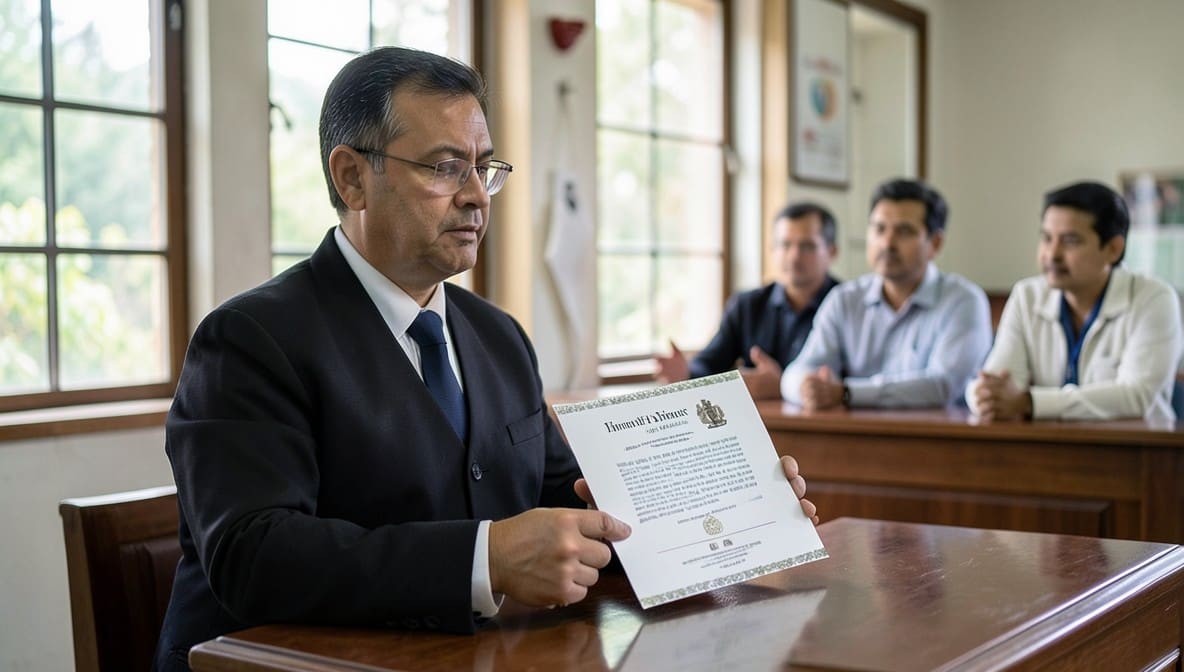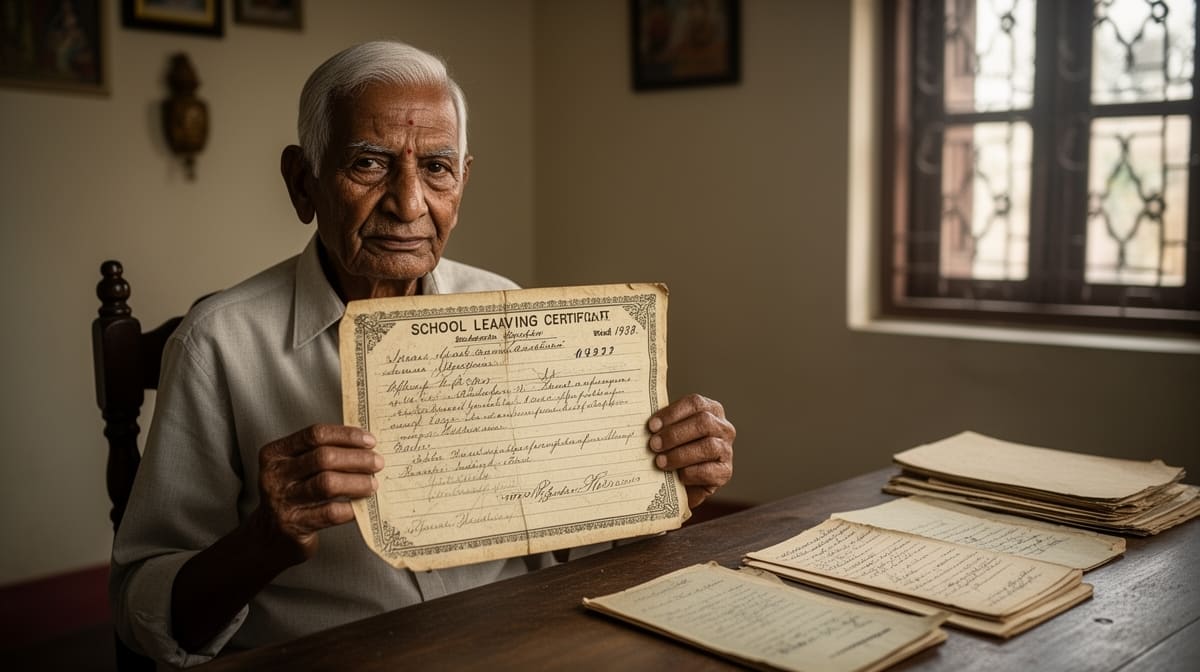
The Supreme Court has definitively held that a person who converts to Christianity loses all entitlement to Scheduled Caste status under the Constitution (Scheduled Castes) Order, 1950, and consequently cannot invoke the protections of the Scheduled Castes and Scheduled Tribes (Prevention of Atrocities) Act, 1989. This ruling clarifies a long-standing ambiguity regarding the intersection of religious conversion and caste-based statutory rights.
Background & Facts
The Dispute
The appellant, Chinthada Anand, a resident of Kothapalem Village in Guntur District, Andhra Pradesh, claims to belong to the Madiga community, a Scheduled Caste under Part I of the Constitution (Scheduled Castes) Order, 1950. He has been serving as a Pastor for approximately ten years prior to the incident, conducting Sunday prayer meetings in private homes and serving as treasurer of the local Pastors Fellowship.
Key Facts
- The appellant was born into the Madiga community, which is listed as a Scheduled Caste in the Constitution (Scheduled Castes) Order, 1950.
- He converted to Christianity and has been actively practicing as a Pastor since around 2011.
- On 03.01.2021, he was allegedly slapped and abused with caste-based slurs while conducting prayers at the home of Doma Koti Reddy.
- On 24.01.2021, he was allegedly restrained, assaulted, and threatened with death by respondent nos. 2 to 7 and approximately twenty-five others at the entrance of a hamlet, while returning home after prayers.
- His mobile phone and vehicle keys were forcibly taken.
- He filed a written complaint on 25.01.2021, leading to FIR No. 08 of 2021 being registered on 26.01.2021.
- The FIR invoked Sections 3(1)(r), 3(1)(s), 3(2)(va) of the SC/ST Act and Sections 341, 506, 323 read with Section 34 of the IPC.
- The Tahsildar issued a caste certificate on 15.02.2021 confirming his Madiga Scheduled Caste status.
- The charge-sheet was filed on 30.04.2021, and the case was taken on file as Spl. SC No. 36 of 2021 before the Special Court under the SC/ST Act, Guntur.
- Respondent nos. 2 to 7 filed a petition under Section 482 of the CrPC seeking quashing of proceedings.
- The High Court of Andhra Pradesh, by order dated 30.04.2025, quashed the proceedings against respondent nos. 2 to 7.
Procedural History
- 03.01.2021: First alleged incident of assault and caste-based abuse.
- 24.01.2021: Principal incident involving restraint, assault, and threats.
- 25.01.2021: Written complaint submitted to Chandole Police Station.
- 26.01.2021: FIR No. 08 of 2021 registered.
- 15.02.2021: Caste certificate issued by Tahsildar.
- 30.04.2021: Charge-sheet filed by Sub-Divisional Police Officer, Bapatla.
- 01.05.2021: Case registered as Spl. SC No. 36 of 2021 before Special Court, Guntur.
- 2022: Criminal Petition No. 7114 of 2022 filed under Section 482 CrPC before High Court of Andhra Pradesh.
- 30.04.2025: High Court quashed proceedings against respondent nos. 2 to 7.
- 2025: Special Leave Petition (Criminal) No. 9231/2025 filed before Supreme Court.
- 24.03.2026: Judgment delivered by Supreme Court.
The Parties' Positions
The appellant contended that caste is a matter of birth and not religion, and that his conversion to Christianity did not erase his social identity or historical disadvantage. He relied on G.O. Ms. No. 341 dated 30.08.1977 issued by the Government of Andhra Pradesh, which extended non-statutory benefits to Scheduled Caste converts to Christianity.
The respondents argued that Clause 3 of the Constitution (Scheduled Castes) Order, 1950 explicitly excludes persons who profess any religion other than Hinduism, Sikhism, or Buddhism from being deemed Scheduled Castes. They emphasized that the appellant’s open and continuous practice as a Pastor constituted a public profession of Christianity, thereby disqualifying him from invoking the SC/ST Act.
Relief Sought
The appellant sought to set aside the High Court’s order dated 30.04.2025 and restore the criminal proceedings against respondent nos. 2 to 7 under the SC/ST Act and IPC. He also sought a direction to proceed with trial on the charges of assault, criminal intimidation, and wrongful restraint.
The Legal Issue
The central question was whether a person who has converted to Christianity and openly practices that faith can claim protection under the Scheduled Castes and Scheduled Tribes (Prevention of Atrocities) Act, 1989, despite being born into a Scheduled Caste community.
Arguments Presented
For the Appellant
The appellant’s counsel argued that caste is an immutable social identity rooted in birth, not religion. He relied on C.M. Arumugam v. S. Rajagopal to assert that conversion does not automatically extinguish caste status. He cited G.O. Ms. No. 341 dated 30.08.1977 as evidence that the State of Andhra Pradesh recognized the continued social disabilities of Scheduled Caste converts to Christianity and extended welfare benefits to them. He contended that the SC/ST Act is a protective statute meant to address caste-based violence, and its application should not be denied on religious grounds.
For the Respondent
The respondents’ senior counsel argued that Clause 3 of the Constitution (Scheduled Castes) Order, 1950 is unambiguous: no person who professes a religion other than Hinduism, Sikhism, or Buddhism can be deemed a Scheduled Caste. He emphasized that the term “professes” means open declaration and practice, which the appellant’s decade-long role as a Pastor clearly demonstrated. He relied on Punjabrao v. D.P. Meshram and Guntur Medical College v. Y. Mohan Rao to show that the Constitution (Scheduled Castes) Order, 1950 is a Presidential Order under Article 341 and cannot be overridden by state executive orders. He further argued that the SC/ST Act is a statutory scheme that requires the victim to be a legally recognized Scheduled Caste member, which the appellant was not.
The Court's Analysis
The Supreme Court undertook a comprehensive examination of the constitutional and statutory framework governing Scheduled Caste status. It emphasized that the Constitution (Scheduled Castes) Order, 1950, issued under Article 341, is the sole authoritative source for determining Scheduled Caste membership. Clause 3 of the Order explicitly excludes persons who profess any religion other than Hinduism, Sikhism, or Buddhism.
"No person who professes a religion different from the Hindu, the Sikh or the Buddhist religion shall be deemed to be a member of a Scheduled Caste."
The Court held that the term “professes” must be interpreted as an open, public declaration and practice of religion, not merely private belief. The appellant’s role as a Pastor, conducting weekly prayer meetings, serving as treasurer of a Pastors Fellowship, and preaching Christian doctrine for over a decade, constituted an unequivocal and continuous profession of Christianity.
The Court rejected the appellant’s reliance on G.O. Ms. No. 341 dated 30.08.1977, noting that the order explicitly distinguishes between non-statutory concessions and statutory benefits. Clause 3 of the order states that reservations and other statutory benefits are applicable only to Scheduled Castes as defined under the Constitution (Scheduled Castes) Order, 1950. The Central Government’s 2021 press release further confirmed that Scheduled Caste converts to Christianity are ineligible for centrally sponsored schemes.
The Court also examined the nature of caste under Hindu society and noted that Christianity, by its theological foundation, does not recognize caste. The Court cited C.M. Arumugam and Y. Mohan Rao to affirm that once a person ceases to be a Hindu and embraces another religion, the social disabilities tied to caste in the Hindu context cease to exist for legal purposes.
Regarding the allegations under the IPC, the Court found that the prosecution’s case rested solely on the appellant’s testimony, with no independent corroboration. The statements of other witnesses either contradicted the allegations or failed to identify the accused. The High Court’s conclusion that the allegations under Sections 341, 506, and 323 read with Section 34 of the IPC were not substantiated was upheld under the principles laid down in State of Haryana v. Bhajan Lal.
The Verdict
The appeal was dismissed. The Supreme Court upheld the High Court’s order dated 30.04.2025 quashing the criminal proceedings against respondent nos. 2 to 7. The Court held that the appellant, having professed Christianity for over a decade, is not a member of a Scheduled Caste under the Constitution (Scheduled Castes) Order, 1950, and therefore cannot invoke the SC/ST Act. The allegations under the IPC were found to be unsupported by evidence, and continuation of proceedings would constitute an abuse of process. No monetary relief, compensation, or direction for trial was granted.
What This Means For Similar Cases
Scheduled Caste Status Is Religion-Dependent
- Practitioners must now treat religious profession as a decisive factor in determining eligibility for SC/ST benefits.
- A caste certificate alone is insufficient if the person professes a religion excluded under Clause 3 of the Constitution (Scheduled Castes) Order, 1950.
- Any claim to Scheduled Caste status must be evaluated against the material time of the incident or benefit claim.
State Executive Orders Cannot Override Constitutional Orders
- State government orders extending welfare benefits to Scheduled Caste converts cannot override the constitutional bar under Article 341.
- Legal arguments based on state circulars for statutory benefits like reservations, SC/ST Act protection, or central schemes will fail.
- Only the Presidential Order under Article 341 governs Scheduled Caste status for legal and constitutional purposes.
Reconversion Requires Unimpeachable Evidence
- To reclaim Scheduled Caste status after conversion, a person must prove: (i) original caste membership, (ii) bona fide reconversion to Hinduism/Sikhism/Buddhism, and (iii) community acceptance.
- Mere self-declaration or issuance of a caste certificate without community recognition is legally inadequate.
- The burden of proof lies entirely on the claimant, and all three conditions must be satisfied cumulatively.