The Karnataka High Court has reaffirmed that administrative authorities cannot condone inordinate delays without assigning cogent, reasoned grounds. In a significant ruling, the Court quashed both the original order condoning a 29-year delay and the subsequent revision order that decided the appeal on merits, directing a fresh hearing with full procedural fairness.
Background & Facts
The Dispute
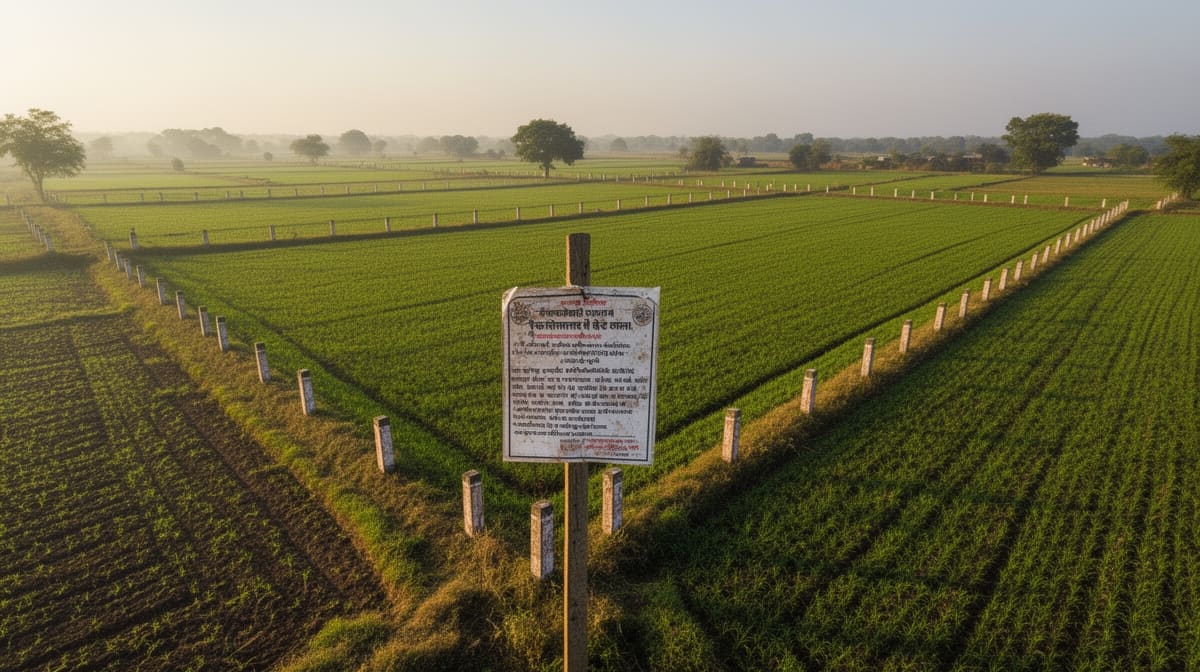
The dispute concerns title and possession of agricultural land in Govindapalli, Tq. Deodurga, District Raichur. The petitioner, Parikshit S/o Gurubeemachar, sought to challenge an order passed by the Tahasildar in 1983-84 regarding revenue records. The petitioner, who later died, was represented by his legal heirs: Raghavendra, Rohini, and Vedaprakash. The respondents include the legal representatives of the original landholder, Hussain Nayak, and the revenue authorities - Deputy Commissioner, Assistant Commissioner, and Tahasildar of Raichur.
Key Facts
- The original order impugned was passed by the Tahasildar in 1983-84.
- The petitioner filed an appeal before the Assistant Commissioner under Section 136(3) of the Karnataka Land Revenue Act, 1956, in 2008-09 - nearly 25 years after the impugned order.
- The appeal was accompanied by an application under Section 5 of the Limitation Act, 1963, seeking condonation of delay amounting to 29 years.
- The Assistant Commissioner passed an order on 29.03.2012, condoning the delay in a cryptic, non-speaking manner, stating only that the delay "deserves to be condoned" without assigning any reasons.
- The respondents, legal heirs of Hussain Nayak, filed a revision petition before the Deputy Commissioner under Section 136(3).
- On 28.08.2020, the Deputy Commissioner set aside the Assistant Commissioner’s order and went on to decide the appeal on merits, dismissing the petitioner’s claim.
Procedural History
- 1983-84: Tahasildar’s order passed on revenue records.
- 2008-09: Petitioner files appeal before Assistant Commissioner.
- 29.03.2012: Assistant Commissioner condones 29-year delay without reasons (Annexure-C).
- 2013-14: Revision petition filed by respondents before Deputy Commissioner (File No. sum.kum/ri/appeal/09/2013-14).
- 28.08.2020: Deputy Commissioner sets aside condonation order and decides appeal on merits (Annexure-F).
- 2020: Writ Petition No. 226429 of 2020 filed before Karnataka High Court, Kalaburagi Bench.
- 01.06.2026: Judgment delivered by Justice S.R. Krishna Kumar.
The Parties' Positions
For the Petitioners
The petitioners contended that the Assistant Commissioner’s order condoning delay was legally unsustainable due to its non-speaking nature. They argued that the Deputy Commissioner, having found the condonation order defective, could not have proceeded to decide the appeal on merits. They relied on settled principles that revisional authorities must confine themselves to correcting legal errors and not act as appellate courts.
For the Respondents
The respondents defended the Deputy Commissioner’s order, arguing that the 29-year delay was inexcusable and that the merits of the case warranted dismissal. They submitted that the Assistant Commissioner’s failure to record reasons was a procedural lapse, but the ultimate decision on merits was correct and should be upheld.
Relief Sought
The petitioners sought quashing of the Deputy Commissioner’s order dated 28.08.2020 and the Assistant Commissioner’s order dated 29.03.2012, and a direction to reconsider the application for condonation of delay with a reasoned order.
The Legal Issue
The central question was whether an appellate authority under the Karnataka Land Revenue Act can condone a delay of 29 years without assigning any reasons, and whether a revisional authority, upon finding such an order defective, may proceed to decide the appeal on merits instead of remanding for a fresh hearing.
Arguments Presented
For the Petitioner
The petitioner’s counsel relied on the principle that condonation of delay under Section 5 of the Limitation Act requires a judicial application of mind. He cited State of Haryana v. Bhajan Lal and K. Srinivasulu v. State of Andhra Pradesh to argue that unreasoned orders are void ab initio. He emphasized that the Deputy Commissioner, having found the condonation order legally flawed, was bound to remand the matter for a reasoned decision, not to substitute its own judgment on the merits.
For the Respondent
The respondents’ counsel contended that the delay was gross and unexplained, and that the Deputy Commissioner was justified in dismissing the appeal on merits to prevent abuse of process. He argued that the revisional power under Section 136(3) includes the authority to correct errors of law and fact, and that remand would cause unnecessary delay.
The Court's Analysis
The Court observed that the Assistant Commissioner’s order dated 29.03.2012 was a classic example of an unreasoned, non-speaking order. The order contained no analysis of the grounds for delay, no assessment of the petitioner’s explanation, and no balancing of prejudice to the opposite party. Such orders, the Court held, are legally unsustainable.
"An order condoning delay under Section 5 of the Limitation Act must be reasoned, specific and demonstrate judicial application of mind. A laconic statement that the delay 'deserves to be condoned' is no order at all."
The Court further held that the Deputy Commissioner, while correct in setting aside the unreasoned order, erred in proceeding to decide the appeal on merits. The revisional jurisdiction under Section 136(3) is not a substitute for appellate jurisdiction. Once the condonation order was found defective, the proper course was to remand the matter to the Assistant Commissioner for a fresh, reasoned decision.
The Court emphasized that the principle of natural justice requires both parties to be heard on the issue of condonation before any final determination. The Deputy Commissioner’s decision on merits, made without affording the petitioner an opportunity to argue on delay, violated this fundamental principle.
The Verdict
The petition was allowed. The Court set aside both the Assistant Commissioner’s order dated 29.03.2012 and the Deputy Commissioner’s order dated 28.08.2020. The matter was remanded to the Assistant Commissioner for fresh consideration of the application for condonation of delay and the appeal. The parties are directed to appear before the Assistant Commissioner on 29.06.2026. The Assistant Commissioner must dispose of the matter within three months from that date. All parties must maintain status quo in revenue records until disposal. No opinion is expressed on the merits of the dispute.
What This Means For Similar Cases
Reasoned Orders Are Non-Negotiable
- Practitioners must challenge any condonation order that lacks reasoning, regardless of the length of delay.
- Unreasoned orders are void and cannot be cured by subsequent appellate or revisional affirmations.
- A revisional authority cannot validate a defective order by deciding the appeal on merits.
Remand Is the Default Remedy
- When an appellate order is set aside for being non-speaking, remand - not merits adjudication - is the legally mandated course.
- Revisional powers under land revenue statutes are supervisory, not appellate; they cannot usurp the function of the original authority.
- Courts will not permit finality to be achieved through procedural shortcuts.
Delay Alone Is Not Fatal - But Silence Is
- Long delay does not automatically disentitle a party; the key is whether the authority applied its mind to the explanation offered.
- The burden is on the authority to record reasons, not on the litigant to prove why the authority failed to do so.
- In land revenue matters, where rights to property are at stake, procedural fairness must be strictly observed.