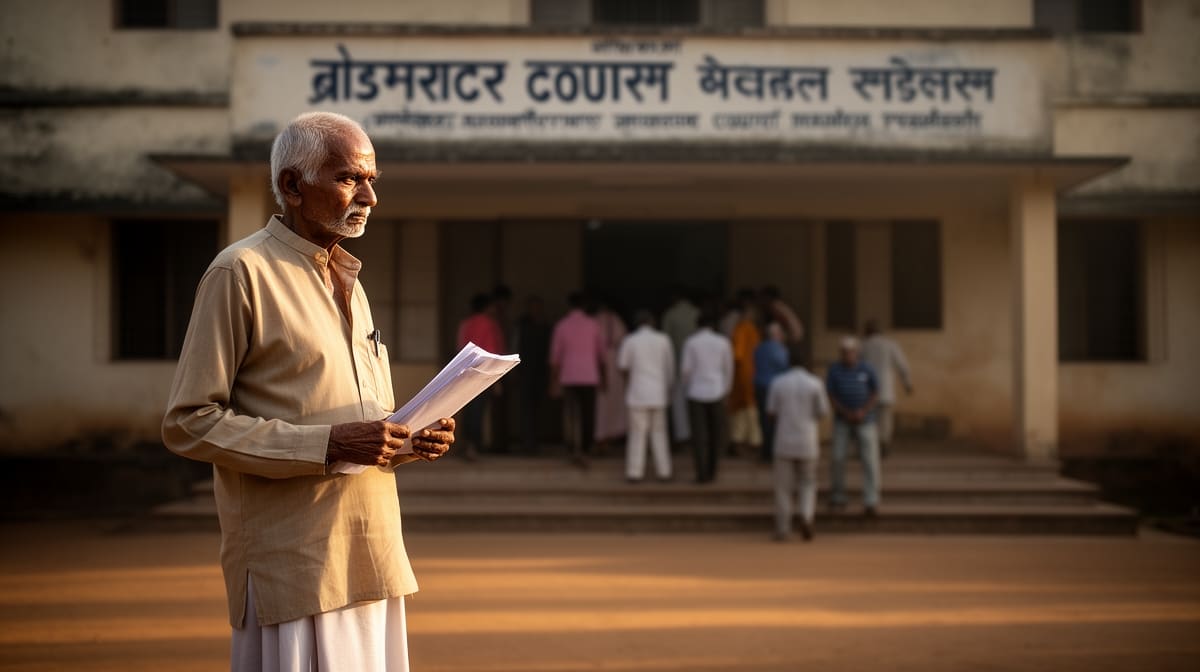
The Madhya Pradesh High Court has reaffirmed that in criminal proceedings, the deprivation of personal liberty demands a more humane application of limitation principles. In a significant ruling, the Court condoned a delay of over seven years in filing an appeal, emphasizing that rigid adherence to time limits cannot override the fundamental right to a fair hearing when liberty is at stake.
Background & Facts
The Dispute
The revision petitioner, Deelan Singh Gond, was convicted by the Trial Court in the case of State of Madhya Pradesh v. Deelan Singh for offences under Section 353, Section 186, and Section 173 of the Indian Penal Code. He was sentenced to rigorous imprisonment for one year, simple imprisonment for one month on each of the other two counts, along with fines of Rs. 200 on each count, with default stipulations of additional simple imprisonment.
The judgment of the Trial Court was delivered on an unspecified date, but the appeal was filed only after a delay of seven years, five months, and sixteen days. The Appellate Court at Pawai dismissed the appeal not on merits, but solely on the ground that no sufficient cause was shown for the delay under Section 5 of the Limitation Act, 1963.
Key Facts
- The petitioner was arrested and produced before the Judicial Magistrate First Class, Pawai, on 28.06.2025
- He was remanded to the Sub-Jail, Pawai, on the same date
- The Trial Court’s judgment was delivered prior to 28.06.2025
- The appeal was filed on or around 14.02.2025 (calculated from 7 years 5 months 16 days prior to the filing of revision on 18.03.2026)
- The Appellate Court dismissed the appeal on 24.09.2025 without examining the merits
- The revision petition was filed before the High Court on 18.03.2026
- As of the date of the High Court’s order (18.03.2026), the petitioner had already undergone over eight months of incarceration since arrest
Procedural History
- Date of Trial Court Judgment: Prior to 28.06.2025 (exact date not specified in judgment)
- Date of Appeal Filing: Approximately 14.02.2025 (after 7 years 5 months 16 days from judgment)
- 24.09.2025: Additional Sessions Judge, Pawai, dismissed the appeal under Section 5 of Limitation Act for lack of sufficient cause
- 18.03.2026: Criminal Revision No. 6186 of 2025 filed before the High Court at Jabalpur
- 18.03.2026: High Court heard the revision on admission and passed order
The Parties' Positions
For the Revisioner
The petitioner’s counsel argued that the delay was not deliberate or mala fide. He submitted that the accused had been in continuous judicial custody since 28.06.2025, and the delay in filing the appeal was due to lack of legal access and awareness while in jail. He relied on the principle that criminal proceedings involve personal liberty, which demands a more liberal approach to limitation.
For the State
The State’s counsel conceded that the only issue was limitation and did not contest the factual assertion of prolonged incarceration. He did not argue against condonation but noted the procedural lapse.
Relief Sought
The revision petitioner sought condonation of delay in filing the appeal and a direction to the Appellate Court to hear and decide the appeal on its merits.
The Legal Issue
Can a delay of over seven years in filing a criminal appeal be condoned under Section 5 of the Limitation Act, 1963, when the appellant has been in continuous judicial custody and the matter involves deprivation of personal liberty?
Arguments Presented
For the Appellant
The petitioner’s counsel contended that Section 5 of the Limitation Act permits condonation of delay if sufficient cause is shown. He emphasized that in criminal cases, the stakes are not merely financial but involve fundamental rights under Article 21 of the Constitution. He cited the prolonged incarceration since 28.06.2025 as evidence of the petitioner’s inability to pursue the appeal earlier. He argued that the Appellate Court erred in dismissing the appeal without examining the merits, especially when the accused had already served over eight months in jail.
For the Respondent
The State did not oppose the prayer for condonation. The learned Government Advocate acknowledged the factual posture and did not contest the argument that personal liberty interests outweigh rigid limitation periods in criminal matters.
The Court's Analysis
The Court undertook a comparative analysis of civil and criminal limitation regimes. It observed that while civil litigation concerns property rights, criminal proceedings directly implicate the liberty of the individual. The Court held that the purpose of Section 5 is not to defeat justice but to ensure that substantial rights are not lost due to technicalities.
"Under Civil Law only property is involved whereas in Criminal Cases personal liberty is involved."
The Court noted that the revisioner had been in continuous custody since 28.06.2025, and had already served over eight months of the sentence imposed by the Trial Court. It found that the delay, though substantial, was not attributable to negligence or laches, but to the petitioner’s custodial condition. The Court further held that the Appellate Court’s refusal to examine the appeal on merits was a failure to discharge its duty under the criminal justice system.
The Court emphasized that the doctrine of actio personalis moritur cum persona does not apply to appeals, and that the right to appeal is a statutory right that must be preserved unless there is clear prejudice to the State. No prejudice was alleged or demonstrated by the State.
The Verdict
The revision was allowed. The High Court condoned the delay of seven years, five months, and sixteen days in filing the appeal. The Appellate Court at Pawai was directed to hear the appeal on its merits and decide it in accordance with law. The petitioner, having already undergone over eight months of incarceration as of 18.03.2026, remains entitled to the full benefit of appellate review.
What This Means For Similar Cases
Personal Liberty Overrides Technical Limitation
- Practitioners must argue that delays in criminal appeals, especially where the accused is in custody, should be viewed through the lens of Article 21 and not mechanical application of limitation periods
- Courts must not dismiss appeals solely on delay without examining whether the delay was caused by custodial constraints, lack of legal aid, or systemic delays
- The burden shifts to the State to demonstrate actual prejudice caused by delay - mere passage of time is insufficient
Appellate Courts Must Decide on Merits
- Dismissal of criminal appeals on limitation grounds without examining the merits constitutes a denial of substantive justice
- The Appellate Court’s duty under Section 374 CrPC is to adjudicate the appeal on facts and law - not to act as a gatekeeper of limitation
- This judgment reinforces that appellate courts in criminal matters are forums for correcting errors, not enforcing procedural rigidity
Custody as Sufficient Cause
- Continuous judicial custody since arrest constitutes sufficient cause under Section 5 for delay in filing appeals
- Legal aid providers and jail authorities must be made aware of this precedent to ensure timely filing of appeals by undertrial prisoners
- Courts should proactively consider the custodial status of appellants when evaluating delay applications