The National Consumer Disputes Redressal Commission has clarified that compensation in medical negligence cases must be grounded in proven deficiency and bear a rational nexus to actual harm - not inflated as punishment. This judgment reasserts the principle that consumer forums must avoid arbitrary enhancement of awards, particularly where expert evidence does not conclusively link the outcome to hospital fault.
Background & Facts
The Dispute
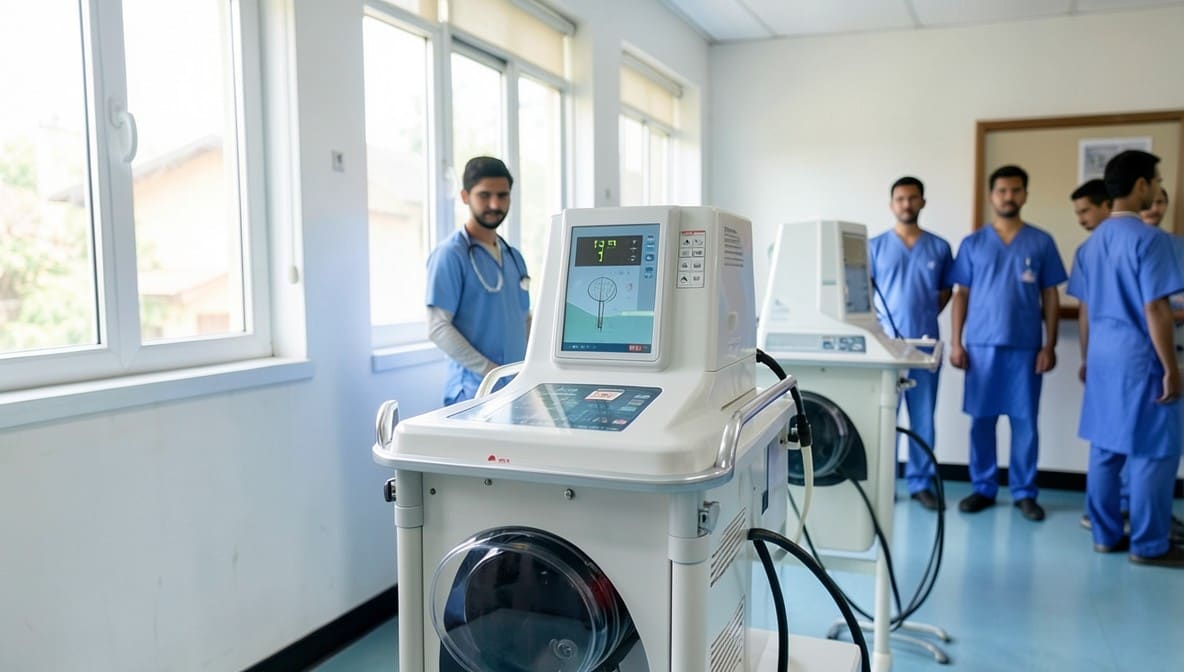
The respondent, Raj Karan Singh, filed a consumer complaint alleging medical negligence by Indraprastha Apollo Hospital in the treatment of his daughter, Anju, who suffered from End Stage Renal Disease and was undergoing regular dialysis. The complaint centered on an incident on 23.12.2006, during which the respondent alleged that the dialysis fistula needle used was improperly cleaned and possibly reused, leading to acute circulatory failure, coma, and eventual death after 47 days in ICU on 08.02.2007.
Key Facts
- The patient had been receiving dialysis at the hospital since 22.06.2005, for over 1.5 years prior to the incident.
- On 23.12.2006, during dialysis, the patient experienced sudden breathlessness and collapsed.
- She was admitted to ICU and remained there until her death on 08.02.2007.
- The complainant alleged that the hospital technician failed to properly wash the dialysis equipment, violating hygiene protocols.
- The hospital denied deliberate negligence but acknowledged procedural lapses by staff.
- The complainant sought Rs. 25,00,000 in compensation for mental agony, loss of life, and medical expenses.
Procedural History
- 23.12.2006: Incident of alleged unhygienic dialysis procedure.
- 08.02.2007: Death of patient Anju.
- 2008: Consumer complaint filed before Consumer Dispute Redressal Forum-VII, Delhi.
- 15.03.2012: District Forum awarded Rs. 1,10,000/- as compensation, citing minor negligence by hospital staff in handling the fistula needle, but explicitly absolving doctors of culpability.
- 15.07.2019: State Consumer Commission enhanced compensation to Rs. 10,00,000/-, holding that the District Forum’s finding of negligence was sufficient to justify enhancement.
- 17.04.2026: Revision Petition heard and decided by National Consumer Disputes Redressal Commission.
The Parties' Positions
For the Petitioner (Hospital):
- The District Forum did not find medical negligence by doctors, only possible minor staff lapse.
- The Safdarjung Hospital Medical Board’s report (04.12.2010), commissioned by the complainant, identified four possible causes of collapse, including hyperkalaemia and acute LVF, not exclusively needle reuse.
- The complainant accepted and encashed the Rs. 1,10,000/- without protest, thereby acquiescing to the finding.
- Enhancement to Rs. 10,00,000/- was arbitrary, punitive, and unsupported by evidence.
- The patient’s underlying end-stage renal disease was the primary cause of death.
For the Respondent (Complainant):
- The hospital’s failure to ensure sterile equipment constituted a clear deficiency in service.
- The 47-day ICU stay and death following the incident established a causal link.
- The District Forum’s finding of staff negligence was sufficient to trigger liability.
- The enhancement was justified by the magnitude of loss and emotional trauma.
Relief Sought
The petitioner sought quashing of the State Commission’s order enhancing compensation to Rs. 10,00,000/-. The respondent sought confirmation of the enhanced award.
The Legal Issue
The central question was whether a consumer forum may enhance compensation tenfold based on a finding of minor staff negligence, when expert medical evidence does not conclusively link the negligence to the fatal outcome, and the original award was accepted without protest.
Arguments Presented
For the Appellant/Petitioner
The hospital relied on Pramod Kumar v. Smt. Savita and Indian Medical Association v. V.P. Shantha to argue that medical negligence requires proof of a breach of standard of care directly causing harm. It emphasized that the Safdarjung Medical Board’s report, commissioned by the complainant, listed multiple possible causes of collapse, none of which were definitively tied to needle reuse. It further cited State of Maharashtra v. M.P. Bhojwani to argue that acceptance and encashment of an award constitutes acquiescence, barring further claims. The hospital contended that the State Commission’s enhancement was punitive, not compensatory, and violated the principle of proportionality.
For the Respondent/State
The complainant argued that the hospital’s failure to maintain hygiene standards during dialysis - a critical, life-sustaining procedure - constituted a clear deficiency in service under Section 2(1)(g) of the Consumer Protection Act, 1986. He relied on K. S. Srinivasan v. Dr. S. S. Srinivasan to assert that hospitals owe a higher duty of care, and any lapse, even minor, in such contexts warrants significant compensation. He maintained that the District Forum’s finding of negligence was sufficient to justify enhancement, and that the quantum should reflect the trauma suffered by the family.
The Court's Analysis
The Commission undertook a meticulous review of the District Forum’s order and the Safdarjung Medical Board’s report. It noted that the District Forum explicitly stated: "it cannot be said that the death of the patient was caused due to negligence of the doctors" and that any negligence was limited to the technician’s handling of the fistula needle. The Commission observed that the Medical Board’s report, prepared at the complainant’s own request, identified four possible causes of collapse, including hyperkalaemia and acute LVF, and did not attribute the event solely to needle reuse.
"The possibility of any one or more of the remaining three factors identified by the Medical Board cannot be altogether discarded."
The Court held that the State Commission erred in treating the District Forum’s observation of "minor negligence" as a conclusive finding of medical negligence warranting a tenfold enhancement. It emphasized that compensation under consumer law must be compensatory, not punitive, and must bear a rational nexus to the proven deficiency. The Court rejected the notion that the mere existence of a procedural lapse, without clear causation to death, justifies an award of Rs. 10,00,000/-.
The Court also noted that the complainant had accepted and encashed the Rs. 1,10,000/- without objection, which, while not a legal estoppel, indicated an implicit acceptance of the quantum as adequate for the proven deficiency. The Court found the original award too low for the trauma suffered but the enhanced award grossly disproportionate.
The Verdict
The Revision Petition was allowed. The NCDRC set aside the State Commission’s order enhancing compensation to Rs. 10,00,000/-. The District Forum’s award of Rs. 1,10,000/- was modified to Rs. 5,00,000/- as lumpsum compensation for physical, mental, and emotional trauma. Simple interest at 6% per annum was awarded from the date of the District Forum’s order (15.03.2012). Additional litigation costs of Rs. 40,000/- were granted to the complainant. The hospital was directed to pay the total amount of Rs. 5,40,000/- within two months. Any delay beyond this period shall attract enhanced interest at 9% per annum until realization.
What This Means For Similar Cases
Compensation Must Be Proportionate to Proven Deficiency
- Practitioners must now demonstrate a direct, credible link between the alleged deficiency and the harm suffered before seeking high compensation.
- Awards based on emotional appeal or punitive intent, without medical causation, are vulnerable to reduction.
- Courts will scrutinize whether the quantum reflects actual loss, not the severity of the outcome alone.
Acceptance of Initial Award May Weaken Subsequent Claims
- While not a legal estoppel, accepting and encashing an award without protest weakens the credibility of later claims for enhancement.
- Advocates should advise clients to formally object to initial awards if they intend to seek higher compensation.
- Failure to challenge an award may be viewed as tacit acceptance of the forum’s factual findings.
Expert Reports Commissioned by Complainants Are Binding Unless Disputed
- Medical reports obtained by the complainant and not rebutted carry significant evidentiary weight.
- Courts will not substitute their opinion for unchallenged expert findings, even if favorable to the hospital.
- Practitioners must proactively challenge or cross-examine such reports if they intend to dispute their conclusions.