The Supreme Court has reaffirmed that a writ petition seeking incorporation of private land into a municipal layout plan cannot be defeated by reopening title issues already conclusively determined in a final civil decree. The judgment underscores judicial restraint in collateral attacks on settled ownership rights.
Background & Facts
The Dispute
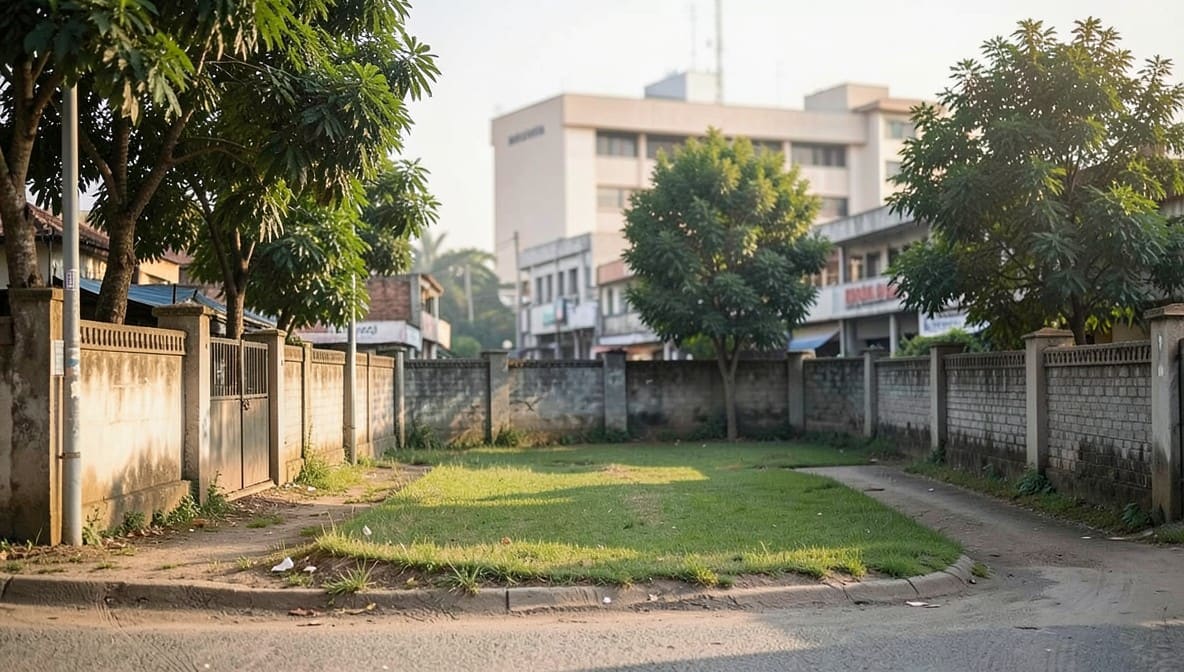
The dispute concerns a 1600 sq. yard parcel of land in Green Park Extension Colony, New Delhi, originally part of a larger tract owned by Urban Improvement Company Private Limited (the "coloniser"). The coloniser surrendered the land to the Municipal Corporation of Delhi (MCD) along with a layout plan for colony development. The original layout plan, sanctioned on 03.09.1958, reserved this plot for a High School, while adjacent areas were earmarked for a primary school and park.
Key Facts
- The reserved area for a High School required approximately 4000 sq. meters (4783.96 sq. yards), but the subject plot measured only 1600 sq. yards.
- On 30.05.1969, the MCD approved a revised layout plan deleting the High School reservation, citing insufficient area. This revision was not challenged and attained finality.
- On 18.06.1975, the coloniser sold the subject plot (Khasra Nos. 5, 6, and 14) to five individuals: Govind Ram (700 sq. yds), Vasudev (250 sq. yds), Jagdish Lal Batra (250 sq. yds), Prem Nath (150 sq. yds), and Pearey Ram (250 sq. yds) - collectively termed "erstwhile owners."
- The erstwhile owners obtained a No Objection Certificate from the A.D.M. (Revenue) dated 05.06.1975, confirming the land was free from government encumbrances.
- The erstwhile owners filed five separate civil suits seeking perpetual injunction against MCD interference. The civil court, by judgments dated 01.10.1988, decreed in their favor, holding that they were owners and in possession, and that MCD could not dispossess them without due process.
- MCD filed first appeals, which were dismissed on 21.03.1992 for delay. Second appeals to the Delhi High Court were dismissed on 04.11.1992. No further challenge was made.
- On 25.01.1994 and 11.04.1994, the erstwhile owners sold the plots to six subsequent purchasers, including Pawan Garg (250 sq. yds), who became appellants.
- In 1996, the subsequent purchasers applied to MCD for incorporation of their plots into the colony layout. The Standing Committee rejected the applications on 19.08.1998.
- In 1999, appellant Pawan Garg filed a fresh application. The Layout Scrutiny Committee (LOSC) approved it on 28.10.2002, subject to DDA clearance, but no further action was taken.
- In 2006, a building plan for a nursery school was rejected. Between 2006 - 2008, gift deeds and sale deeds were executed in favor of appellants.
- On 19.05.2014, LOSC rejected the incorporation application, citing an entry in MCD’s Immovable Property (I.P.) Register. The Standing Committee upheld this on 17.07.2014.
Procedural History
- 01.10.1988: Civil Court decrees perpetual injunction in favor of erstwhile owners in five suits.
- 21.03.1992: First appeals by MCD dismissed by Additional District Judge for delay.
- 04.11.1992: Second appeals dismissed by Delhi High Court.
- 19.08.1998: MCD Standing Committee rejects incorporation application.
- 28.10.2002: LOSC approves incorporation subject to DDA clearance.
- 30.11.2006: Building plan application rejected.
- 19.05.2014: LOSC issues negative opinion based on I.P. Register entry.
- 17.07.2014: Standing Committee upholds LOSC’s rejection.
- 2014: Writ Petition (W.P. (C) No. 5382/2014) filed before Delhi High Court.
- 03.03.2016: Single Judge allows writ, sets aside 2014 orders, directs MCD to consider incorporation within 60 days.
- 24.04.2019: Division Bench allows Letters Patent Appeal, reverses Single Judge’s order.
- 2019: SLP(C) No. 26487 of 2019 filed in Supreme Court.
- 20.04.2026: Supreme Court delivers judgment.
Relief Sought
Appellants sought quashing of the Division Bench’s order dated 24.04.2019, restoration of the Single Judge’s order dated 03.03.2016, and a direction to the South Delhi Municipal Corporation to consider their application for incorporation of the plots into the colony layout plan within 60 days.
The Legal Issue
The central question was whether a writ petition seeking incorporation of land into a municipal layout plan may be defeated by the High Court reopening the issue of title, when that issue had been conclusively determined in a final civil decree over two decades prior.
Arguments Presented
For the Appellant
Shri Siddharth Bhatnagar, Senior Counsel, argued that the civil court’s 1988 decree, affirming ownership and possession of the appellants’ predecessors, had attained finality through dismissal of appeals on limitation grounds. The writ petition was filed solely to compel the MCD to consider incorporation - not to adjudicate title. The Division Bench exceeded its jurisdiction by delving into title, which was never in dispute before the Single Judge. He emphasized that the MCD had never asserted title in any forum since 1988 and that the I.P. Register entry was a mere administrative record, not proof of ownership.
For the Respondent
Shri Ashwani Kumar, Counsel for the MCD, contended that the civil suits were only for injunction and did not seek declaration of title. He argued that the original reservation for a public purpose (High School) could not be extinguished merely by deletion from the layout plan, and that the land remained held in trust for public use. He relied on the custodial role of municipal corporations under Pt. Chet Ram Vashist and asserted that the MCD had a duty to preserve land for public purposes, even if not formally owned.
The Court's Analysis
The Supreme Court observed that the civil court’s 1988 decree, which held the erstwhile owners as owners and in possession, was never challenged beyond the second appeal stage. The dismissal of appeals on limitation grounds did not imply a decision on merits - but it did render the decree final and binding on the parties. The MCD, having failed to challenge the decree, could not later resurrect the title issue in a collateral proceeding.
"The Division Bench was not justified in rendering observations so as to virtually unsettle the decree of the civil Court passed way back in 1988 and thereby, cause the title to be brought under dispute."
The Court rejected the Division Bench’s reliance on the I.P. Register entry as proof of ownership, noting that such entries are administrative records, not conclusive evidence of title. The Court emphasized that the MCD had never claimed ownership in any forum since 1988, and that the 1969 deletion of the High School reservation - based on insufficient area - effectively reverted the land to its original status as alienable property.
"A mere entry in the list of properties maintained by the MCD cannot, by itself, constitute a valid proof of title over the subject land."
The Court further held that the Division Bench’s characterization of the MCD as a "custodian of public interest" was unsupported by evidence. The original reservation was legally extinguished in 1969, and no subsequent statutory provision or policy mandated continued public use. The Court noted that the appellants had been in continuous, peaceful possession for over 45 years, and had constructed residential buildings on the land.
The Court concluded that the Single Judge’s direction - to consider the incorporation application within 60 days - was narrow, lawful, and confined to the scope of the writ petition. The Division Bench’s intrusion into title and public purpose was an unwarranted expansion of jurisdiction.
The Verdict
The appeal was allowed. The Supreme Court set aside the Division Bench’s judgment dated 24.04.2019 and restored the Single Judge’s order dated 03.03.2016. The South Delhi Municipal Corporation is directed to consider the appellants’ application for incorporation of the plots into the colony layout plan within 60 days from the date of this judgment, by passing a speaking order. The decision shall not be influenced by any observations made in the impugned judgment or this order. No costs are awarded.
What This Means For Similar Cases
Title Cannot Be Reopened in Writ for Limited Relief
- Practitioners may rely on this judgment to oppose attempts by municipal bodies to revive title disputes in writ petitions seeking only procedural compliance.
- A final civil decree on ownership, even if unchallenged on limitation grounds, creates an estoppel against collateral attacks in subsequent proceedings.
Municipal Land Use Decisions Must Be Grounded in Law, Not Administrative Records
- Mere entries in property registers cannot override registered conveyances or final court decrees.
- Municipal corporations must justify land use restrictions with statutory authority, not vague notions of "public trust" absent legislative backing.
Judicial Restraint in Writ Jurisdiction Is Mandatory
- Writ courts must confine themselves to the scope of the petition. If the prayer is for a direction to consider an application, the court cannot adjudicate underlying title or ownership.
- Courts must not substitute their own policy views for administrative discretion unless the decision is arbitrary or mala fide.