The Rajasthan High Court has clarified that the existence of a specialized administrative remedy under Rule 30 of the Rajasthan Urban Improvement Rules does not oust the jurisdiction of Civil Courts to adjudicate suits challenging the very authenticity of lease deeds. This ruling reinforces the principle that courts must not be barred from examining allegations of fraud, even when statutory mechanisms exist for regulatory oversight.
Background & Facts
The Dispute
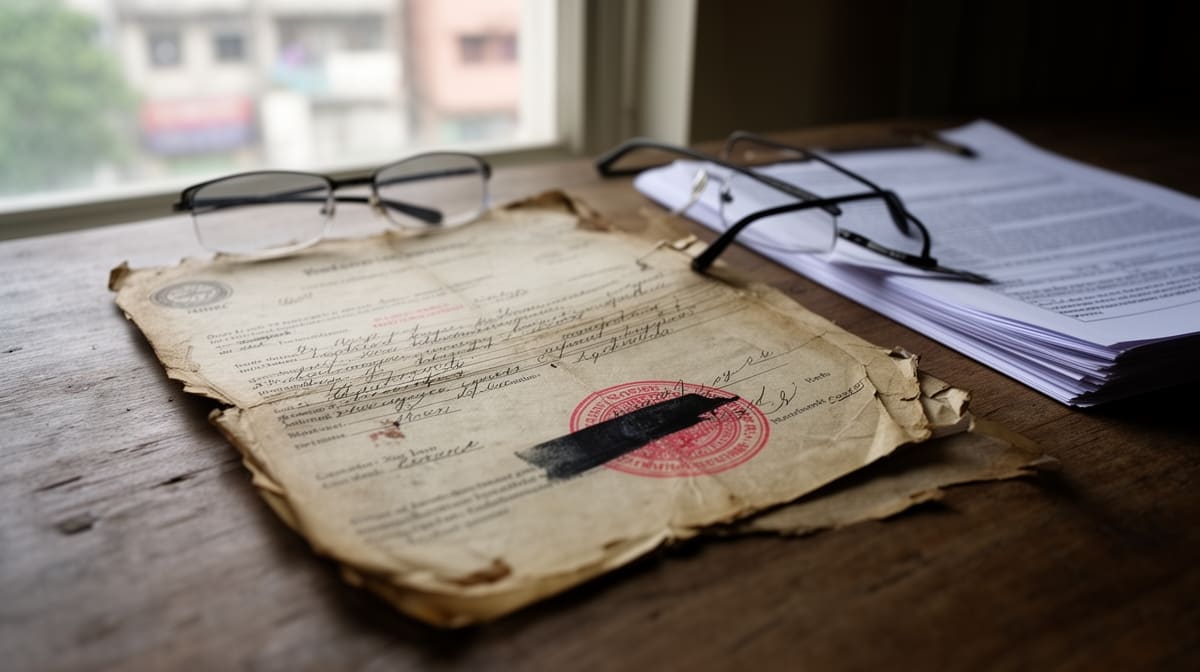
The petitioners, members of the Sethia family, held lease deeds for residential plots allotted by the Urban Development Trust, Bikaner. The Trust subsequently filed civil suits seeking cancellation of these lease deeds, alleging they were forged and never issued by the Trust. The petitioners contested the suits, arguing that under Rule 30 of the Rajasthan Urban Improvement (Disposal of Urban Land) Rules, 1974, only the Divisional Commissioner had authority to examine the validity of such transfers, and therefore, the Civil Court lacked jurisdiction.
Procedural History
- 2019: Six civil suits filed by the Urban Development Trust seeking cancellation of lease deeds on grounds of forgery.
- 2025: Petitioners filed applications under Order 7 Rule 11 CPC seeking rejection of suits on grounds of non-maintainability.
- 28 October 2025: Additional Civil Judge No. 3, Bikaner, rejected the applications, holding that Rule 30 did not bar Civil Court jurisdiction.
- 2026: Petitioners filed six revision petitions before the Rajasthan High Court challenging the rejection order.
Relief Sought
The petitioners sought dismissal of the Trust’s suits on the ground that the Civil Court had no jurisdiction, and that the exclusive remedy lay before the Divisional Commissioner under Rule 30 of the 1974 Rules.
The Legal Issue
The central question was whether Rule 30 of the Rajasthan Urban Improvement (Disposal of Urban Land) Rules, 1974 operates as a statutory bar to the jurisdiction of Civil Courts when a plaintiff seeks cancellation of a lease deed on grounds of forgery, or whether such suits remain maintainable where the very issuance of the document is disputed.
Arguments Presented
For the Petitioner
Counsel argued that Rule 30 creates an exclusive administrative mechanism for reviewing the legality of land transfers by the Trust. Any challenge to the validity of a lease deed, including allegations of irregularity or fraud, must first be referred to the Divisional Commissioner. Relying on the doctrine of exhaustion of remedies, they contended that bypassing this forum rendered the suits non-maintainable under Order 7 Rule 11 CPC.
For the Respondent
The Urban Development Trust, through its counsel, maintained that the suits were not challenges to the administrative propriety of allotment, but direct claims of forgery and fraud. The Trust asserted that it was seeking judicial redress for a criminal act - fabrication of official documents - and that Rule 30 was never intended to shield fraudulent instruments from civil scrutiny.
The Court's Analysis
The Court undertook a textual and purposive interpretation of Rule 30. It observed that the rule empowers the Divisional Commissioner to examine whether a transfer was made "in accordance with or in contravention of these rules," implying a focus on procedural compliance, not authenticity of documents.
"Herein, the trust has denied the issuance of the lease deed itself."
The Court emphasized that Rule 30 applies only when the Trust acknowledges the issuance of the lease deed but seeks to challenge its procedural validity. Where, as here, the Trust itself alleges that the document was never issued and is forged, the matter falls squarely within the domain of civil adjudication. The Court held that fraud vitiates all proceedings, and no statutory mechanism can override the inherent jurisdiction of Civil Courts to examine the genuineness of documents.
The Court further distinguished this from cases where parties dispute the legality of allotment or transfer - situations where Rule 30 would apply. Here, the issue was not whether the Trust followed procedure, but whether the document was real. The Trial Court correctly held that Order 7 Rule 11 CPC could not be invoked to reject the suit on jurisdictional grounds.
The Verdict
The petitioners’ revision petitions were dismissed. The Court held that Civil Courts retain jurisdiction to adjudicate suits seeking cancellation of lease deeds on grounds of forgery, irrespective of Rule 30 of the Rajasthan Urban Improvement Rules. The Trust’s suit was maintainable, and the rejection of the Order 7 Rule 11 CPC application was legally sound.
What This Means For Similar Cases
Fraudual Documents Cannot Be Shielded by Administrative Remedies
- Practitioners must argue that allegations of forgery or fabrication of documents fall outside the scope of statutory forums designed for procedural review.
- Applications under Order 7 Rule 11 CPC cannot succeed if the core dispute is authenticity, not compliance.
Rule 30 Is Procedural, Not Jurisdictional
- Rule 30 applies only when the validity of a transfer is contested on grounds of non-compliance with allotment rules.
- Where the document itself is denied as fake, the Civil Court is the proper forum - regardless of the existence of a parallel administrative remedy.
Burden of Proof Shifts to the Defendant in Fraud Claims
- Defendants invoking Rule 30 to bar suits must prove the document was issued and the dispute concerns only its procedural validity.
- Mere invocation of a statutory rule without addressing the nature of the claim will not oust civil jurisdiction.