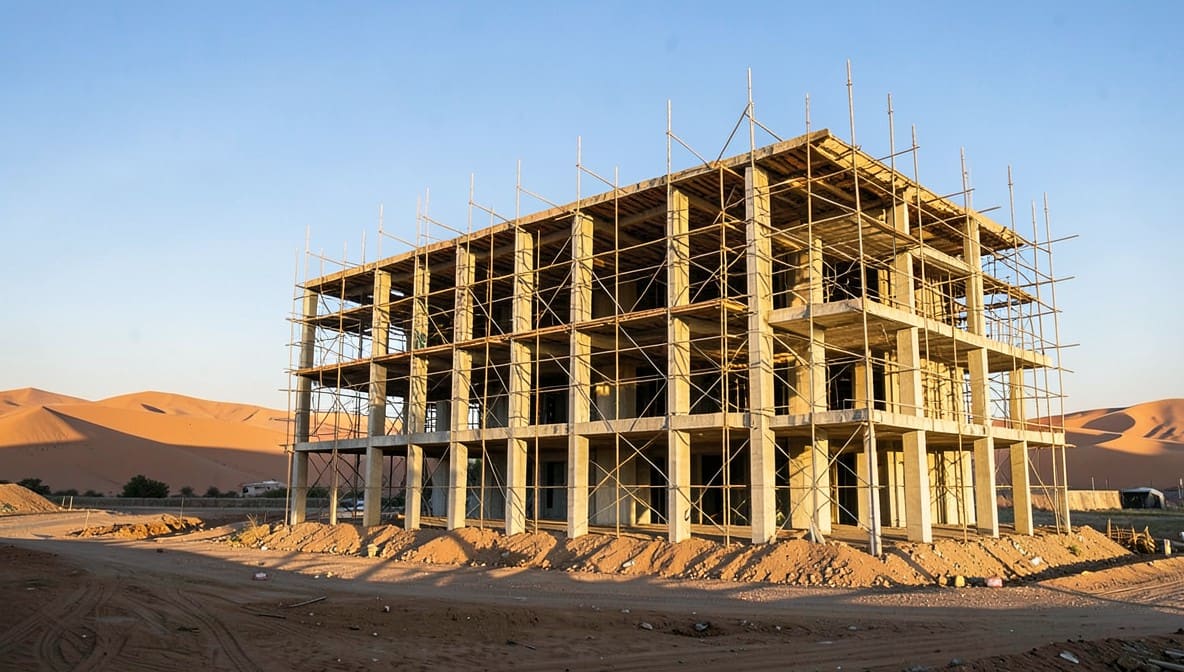
The Rajasthan High Court clarified that a landlord-tenant dispute concerning a commercial hotel lease remains within the exclusive jurisdiction of the Rent Tribunal under the Rajasthan Rent Control Act, 2001, despite the premises being used exclusively for trade. The Court emphasized the primacy of a special statute over the procedural framework of the Commercial Courts Act, 2015.
Background & Facts
The Dispute
The petitioner, M/s Shree Vinayak Hotels And Resorts, entered into a duly registered lease agreement with the respondents, Desert Tulip Hotel And Resorts Pvt. Ltd. and its directors, on 10 August 2022. The lease covered the premises at Plot No.04, Hotel Complex, Jodhpur Road, NH-15, Jaisalmer, for a fixed term of four years and eleven months, commencing 01 September 2022 and expiring 01 August 2027. The annual lease consideration was ₹50,00,000 (exclusive of electricity, water and GST), payable quarterly in advance. The petitioner paid rent up to August 2024 in advance and commenced hotel operations under the name M/s Shree Vinayak Hotels & Resorts.
Key Facts
- April 2024: Respondent No.3 demanded an increase of annual rent to ₹1,00,00,000 effective June 2024; the petitioner rejected the demand.
- 13 May 2024: Respondents issued a notice seeking vacation of the premises.
- 15 May 2024 and 18 May 2024: Further notices/emails were sent by respondents.
- 15 May 2024, 17 May 2024, 20 May 2024: Petitioner replied to each notice, denying any breach.
- 24 May 2024: Petitioner furnished an account of loss it would suffer upon premature vacation.
- 26 June 2024: The Rent Tribunal, Jaisalmer, passed an interim order restraining respondents from dispossessing the petitioner except in accordance with law.
- 02 August 2024: The Rent Tribunal, on an application under Order VII Rule 11 CPC, held the dispute to be a “commercial dispute” within the ambit of Section 2(1)(c)(vii) of the Commercial Courts Act, 2015 and directed the petition to be returned to the Commercial Court.
- 23 October 2024: The Rent Appellate Tribunal affirmed the Tribunal’s order.
- Writ Petition: The petitioner filed a writ petition under Articles 226 and 227 of the Constitution challenging both the order dated 02 August 2024 and the appellate judgment dated 23 October 2024.
Procedural History
- 10 August 2022: Lease Agreement executed.
- April 2024: Rent increase demand.
- 13 May 2024: First termination notice.
- 15 & 18 May 2024: Subsequent notices.
- 26 June 2024: Interim protection order by Rent Tribunal.
- 02 August 2024: Rent Tribunal order under Order VII Rule 11 CPC.
- 23 October 2024: Rent Appellate Tribunal judgment affirming the Tribunal’s order.
- Writ Petition filed (date not specified, but arguments heard on 03 August 2026).
- 13 August 2026: Judgment pronounced.
The Parties' Positions
- Petitioner: Asserted that the dispute is a landlord-tenant matter falling squarely within the Rajasthan Rent Control Act, 2001. Emphasised the non-obstante clauses in Sections 18(1) and 29 of the Act, arguing that commercial use of the premises does not convert the dispute into a “commercial dispute” under the Commercial Courts Act.
- Respondents: Contended that because the premises are used exclusively for a hotel business, the dispute falls within Section 2(1)(c)(vii) of the Commercial Courts Act, 2015 and therefore must be heard by a Commercial Court.
Relief Sought
The petitioner sought quashing of the order dated 02 August 2024 and the appellate judgment dated 23 October 2024, restoration of the original petition before the Rent Tribunal, and continuation of the interim protection order dated 26 June 2024.
The Legal Issue
Whether a dispute arising from a lease of premises that are used exclusively for a commercial hotel constitutes a “commercial dispute” within the meaning of Section 2(1)(c)(vii) of the Commercial Courts Act, 2015, thereby attracting the jurisdiction of a Commercial Court, or whether the dispute remains a landlord-tenant matter exclusively within the jurisdiction of the Rent Tribunal under the Rajasthan Rent Control Act, 2001.
Arguments Presented
For the Petitioner
- The Rajasthan Rent Control Act, 2001 is a special statute fortified by non-obstante clauses in Sections 18(1) and 29, which expressly confer exclusive jurisdiction on the Rent Tribunal over landlord-tenant disputes.
- Section 2(f) of the Act defines “premises” to include those let for commercial use, demonstrating legislative intent to regulate commercial tenancies within the special statute.
- Reliance on Puran Indoria v. Balashram Society (2012) and Suresh Shah v. Hipad Technology (2021) to show that commercial use does not oust the special rent-control regime.
- The expression “exclusively” in Section 2(1)(c)(vii) of the Commercial Courts Act must be read in context; it cannot create a jurisdictional fiction that overrides a special statute.
For the Respondent
- The lease concerns immovable property used exclusively in trade or commerce; therefore, under Section 2(1)(c)(vii) of the Commercial Courts Act, the dispute is a “commercial dispute”.
- Cited Ambalal Sarabhai Enterprises Ltd. v. K.S. Infraspace LLP (2020) to argue that commercial use of premises brings the matter within the Commercial Courts’ jurisdiction.
- Asserted that the Rent Tribunal erred in focusing on the lease relationship rather than the commercial character of the activity.
The Court's Analysis
The Court began by examining the object, reason and nature of both statutes. It observed that the Rajasthan Rent Control Act, 2001 was enacted as a protective social-welfare legislation aimed at balancing the bargaining power between landlords and tenants, expressly covering both residential and commercial tenancies. The Act’s non-obstante clauses in Sections 18(1) and 29 create a jurisdictional bar against any other forum, including Commercial Courts, from entertaining landlord-tenant disputes.
"The Act of 2001 is a special and protective statute doubly fortified by non obstante clauses under Sections 18(1) and 29, conferring exclusive jurisdiction upon the Rent Tribunal over landlord-tenant disputes."
The Court then turned to the Commercial Courts Act, 2015, noting that it is a procedural, forum-allocating statute intended to expedite high-value commercial disputes. Section 11 of that Act expressly self-denies jurisdiction wherever another law bars civil court jurisdiction. The Court read Section 11 in harmony with the Rajasthan Act, concluding that the lex specialis principle (special law overrides general law) mandates that the Rent Control Act’s bar prevails.
The Court stressed that jurisdiction must be determined by the substance of the dispute, not by the nomenclature of the contract or the commercial nature of the activity. It reiterated that the lease agreement is a classic landlord-tenant contract: the lessor grants possession of identified immovable property for a fixed term in exchange for rent. The fact that the lessee operates a hotel is merely an incidental use of the demised premises and does not transform the contract into a commercial agreement concerning the business itself.
The Court distinguished the present case from Ambalal Sarabhai by highlighting the presence of a special rent-control statute in Rajasthan, which was absent in the Supreme Court’s decision. Consequently, the reliance on Ambalal Sarabhai was held inapplicable.
Finally, the Court observed that the lower tribunals had mechanically applied Section 2(1)(c)(vii) without giving due weight to the statutory bar under Section 11 of the Commercial Courts Act and without appreciating the protective scheme of the Rajasthan Act. This constituted a jurisdictional error warranting correction under the Court’s supervisory jurisdiction.
The Verdict
The Court quashed the order dated 02 August 2024 passed by the Rent Tribunal and the judgment dated 23 October 2024 of the Rent Appellate Tribunal. The writ petition was allowed. The petition was restored to its original number before the Rent Tribunal, which shall now adjudicate the matter on its merits. The interim protection order dated 26 June 2024 remains operative. No order as to costs was made.
What This Means For Similar Cases
Special Statutes Prevail Over General Commercial Courts
- When a special rent-control statute contains explicit non-obstante clauses, it excludes the jurisdiction of Commercial Courts, even if the premises are used for commercial purposes.
- Practitioners must first assess whether a special enactment governs the dispute before invoking the Commercial Courts Act.
Commercial Use Alone Does Not Shift Jurisdiction
- The mere fact that a leased property is employed for a hotel, shop, or office does not convert a landlord-tenant dispute into a “commercial dispute” under Section 2(1)(c)(vii).
- The nature of the contractual relationship (lease vs. joint venture) remains the decisive factor.
Focus on the Legal Relationship, Not Business Activity
- Courts will look at the pith and substance of the controversy: possession, rent, termination, and eviction rights, rather than the tenant’s business model.
- Lawyers should frame pleadings to highlight the lease-related cause of action when seeking relief under rent-control statutes.
Actionable Takeaways
- Verify the existence of a special statute (e.g., Rent Control Act) before filing in a Commercial Court.
- Draft notices and pleadings to emphasize the landlord-tenant relationship and the statutory protections it invokes.
- Anticipate that courts will apply the lex specialis rule; cite relevant case law such as Puran Indoria and Suresh Shah.