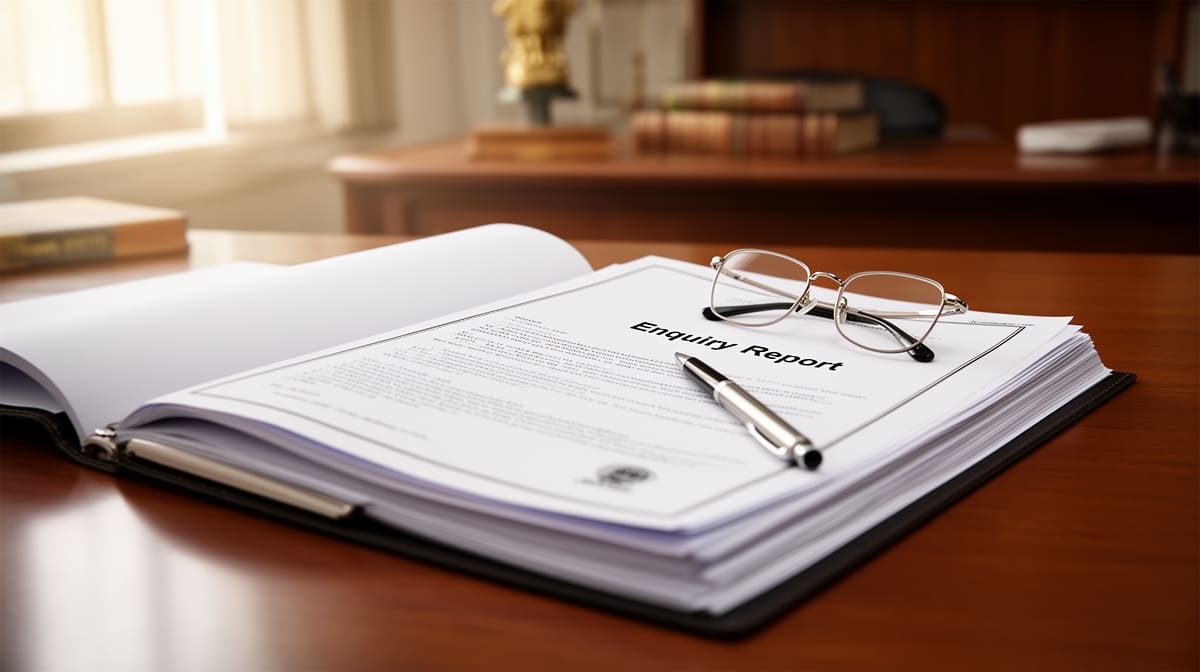
The High Court of Tripura has reaffirmed a foundational principle of administrative law: that a delinquent government employee must be provided with the enquiry report before any punishment is imposed, regardless of whether service rules require it or whether prejudice can be proven. This judgment reinforces the non-negotiable nature of procedural fairness in disciplinary proceedings.
Background & Facts
The Dispute
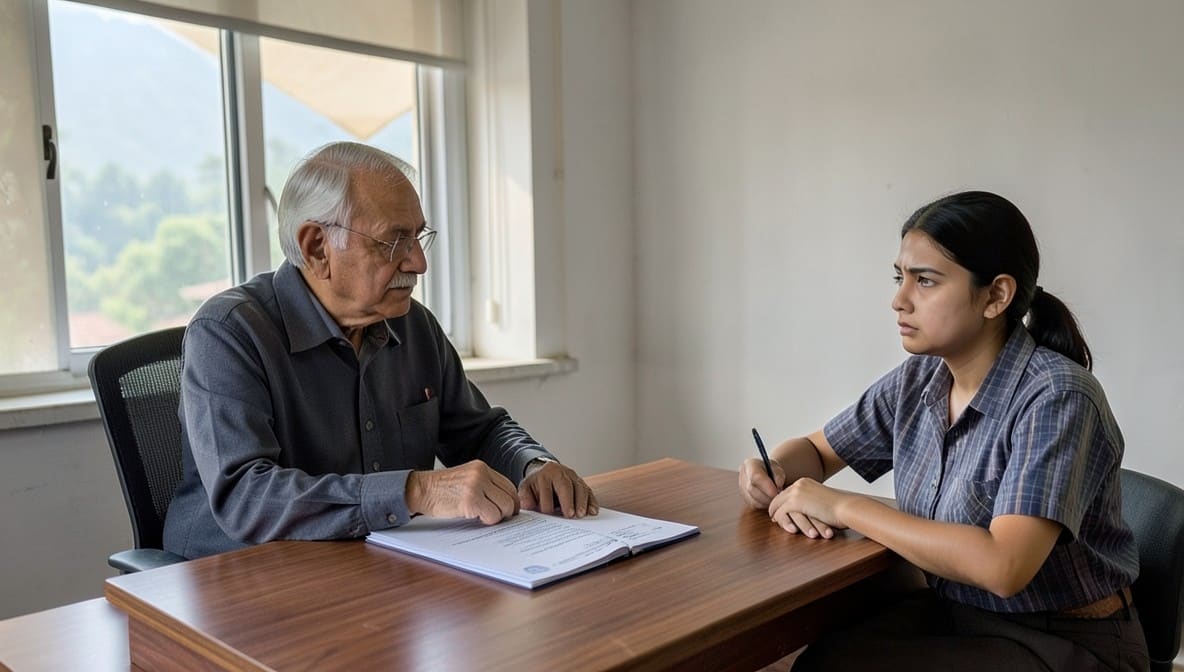
The petitioner, Sri Sujit Kumar Dey, a Rifleman (Driver) in the Tripura State Rifles (TSR), was charged with fraudulently submitting a forged guarantor form to obtain a Rs. 5,00,000 loan under a government-sponsored small business scheme. The charge alleged forgery of the signature and seal of the Drawing and Disbursing Officer (DDO) of his unit. A departmental proceeding was initiated under Rule 14 of the Central Civil Service (Classification, Control and Appeal) Rules, 1965, read with the Tripura State Rifles Act, 1983.
Procedural History
- 2023: Articles of charge framed and served on the petitioner
- 2024: Multiple Inquiring Authorities were appointed due to transfers; final enquiry report submitted on 17.09.2024
- 23.09.2024: Disciplinary Authority issued a provisional order of "Removal from Service"
- 18.10.2024: After considering the petitioner’s representation, the punishment was modified to "Compulsory Retirement"
- 18.02.2025: Appellate Authority upheld the punishment without considering the merits of the appeal
- 25.02.2026: Writ petition filed before the High Court of Tripura
Relief Sought
The petitioner sought quashing of the compulsory retirement order on grounds of violation of natural justice, specifically the non-furnishing of the enquiry report prior to punishment, and requested remand for a fresh proceeding.
The Legal Issue
The central question was whether the principle of natural justice mandates that a delinquent employee be provided with the enquiry report before the disciplinary authority imposes punishment, even when service rules are silent or when no prejudice is proven.
Arguments Presented
For the Petitioner
Learned Senior Counsel relied on Managing Director, Ecil v. B. Karunakar and State of U.P. v. Ram Prakash Singh to argue that the right to receive the enquiry report is an inherent part of the right to a fair hearing under Article 311(2) of the Constitution. He emphasized that the report contained critical findings based on the Scientific Forensic Laboratory (SFSL) report, which the petitioner was never allowed to cross-examine. The failure to furnish the report deprived him of the opportunity to challenge the Inquiring Authority’s conclusions, rendering the proceeding void.
For the Respondent
The State contended that the petitioner was given ample opportunity to inspect documents, submit documents, and call witnesses. It argued that the charges were proved on documentary evidence and that the petitioner had not requested the enquiry report. The State further relied on the Appellate Authority’s observation that the petitioner failed to produce any evidence in his defense, suggesting waiver or substantial compliance.
The Court's Analysis
The Court undertook a rigorous analysis of the jurisprudence developed by the Supreme Court in B. Karunakar and its reaffirmation in Ram Prakash Singh. It held that the right to receive the enquiry report is not a mere procedural formality but a substantive safeguard under natural justice. The Court rejected the State’s argument that prejudice must be proven, citing Ram Prakash Singh para 52:
"...the bogey argument of the employer to apply the test of ‘prejudice’ when the report of enquiry is not furnished cannot be of any avail to thwart the challenge of the delinquent employee."
The Court emphasized that the report is not merely evidentiary - it contains the Inquiring Authority’s assessment of credibility, weight of evidence, and conclusions on guilt. Denying access to it prevents the employee from effectively challenging the basis of the proposed punishment. The Court further noted that the petitioner’s failure to request the report does not constitute waiver, as the right is automatic and non-derogable. The State’s reliance on the petitioner’s opportunity to inspect documents was insufficient, as inspection does not equate to receiving a copy for reasoned representation. The Court concluded that the violation was fatal to the proceedings, irrespective of the nature of punishment or the strength of the evidence.
The Verdict
The petitioner succeeded. The Court quashed both the Disciplinary Authority’s order of compulsory retirement and the Appellate Authority’s affirmation. The matter was remanded to the Disciplinary Authority with a direction to furnish the enquiry report to the petitioner and allow him to submit a representation before passing a fresh order within three months.
What This Means For Similar Cases
Furnishing the Enquiry Report Is Mandatory
- Practitioners must now treat non-furnishing of the enquiry report as a fatal procedural defect, regardless of whether service rules require it
- Even if the employee does not request the report, the employer bears the burden of proving waiver by clear conduct
- This applies to all government and public sector employers, including armed forces and autonomous bodies
Prejudice Is Not a Prerequisite for Relief
- The Court has definitively rejected the "prejudice test" as a defense to non-furnishing
- Courts will now presume prejudice from the denial itself
- Employers must ensure compliance as a matter of routine procedure, not as a contingency
Remedy Is Not Reinstatement But Remand
-
The Court clarified that quashing does not automatically mean reinstatement
-
The appropriate remedy is remand to allow a fair opportunity to respond
-
This preserves the employer’s right to impose punishment if the process is corrected
-
Always obtain and retain proof of delivery of the enquiry report
-
Do not assume silence equals consent or waiver
-
In appeals, raise non-furnishing as a standalone ground, not merely as part of general natural justice claims