The Supreme Court has clarified that a public body’s failure to conduct mandated re-inspections cannot be used to deny subsidy eligibility to an applicant who has persistently sought compliance. In a significant ruling, the Court restored the Single Judge’s order directing release of the remaining subsidy to APMC Deesa, emphasizing procedural fairness over technical defaults.
Background & Facts
The Dispute
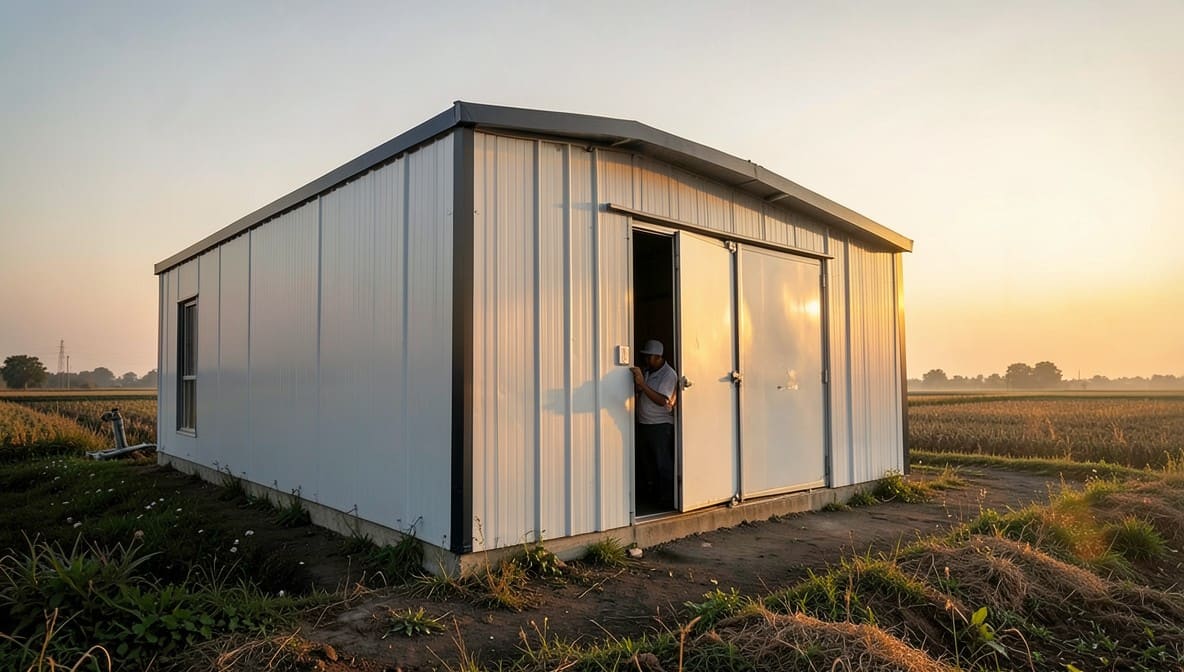
The appellant, Agricultural Produce Market Committee (APMCD), Deesa, applied for the "Capital Investment Subsidy for Construction/Expansion/Modernization of Cold Storages/Storage of Horticultural Produce" under a scheme operated by the National Horticulture Board (NHB) and administered by the National Bank for Agriculture and Rural Development (NABARD). The scheme provided for 50% advance subsidy and 50% final subsidy upon successful post-completion inspection. APMCD obtained a loan of Rs. 1 crore from Gujarat State Co-operative Agriculture and Rural Development Bank Ltd. (GSCARDB) to construct the cold storage facility.
Key Facts
- APMCD submitted an expenditure certificate for Rs. 4,25,26,829 on 18.05.2012
- Rs. 25 lakhs (50% advance subsidy) was credited to APMCD’s account on 08.06.2012
- A Joint Monitoring Visit (JMV) was conducted on 19.11.2008
- The JMV Report noted:
- Cold storage structure was earthquake-resistant and used EPS panels
- DG set was not installed
- Capacity utilization was only 20% on the day of inspection
- Unit was "completed and commissioned"
- Re-inspection and document re-verification were recommended
- GSCARDB, acting on behalf of APMCD, sent multiple letters between 17.06.2009 and 08.04.2011 requesting re-inspection and release of the final subsidy
- On 03.05.2011, the cold storage unit caught fire due to a short circuit
- NABARD subsequently issued instructions to withdraw the entire subsidy and recover the Rs. 25 lakhs already paid
- NHB upheld NABARD’s decision
Procedural History
- 19.11.2008: Joint Monitoring Visit conducted; report issued
- 10.06.2009: GSCARDB wrote to APMCD seeking clarification on operational status of cold storage
- 17.06.2009 to 08.04.2011: Nine formal communications sent by GSCARDB to NABARD/NHB requesting re-inspection and release of final subsidy
- 03.05.2011: Fire destroyed part of the cold storage facility
- 2012: NABARD initiated recovery of Rs. 25 lakhs and withheld final subsidy
- 2019: APMCD filed Special Civil Application No. 15592 of 2019 before the Gujarat High Court (Single Judge)
- 19.01.2023: Single Judge set aside NABARD’s withdrawal order and directed release of remaining subsidy
- 01.07.2024: Division Bench reversed the Single Judge’s order, upholding NABARD’s decision
- 2025: Special Leave Petition (SLP(C) No. 13129 of 2025) filed in Supreme Court
- 17.04.2026: Supreme Court delivered judgment
Relief Sought
APMCD sought:
- Restoration of the Single Judge’s order dated 19.01.2023
- Release of the remaining 50% subsidy amount (Rs. 25 lakhs)
- Cancellation of NABARD’s demand for refund of Rs. 25 lakhs already received
- Costs of litigation
The Legal Issue
The central question was whether an applicant’s entitlement to the final installment of a government subsidy is forfeited merely because the designated authority failed to conduct a mandated re-inspection, despite repeated requests by the applicant.
Arguments Presented
For the Appellant
APMCD, through its bank GSCARDB, submitted nine written communications between 2009 and 2011 seeking re-inspection and release of the final subsidy. It relied on the JMV Report’s explicit observation that the unit was "completed and commissioned" and eligible for final subsidy subject to parameters. It argued that the burden of timely inspection lay with NABARD/NHB under the Scheme’s procedure, and that delay by the authorities could not be used to penalize the applicant. It further contended that the fire incident was an unforeseen event and did not negate prior compliance.
For the Respondent
NHB and NABARD contended that APMCD failed to cure the deficiencies noted in the JMV Report - specifically, the lack of DG set and low capacity utilization. They argued that the applicant made no meaningful effort to demonstrate operational readiness after the 2008 inspection and that the subsidy was rightfully withdrawn due to non-compliance with Scheme conditions. They relied on the principle that subsidies are conditional grants and must be earned through strict adherence to guidelines.
The Court's Analysis
The Court examined the Scheme’s procedure under Clause 6(A), which clearly mandated that the final 50% subsidy be disbursed only after a Joint Monitoring Visit by officials of NABARD, the participating bank, and NIIB. The Court noted that the JMV Report of 19.11.2008 did not declare the project ineligible; rather, it recommended re-inspection and document verification.
"The unit is completed and commissioned, it may be considered for the final subsidy as per NHB, NABARD guidelines and the parameters mentioned above."
The Court emphasized that the Scheme placed the onus of scheduling and conducting the re-inspection squarely on the authorities, not the applicant. Despite repeated written requests from GSCARDB over a period of nearly three years, no re-inspection was conducted. The Court observed that the applicant had done everything within its power to comply.
The Court rejected NHB’s claim that APMCD had "miserably failed" to establish efforts, pointing out the documentary trail of nine communications. It held that the fire incident in 2011 was an independent event and did not retroactively invalidate prior compliance. The Court further noted that NABARD’s decision to demand refund of the advance subsidy was arbitrary and lacked any statutory or contractual basis.
The Court concluded that the Division Bench erred in reversing the Single Judge’s order, which correctly recognized that administrative inaction cannot be weaponized to deprive a beneficiary of a legitimate entitlement.
The Verdict
The Supreme Court allowed the appeal and set aside the Division Bench’s order dated 01.07.2024. The Single Judge’s order dated 19.01.2023 was restored. The Court directed that the final installment of subsidy amounting to Rs. 25 lakhs be released to APMC Deesa. If the Rs. 25 lakhs advance subsidy had already been refunded, the entire subsidy amount of Rs. 50 lakhs shall now be released. If not refunded, only the final Rs. 25 lakhs shall be disbursed. All pending applications are disposed of.
What This Means For Similar Cases
Administrative Inaction Cannot Invalidate Entitlement
- Practitioners must now argue that where a scheme mandates official inspection, delay or non-compliance by the authority cannot be used to deny benefits
- Applicants must maintain a documented record of all requests for inspection or release
- Courts will not permit authorities to use procedural delays as grounds for forfeiture
Subsidy Schemes Require Procedural Fairness
- The principle of legitimate expectation applies strongly in subsidy schemes
- Conditions must be clearly communicated and opportunities for compliance must be afforded
- A single negative inspection report does not extinguish eligibility if the project is otherwise complete and the applicant has sought re-evaluation
Documentation Is Critical
- Maintain a chronological log of all communications with implementing agencies
- Send all requests via registered post or email with read receipts
- Preserve copies of inspection reports and any acknowledgments received
- Where authorities fail to act, file formal representations under RTI or administrative review mechanisms