The Patna High Court has clarified that anticipatory bail may be granted selectively based on the specificity of allegations against individual accused, even within the same FIR. The judgment underscores that blanket denial of bail cannot be justified where some petitioners lack direct involvement in violent acts against public servants.
Background & Facts
The Dispute
The petitioners - Vijay Rai, Umesh Kumar, and Tipu Rai - are accused in Police Station Raghopur, District Vaishali, in Case No. 107 of 2025, registered under Sections 191(2), 191(3), 126, 115(2), 118, 109, 132, 352, and 351(3) of the Bharatiya Nyaya Sanhita. The case arises from an alleged incident on the date of registration, wherein a police raiding team attempted to arrest Laldev Rai for involvement in an illegal liquor business. The petitioners, along with others, allegedly intervened to free Laldev, resulting in violence against police personnel.
Key Facts
- The informant alleges that a police team arrived at Hemantpur village to arrest Laldev Rai
- During the attempted arrest, the petitioners and others allegedly attacked the team with lathis, bricks, and rods
- Specific allegations: Vijay Rai (Petitioner No. 1) assaulted Sangam, a police officer, with a rod, causing head injury and unconsciousness
- Bijli Rai allegedly assaulted Sub-Inspector Deepak with a lathi, injuring his right hand
- Sanjit was assaulted with a brick, injuring Deepak’s forehead
- Laldev and Dinesh assaulted Constable Bhagwanlal with a lathi, injuring his right hand
- Umesh Kumar (Petitioner No. 2) allegedly assaulted with a brick, injuring the shoulder of an officer
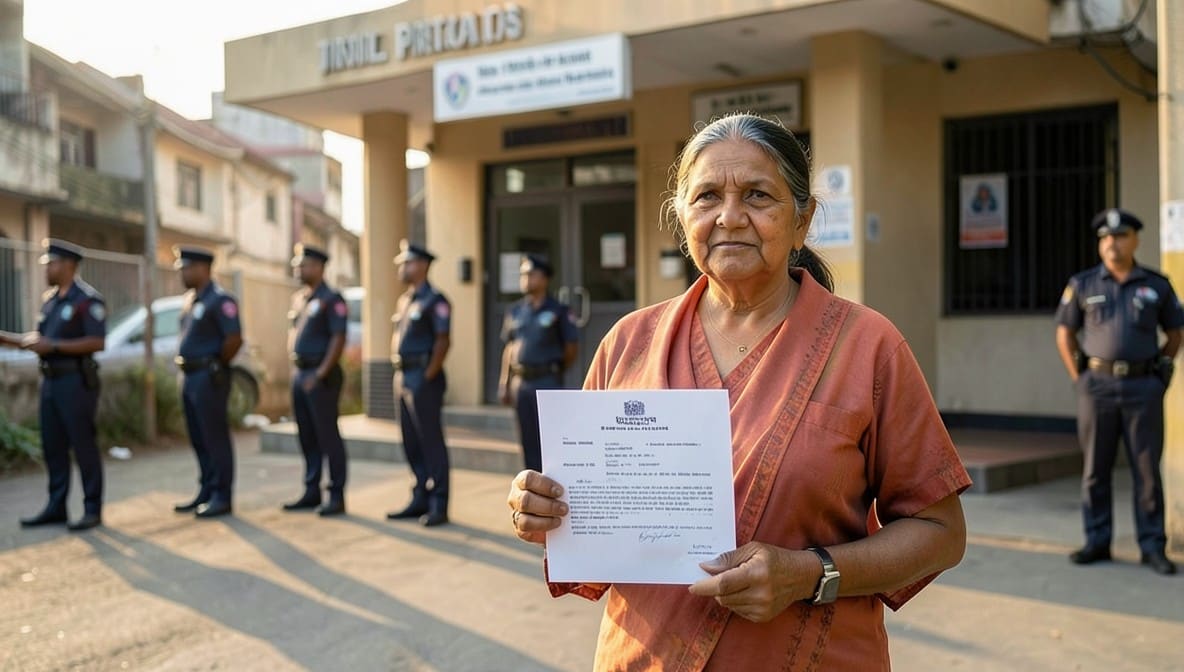
- Tipu Rai (Petitioner No. 3), aged approximately 80 years, is alleged only in general terms without any specific act of assault
- No individualized allegation of physical violence is made against Petitioners No. 2 and No. 3 in the FIR
- All petitioners are described as persons with clean antecedents
- Tipu Rai is a senior citizen nearing advanced age
Procedural History
- Date of Incident: Not explicitly stated, but FIR registered in 2025
- FIR Registration: PS Raghopur Case No. 107 of 2025
- Date of Filing: Criminal Miscellaneous No. 5519 of 2026 filed before Patna High Court
- Date of Hearing: 22 April 2026
- Date of Order: 29 April 2026
The Parties' Positions
For the Petitioners
- Learned counsel argued that Petitioners No. 2 and No. 3 are not specifically implicated in any act of assault
- Petitioner No. 3, aged 80, has no prior criminal record and is a senior citizen with no involvement in the alleged violence
- The allegations against him are vague, omnibus, and disproportionate to his age and status
- The petitioners are not flight risks and have cooperated with investigation
- Granting anticipatory bail would uphold the principle of proportionality and personal liberty
For the Respondent/State
- The Additional Public Prosecutor acknowledged that no specific allegation of assault was made against Petitioners No. 2 and No. 3
- However, opposed bail for Petitioner No. 1 due to the specific allegation of assaulting a police officer with a rod, causing unconsciousness
- Argued that the gravity of the offence under BNSS, particularly against a public servant, warranted denial of anticipatory bail for Petitioner No. 1
- Did not contest the absence of specific allegations against the other two petitioners
Relief Sought
The petitioners sought anticipatory bail under Section 482(2) of the Bharatiya Nyaya Sanhita, in the event of arrest, subject to conditions including bail bonds and appearance before the trial court.
The Legal Issue
Can anticipatory bail be granted selectively to petitioners who are not specifically implicated in violent acts against police officers, while denying it to another accused in the same case who is directly alleged to have assaulted a public servant with a weapon?
Arguments Presented
For the Petitioner
The petitioners relied on the principle of individualized assessment in bail jurisprudence, citing Arnesh Kumar v. State of Bihar and Sushil Ansal v. State (NCT of Delhi). They argued that the absence of specific allegations against Petitioners No. 2 and No. 3 renders the charges against them legally unsustainable for denial of bail. The seniority and clean record of Petitioner No. 3 further warranted humanitarian consideration. The counsel emphasized that general and omnibus allegations cannot justify incarceration without concrete evidence.
For the Respondent
The State did not dispute the factual distinction between the petitioners. It conceded that Petitioners No. 2 and No. 3 lacked specific allegations of assault. However, it opposed anticipatory bail for Petitioner No. 1 on the grounds that assaulting a police officer with a rod, causing unconsciousness, constitutes a serious offence under BNSS, particularly under Sections 351(3) and 191(2), and that such acts undermine public order and the authority of law enforcement.
The Court's Analysis
The Court undertook a granular review of the FIR and the allegations against each petitioner. It noted that while the FIR broadly mentions a violent confrontation, only Petitioner No. 1 is named in a specific, direct, and violent act - assaulting Sangam, a police officer, with a rod, resulting in unconsciousness. The Court observed that the allegations against Petitioners No. 2 and No. 3 are either generic or entirely absent in terms of direct participation in assault.
"It is manifest from the allegations that no specific act of assault is attributed to petitioner nos. 2 and 3. The charge against them is general and omnibus, which cannot sustain denial of anticipatory bail, especially in the case of a senior citizen.
The Court emphasized that the grant of anticipatory bail is not a blanket privilege but must be evaluated on the nature and specificity of allegations against each accused. It held that the principle of proportionality and the right to personal liberty under Article 21 of the Constitution require that bail be denied only where the individual’s conduct is clearly and specifically incriminating.
The Court further noted that the State itself did not contest the lack of specific allegations against Petitioners No. 2 and No. 3, thereby implicitly acknowledging the merit of their position. The Court declined to extend the same privilege to Petitioner No. 1, given the gravity of the specific allegation involving violence against a public servant during the discharge of official duty.
The Verdict
The Court granted anticipatory bail to Petitioners No. 2 and No. 3, subject to furnishing bail bonds of Rs. 10,000 each with two sureties of like amount, to be approved by the trial court in PS Raghopur Case No. 107 of 2025. The bail is effective for six weeks from the date of order, upon surrender or arrest. The prayer for anticipatory bail of Petitioner No. 1 was rejected. The Court directed compliance with all conditions under Section 482(2) of the Bharatiya Nyaya Sanhita.
What This Means For Similar Cases
Specific Allegations Are Prerequisite for Denial of Bail
- Practitioners must scrutinize FIRs for individualized allegations before opposing bail
- General or omnibus allegations against multiple accused cannot justify blanket denial of anticipatory bail
- Where no specific act is attributed to an accused, bail should be granted unless other compelling factors exist
Senior Citizens and Clean Record Warrant Leniency
- Age and antecedents are material factors in bail decisions under BNSS
- Courts must apply humanitarian considerations when an accused is elderly and has no prior criminal history
- Denial of bail to senior citizens without specific involvement may violate Article 21
Assault on Police Officers Triggers Higher Scrutiny
- Direct, violent assault on a public servant during duty attracts stricter bail standards
- Use of weapons such as rods or lathis against police officers will likely disqualify an accused from anticipatory bail
- Courts will distinguish between participants in a mob and those who commit specific violent acts