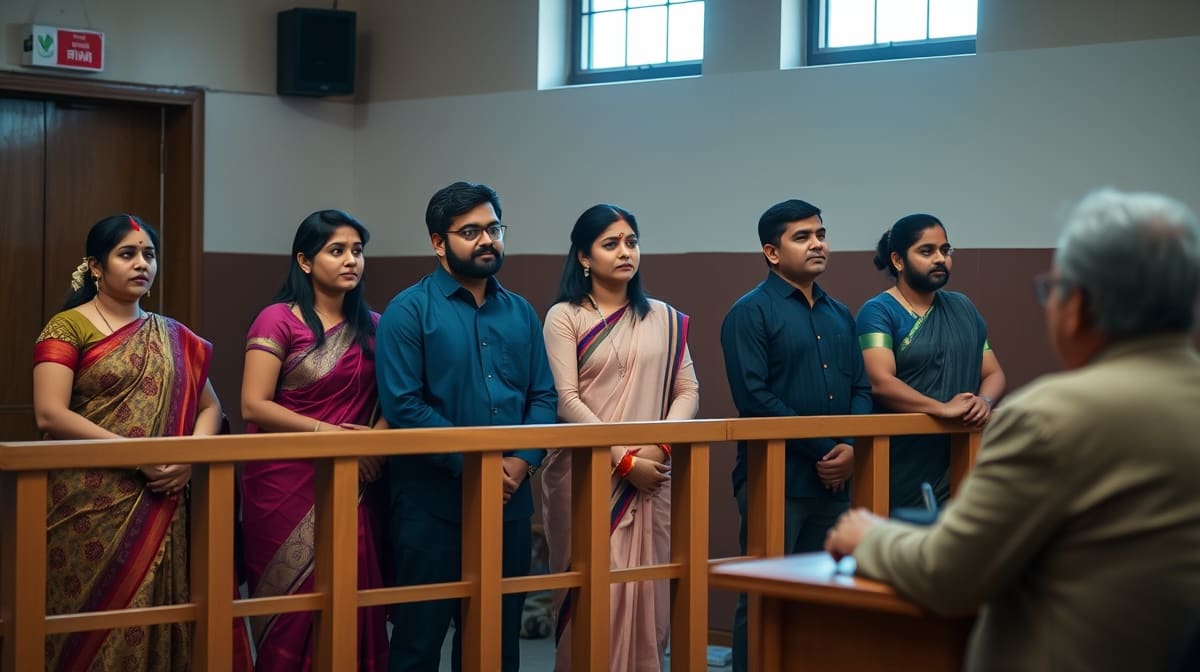
The Patna High Court has clarified that anticipatory bail cannot be denied solely on the basis of generalised allegations and a single grievous injury to a non-vital body part, reinforcing that the totality of circumstances must be assessed under Section 438 of the CrPC and its equivalent under the Bhartiya Nyay Sanhita, 2023.
Background & Facts
The Dispute
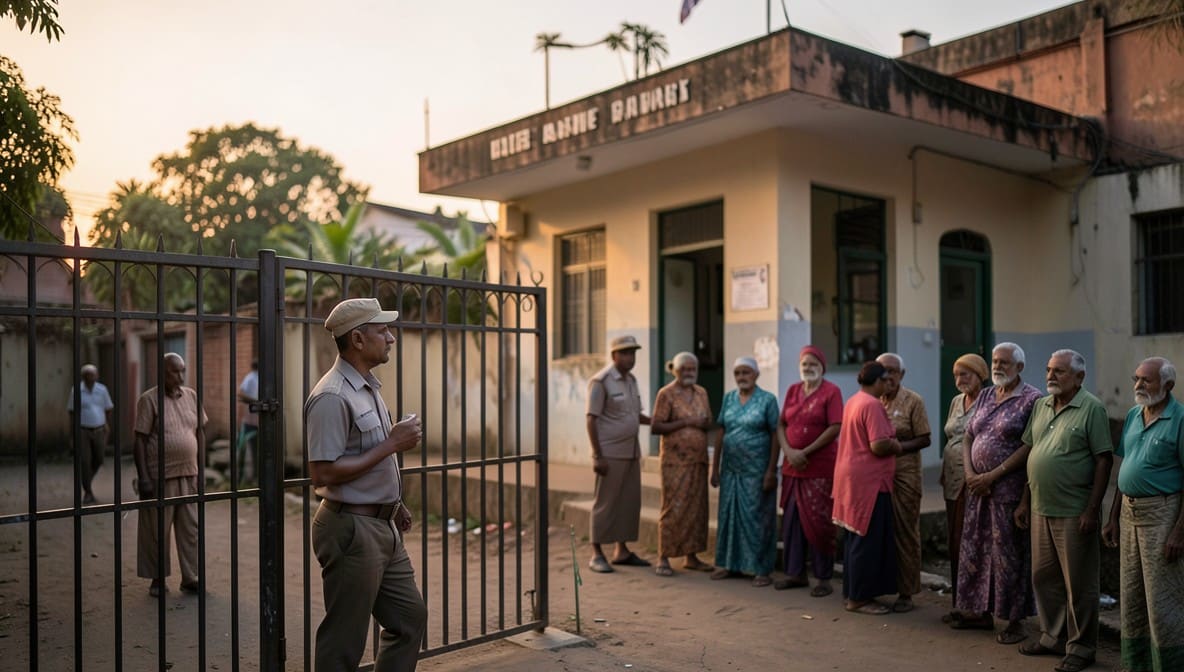
The petitioners - Mukesh Mandal, Murari Kumar, and Rajendra Mandal - are accused in Tatarpur P.S. Case No. 21 of 2026, registered under multiple sections of the Bhartiya Nyay Sanhita, 2023 (B.N.S.), including Sections 189(2), 189(4), 190, 191(3), 126(2), 115(2), 117(2), 109(1), 303(2), 324(4), and 308(2). The case arises from an alleged assault on the informant and others using lathi, iron rod, and khanti, resulting in head and bodily injuries. The prosecution claims the assault was motivated by prior enmity and with intent to cause death.
Key Facts
- The incident occurred in Mohalla Naya Tola, Rekabganj, Tatarpur, Bhagalpur
- The complainant filed the FIR on 15.02.2026
- A prior case, Tatarpur P.S. Case No. 20 of 2026, was filed by the petitioners against the same parties, alleging assault by the complainant’s side
- Medical examination of the complainant revealed simple injuries except one: fracture of the middle finger, classified as a non-vital part of the body
- The petitioners claim the present FIR is retaliatory and fabricated to counter the earlier complaint
- All petitioners received injuries during the altercation, as per their submissions
- Petitioner No. 2, Vikash Kumar, was arrested during pendency of this petition, rendering his anticipatory bail application infructuous
Procedural History
- 15.02.2026: FIR No. 21 of 2026 registered at Tatarpur Police Station
- 05.03.2026: Petitioners filed anticipatory bail application before the Sessions Court, Bhagalpur
- 10.03.2026: Sessions Court rejected anticipatory bail application
- 12.04.2026: Petitioners filed Criminal Miscellaneous No. 27416 of 2026 before the Patna High Court
- 22.04.2026: Hearing commenced before Justice Chandra Shekhar Jha
- 29.04.2026: Petitioner No. 2, Vikash Kumar, was arrested; his application deemed infructuous
The Parties' Positions
For the Petitioners
- The allegations are vague, omnibus, and lack specificity
- The sole grievous injury is to the middle finger, a non-vital part
- The incident was a mutual free-fight, not a premeditated attack
- The FIR appears retaliatory, given the prior case filed by petitioners
- Reliance placed on State of Himachal Pradesh v. Shamsher Singh (2025 SCC OnLine SC 807) to argue that injury alone cannot determine culpability under Section 109 B.N.S.
- Petitioners have no history of violent offences; one prior case is pending, but they are already on bail
For the Respondent/State
- The offences under B.N.S. are serious, including attempt to murder and grievous hurt
- The use of weapons (lathi, iron rod) indicates dangerous intent
- The presence of multiple accused suggests organised violence
- The prior case filed by petitioners does not negate the veracity of the current FIR
- Public interest demands denial of anticipatory bail given the gravity of charges
Relief Sought
The petitioners sought anticipatory bail for themselves in the event of arrest, with conditions including execution of a bail bond with sureties, and compliance with Section 438(2) CrPC / Section 482(2) B.N.S.S.
The Legal Issue
Can anticipatory bail be denied merely on the basis of generalised allegations and a single grievous injury to a non-vital body part, without evaluating the nature of the altercation, weapon used, or conduct of the parties?
Arguments Presented
For the Petitioner
Learned counsel argued that the Bhartiya Nyay Sanhita requires a contextual assessment of intent and conduct, not mechanical reliance on injury reports. Citing State of Himachal Pradesh v. Shamsher Singh, counsel emphasized that Section 109 B.N.S. demands proof of abetment through active participation, not mere presence. The fracture of the middle finger, while technically grievous under Section 320 B.N.S., is non-vital and does not indicate intent to kill. The allegations were broad, naming all petitioners without distinguishing individual roles. The prior case filed by petitioners supports the claim of mutual hostility, not one-sided aggression. The petitioners have no prior convictions and are cooperating with investigation.
For the Respondent
The State contended that the offences under Sections 303(2), 324(4), and 109(1) B.N.S. carry serious punishment and involve use of deadly weapons. The fact that one injury is classified as grievous, even if non-vital, elevates the seriousness of the case. The presence of multiple accused and the use of lathi and iron rod indicate a premeditated assault. The prior case filed by petitioners does not justify the current allegations and cannot be treated as a defence to anticipatory bail. The State argued that granting bail would risk witness tampering and undermine public confidence.
The Court's Analysis
The Court examined the nature of the allegations and the medical evidence. It noted that the FIR contained broad, omnibus allegations against all petitioners without specifying individual acts. The Court observed that the sole grievous injury was to the middle finger, a non-vital part, and all other injuries were classified as simple. The Court held that the nature of injury alone cannot be the sole determinant of bail eligibility, particularly where the context suggests a mutual altercation.
"Merely on the ground that one grievous injury was found upon, the anticipatory bail of the petitioners was rejected by the learned trial court, which is not the correct position of law, as only nature of injury is not the consideration to constitute an offence under section 109 of the B.N.S. rather several factors are required to be taken into consideration as nature of weapon, manner of assault, body parts where assault was made, pre and post conduct of the accused etc."
The Court distinguished this case from those involving targeted attacks on vital organs or where the accused had a history of violent conduct. It accepted the petitioners’ submission that the incident arose from a free-fight, corroborated by the existence of a prior case filed by them. The Court also noted that the petitioners were already on bail in another case, indicating no prior flight risk or obstruction of justice. The Court held that the principle of proportionality and the doctrine of presumption of innocence must guide bail decisions under Section 438 CrPC and Section 482 B.N.S.S.
The Verdict
The petitioners succeeded. The Court granted anticipatory bail to petitioners Nos. 1, 3, and 4 - Mukesh Mandal, Murari Kumar, and Rajendra Mandal - on the condition that they surrender within four weeks of this order. Each petitioner shall furnish a personal bail bond of Rs. 10,000 with two sureties of like amount each, to be approved by the Judicial Magistrate First Class, Bhagalpur. The bail is subject to all conditions under Section 438(2) CrPC and Section 482(2) B.N.S.S., including not influencing witnesses and cooperating with investigation.
What This Means For Similar Cases
Generalised Allegations Cannot Justify Bail Denial
- Practitioners must challenge blanket accusations in FIRs where roles are not individually specified
- Courts must scrutinise whether allegations are specific or omnibus before denying bail
- A single grievous injury to a non-vital part does not automatically justify refusal of anticipatory bail
Injury Classification Must Be Contextualised
- Medical reports must be interpreted alongside the nature of the altercation
- Non-vital grievous injuries (e.g., finger fracture) should not be equated with life-threatening injuries for bail purposes
- The triple test under Arnesh Kumar v. State of Bihar - gravity of offence, likelihood of flight, and possibility of tampering - must be applied holistically
Mutual Altercations Warrant Balanced Judicial Response
- Where both parties have filed FIRs, courts must assess whether the case is retaliatory
- Anticipatory bail should not be denied merely because the accused were involved in a prior dispute
- The burden shifts to the State to demonstrate a real risk of obstruction, not just the seriousness of the charge