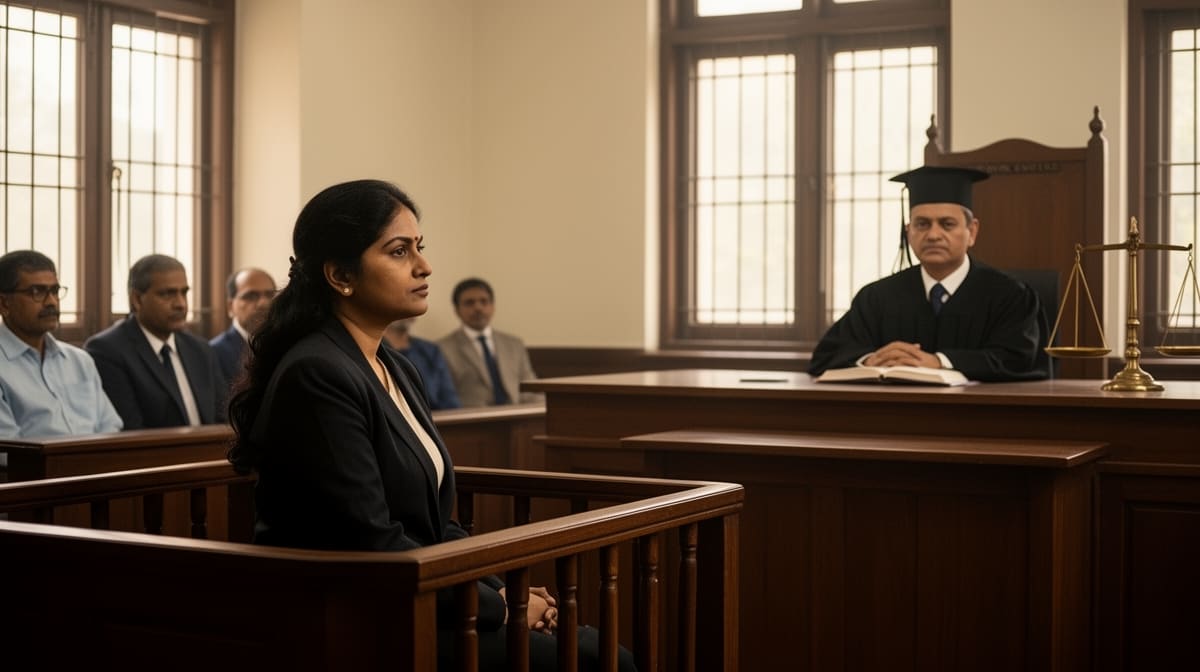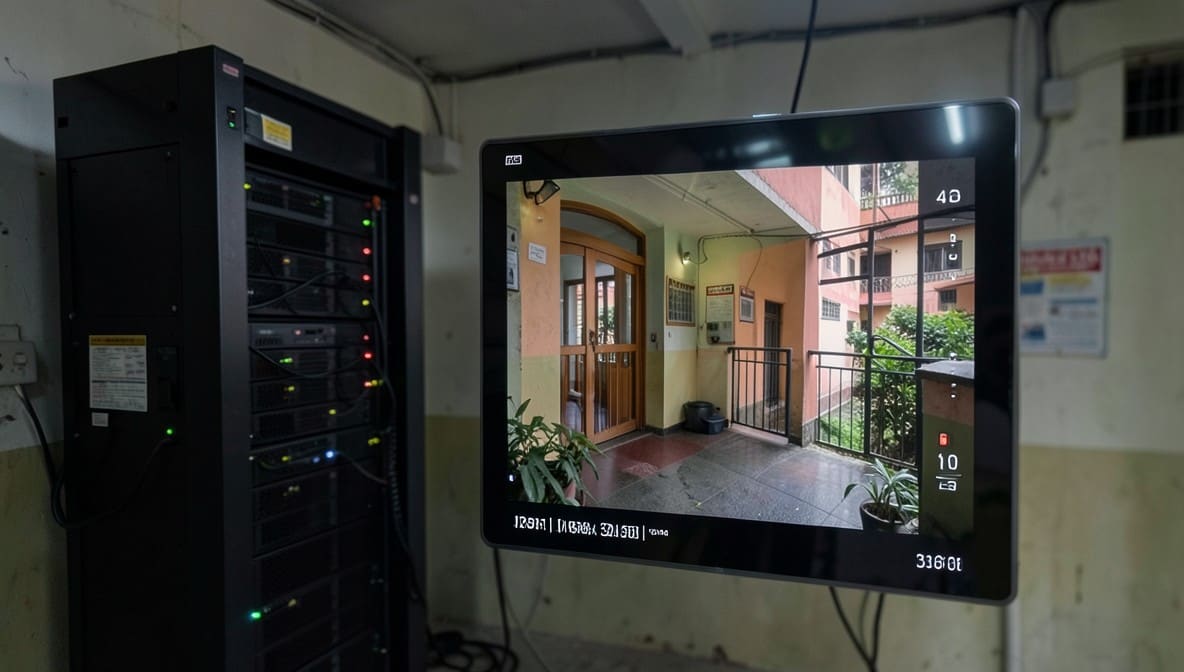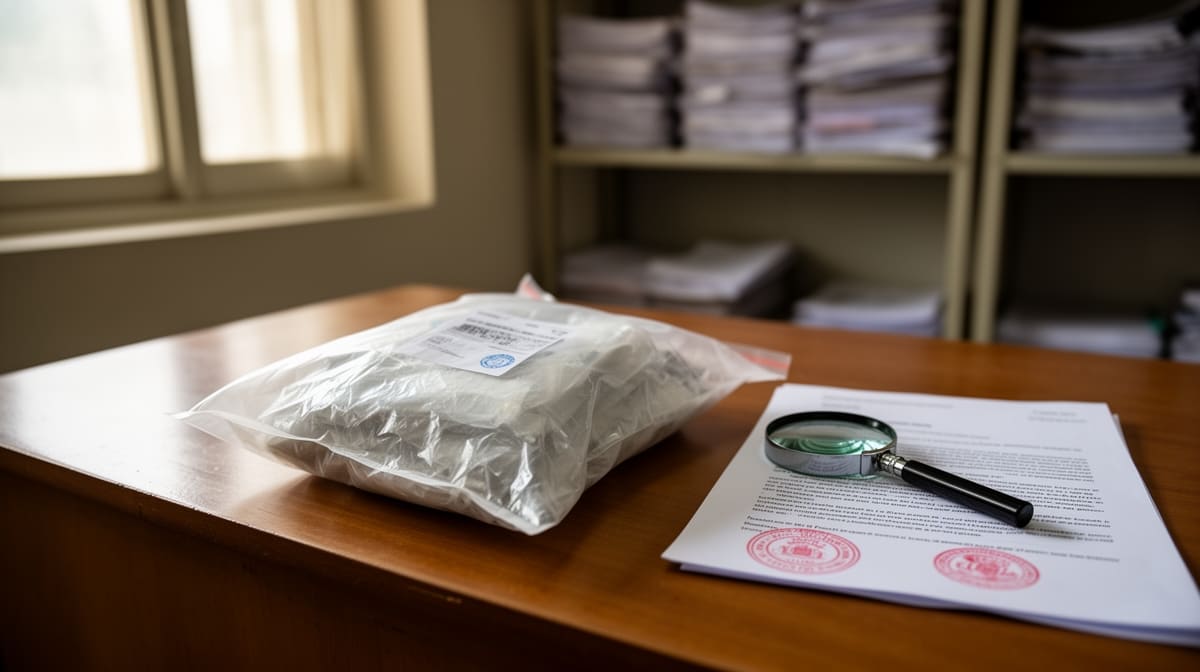
The Madhya Pradesh High Court has clarified that an accused person may be lawfully directed to re-record voice samples even if a sample was previously obtained, provided the investigating agency demonstrates inadequacy or technical deficiency in the initial recording. This ruling reinforces the state’s investigative powers under the Bhartiya Nagarik Suraksha Sanhita, 2023, while affirming that voice sampling does not violate the right against self-incrimination.
Background & Facts
The Dispute
The applicant, Harshal Bahrani, was posted as Naib Tehsildar and was named in FIR No. 149/2025 registered on 31.10.2025 under Section 7 of the Prevention of Corruption Act. The FIR alleged that he accepted a bribe of Rs. 15,000/- from a complainant during a trap operation conducted on the same date.
Key Facts
- The trap operation was conducted on 31.10.2025 by Investigating Officers Ramniwas Yadav and Amit Vatti.
- During the trap, no voice sample was recorded, despite the procedure being standard.
- The Investigating Officer later filed a false application claiming a voice sample had been collected during the trap.
- Notices were issued to the applicant on 09.11.2025, 18.12.2025, and 23.02.2026 directing him to provide a voice sample.
- The applicant responded to the notices dated 18.12.2025 and 23.02.2026 on 19.12.2025 and 27.02.2026 respectively, asserting that a voice sample had already been taken on 31.10.2025.
- A further notice dated 13.04.2026 directed the applicant to appear on 17.04.2026 for voice sampling, citing absence of any mention of voice sample in the case diary or charge sheet.
- The applicant did not appear on 17.04.2026, reiterating his prior claim.
- On 24.04.2026, the Special Judge (Prevention of Corruption) directed the applicant to provide a voice sample on 05.05.2026.
Procedural History
- 31.10.2025: Trap operation conducted; no voice sample recorded.
- 09.11.2025: First notice issued under Section 35 of BNSS.
- 18.12.2025: Second notice issued; applicant replied on 19.12.2025.
- 23.02.2026: Third notice issued; applicant replied on 27.02.2026.
- 13.04.2026: Fourth notice issued, citing absence of voice sample in case diary.
- 17.04.2026: Applicant failed to appear as directed.
- 24.04.2026: Special Judge ordered voice sample collection on 05.05.2026.
- 04.05.2026: Present M.Cr.C. filed before the Madhya Pradesh High Court.
The Parties' Positions
Applicant’s Position: The voice sample was taken on 31.10.2025 during the trap under coercion. The prosecution lost the recording and is now seeking re-collection. Requiring a second sample violates the principle against double jeopardy and is an abuse of process.
Respondent’s Position: No voice sample was ever recorded during the trap. The earlier claims of collection were false. The direction under Section 35 of BNSS is lawful and necessary for investigation.
Relief Sought
The applicant sought quashing of the order dated 24.04.2026 directing him to provide a voice sample on 05.05.2026, arguing that the direction was illegal, redundant, and violative of Article 20(3) of the Constitution.
The Legal Issue
Can an accused person be lawfully directed to re-record a voice sample under Section 349 of the Bhartiya Nagarik Suraksha Sanhita, 2023, if the investigating agency claims the initial sample was never collected or is inadequate, even when the accused asserts it was already provided?
Arguments Presented
For the Appellant
Counsel relied on Babu Bhai v. State of Gujarat to argue that once a voice sample is obtained, re-collection is impermissible absent statutory authority. He contended that the applicant had already complied with the investigation by providing the sample on 31.10.2025, and the prosecution’s failure to preserve it cannot justify coercive re-collection. He further argued that the direction violated the principle against self-incrimination under Article 20(3), as repeated demands amounted to harassment.
For the Respondent
Counsel submitted that no voice sample was ever recorded during the trap, and the applicant’s claims were false. The prosecution’s application was filed only after discovering the absence of the sample in the case diary and charge sheet. The direction under Section 349 BNSS is explicit, lawful, and necessary for scientific verification. The applicant’s non-cooperation warranted judicial intervention.
The Court's Analysis
The Court examined the legal framework under Section 349 of the Bhartiya Nagarik Suraksha Sanhita, 2023, which explicitly empowers a Judicial Magistrate or Special Judge to direct any person to provide a voice sample for investigation purposes. The Court noted that this provision codifies the principle established in Ritesh Sinha v. State of Uttar Pradesh, which held that voice sampling does not constitute testimonial compulsion and therefore does not violate Article 20(3).
"The said sampling is similar to voice sampling, as now possible by reason of the advancing technology. Mere furnishing of a sample of the fingerprint, signature or handwriting would not incriminate the person as such. It would have to be compared with the material discovered on investigation, which alone could incriminate the person giving the sample, which would not fall under a testimonial compulsion, thus not falling foul of the rule against self-incrimination."
The Court rejected the applicant’s argument that prior collection precludes re-collection. It held that even if a sample was taken on 31.10.2025, the prosecution is entitled to seek a fresh sample if the original is lost, degraded, or technically insufficient for forensic comparison. The Court emphasized that the purpose of voice sampling is evidentiary, not punitive, and the law permits multiple samples where necessary for accurate investigation.
The Court also noted that the applicant’s failure to appear on 17.04.2026, despite clear notice, justified the Special Judge’s order. The absence of the sample in the case diary and charge sheet was not an oversight but a factual gap requiring correction. The Court further observed that under Section 119 of the Bhartiya Saksha Adhiniyam, 2023, failure to cooperate may lead to adverse inference.
The Verdict
The Madhya Pradesh High Court dismissed the M.Cr.C. The order dated 24.04.2026 directing the applicant to provide a voice sample on 05.05.2026 was upheld. The applicant must comply with the direction within the stipulated time. The Court held that re-collection of voice samples is lawful under Section 349 BNSS where the investigating agency demonstrates inadequacy or absence of the original sample, and no violation of Article 20(3) occurs.
What This Means For Similar Cases
Voice Sampling Is Not a One-Time Compliance
- Practitioners must advise clients that providing a voice sample once does not discharge their obligation under Section 349 BNSS if the prosecution later demonstrates technical inadequacy.
- Defense arguments based on "double jeopardy" or "abuse of process" will not succeed if the state proves the initial sample was never recorded or is unusable.
- The burden shifts to the accused to prove the prior sample was validly recorded and preserved, not merely asserted.
Procedural Non-Cooperation Invites Adverse Inference
- Failure to appear for a lawful direction under Section 349 BNSS may trigger presumption of guilt under Section 119 of the Bhartiya Saksha Adhiniyam, 2023.
- Lawyers must ensure clients respond to notices with documentary evidence (e.g., audio files, receipts, affidavits) if claiming prior compliance.
- Blanket refusals to provide samples without substantiation will be viewed unfavorably by courts.
Investigative Flexibility Is Legally Recognized
- The judgment affirms that investigative agencies may use evolving forensic technology to improve evidence quality.
- Courts will not interfere with re-collection orders unless there is clear evidence of mala fide intent or procedural arbitrariness.
- This precedent applies equally to fingerprint, handwriting, and DNA sampling under analogous provisions.