The Bombay High Court has clarified that allegations of unlawful medical termination of pregnancy under the Bharatiya Nyaya Sanhita, 2023, cannot sustain criminal proceedings without concrete evidence of lack of informed consent. The judgment underscores the necessity of corroborative proof over unverified assertions in sensitive medical cases.
Background & Facts
The Dispute
The applicants - Priyanka Rahul Sonavane, Yogeshwar Dnyaneshwar Baviskar, and Shobhabai Dnyaneshwar Baviskar - are accused in CR No.45 of 2026, registered at Warje Malwadi Police Station, Pune, for offences under Section 89 read with Section 3(5) of the Bharatiya Nyaya Sanhita, 2023. The case arises from the alleged medical termination of pregnancy of the informant, who was married to accused No.1, Yogeshwar Baviskar, since 14 January 2024.
Key Facts
- The informant became pregnant in early 2025 and underwent routine prenatal check-ups.
- On 6 February 2026, the informant was taken to a recognised nursing home under the representation that a chest lump excision was to be performed.
- While under anaesthesia, a medical termination of pregnancy was carried out.
- The informant alleged she was not informed of the nature of the procedure and did not consent to it.
- The accused denied any deception, asserting that the procedure was conducted with full consent and medical justification.
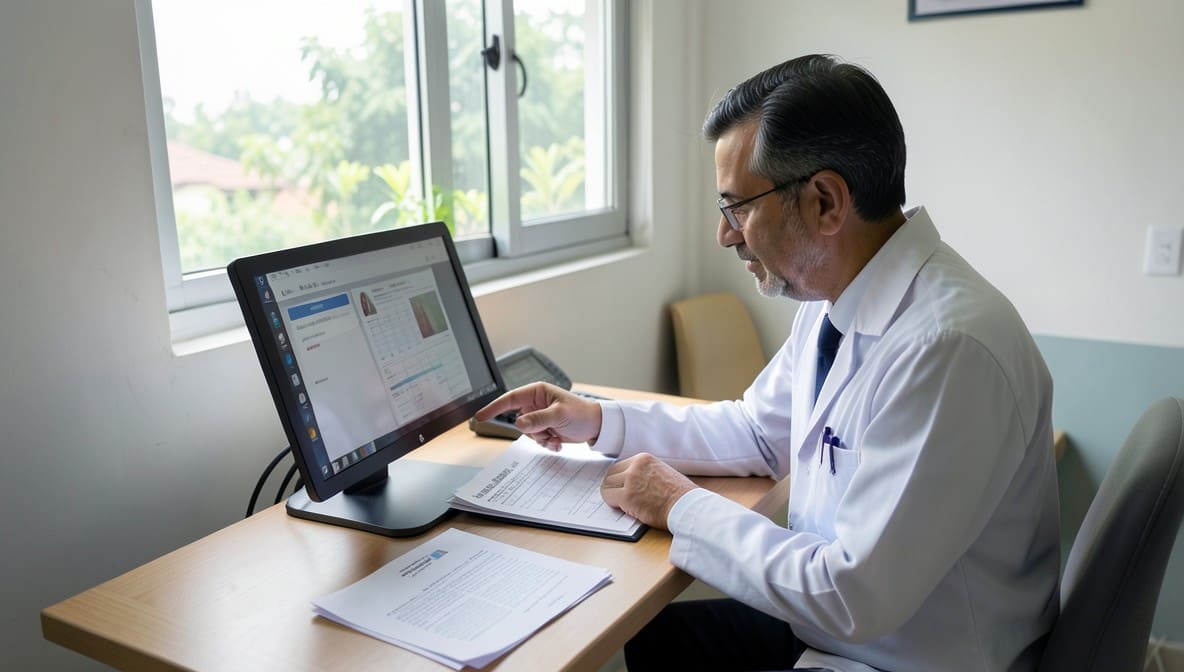
- Medical records, including sonography reports and statements of the attending nurse and physician, were submitted to the police.
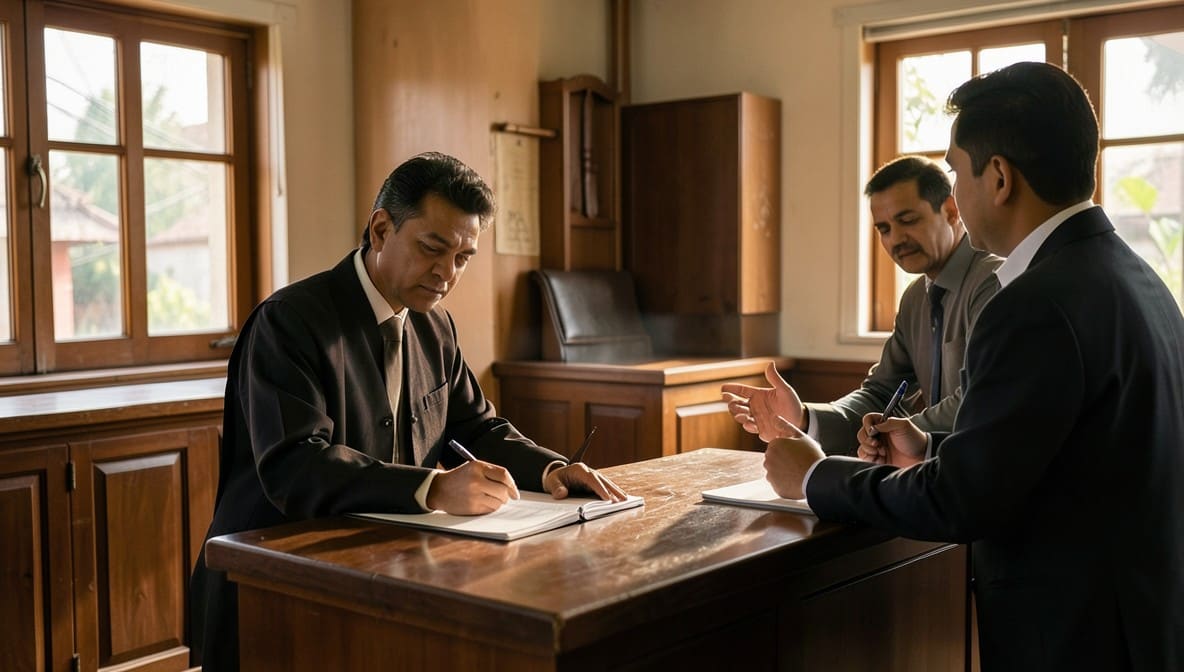
- The FIR was registered on 12 February 2026, six days after the alleged incident.
- The applicants have not been arrested and have cooperated fully with the investigation.
Procedural History
- 06.02.2026: Alleged medical termination of pregnancy at a recognised nursing home in Pune.
- 12.02.2026: FIR CR No.45 of 2026 registered at Warje Malwadi Police Station.
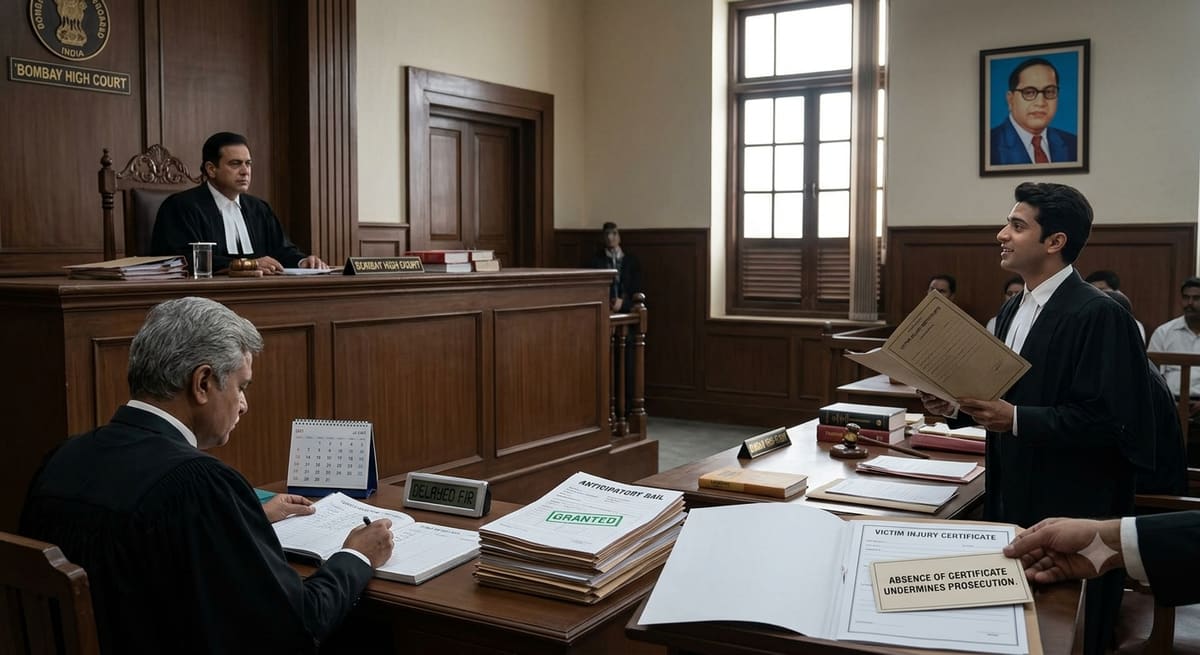
- 07.04.2026: Anticipatory bail applications filed before the Bombay High Court.
- 07.04.2026: Hearing conducted and judgment delivered on the same day.
The Parties' Positions
Applicants (Accused Nos.1, 2 and 4): Contended that the allegations are fabricated to settle matrimonial disputes. They submitted that medical records prove the procedure was lawful, with documented consent and professional oversight. They argued that accused Nos.2 and 4 (mother-in-law and sister-in-law) had no role in the medical decision or execution.
Respondent (State): Acknowledged that the investigation was complete, custodial interrogation was unnecessary, and no further evidence was expected from the applicants.
Relief Sought
The applicants sought anticipatory bail in the event of arrest, with conditions to ensure cooperation with the investigation and preservation of evidence.
The Legal Issue
The central question was whether Section 89 read with Section 3(5) of the Bharatiya Nyaya Sanhita, 2023 can be invoked based solely on the uncorroborated assertion of the complainant that informed consent was lacking, when medical records and professional testimony indicate otherwise.
Arguments Presented
For the Appellant/Petitioner
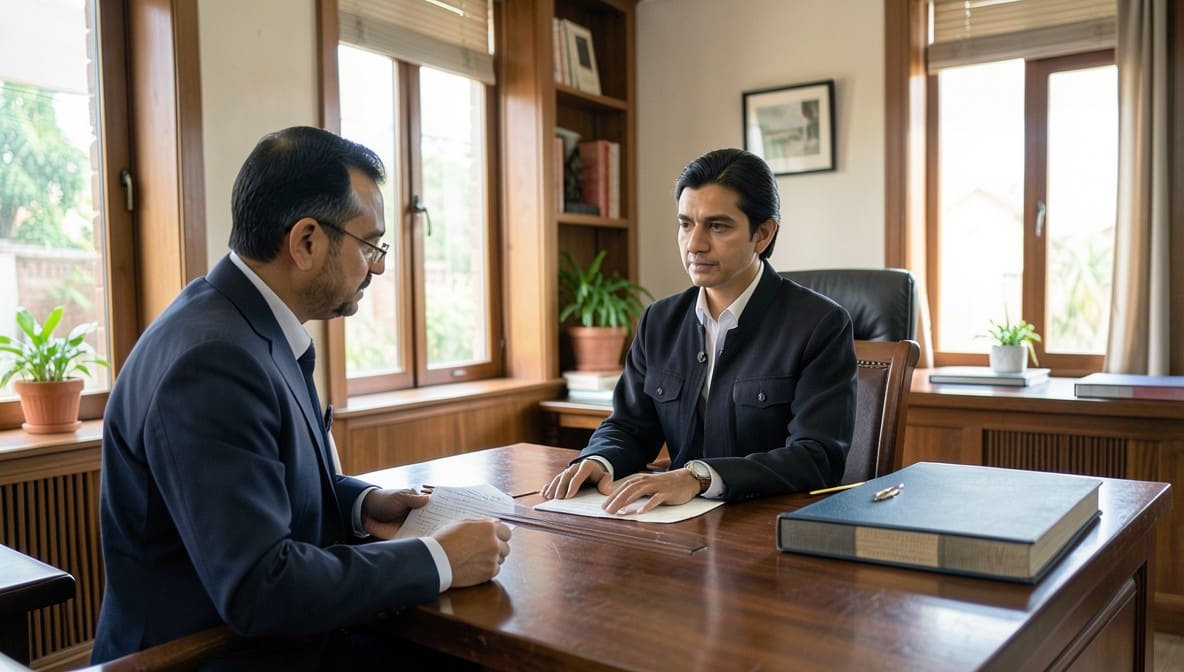
The applicants’ counsel argued that the prosecution’s case is built on a single, uncorroborated allegation. They relied on medical documents - including sonography reports, hospital records, and statements of the attending nurse and physician - to demonstrate that the procedure was lawful, consensual, and professionally conducted. They cited Arnesh Kumar v. State of Bihar to argue against automatic arrest in cases lacking prima facie evidence of criminal intent. They further contended that the delay in filing the FIR and the absence of any specific role attributed to accused Nos.2 and 4 rendered their implication legally unsustainable.
For the Respondent/State
The Additional Public Prosecutor conceded that the investigation was complete and that custodial interrogation of the applicants was not required. The State did not dispute the medical records but maintained that the complainant’s version, if accepted, could constitute an offence. However, the APP did not oppose bail, acknowledging the applicants’ cooperation and the absence of risk of evidence tampering.
The Court's Analysis
The Court conducted a meticulous review of the medical records and statements of healthcare professionals. It observed that the attending nurse and physician both affirmed that the informant was fully briefed on the procedure, its implications, and consequences, and had voluntarily given her consent. The Court noted:
"The record discloses that the informant underwent requisite medical consultations, diagnostic sonography examinations, and deliberations with attending physicians prior to the procedure. Their statements do not indicate that such consent was obtained by coercion, misrepresentation, or undue influence."
The Court further held that the prosecution’s case rested entirely on the informant’s uncorroborated statement, with no independent evidence to support the claim of deception or lack of consent. It emphasized that Section 89 read with Section 3(5) of the Bharatiya Nyaya Sanhita requires proof of unlawful intent and absence of consent - not mere suspicion or post-facto allegations.
Regarding accused Nos.2 and 4, the Court found the allegations to be vague, omnibus, and devoid of specific acts attributable to them. The Court observed that the law does not permit guilt by association or familial proximity without concrete participation in the alleged offence.
The Court also noted the State’s concession that custodial interrogation was unnecessary and that the investigation had reached its conclusion. It reaffirmed the principle from State of Haryana v. Bhajan Lal that anticipatory bail must be granted where the allegations, even if true, do not prima facie disclose a cognizable offence or where the accused’s liberty is at stake without compelling reason.
The Verdict
The applicants succeeded. The Court granted anticipatory bail to all three applicants. In the event of arrest, they shall be released on a personal bond of Rs.25,000 each, with one or more sureties in the same amount. They are prohibited from tampering with evidence or influencing witnesses. They must appear before the Warje Malwadi Police Station as and when required until the filing of the charge sheet. The applications are disposed of.
What This Means For Similar Cases
Consent Must Be Proven, Not Presumed
- Practitioners must now demand corroboration for allegations of lack of informed consent in medical procedures.
- Mere complainant testimony, without supporting medical or witness evidence, is insufficient to sustain charges under Section 89 BNS.
- Courts will scrutinize hospital records, consent forms, and professional affidavits as primary evidence.
Vague Allegations Against Family Members Are Insufficient
- Accusations against non-medical family members without specific acts of participation will be dismissed at the bail stage.
- Lawyers should move to quash or seek discharge where charges are omnibus and lack particularisation.
- The Court’s observation that "no overt act" was attributable to accused Nos.2 and 4 sets a precedent for challenging broad-based criminalisation of family members in medical disputes.
Custodial Interrogation Not Automatic in Medical Cases
- Where investigation is complete and no recovery or further interrogation is needed, courts will deny custody.
- This judgment reinforces that personal liberty must prevail unless there is a clear risk of evidence destruction or witness intimidation.