The Himachal Pradesh High Court has reaffirmed that pre-arrest bail is an extraordinary remedy, not to be granted where custodial interrogation is essential to unravel an organised crime involving controlled pharmaceutical substances. The denial of bail in this case underscores the judiciary’s deference to investigative necessity in serious economic and drug-related offences.
Background & Facts
The Dispute
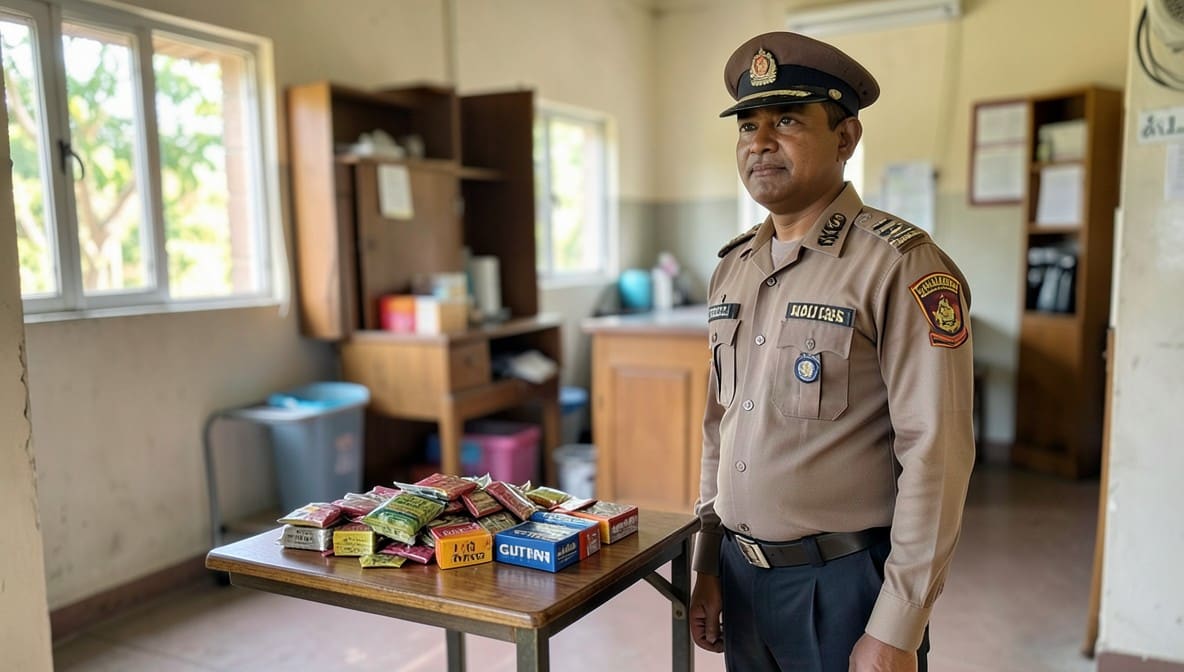
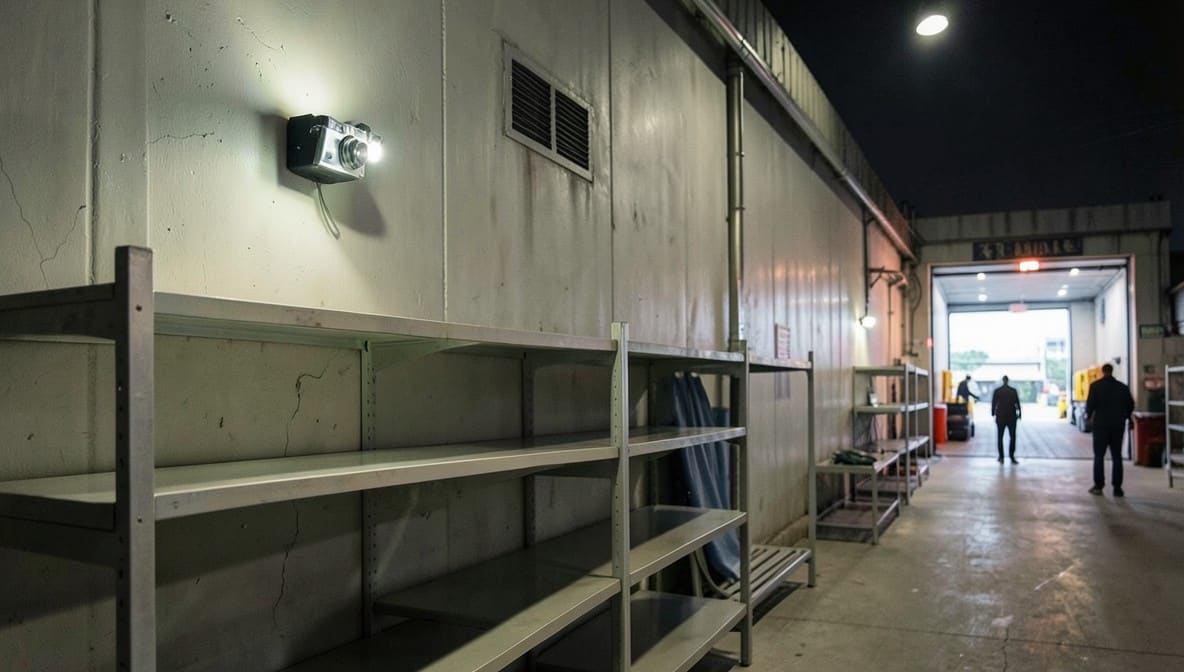
The petitioner, Balwant Singh, sought pre-arrest bail in connection with FIR No. 44 of 2026, registered at Police Station Barotiwala, for offences under Section 331(4) and Section 305 read with Section 3(5) of the Bharatiya Nyaya Sanhita (BNS), 2023. The case involves the theft of active pharmaceutical ingredients (APIs) valued at ₹8-9 lakh from the warehouse of M/s ANG Lifesciences India Ltd.
Key Facts
- The theft was detected on 03.03.2026 during a surprise inspection, when it was found that four boxes of APIs were missing
- The stock had been verified and confirmed present on 14.02.2026
- CCTV footage from 02.03.2026 at approximately 11:05 PM showed the transportation of the stolen material
- The stolen APIs are controlled substances requiring a licensed permit for purchase, storage, and sale
- The petitioner was identified in the CCTV footage as one of the individuals involved in the theft
- Two co-accused, Mahajan Singh and Mahender Singh, were arrested and later released on regular bail by the Additional CJM, Kasauli on 20.04.2026
- The petitioner was named in the police status report submitted before the Additional CJM, Kasauli, prompting him to approach the High Court
- The petitioner claims he is falsely implicated and has no connection to the crime
- The petitioner is a permanent resident of Mandi and has offered to cooperate fully with the investigation
Procedural History
- 02.03.2026: Theft of APIs recorded on CCTV
- 03.03.2026: Discovery of missing stock during inspection
- 07.04.2026: FIR No. 44 of 2026 registered at Police Station Barotiwala
- 18.04.2026: Petitioner granted interim protection by Sessions Judge, Solan
- 20.04.2026: Co-accused Mahajan Singh and Mahender Singh released on regular bail by Additional CJM, Kasauli
- 27.04.2026: Petition for pre-arrest bail heard and reserved
- 04.05.2026: Judgment delivered dismissing the petition
The Parties' Positions
For the Petitioner
- Claims to be falsely implicated with no material evidence linking him to the crime
- Asserts he will fully cooperate with the investigation if summoned
- Argues that his identification is not required and no recovery is expected from him
- Seeks pre-arrest bail on grounds of presumption of innocence and absence of flight risk
For the Respondent-State
- Contends the petitioner is the main conspirator and was clearly visible in CCTV footage
- Argues that custodial interrogation is essential to trace the source and destination of the stolen APIs
- States that the petitioner failed to cooperate after being granted interim protection by the Sessions Judge
- Highlights the organised nature of the crime and the need to uncover the supply chain
Relief Sought
The petitioner sought pre-arrest bail under Section 438 CrPC to prevent his arrest and to allow him to appear before the investigating agency on his own terms.
The Legal Issue
Can pre-arrest bail be granted under Section 438 CrPC when the investigating agency demonstrates a clear need for custodial interrogation to unravel an organised theft of controlled pharmaceutical substances, and the accused is visibly implicated in CCTV footage?
Arguments Presented
For the Petitioner
The petitioner’s counsel, Mr. M.L. Sharma, argued that the petitioner is innocent and falsely implicated. He submitted that there is no direct evidence connecting the petitioner to the theft beyond his presence in CCTV footage, which may be coincidental. He emphasized the petitioner’s willingness to cooperate with the investigation, his permanent residence in Mandi, and the absence of any prior criminal record. He relied on the principle of presumption of innocence and contended that the grant of pre-arrest bail would not impede the investigation.
For the Respondent-State
The Additional Advocate General, Mr. Lokender Kutlehria, countered that the petitioner is the main conspirator, as established by the Sessions Judge’s interim order and CCTV evidence. He argued that the theft involved high-value, licensed pharmaceuticals that cannot be sold on the open market, making it imperative to trace the buyer and distribution network. He stressed that custodial interrogation is necessary to extract information that may not be forthcoming otherwise, and that the petitioner’s prior non-cooperation after interim protection justified the need for detention. He cited State v. Anil Sharma and P. Chidambaram to underscore that pre-arrest bail cannot be granted where it would frustrate investigation.
The Court's Analysis
The Court undertook a rigorous analysis of the Supreme Court’s jurisprudence on pre-arrest bail, beginning with P. Chidambaram v. Directorate of Enforcement, which held that such relief is extraordinary and must be granted only in exceptional circumstances. The Court reiterated that the power under Section 438 CrPC is not a routine entitlement but a safeguard against unwarranted arrest, to be exercised with caution.
The Court noted that the petitioner was identified in CCTV footage as a participant in the theft, and the nature of the stolen goods - APIs requiring a drug license - indicates a sophisticated, organised crime. The Court observed that such substances are not available on the open market and must be traced to licensed entities, making custodial interrogation indispensable.
"In a case like this, effective interrogation of a suspected person is of tremendous advantage in disinterring much useful information and also materials which would have been concealed. Success in such interrogation would elude if the suspected person knows that he is well protected and insulated by a pre-arrest bail order during the time he is interrogated."
The Court relied on State v. Anil Sharma to hold that the risk of third-degree methods cannot be used to deny custodial interrogation, as such arguments are generic and undermine the investigative process. The Court also distinguished Pratibha Manchanda and Devinder Kumar Bansal, noting that while the presumption of innocence is relevant, it cannot be the sole ground for granting pre-arrest bail, especially where the allegations are serious and the accused is visibly implicated.
The Court rejected the petitioner’s plea of parity with co-accused, clarifying that regular bail and pre-arrest bail operate on different standards. The co-accused were granted regular bail after arrest, while the petitioner sought protection before arrest. The Court further held that the roles of the petitioner and co-accused are not identical, as the petitioner was identified as the main conspirator in the footage.
The Court concluded that the investigation into the source and destination of the stolen APIs remains incomplete, and the petitioner’s detention is necessary to prevent evidence tampering and to secure critical disclosures.
The Verdict
The petition for pre-arrest bail was dismissed. The Court held that the petitioner’s custodial interrogation is essential to unravel the organised theft of APIs worth ₹8-9 lakh, and that the grant of pre-arrest bail would impede the investigation. The Court directed that the petitioner be made available for arrest and interrogation as per the investigation’s requirements. The observations made are confined to the bail application and do not prejudge the merits of the case.
What This Means For Similar Cases
Custodial Interrogation Overrides Presumption of Innocence in Organised Crimes
- Practitioners must now argue that in cases involving controlled substances, high-value thefts, or organised economic offences, the need for custodial interrogation can outweigh the presumption of innocence
- Pre-arrest bail applications must address not just the accused’s conduct but the nature of the evidence and the investigative gaps that only detention can fill
- CCTV footage identifying the accused as a key participant significantly weakens the case for pre-arrest bail
Parity Between Accused Does Not Extend to Pre-Arrest Bail
- The grant of regular bail to co-accused does not create a right to pre-arrest bail
- Courts will examine the distinct roles of each accused; similarity in charges is insufficient without similarity in involvement
- Legal arguments based on parity must be supported by evidence of identical roles, not merely identical charges
Pre-Arrest Bail Is Not a Shield Against Investigation
- Offering to cooperate voluntarily is not enough to secure pre-arrest bail if the investigation requires custodial questioning
- Courts will consider whether the accused has previously evaded or delayed cooperation, as the petitioner did after interim protection
- The burden shifts to the applicant to demonstrate why custodial interrogation is unnecessary, not merely that they are innocent