The Allahabad High Court has reaffirmed that in matrimonial disputes involving benami property, the preservation of possession at the time of filing suit is paramount. Where one spouse claims ownership of property held in the other’s name and has invested substantially in its development, courts must prioritize maintaining the status quo pending adjudication on merits, especially when ouster occurs without legal process.
Background & Facts
The Dispute
The appellant, Dr. Avinash Kumar Singh, filed Suit No. 210 of 2015 (later converted to Suit No. 15 of 2025) before the Civil Judge (Senior Division), Agra, against his wife, Dr. Charu Singh, the respondent. He sought a declaration that he is the real owner of Astraa Hospital, located on Plot No. 77A, Khasra No. 590 Minjumla, Sikandra, Agra, which was purchased in the respondent’s name. He further sought a permanent prohibitory injunction to prevent her from dispossessing him or transferring the property.
Key Facts
- The appellant and respondent married in Agra and have two minor children: Kumari Navya Singh (born 07.02.2010) and Kartikeya Singh (born 13.08.2012)
- The appellant was employed in Ireland but relinquished his career to return to India for family reasons
- He used his personal savings to purchase the property via a registered sale deed from Mrs. Poonam Verma, executed in the respondent’s name out of love and affection
- He personally funded and managed the construction of Astraa Hospital, including hiring architects, contractors, and workers
- He bore all costs for medical equipment, including a Laser Astras 30 Watt machine purchased on 04.10.2022 for Rs. 13,50,000
- He recruited and managed all hospital staff, including doctors and nurses
- The Chief Medical Officer’s medical establishment certificate dated 26.06.2024 lists Dr. Charu Singh as Doctor No. 1 and Dr. Avinash Kumar Singh as Doctor No. 2, with the appellant named as the person in charge
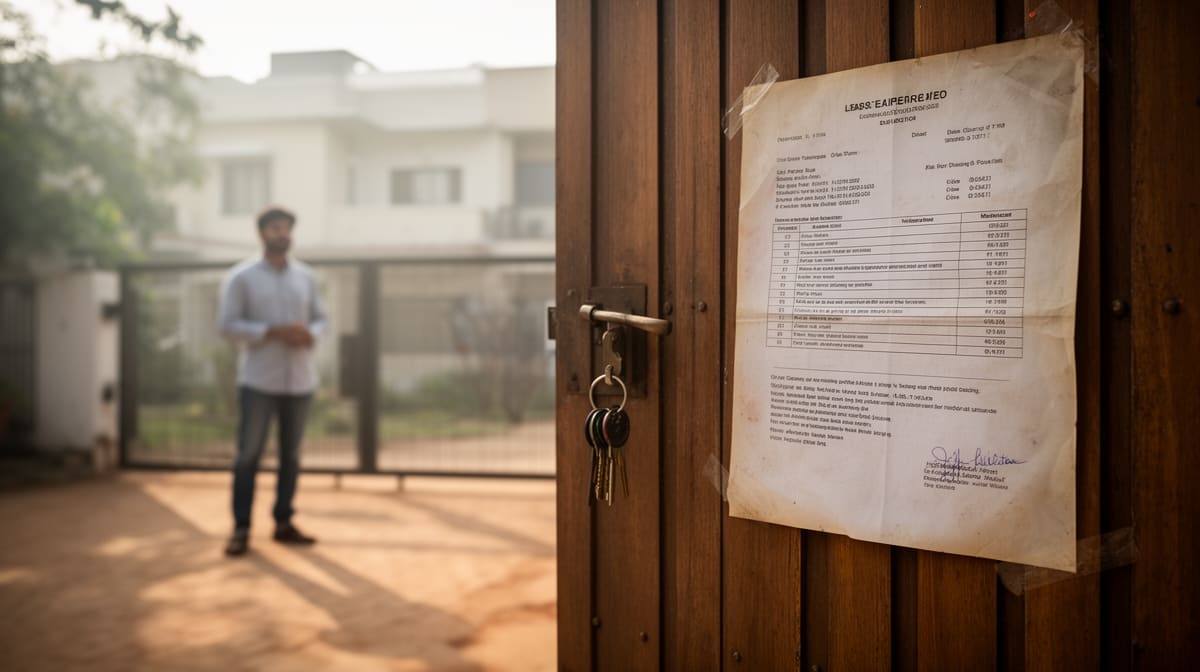
- A rent agreement dated 28.09.2024, for 30 years, was executed in favor of the appellant
- The appellant submitted bank statements from Axis Bank showing payments made by him for construction and equipment
- WhatsApp conversations were filed as evidence of his control and investment
- The respondent filed a counterclaim seeking restoration of possession and mesne profits of Rs. 2,50,000 per month
- The respondent filed an FIR under Sections 85, 115, 324(2), 351(2), 352, and 61 B.N.S., 2023 against the appellant
- The appellant filed a counter-FIR under Sections 352, 303(1), 305(a) of B.N.S. against the respondent
Procedural History
- 2015: Original suit filed as Suit No. 210 of 2015
- 2025: Suit converted to Suit No. 15 of 2025
- During pendency: Respondent filed application under Order VI Rule 17 CPC seeking amendment to include counterclaim for possession and mesne profits
- 04.04.2026: Appellant filed application seeking injunction against dispossession without due process
- 08.04.2026: Respondent filed counter affidavit claiming exclusive possession and ouster of appellant
- 09.04.2026: Trial court dismissed appellant’s injunction application
- 2026: First Appeal No. 619 of 2026 filed before the Allahabad High Court
The Parties' Positions
Appellant’s Position: The property is benami, held in the respondent’s name for convenience. He is the real owner, having funded and managed the hospital. His possession was lawful and continuous until forcibly ousted without legal process.
Respondent’s Position: The property is her self-acquired asset. The appellant was merely a licensee with no independent right to possession. His occupation was permissive and has now ceased. The counterclaim for possession was withdrawn, and his ouster was lawful.
Relief Sought
The appellant sought:
- Declaration of ownership of Astraa Hospital
- Permanent injunction restraining the respondent from dispossessing him or transferring the property
- Restoration of possession as it existed at the time of filing the suit
- Preservation of status quo pending final adjudication
The Legal Issue
Can a spouse who claims to be the real owner of a property held in the other spouse’s name seek interim protection of possession, even if title is disputed, when the property was lawfully occupied at the time of filing suit and the ouster occurred without due process?
Arguments Presented
For the Appellant
The appellant relied on Dalpat Kumar v. Prahlad Singh (AIR 1993 SC 276), emphasizing that interim injunctions are granted to preserve the subject matter of the suit in status quo, not to determine title. He argued that his possession was established through financial investment, management, and documentary evidence including the rent agreement and medical certificate. The respondent’s own counterclaim admitted his possession, making her subsequent affidavit contradictory. Any ouster without court order or legal process violates the principle of due process.
For the Respondent
The respondent contended that the registered sale deed vests absolute title in her. The appellant’s occupation was permissive as a licensee, and licensees have no right to resist ouster by the licensor. She argued that the appellant had conceded jurisdictional defects in the suit and that the counterclaim under Order VI Rule 17 CPC was not pressed, rendering it irrelevant. She further cited Sachin Kumar v. Smt. Nidhi Dohre to argue the trial court lacked jurisdiction.
The Court's Analysis
The Court rejected the respondent’s argument that the withdrawal of the counterclaim negated its evidentiary value. It held that admissions made in pleadings, even if later withdrawn, remain relevant for assessing prima facie case. The Court observed:
"The averments made by the respondent herself in the application under Order VI Rule 17 CPC prima facie establish that Dr. Avinash Kumar Singh/plaintiff/appellant was in possession of the property in question at the time of institution of the suit."
The Court further noted that the respondent’s counter affidavit of 08.04.2026 directly contradicted her earlier position, and crucially, she failed to disclose any legal procedure followed to dispossess the appellant. The Court emphasized:
"Any ouster of the plaintiff/appellant from the premises without adopting due process of law or the procedure established by law is legally impermissible."
It distinguished between title and possession, reaffirming that interim relief is not about deciding ownership but preventing irreparable harm. The Court held that the appellant had established a prima facie case through financial investment, operational control, and documentary proof. The existence of matrimonial litigation and minor children further reinforced the need for equitable intervention.
The Court also rejected the reliance on Sachin Kumar, noting that jurisdictional issues are mixed questions of fact and law best decided by the trial court on merits, not at the interim stage.
The Verdict
The appeal was allowed. The impugned order dated 09.04.2026 was set aside and modified. The respondent, Dr. Charu Singh, is directed to restore possession of Astraa Hospital to the appellant, Dr. Avinash Kumar Singh, in the exact condition as it existed at the time of filing the suit on 2015. She is restrained from creating any third-party rights in the property - including through sale, gift, lease, or rent - during the pendency of the suit. The trial court is directed to decide the original suit on merits expeditiously.
What This Means For Similar Cases
Possession Trumps Title at Interim Stage
- Practitioners must focus on establishing factual possession at the time of filing, not just title documents
- Financial investment, operational control, and documentary evidence (invoices, certificates, rent agreements) are critical to proving prima facie possession
- Even in benami claims, courts will preserve possession if the claimant was in lawful occupation
Ouster Without Due Process Is Illegal
- A spouse cannot unilaterally evict the other from jointly occupied property, even if title is in one name
- Any dispossession must follow legal procedure; self-help eviction is impermissible
- Courts will view such acts as contemptuous of judicial process, especially when counterclaims previously admitted possession
Matrimonial Context Demands Equitable Intervention
- Courts will consider welfare of minor children and the nature of spousal relationships when granting interim relief
- Disputes between spouses are not treated as ordinary civil disputes; equitable principles apply more strongly
- Withdrawal of a counterclaim does not erase its evidentiary value if it was made under oath and contradicts later assertions