The Madhya Pradesh High Court has granted regular bail in a serious excise offence case after finding that the prosecution’s core evidence had collapsed due to uncorroborated seizure witnesses and the applicant’s severe medical condition. This order reinforces that bail is not a privilege but a right to be granted when custodial interrogation is no longer necessary and the prosecution’s case is materially weakened.
Background & Facts
The Dispute
The applicant, Imanwel Brown @ Chikki, was arrested on 26.03.2026 in connection with Crime No. 148 of 2026 registered at Police Station Kotwali, Dhar, Madhya Pradesh. The offence pertains to possession of 175.5 bulk litres of liquor without a valid license, punishable under Section 34(2) of the Madhya Pradesh Excise Act, 1915.
Key Facts
- On 06.03.2026, police conducted a search at the applicant’s residence based on information from a mukhbir.
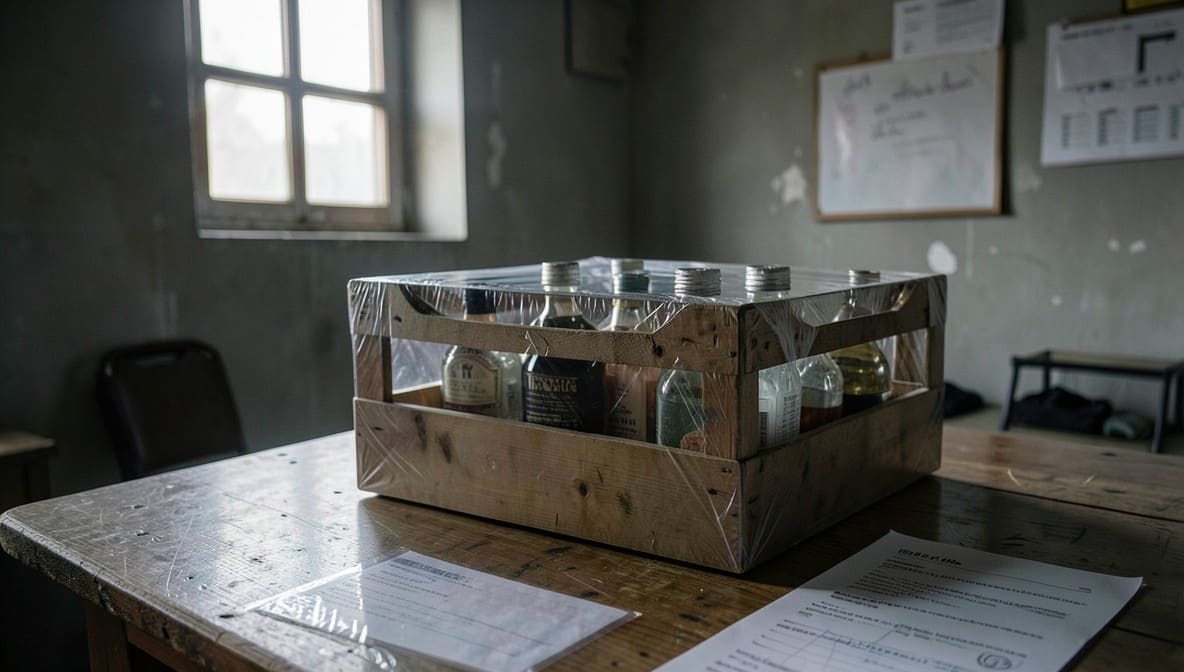
- Two boxes of liquor were recovered from the applicant’s house.
- Additional boxes were recovered from a structure constructed behind the applicant’s house.
- Total liquor seized: 175.5 bulk litres.
- The applicant was taken into custody on 26.03.2026.
- The charge sheet was filed after completion of investigation.
- Two seizure witnesses were examined during trial but failed to support the prosecution’s version.
- The applicant suffers from chronic liver disease, supported by medical documents filed as Annexure A/3.
- The applicant has eleven prior cases pending, seven of which involve similar excise offences.
Procedural History
- 26.03.2026: Applicant arrested and taken into custody.
- 16.06.2026: First bail application (MCRC No. 19114 of 2026) dismissed by this Court, withdrawn with liberty to renew after reasonable time.
- 15.07.2026: Second bail application filed under Section 483 of the Bhartiya Nagarik Suraksha Sanhita, 2023 (equivalent to Section 439 CrPC, 1973).
Relief Sought
The applicant sought regular bail on grounds that: (1) the seizure witnesses had discredited the prosecution’s case; (2) the investigation was complete and no further custodial interrogation was required; and (3) his chronic liver disease warranted release on medical grounds.
The Legal Issue
The central question was whether bail could be granted under Section 483 of the Bhartiya Nagarik Suraksha Sanhita, 2023 when the prosecution’s evidence has been undermined by witness testimony, the investigation is complete, and the accused suffers from a serious medical condition, despite prior criminal antecedents.
Arguments Presented
For the Appellant/Petitioner
Learned counsel submitted that the two seizure witnesses, upon examination, did not corroborate the prosecution’s claim of recovery from the applicant’s premises. This materially weakened the case against him. Further, the investigation was complete and the charge sheet filed, rendering custodial detention unnecessary. The applicant’s chronic liver disease, documented in Annexure A/3, necessitated medical attention outside custody. Counsel emphasized that bail is the norm and incarceration the exception, particularly when no further interrogation is required.
For the Respondent/State
The State contended that the applicant has eleven pending cases, seven of which are for similar excise offences, indicating a pattern of habitual criminality. The gravity of the offence, involving large-scale illicit liquor, and the applicant’s repeated involvement warranted denial of bail to prevent interference with justice and potential reoffending.
The Court's Analysis
The Court examined the factual matrix with particular attention to the credibility of the prosecution’s evidence. It noted that the seizure witnesses, who were critical to establishing the chain of recovery, had failed to support the prosecution’s narrative. This significantly eroded the foundation of the case. The Court observed that the completion of investigation and filing of the charge sheet negated any necessity for continued custody for interrogation purposes.
"The examination of seizure witnesses has not supported the prosecution story, and the investigation is complete. There is no justification for continued detention."
The Court also considered the applicant’s medical condition, acknowledging that chronic liver disease requires consistent monitoring and treatment not readily available in custody. While the applicant’s criminal antecedents were noted, the Court held that prior offences alone cannot override the collapse of evidentiary support and the absence of custodial necessity.
The Court further emphasized that bail conditions can be tailored to balance liberty with public interest, particularly where repeat offences are a concern.
The Verdict
The applicant succeeded. The Court allowed the bail application and directed his release on a personal bond of Rs. 1,00,000 with one solvent surety of like amount. He must appear before the trial court on all dates and comply with all conditions under Section 480(3) of the Bhartiya Nagarik Suraksha Sanhita, 2023. Additionally, he is required to mark his presence at the concerned police station on the last Sunday of every alternate month between 10:00 AM and 12:00 Noon until the trial concludes. The bail order remains effective till the end of the trial but shall become void upon breach of any condition or bail jump.
What This Means For Similar Cases
Witness Credibility Can Override Prior Antecedents
- Practitioners must aggressively challenge the reliability of seizure witnesses in excise and narcotics cases.
- If key witnesses recant or fail to support the prosecution’s version, this alone may justify bail even in repeat offender cases.
- Courts are increasingly willing to prioritize evidentiary integrity over criminal history when assessing bail.
Medical Grounds Are a Valid Factor in Bail Decisions
- Chronic medical conditions, supported by documented evidence, constitute a compelling ground for release.
- Courts will not defer to custodial convenience when an accused’s health is at serious risk.
- Medical reports must be filed early and with specificity - general assertions are insufficient.
Tailored Bail Conditions Are Permissible for Repeat Offenders
- Courts may impose additional conditions such as periodic police reporting to mitigate risk.
- Such conditions are not punitive but preventive and must be clearly specified.
- Practitioners should proactively propose reasonable conditions to increase the likelihood of bail grant.