The Chhattisgarh High Court has reaffirmed that successive bail applications in serious corruption cases cannot be granted absent a substantial change in circumstances, particularly when the accused is alleged to have impersonated a public official to facilitate a bribe demand. The judgment underscores the judiciary’s reluctance to grant bail where prima facie evidence points to active participation in a structured conspiracy involving deception and extortion.
Background & Facts
The Dispute
The case arises from an alleged corruption conspiracy in which the applicant, Anil Kumar Gupta, is accused of impersonating a non-existent Commissioner of CGST named "Mishraji" to extort Rs. 34 lakh as illegal gratification from a shop owner, Lalchand Athwani. The prosecution alleges that Gupta, in collusion with CGST Superintendent Bharat Singh and driver Vinay Rai, orchestrated a fake tax audit at Athwani’s business on 28.01.2025, then summoned him to Starbucks in Raipur on 29.01.2025, where Gupta posed as "Mishraji" and demanded the bribe. Vinay Rai was later caught red-handed accepting Rs. 5 lakh as part of the demand.
Procedural History
- 30.01.2025: Complainant files written complaint with CBI.
- 31.01.2025: Crime No. RC1242025A0002 registered under Section 61(2) of the Bharatiya Nyaya Sanhita and Sections 7 and 7A of the Prevention of Corruption Act, 1988.
- 29.03.2025: Main charge sheet filed; applicant named as accused.
- 05.09.2025: Supplementary charge sheet filed with additional evidence.
- 20.05.2025: Bail applications of co-accused Bharat Singh and Vinay Rai rejected by this Court.
- 26.11.2025: First bail application of applicant rejected.
- 10.07.2025: Applicant surrenders and is taken into judicial custody.
- 19.02.2026: Second bail application rejected.
Relief Sought
The applicant seeks regular bail, arguing that he is not a public servant, has not received any bribe, and that the evidence against him - primarily CCTV footage and voice recordings - is unauthenticated and insufficient to justify continued detention.
The Legal Issue
The central question was whether a second bail application under Section 483 of the Bharatiya Nagarik Suraksha Sanhita, 2023 can be granted in a serious corruption case where no substantial change in circumstances has occurred since the rejection of the first application, and where prima facie evidence suggests active participation in a conspiracy involving impersonation and demand of illegal gratification.
Arguments Presented
For the Petitioner
Learned counsel argued that the applicant is a private individual with no criminal record, voluntarily surrendered, and has deep societal roots. He emphasized that the prosecution’s case rests on disputed electronic evidence - CCTV and voice recordings - that have not been forensically authenticated. He cited M. Ravindran v. Intelligence Officer and A.R. Antulay v. R.S. Nayak to argue that prolonged pre-trial detention without commencement of trial violates Article 21 and entitles the accused to bail. He further contended that eight of eleven co-accused have already been granted bail, making the applicant’s continued detention arbitrary.
For the Respondent
The CBI argued that the applicant’s role was central: he impersonated a senior official, directed the conspiracy, and evaded arrest despite multiple notices under Section 35(3) BNSS. The prosecution highlighted corroborative evidence: multiple witness identifications (including Starbucks staff and former employees), IPDR records showing live coordination with Bharat Singh, and the applicant’s initial refusal to provide a voice sample. The CBI stressed that the first bail application was rejected on merits and no new facts or legal grounds were presented in the second application.
The Court's Analysis
The Court held that while bail is a rule and jail an exception, the gravity of the offence and the nature of the allegations demand a cautious approach. It observed that impersonation of a public official to extract bribes strikes at the core of public trust and constitutes a serious offence under Section 7A of the Prevention of Corruption Act.
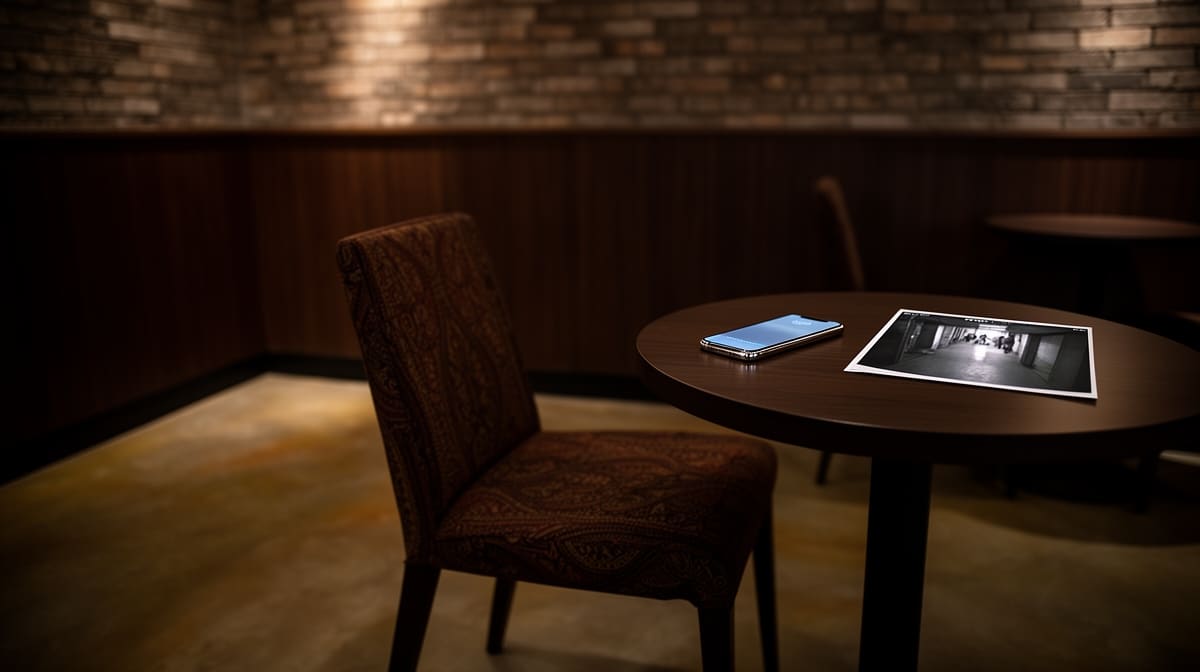
"The presence of the applicant at the Starbucks Coffee Shop, where the alleged negotiations regarding the bribe took place, is supported by CCTV footage, and he has been identified by the complainant and other witnesses."
The Court noted that identification by multiple independent witnesses - including employees of the establishment and forensic voice analysis - constitutes prima facie evidence of active participation. It rejected the petitioner’s reliance on the delay in trial, clarifying that the charge sheet and supplementary charge sheet had been filed, and the delay was attributable to the accused’s own conduct in evading summons and refusing to cooperate.
The Court emphasized that successive bail applications are not routine and require demonstration of a substantial change in circumstances. No such change was shown. The applicant’s reluctance to provide a voice sample, despite court direction, was viewed as indicative of consciousness of guilt. The Court also distinguished the applicant’s case from those of co-accused who had been granted bail, noting that their roles were not alleged to be as central or deceptive.
The Court further held that the material on record, though not conclusive at the bail stage, was sufficient to establish a prima facie case of conspiracy, impersonation, and demand of illegal gratification. The applicant’s conduct during investigation, including evasion of arrest, weighed heavily against him.
The Verdict
The applicant’s second bail application was rejected. The Court held that continued detention is justified where the accused is alleged to have impersonated a public official in a corruption conspiracy, prima facie evidence is strong, and no substantial change in circumstances has occurred since the rejection of the first bail application. The applicant remains in judicial custody pending trial.
What This Means For Similar Cases
Impersonation Elevates Bail Threshold
- Practitioners must now treat cases involving impersonation of public officials as inherently more serious under Section 7A of the Prevention of Corruption Act.
- Courts are likely to view such conduct as indicative of premeditation and abuse of public trust, making bail harder to secure.
- Even if the accused is not a public servant, active participation in impersonation may trigger stricter bail scrutiny.
Successive Bail Applications Require Concrete New Grounds
- A mere re-argument of existing facts or reliance on co-accused being granted bail is insufficient.
- New evidence, exculpatory material, or a material change in the prosecution’s case must be demonstrated.
- Courts will not entertain repetitive applications without a compelling reason.
Voice and CCTV Evidence Can Form Prima Facie Case
- Voice recordings and CCTV footage, even if not yet forensically tested, can form the basis of a prima facie case if corroborated by multiple independent identifications.
- Refusal to provide voice samples may be interpreted as adverse conduct.
- Prosecution need not prove guilt at bail stage, but must show credible, non-speculative evidence of involvement.